REVIEW · VENICE
Giudecca Island Discovery Tour
Book on Viator →Operated by deTourist Venice Valerio Coppo · Bookable on Viator
Venice, but off the main track. This Giudecca Island Discovery Tour is a small-group way to see a part of the lagoon most people skip, with a local guide connecting present-day art corners to older stories about power, exile, and industry. You start along the Zattere area, then hop into Giudecca’s quieter rhythms—warehouses, churches, and converted spaces—without feeling like you’re fighting for elbow room.
I especially like two things: the tight group size (max 10) and the way the route turns into a real sense-making timeline. You’ll learn why rebel aristocratic families were sent to Giudecca centuries ago, and then how later artists followed—priced out of central Venice. That personal connection to place is what makes the walking feel purposeful.
One heads-up: this is mostly an outdoor stroll around the island, and Giudecca can feel windy and cool, especially in shade. The pace is relaxed, but you’ll still be outside for the full loop, so pack for the weather.
In This Review
- Quick Take: What Makes This Giudecca Tour Worth Your Time
- Giudecca’s Quiet Side: Why This Island Feels Like Real Venice
- Start Point and the Water Bus: The Practical Logistics That Matter
- A Small-Group Walk Led by Valerio Coppo (and Genny on Some Runs)
- The Giudecca Route, Stop by Stop (What You’ll See and Why It Works)
- Stop 1: Venice Roots of the Name (Judged Rebels to Artist Exiles)
- Stop 2: Fondamenta Sant’Eufemia and a Church with a Martyr Legend
- Stop 3: Hilton Molino Stucky Venice (Neo-Gothic Mill → Pasta Factory → Hotel)
- Stop 4: Fondamenta de le Convertite (The Island’s Hidden Institutional Corners)
- Stop 5: Artisti Artigiani del Chiostro (Ex Convent as a Creative Center)
- Stop 6: Teatro Junghans (Glass Factory → Homes + Contemporary Theatre)
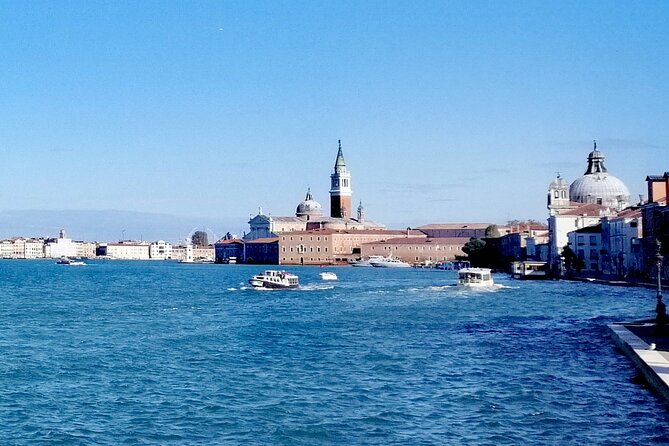
- Stop 7: Chiesa del Santissimo Redentore (Palladio + Black Death Deliverance + July Pontoon Pilgrimage)
- Stop 8: Villa Heriot (Art Nouveau Off the Beaten Paths + Lagoon Views)
- Stop 9: Casa dei Tre Oci (Final Views Toward San Marco and Punta della Salute)
- Admission, Time, and What This Tour Gives You Per Minute
- How to Plan Your Day Around This Tour (So the Wind Doesn’t Win)
- Should You Book the Giudecca Island Discovery Tour?
- FAQ
- How long is the Giudecca Island Discovery Tour?
- Where does the tour start?
- Where does the tour end?
- How do I get to Giudecca?
- How many people are in the group?
- Is there a mobile ticket?
- Are admission tickets included for the stops?
- Is the tour suitable for most people?
- Is there an access fee in Venice?
- Are service animals allowed?
- Is free cancellation available?
- What’s included in the price?
Quick Take: What Makes This Giudecca Tour Worth Your Time
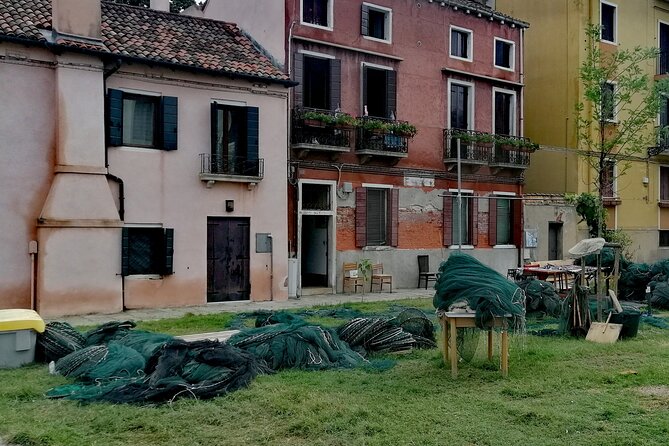
- Max 10 people means you can actually ask questions and get real answers from Valerio Coppo and the team (including Genny, in some runs).
- A guided “why” tour: Giudecca’s name and its exile story connect directly to what you see today.
- Factory-to-art and factory-to-living transformations: old flour/pasta and glass-production sites show up along the route.
- Churches with dramatic backstories, including a Palladio-designed stop tied to Venice’s Black Death deliverance.
- You end with sea views toward San Marco and Punta della Salute, so the last stretch feels like payoff.
Giudecca’s Quiet Side: Why This Island Feels Like Real Venice
Central Venice is stunning, but it’s also condensed. Giudecca is different: it sits across the lagoon and carries a more local, working-edge feel. That shift matters, because the tour isn’t built around grand monuments only—it’s built around everyday-sized places that explain how the island kept changing.
You’ll spend your time seeing spaces that used to do one job—warehousing, milling, manufacturing, even confinement—and later became creative or cultural use. When you understand the island’s logic (who was sent here, what industries arrived, and what took over when rents and economics shifted), Giudecca stops feeling like a “side trip” and starts feeling like a place with its own character.
And yes, there’s a practical payoff: you get to do this in about 2 hours, not a half-day slog. You’ll leave with a mental map of what’s on Giudecca, so you can wander afterward with confidence.
You can also read our reviews of more tours and experiences in Venice.


Start Point and the Water Bus: The Practical Logistics That Matter
The tour meets at Zattere 30133 Venice, and it finishes at the Le Zitelle Fondamenta Zitelle, 33 water-bus area. That matters because Zattere is one of the best launching zones for lagoon viewpoints, and it also sets you up for a nicer angle at the end.
Getting to Giudecca is via water bus. The key detail: your water-bus ticket is purchased on board, not bundled in the initial ticket. So plan a little time and cash/card readiness at the dock area, and expect a short transition as the group boards.
You’ll also have a mobile ticket and confirmation at booking. The tour is near public transportation, which helps if you’re mixing it with other Venice plans.
A Small-Group Walk Led by Valerio Coppo (and Genny on Some Runs)
This is capped at 10 travelers, and the impact is real. In a small group, the guide can slow down when questions pop up, and you’re more likely to hear the stories behind the sights instead of just matching pace with everyone else.
The guide credited in the experience setup is Valerio Coppo, and multiple reviews praise his humor, focus, and communication. One of the standout themes is how he uses specific local details, not vague talking points—like why the name Giudecca links to the judged, and how later artists followed an exile logic of their own when they could no longer afford central loft rents.
In at least one instance, the tour is credited to Genny, so if you’re hoping for a particular guide style, it can vary by day. Either way, the common thread from the feedback is that the guide is prepared and actively engaged with the group, including families with kids.
The Giudecca Route, Stop by Stop (What You’ll See and Why It Works)
Each stop is brief—around 15 minutes—which is exactly what you want for an orientation tour. You get to see a lot of the island without the “too long at one place” problem.
Stop 1: Venice Roots of the Name (Judged Rebels to Artist Exiles)
You begin with Giudecca’s name story. The explanation focuses on the idea that the name doesn’t come from one-time Jewish inhabitants, but rather from a Venetian word zudega, meaning the judged. The point: in the 9th century, rebel aristocratic families were banished here.
Then the narrative flips to the modern. In more recent years, you’ll learn that artists became the new exiles—people who couldn’t afford rents in central Venice and needed work/play space on the edge. It’s a clever setup, because it turns every later conversion story into something you can interpret, not just observe.
If you’re sensitive to condensed story timelines, note that this early stop is compact. The upside is that it gives you a framework for the rest of the walk.




Stop 2: Fondamenta Sant’Eufemia and a Church with a Martyr Legend
Next is a church tied to AD 890 origins, with a structure dated from the 14th century. You’ll also hear the name’s connection to a Byzantine Christian martyr: a woman thrown to hungry lions who, after biting off her hand, survived in a way that made her holy virgin story central to the legend.
This kind of stop is why the tour works for more than just architecture lovers. You’re not just looking at walls—you’re learning how stories shaped names, locations, and local identity.
Drawback to know: because the explanation includes legend details, the guide may move on quickly if the group is large or if the dock-side wind is strong.
Stop 3: Hilton Molino Stucky Venice (Neo-Gothic Mill → Pasta Factory → Hotel)
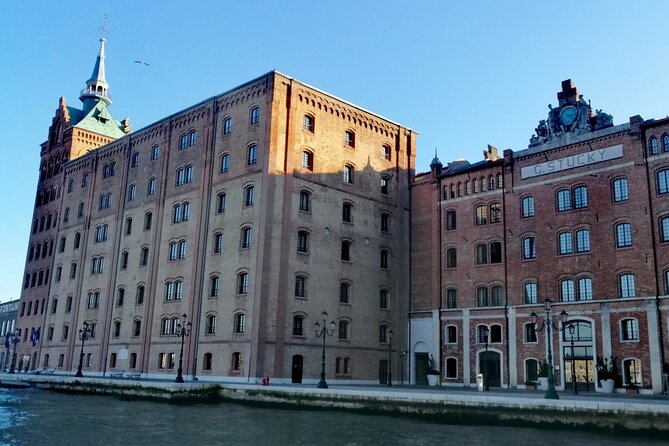
Then you hit one of Giudecca’s most recognizable transformations: the massive Neo-Gothic Molino Stucky complex, now the Hilton Molino Stucky Venice. Historically, it served as a flour mill supplied by boats across the lagoon, and it later operated as a pasta factory. Today, it’s a 5-star hotel.
This stop is useful even if you’re not staying there. You’ll see how industrial power buildings on Giudecca became repurposed without pretending they were always “pretty.” It also helps you understand why warehouses and factory shells show up again later on the route.
If you’re trying to go in-depth on the building itself, this stop is likely more viewing and storytelling than full interior exploration.
Stop 4: Fondamenta de le Convertite (The Island’s Hidden Institutional Corners)
Here you’ll walk through the island’s less obvious side: Fondamenta de le Convertite. The tour description points out an organic prison market area adjacent to a women’s correction facility.
This isn’t meant to be morbid—it’s meant to show Giudecca’s practical history. The island handled exile and confinement when Venice needed those functions off-center, and that reality still shapes where you stand.
Because it’s a more sensitive category of place, the guide’s tone matters. From the structure of the tour, you’re not stuck long—you get the context and then move on.
Stop 5: Artisti Artigiani del Chiostro (Ex Convent as a Creative Center)
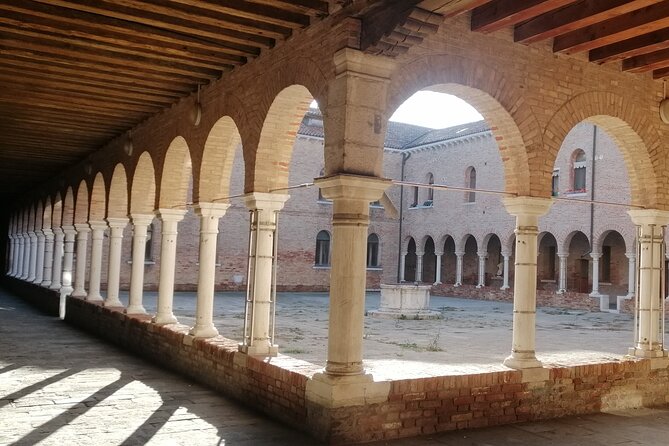
Next is a former monastery, now called Artisti Artigiani del Chiostro – Ex Convento Santissimi Cosma e Damiano, used as a center promoting local artists and artisans. This is one of the stops where the tour’s “past → present” theme feels most tangible.
Warehouses and churches are one thing; a working creative center in a monastery setting is another. It helps you see how Giudecca didn’t just lose old uses—it adopted new ones that still serve communities.
You’ll want to keep your pace here. Converted spaces can have limited time windows or sightlines from outside viewpoints, so the best approach is to listen closely while you’re there.
Stop 6: Teatro Junghans (Glass Factory → Homes + Contemporary Theatre)
Then comes Teatro Junghans. You’ll learn about the former glass factory and how it was converted into a modern residential neighbourhood and a contemporary theatre facing the southern lagoon.
This is the stop that usually makes people rethink what “industrial heritage” means. The building isn’t just preserved as a memory; it’s being used—living, performing, gathering. And because the theatre faces the southern lagoon, you get a sense of how Giudecca’s orientation affects the feel of the neighborhood.
One practical note: if the wind is up, the lagoon-facing direction can feel colder than you expect.
Stop 7: Chiesa del Santissimo Redentore (Palladio + Black Death Deliverance + July Pontoon Pilgrimage)
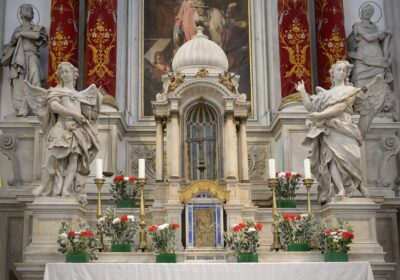
Now you’ll admire Chiesa del Santissimo Redentore, a church designed by Palladio. The reason it exists: Venice’s deliverance from the Black Death.
Then the guide brings it to life with a seasonal tradition. Each July, Venetians make a pilgrimage across the canal to this church on a shaky pontoon bridge from the Zattere since 1578. That “fragile crossing” detail makes the church story feel immediate instead of museum-like.
This stop is also a good reminder that survival in a tidal city is never taken for granted. Even if you don’t attend the festival, you’ll understand what the architecture was built to support emotionally.
If you’re visiting outside July, you won’t get the full spectacle—but the explanation sets the context fast.
Stop 8: Villa Heriot (Art Nouveau Off the Beaten Paths + Lagoon Views)
Next is Villa Heriot, an Art Nouveau villa off the usual tourist routes. You’ll get breath-catching views over the southern lagoon, which is one of those moments when the tour stops being “facts on foot” and starts becoming a view-based memory.
This is also a good place to pause if the group is cold or tired. Views give you a break without ending the tour.
The only drawback: since it’s off the beaten paths, you’ll feel more “exposed” to weather and wind than in a dense city corridor.
Stop 9: Casa dei Tre Oci (Final Views Toward San Marco and Punta della Salute)
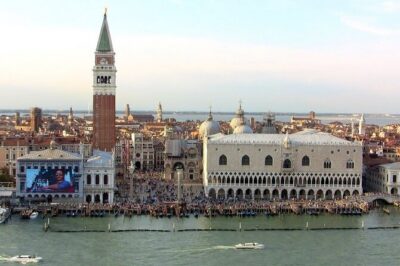
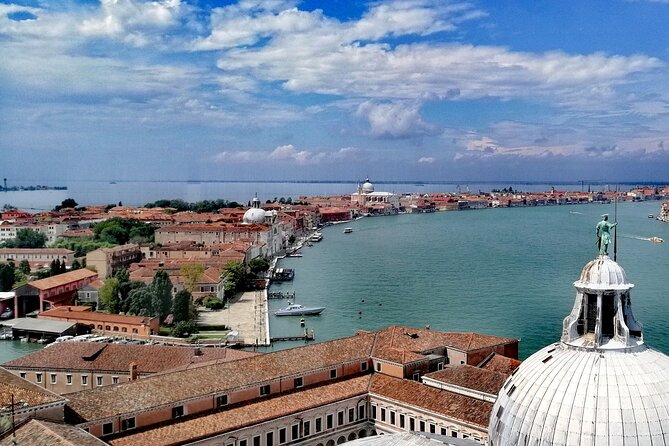
You finish with scenery around Casa dei Tre Oci, ending with views on San Marco and Punta della Salute. Along the way, you’ll walk by a palace with a distinctive neo gothic brick facade and three peculiar arched windows.
This is smart planning. Ending with a sightline gives you a clean mental “close.” After the structured stops, you can take in the skyline and then decide if you want to stay for sunset or head back.
The tour ends at the Zitelle water-bus stop, so you’re set up to continue exploring Venice without extra wandering.
Admission, Time, and What This Tour Gives You Per Minute
A major value point is that the stops are marked admission ticket free in the tour description. That means your cost is mostly paying for the guide, interpretation, and the time-efficient route.
For $163.64 per person and about 2 hours, the biggest bargain is how much thinking the tour gets you to do. You’re not just seeing converted buildings; you’re learning why Giudecca became a target for exile, then later a place where artists could survive. That’s the kind of context that makes repeat visits easier.
Also, there’s a small-group group discount aspect. Even if you’re not traveling with a big crew, the idea is that the organizer isn’t running giant-coach logistics.
Two cost considerations to keep in mind:
- The water-bus ticket to Giudecca is purchased on board, so budget for it separately.
- If you’re staying outside Venice for the day, you might face a €5 access fee on certain dates, with details and exemptions on the official site listed in the experience info.
How to Plan Your Day Around This Tour (So the Wind Doesn’t Win)
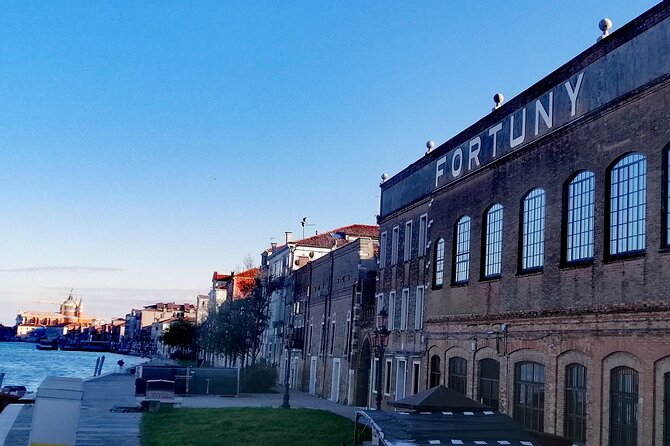
Giudecca’s advantage is that it’s calmer than central Venice. Its downside is that calmer can mean more wind off open water. Plan for that. A light layer plus something wind-resistant can make the difference between enjoyable walking and a shiver-fest.
Because each stop is about 15 minutes, bring a question or two in your head. Ask about the exile story, the name zudega/judged meaning, or why industrial buildings were repurposed. In a group of up to 10, those questions actually get time.
Footwear matters too. You’re walking between lagoon edges and local streets, and Venice surfaces can be uneven. Comfortable shoes help you keep pace without getting grumpy.
If you’re traveling with kids, this tour can work since the guide is described as involving younger people. Still, bring patience: the route moves, and legends and history take a bit of attention.
Should You Book the Giudecca Island Discovery Tour?
Book this if you:
- want a small-group Venice experience with real local storytelling
- already visited the main highlights and want a different Venice angle
- like seeing how places change roles over time—mills becoming buildings, convents becoming creative centers, and factories turning into homes and theatre
Skip it or think twice if:
- you strongly dislike outdoor walking in wind
- you expect long museum-style time inside sites (this is more “see and explain” than “stay and wander”)
- you don’t want to handle a separate on-board water-bus purchase
For most people, it’s a smart use of two hours: you get a guided orientation of Giudecca, a clear storyline about exile and transformation, and finish with lagoon views that make the detour feel worth it.
FAQ
How long is the Giudecca Island Discovery Tour?
The tour is approximately 2 hours.
Where does the tour start?
The meeting point is Zattere 30133 Venice, and the tour begins there.
Where does the tour end?
The tour ends at the Le Zitelle Fondamenta Zitelle water-bus area (Zitelle water bus stop).
How do I get to Giudecca?
You take a water bus, and the ticket is purchased on board.
How many people are in the group?
The tour has a maximum of 10 travelers.
Is there a mobile ticket?
Yes, the tour uses a mobile ticket.
Are admission tickets included for the stops?
The stops listed in the description are marked as admission ticket free.
Is the tour suitable for most people?
The information states that most travelers can participate.
Is there an access fee in Venice?
On certain dates, people staying outside Venice who are planning a day visit may need to pay a €5 access fee. Check the official site listed in the experience info for the applicable days and exemptions.
Are service animals allowed?
Yes, service animals are allowed.
Is free cancellation available?
Yes. You can cancel up to 24 hours in advance for a full refund.
What’s included in the price?
The included items are the tour leader and a nature and interpretive guide.