REVIEW · VENICE
Ellegi Murano Glass: The Art of Tradition
Book on GetYourGuide →Operated by Ellegi Murano Glass Srl · Bookable on GetYourGuide
Hot glass in Venice for five bucks.
Ellegi Murano Glass is a family-run workshop where you can see handmade Murano pieces take shape the old way, in a factory that dates back about 600 years. I like that the focus stays on the craft itself, not a sales pitch. I also like how easy it is to slot in on Murano because the stop is close to major sights.
The main thing to keep in mind is that this is a short, busy demonstration—so hearing and language can be uneven depending on how the moment is going. If you’re sensitive to noise or you need a specific language, I’d plan to arrive a little early and keep expectations flexible.
In This Review
- Key things to know before you go
- Why Ellegi Murano Glass feels different from the usual factory stop
- Finding Ellegi on Murano: from Faro boat stop to the courtyard entrance
- What the 15-minute Murano visit really includes (and what it doesn’t)
- The demonstration: where hot glass gets shaped in front of you
- Two main techniques: blown and molded glass explained for you
- Showroom time: buy directly from a traditional workshop
- Who this works best for on Murano
- Tips to make it smoother (especially if you care about language or sound)
- Price and logistics: $5 for craft time plus a showroom
- Should you book Ellegi Murano Glass?
- FAQ
- Where is the meeting point for Ellegi Murano Glass?
- How long is the visit?
- What languages are available for the live guide?
- What’s included in the price?
- Is it wheelchair accessible?
- Are kids or pets allowed?
Key things to know before you go
- A 600-year family tradition: The workshop frames glass skill as something passed down through people, not classes.
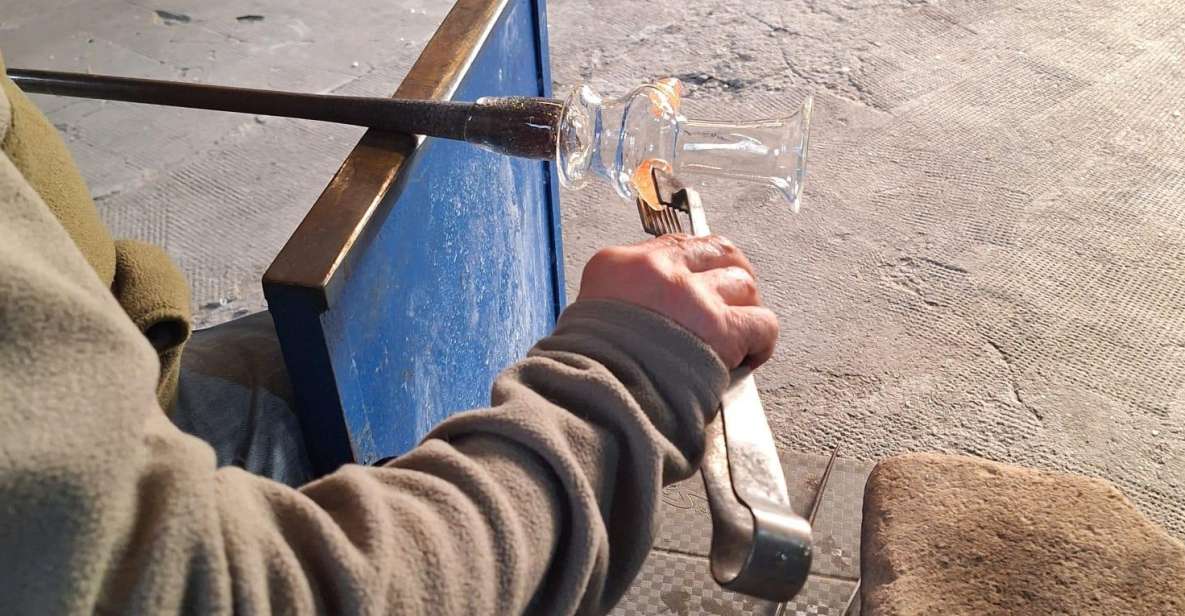
- The furnace is the star: You’ll watch hot glass processing and shaping up close.
- Short but focused: It’s built to fit into a tight Murano schedule, with a guided run and a showroom stop.
- Handmade variety, not just one product: You may see small artistic items, including sculptural pieces like a horse.
- Multi-language explanations: Guides are listed in Italian, English, Spanish, and French.
Why Ellegi Murano Glass feels different from the usual factory stop
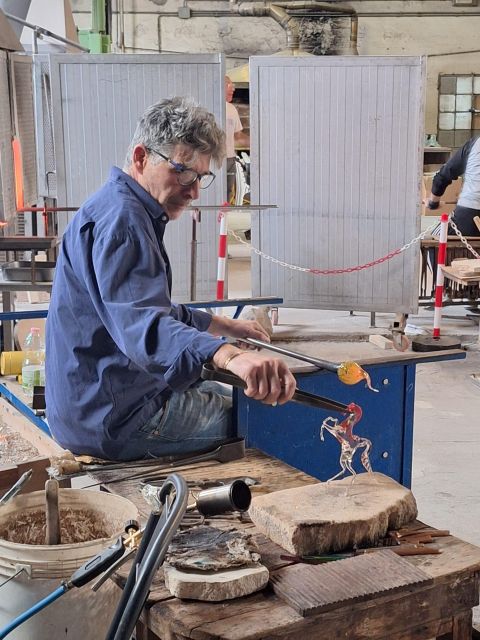
If your Venice time is limited, Murano can be tricky. You want something real, not just a quick glance at glass in a shop. Ellegi is appealing because it leans into production you can actually see: the heat, the shaping, and the skill that comes from doing it day after day.
I also appreciate that the experience is built around techniques. You’re not just looking at finished souvenirs behind glass. You’re watching artisans work the material while someone explains what’s happening in the language you need.
That matters because Murano glass is easy to admire and hard to understand. Techniques like hot shaping and molding look like magic if you don’t know what to watch for. Ellegi gives you enough context to turn a pretty object into something you can read.
And the setting helps. The atmosphere in a working family workshop tends to feel more human than a polished showroom-only visit. Even in a compact time window, you get that sense of the craft being lived, not performed on cue.
You can also read our reviews of more tours and experiences in Venice.


Finding Ellegi on Murano: from Faro boat stop to the courtyard entrance
Ellegi Murano Glass is set up for easy arrival. It’s just a few steps from the main boat stop at Faro, which is a lifesaver if you’re hopping between sights on the island. You’re also close to big Murano draws like the Glass Museum and the Basilica of Santa Maria e San Donato, so you can chain visits without burning time on transport.
Access is straightforward. There aren’t architectural barriers that would make the route difficult for many visitors, which helps if you’re traveling with kids, strollers, or anyone who moves slower.
If you’re arriving by private taxi, the factory also has its own private boat pier. That’s a handy option if you’re trying to reduce transfers and keep things simple.
Your meeting point is the internal courtyard of the factory, with the name Ellegi Murano Glass displayed above the entrance. On Murano, that kind of clarity helps. It prevents the classic problem of walking around beautiful streets while you’re trying to find one specific door.
What the 15-minute Murano visit really includes (and what it doesn’t)
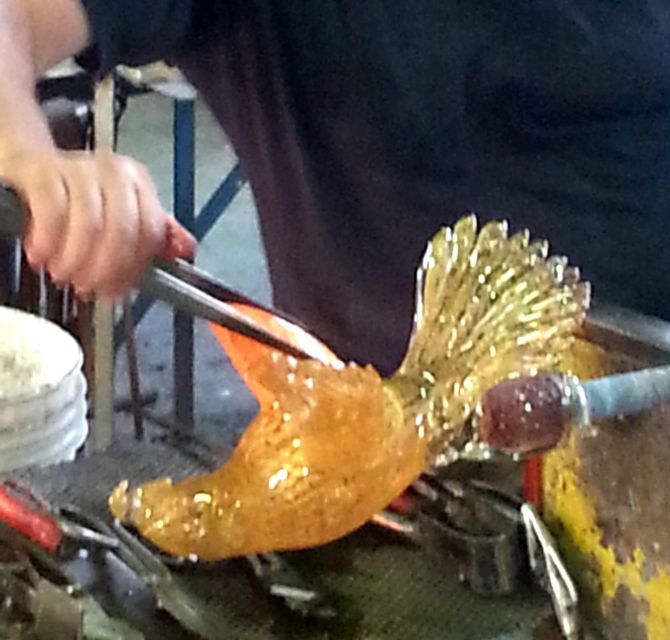
This stop is short by design. The tour time is listed at 15 minutes, and you’ll also hear it described as lasting around 20 minutes. Either way, it’s not an all-day factory tour. Think of it as a focused “see it happen” moment plus a showroom look.
Here’s what’s included:
- A glass processing demonstration
- A visit to the showroom
What’s not included is basic refreshment. You’ll find vending machines at the entrance for drinks and snacks, but you’re on your own for anything beyond that.
So how do you decide if this length works for you? If you’re the type who likes quick, vivid highlights, it’s a great match. You can watch the key steps, get the explanation, and still have time to wander Murano.
If you’re the type who wants every stage of production in slow motion, you might feel it’s too brief. The demo is built to show the core techniques, not to take you through every internal step of a full production run.
The demonstration: where hot glass gets shaped in front of you
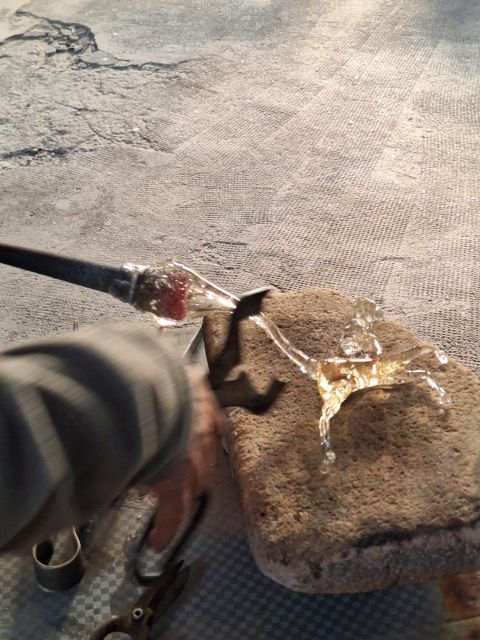
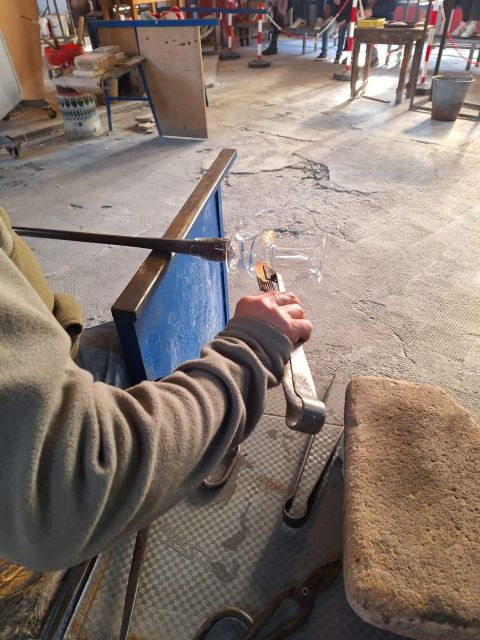
The heart of the experience is the processing demonstration. Glass comes out of the heat at very high temperatures, and you watch it get shaped before you. That visual is what hooks most people fast—because you see the transformation live, not recreated afterward.
You’ll typically see the glass being worked while someone guides you through what’s happening. The explanation is delivered by a speaker using the language listed for your tour, so you get more than a silent “watch and guess.”
A nice bonus is the variety in what they make. Even if you come expecting the usual tableware, you might see more artistic pieces in the lineup. Some visits include sculptural items like a horse, which makes it feel less repetitive and more like a craft demo than a souvenir assembly line.
Because the tour is short, the timing can feel tight. The trick is to watch the moment of shaping. Don’t only look at the final form. Pay attention to how the artisan controls the material as it changes shape quickly.
That’s where your understanding starts. Murano glass feels like artistry because the hands are making constant micro-decisions. The furnace isn’t just a dramatic prop—it’s the engine behind every step you’re seeing.
Two main techniques: blown and molded glass explained for you
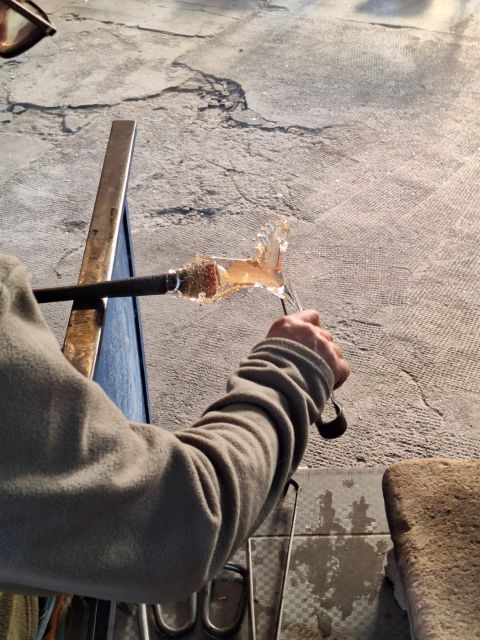
Ellegi highlights glass processing techniques, and you can expect explanations around two core methods: hot glass blowing and molded shaping.
What I like about this setup is that it gives your eyes a framework. Even if you don’t know the vocabulary, you can start spotting differences:
- With hot blowing, the glass takes form through breath-driven motion and tool control.
- With molding, shape comes from guided form using a mold process.
The speaker’s job here is to make those differences click. They explain each technique in detail, in the language required for the tour. That’s especially useful if you’ve only ever seen finished Murano objects in shops.
Why this matters for value: a $5 ticket is easy to dismiss if all you want is a quick look. But if you leave understanding how two techniques create different kinds of pieces, you’ve gotten something lasting.
It also makes your later Murano shopping smarter. When you browse other shops, you’ll be able to spot clues about how a piece might have been made. That’s the difference between collecting pretty things and appreciating the craft behind them.





Showroom time: buy directly from a traditional workshop
After the demonstration, you head into the showroom. This is where the finished work takes center stage, and it’s also where the visit becomes practical.
Since it’s tied to the same workshop, the shopping feels more connected than in a factory store that’s just reselling. You can view handmade items created by the craftsmen you just watched.
If you’re budget-minded, I’d treat showroom time like inspiration browsing. Murano glass can range from small gifts to larger display pieces. Even if you don’t plan to buy, it’s worth going slowly and comparing the shapes you saw during the demo with what’s on display.
And if you do buy, you’ll have a quick story to tell yourself later: you saw how the material was shaped and why the technique matters.
Who this works best for on Murano
Ellegi is a strong fit for families and casual visitors because it’s straightforward and not overly technical. Kids are welcome, and children up to 15 are free, which can make Murano glass suddenly feel affordable even on a busy trip.
Pets are also welcome. That’s not universal across Venice-area attractions, so it’s a real plus if your travel style includes a companion animal.
Best for:
- You want a quick, meaningful Murano stop without a long schedule
- You like craft demonstrations more than lecture-style tours
- You want language support in Italian, English, Spanish, or French
- You’re traveling with kids and want something they can enjoy quickly
If you’re a die-hard craft nerd looking for hours of process detail, you might prefer a longer workshop or a museum day. But if you want one great moment of action at the furnace, this hits the mark.
Tips to make it smoother (especially if you care about language or sound)
The biggest practical challenge is that it’s a short demo, and a working shop can get busy. Based on real-world experiences, communication can vary with crowd flow—sometimes making it harder to follow every word.
Here’s how I’d handle that:
- Arrive a bit early and get positioned so you can see both hands and tools.
- If you’re counting on Spanish or French, don’t assume it will be perfectly handled for every time slot. Go in with a flexible mindset.
- Focus on visual cues, not only the spoken explanation. The technique differences are visible even when audio is imperfect.
Another thing to consider is that production demos can feel like “show mode” in a short window. Even when the craft is genuine, the visit may not show every step. If you’re expecting a complete end-to-end walkthrough, you could be disappointed.
I’d frame your expectations like this: you’re paying for a craft moment plus a showroom look. You’re not paying for a full production tour.
Price and logistics: $5 for craft time plus a showroom
At $5 per person, this is one of the more approachable ways to see real Murano glassmaking without committing a big chunk of your day or your wallet. The value comes from two things you can’t easily replicate elsewhere: the live furnace demonstration and the immediate showroom context.
Could you spend more and get a longer or more detailed experience? Sure. But Ellegi is priced like a smart add-on to your Murano itinerary. It’s the kind of stop that works even if you only have an hour on the island beyond sightseeing.
Also, it helps that the location is practical. Getting to it from Faro is easy, and it sits near major attractions. That reduces travel friction, which is part of why the experience feels like good value.
If your main goal is to understand how Murano glass is made, the short format is actually a strength. You get the key techniques fast, then you can keep exploring.
Should you book Ellegi Murano Glass?
If you want a simple, low-cost Murano stop that shows the real process, yes, book it. It’s especially worth it if you’re traveling with kids, you want language support, or you like craft demonstrations where you can see hot glass shaped in front of you.
Pass or at least adjust expectations if you need long, detailed narration, perfect audio conditions, or a guarantee that your exact language will be handled exactly as you expect every time. The experience is short, and in a working factory that can mean a bit of variation in how smooth things feel.
FAQ
Where is the meeting point for Ellegi Murano Glass?
Meet in the internal courtyard of the Ellegi Murano Glass factory. Above the entrance there is a sign with the factory name.
How long is the visit?
The guided tour is listed at 15 minutes.
What languages are available for the live guide?
The live tour guide is available in Italian, English, Spanish, and French.
What’s included in the price?
The price includes the glass processing demonstration and a visit to the showroom.
Is it wheelchair accessible?
Yes, it is wheelchair accessible.
Are kids or pets allowed?
Kids until 15 years old are free, and pets are welcome.