REVIEW · VENICE
Public Venice: St Mark’s Basilica Tour
Book on GetYourGuide →Operated by Venice Boat Experience · Bookable on GetYourGuide
Venice’s gold gets very up close. A St. Mark’s Basilica visit like this is interesting because you’re not just looking at the famous interior—you’re getting guided context for the Byzantine art and the marble-and-gold details you’d otherwise overlook. I especially love how the skip-the-line ticket saves time at a site where you don’t want to lose your place. One possible drawback: the meeting point can be tricky in bad weather, so you’ll want to arrive early and find that Poste Italiane location confidently.
For the price, I think it offers solid value if you want a focused, guided hour instead of wandering for hours on your own. You’ll get a professional guide plus audio receiver devices, and the tour runs in multiple languages (English, Spanish, German, French). Just be ready for the basilica rules: no shorts or tank tops, and backpacks aren’t allowed for security.
In This Review
- Key things to know before you go
- St Mark’s Basilica Tour meets at Poste Italiane
- Skip-the-line tickets: what you really gain
- Inside the basilica: a guided look at Byzantine treasures
- Golden mosaics and marble floor inlays: where the tour shines
- History and particularities: what the guide actually helps you notice
- Dress code and backpack rules: the “show up ready” checklist
- Weather and the meeting-point reality in rainy Venice
- Languages: helpful if you don’t want to strain to follow
- Who this tour fits best (and who should skip it)
- Should you book Public Venice: St Mark’s Basilica Tour?
- FAQ
- How long is the St Mark’s Basilica tour?
- Where is the meeting point?
- Does this tour include skip-the-line entry?
- Is there a live guide?
- Do I get audio devices?
- What languages is the tour available in?
- What is the price per person?
- Is adult pricing used for everyone?
- What clothing is required?
- Are backpacks allowed?
- What happens if the weather is bad?
- Where does the tour end?
Key things to know before you go
- Skip-the-line entry helps you avoid a long wait and get inside faster
- Audio receiver devices make the guide’s explanations easier to follow in a busy space
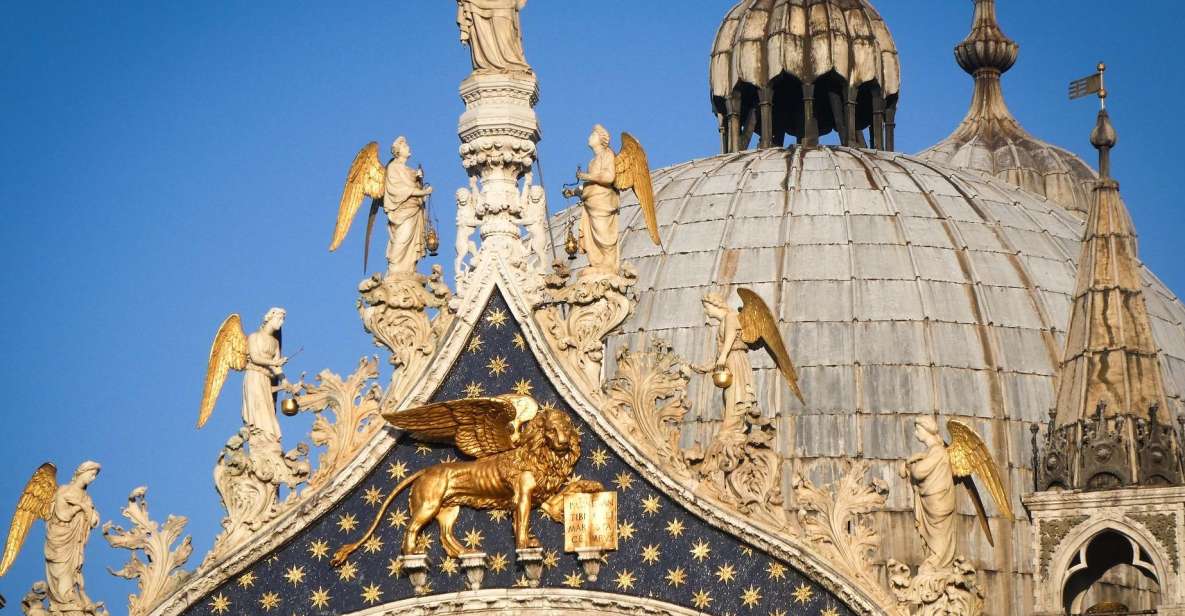
- Byzantine mosaics and marble floor inlays are the main show, explained scene-by-scene
- A live professional guide covers history and the building’s particularities, not just facts
- Strict access rules mean proper clothing and no backpacks at the entrance
- Weather can affect the tour since it isn’t guaranteed in adverse conditions
St Mark’s Basilica Tour meets at Poste Italiane
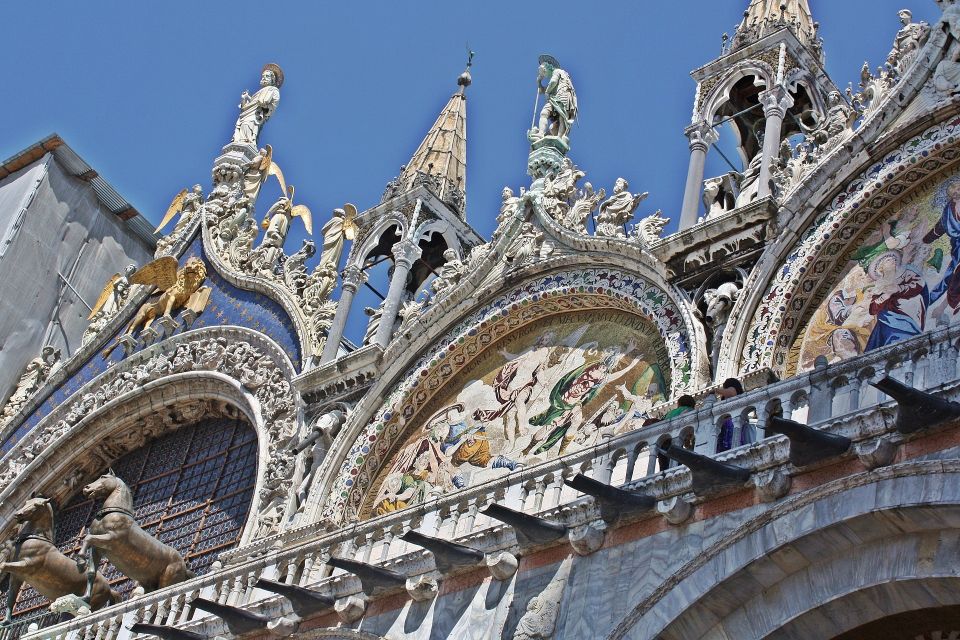
This tour keeps things simple: you meet your guide outside near St. Mark’s Square at the Poste Italiane Office on Calle Larga de l’Ascension, then you visit inside and end back at the meeting point. That back-to-the-start structure is convenient in Venice, where getting turned around can cost time fast.
The “one hour” format matters. St. Mark’s Basilica is huge, crowded, and visually intense. With an hour and a guide steering the order of what to look at, you’re less likely to miss the best art because you got distracted by the ceiling glow and the floor detail at the same time.
You can also read our reviews of more tours and experiences in Venice.



Skip-the-line tickets: what you really gain
The headline benefit here is the skip-the-line ticket. In a place like St. Mark’s, that’s not a small perk. Lines and slow-moving entry can turn a short sightseeing window into frustration. When you reduce waiting, you get more of your limited time inside where the mosaics and marble work their magic.
I also like that the tour includes an audio receiver device. If you’ve ever tried to listen to a guide in a cathedral full of echoes and tour groups, you know how quickly it turns into noise. With the audio setup, you can actually hear the history and the meaning behind the visuals—especially when the guide is pointing out biblical scenes represented in the art.
Inside the basilica: a guided look at Byzantine treasures
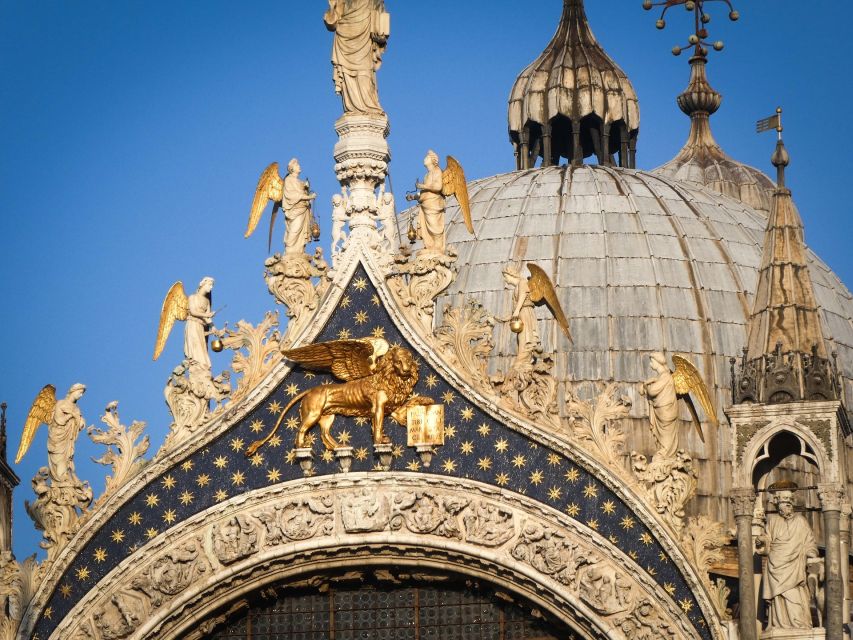
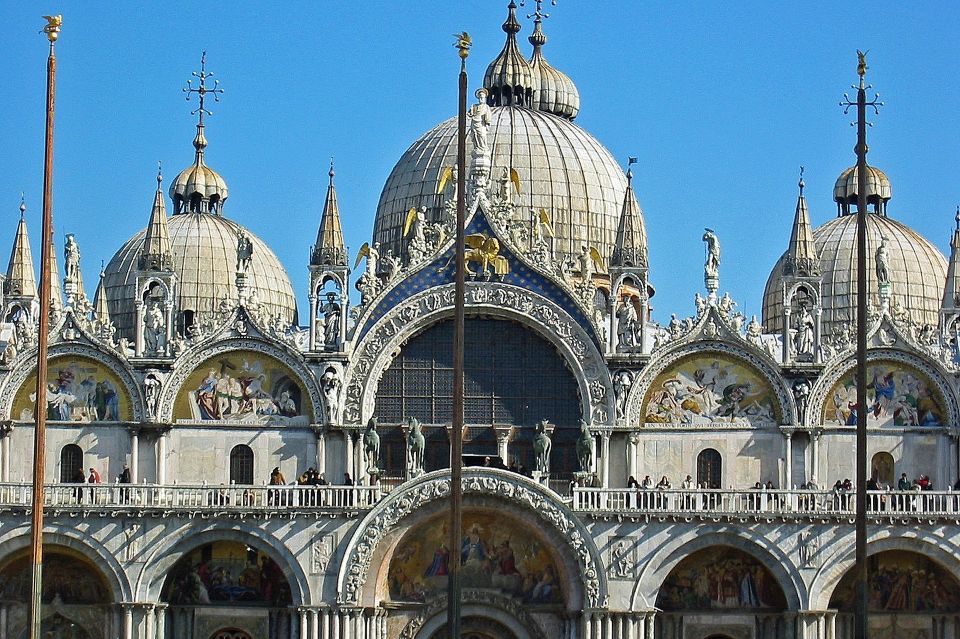
Once you’re through the entrance, the tour becomes a guided “look and learn” session. Your professional guide focuses on three things you’ll care about during the visit: the history of the building, the particularities of the basilica, and what you’re seeing in the mosaics and floors.
Here’s the practical value: a lot of people stare upward at the gold and then forget to look down. This tour pushes you to notice the whole layout—the way the building’s design and decoration work together. That means you get more out of the time you spend standing, looking, and rotating your attention from ceiling to floor.
You’ll also get explanations of the biblical scenes represented throughout the basilica. Even if you’re not a religious art specialist, the guide’s narration helps connect the artwork to stories and symbolism, which makes the mosaics feel less like decoration and more like a deliberate visual language.
Golden mosaics and marble floor inlays: where the tour shines
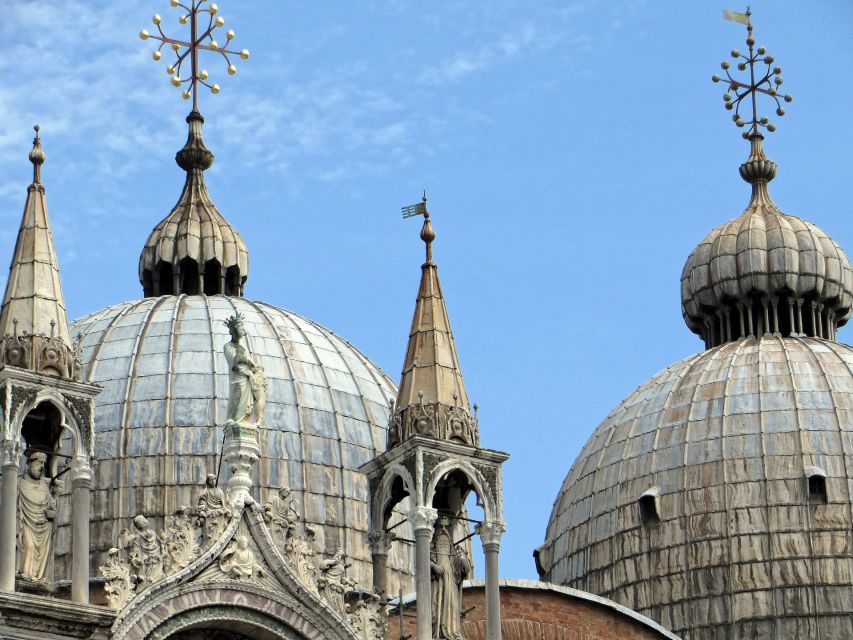
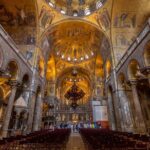
St. Mark’s Basilica is famous for a reason. The gold mosaics create that unforgettable, glowing effect that photographs well and looks even better in person. But the tour’s emphasis is smarter than “see the ceiling and go.” You’re encouraged to pay attention to the marble floor inlays too, which are easy to miss if you’re rushing.
I love this combination because it gives you two different kinds of detail. The mosaics pull you into the narrative and the vertical drama of the space. The floor inlays reward you for slowing down and looking carefully at patterns and designs underfoot. When a guide points out what to look for, you stop treating it like a single view and start experiencing it as a full interior.
There’s another benefit: with a guided route through the basilica, you spend less time guessing where your viewing angles will be best. That matters because the lighting and sightlines inside can shift as you move, and it’s easy to end up in the “wrong spot” when you’re solo.
History and particularities: what the guide actually helps you notice
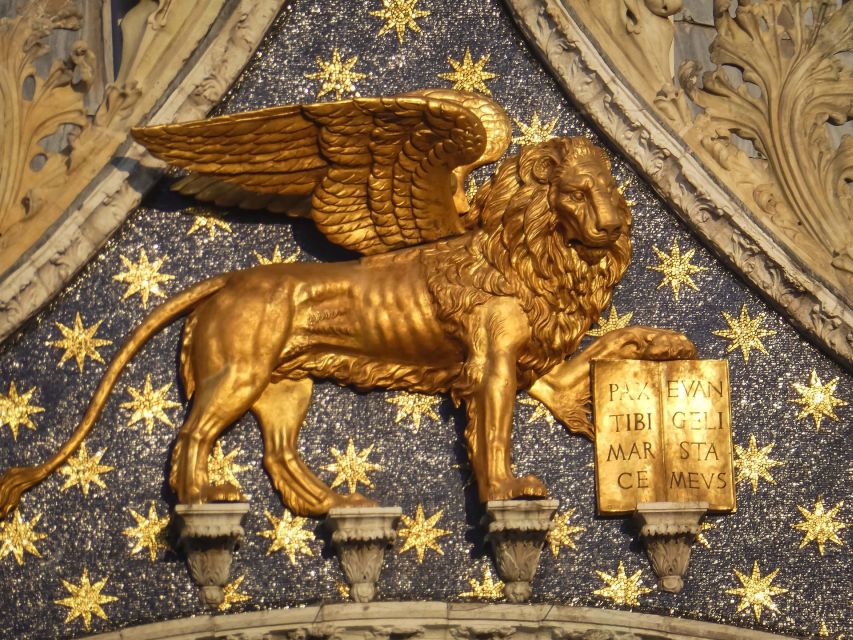
A tour like this works best when it tells you what to pay attention to. That’s exactly the purpose of the guide here—covering the basilica’s history and its particularities, while pointing out the mosaics and floors in a way that makes sense.
I find this kind of guided context especially useful at St. Mark’s because it’s not just about aesthetics. You’re looking at a building that’s been shaped by different influences over time, and the guide’s explanations help you understand why the art looks the way it does and how the architecture supports the decoration.
This is also where the audio receiver devices really earn their keep. Even if you’re a fast listener, cathedral acoustics can muffle key details. With the audio, you’re not relying on luck or volume—you’re catching the story the guide is trying to connect to what you see in front of you.



Dress code and backpack rules: the “show up ready” checklist
This tour has straightforward restrictions that you should take seriously before you leave your hotel. For the basilica visit, you need proper clothing—no shorts or tank tops. That can catch people off guard in summer, so I recommend planning your outfit the same way you would for any church visit in Italy: cover up and keep it comfortable for standing.
Another key rule: for security reasons, backpacks won’t be allowed. That means you should travel light. If you’re coming from a day of shopping or carrying a camera bag, think ahead. Even if you’re not carrying much, it’s smart to have a plan for where your bag can go before you meet the guide.
These rules aren’t meant to be annoying. They help manage security in a high-traffic monument. But if you show up with the wrong clothing or a backpack, you can waste time at the entrance while you try to figure out your next move.
Weather and the meeting-point reality in rainy Venice
St. Mark’s Basilica is weather-friendly compared to some outdoor sights, but the tour itself isn’t guaranteed in adverse weather conditions. That’s a big deal for Venice, where rain can change plans in a hurry.
The other practical point: the meeting point depends on you finding the Poste Italiane Office near St. Mark’s Square on Calle Larga de l’Ascension. In good weather, you can usually navigate by landmarks. In rain, you’ll move slower, slip on wet streets, and lose patience. One unpleasant experience people have reported is difficulty locating the meeting point and then running into problems getting the tour tickets. I can’t control what the operators do in those situations, but I can tell you the best defense is simple: arrive early, keep a close eye on street names, and ask for directions by reading the street name aloud.
If it’s pouring, consider a rain strategy before you head out—something like a compact umbrella or a hooded layer—because you’re standing around outside at the start of the tour before you get under cover inside.
Languages: helpful if you don’t want to strain to follow
This tour runs with a live guide in English, Spanish, German, or French. That matters because the experience is built around the guide’s explanations of history and the biblical scenes depicted in the mosaics and floors.
I like tours where language isn’t an afterthought. If you understand the guide clearly, you’ll actually notice more. You’ll connect details to meaning, and you’ll walk out feeling like you saw a coherent “story” rather than a random set of impressive images.
Who this tour fits best (and who should skip it)
This is a great choice if you want a short, high-focus St. Mark’s visit. The one-hour format works for people who:
- like art and architecture but don’t want to spend half a day figuring out what matters
- value clear explanations instead of silent sightseeing
- want audio help to catch the guide’s narration in a crowded interior
It may be less ideal if you:
- want a long, unstructured wander with lots of time to re-spot specific details
- plan to carry a backpack into the basilica (since backpacks aren’t allowed)
- are not able to meet basic dress rules (no shorts or tank tops)
Also, if you’re traveling during unstable weather, treat the tour as something that could be affected. You’ll enjoy it more if you go in with flexibility.
Should you book Public Venice: St Mark’s Basilica Tour?
I’d book it if you’re aiming for a smart, guided St. Mark’s visit where the focus is Byzantine mosaics, marble inlays, and the stories behind them. The skip-the-line entry and audio receiver devices are practical upgrades that help you get inside faster and actually hear the guide.
I’d hesitate only if you know you struggle with meeting points under pressure or you’re showing up dressed in a way that might not meet the basilica rules. If you do book, arrive early near the Poste Italiane Office at the agreed address on Calle Larga de l’Ascension, wear clothes that fit the dress code, and plan for no backpack at security.
If you do those basics, this is the kind of short tour that leaves you feeling like you saw the basilica on purpose, not just by luck.
FAQ
How long is the St Mark’s Basilica tour?
The tour duration is 1 hour. Starting times vary, so you’ll need to check availability for the schedule.
Where is the meeting point?
Meet your guide in front of the Poste Italiane Office near St. Mark’s square in Calle Larga de l’Ascension.
Does this tour include skip-the-line entry?
Yes. A skip-the-line ticket for St. Mark’s Basilica is included.
Is there a live guide?
Yes. The tour includes a live professional guide.
Do I get audio devices?
Yes. Audio receiver devices are included.
What languages is the tour available in?
The live tour guide is available in English, Spanish, German, and French.
What is the price per person?
The price is listed as $52.38 per person.
Is adult pricing used for everyone?
Yes. Adult pricing applies to all travelers.
What clothing is required?
Proper clothing is required. Shorts and tank tops are not allowed while visiting the basilica.
Are backpacks allowed?
No. For security reasons, backpacks are not allowed.
What happens if the weather is bad?
The tour will not be guaranteed in adverse weather conditions.
Where does the tour end?
The activity ends back at the meeting point.