REVIEW · VENICE
Venice Private Walking Tour
Book on Viator →Operated by Travelling Italy · Bookable on Viator
Venice moves fast. This private walking tour gives you a focused route through the big landmarks and the street life between them, with time to ask questions as you go. You pick a start time that fits your day, and you can request pickup from your central hotel to keep the first steps easy.
What I like most is the way the tour turns famous sights into something you can actually read on the street. You’ll get context at the Rialto Bridge and then keep the story going through spots like Teatro La Fenice, Campo San Zulian, St Mark’s Basilica, the Doge’s Palace area, and the Bridge of Sighs.
One consideration: several key stops have admission not included (like St Mark’s Basilica and Doge’s Palace), so if you want to go inside, you should plan for extra entry time and ticket handling.
In This Review
- Key highlights you’ll feel in real life
- A private Venice walk that actually helps you see
- Rialto Bridge first: orientation on the Grand Canal
- Teatro La Fenice: what to notice around a world-famous opera house
- Campo San Zulian: where medieval Venice still shows up
- St Mark’s Basilica: how to handle a ticketed stop with confidence
- Palazzo Ducale and the Doge’s Palace area: Venetian power in stone
- Bridge of Sighs: the story between prison and interrogation
- Pace, start times, and how to keep the day from feeling like a sprint
- Price and value: what $162.40 buys you
- Who this tour suits best
- Should you book the Venice Private Walking Tour?
- FAQ
- How long is the Venice Private Walking Tour?
- Is this tour private or shared with other groups?
- What language is the tour offered in?
- Is pickup available from my hotel?
- Where does the tour start and end?
- Are entrance tickets included for St Mark’s Basilica and Palazzo Ducale?
- Are there any stops with free admission?
- Is free cancellation available?
Key highlights you’ll feel in real life
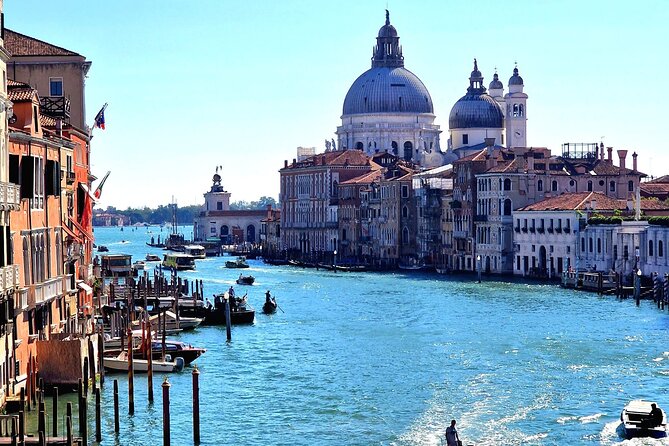
- 100% private, 2-hour pace: your group sets the rhythm, so you can linger or keep moving without slowing everyone down.
- Hotel pickup from central Venice: less scrambling at the start, especially when you’re juggling maps and vaporetto stops.
- A practical route that links the dots: Rialto → La Fenice → Campo San Zulian → St Mark’s area → Doge’s area → Bridge of Sighs.
- Skip-the-guesswork explanations: you’ll get the why behind the buildings, not just the where.
- Free stops that help you budget: Rialto Bridge and Campo San Zulian list admission as free.
- Guides who tailor the day: standout guides like Rossella, Michele, Emanuele, and Lucrenzia were praised for being local and helpful with on-the-ground suggestions.
A private Venice walk that actually helps you see
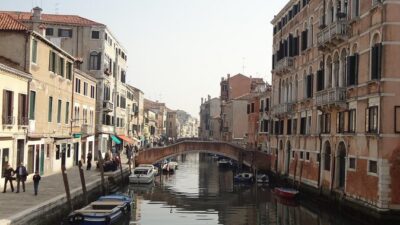
Venice is one of those cities where staring at a map gets you nowhere. The streets twist, landmarks repeat in different angles, and the most important details are often the small ones: an archway, a facade, the way a campo is used at street level.
That’s where a private format pays off. Instead of a big group marching behind a speaker system, you get a licensed local guide for your own time window of about 2 hours. This matters because Venice rewards curiosity. If you want to ask why a place is shaped a certain way, or what a building signaled about power and daily life, you can stop and talk without feeling rushed.
And because you can choose the start time, you can line the walk up with your energy and your sightseeing priorities. Want a calmer beginning? Go earlier. Want it as your orientation walk before you commit to longer lines? Pick a time that gives you breathing room afterward.
You can also read our reviews of more walking tours in Venice


Rialto Bridge first: orientation on the Grand Canal
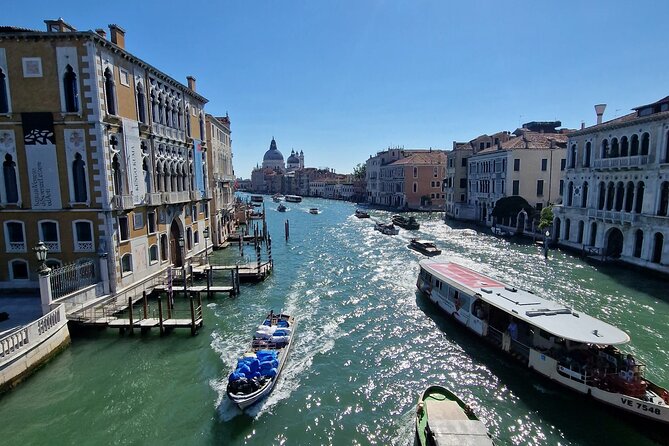
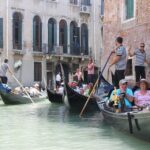
Starting at Ponte di Rialto is smart, because it’s both a landmark and a compass. The tour begins right at one of the oldest bridges spanning the Grand Canal, and that puts you on the main stage where Venice’s water-based life shows up instantly.
Even if you’ve seen photos, being there in person changes your sense of scale. You can look across the canal, spot the angles people naturally gather for, and then let your guide connect the bridge to the surrounding commercial streets and everyday movement. Since the stop lists admission as free, you’re not dealing with ticket decisions right at the start—just walking, looking, and getting your bearings fast.
If you’re thinking budget and time management, this helps. Free, high-impact opening stops lower friction on day one, especially if you’re arriving with limited patience for ticketing.
Teatro La Fenice: what to notice around a world-famous opera house
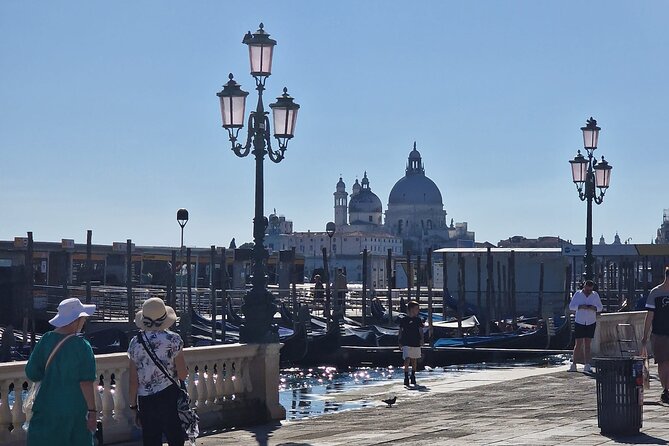
Next comes Teatro La Fenice, one of Venice’s best-known opera landmarks. The tour doesn’t frame it as a museum piece; it gives you context for why this theater mattered—especially in the 19th century, when it hosted famous premieres tied to major bel canto composers like Rossini, Bellini, Donizetti, and Verdi.
What’s useful here is the approach: your guide helps you look at the building and its place in Venetian culture as part of everyday life, not just a famous exterior you pass by. Even if opera isn’t your thing, you’ll come away with a clearer picture of how arts and status moved together in Venice.
Admission at this stop is listed as not included, and that’s a cue. You can treat this stop as a guided look-and-understand moment from the outside and nearby views, and if there are options to go further inside, you’d handle that separately.
Campo San Zulian: where medieval Venice still shows up
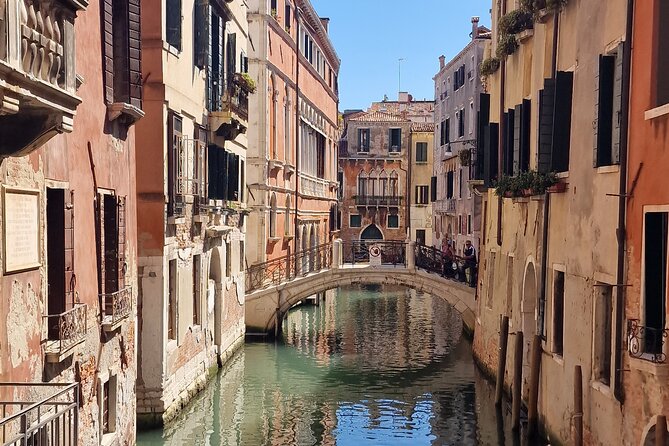
After Rialto and the theater, the route shifts to Campo San Zulian, a square that’s been a gathering point since medieval times. Campo life is one of Venice’s best clues for how the city works. You’ll see how the square functions as a social anchor—once connected to markets, festivals, and daily rhythms.
The name is part of the story too. It honors Saint Julian the Hospitaller, and your guide connects the square to the idea of important routes linking major areas of the city, especially between Rialto and St Mark’s Square.
This stop is listed with admission as free, which makes it a nice relief break inside a walking itinerary. It’s also where you can slow down and absorb. Venice’s best textures are often the quiet ones: the facades around you, the way people use steps and edges, and the sense that you’re not just touring—you’re walking through neighborhoods that still function.
St Mark’s Basilica: how to handle a ticketed stop with confidence
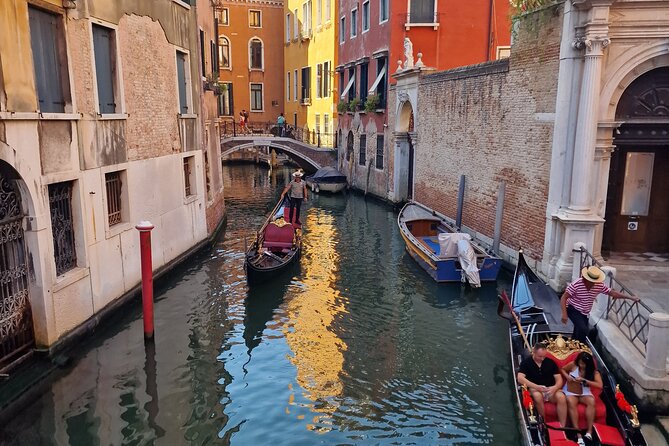
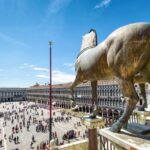
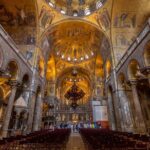
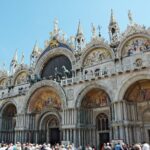
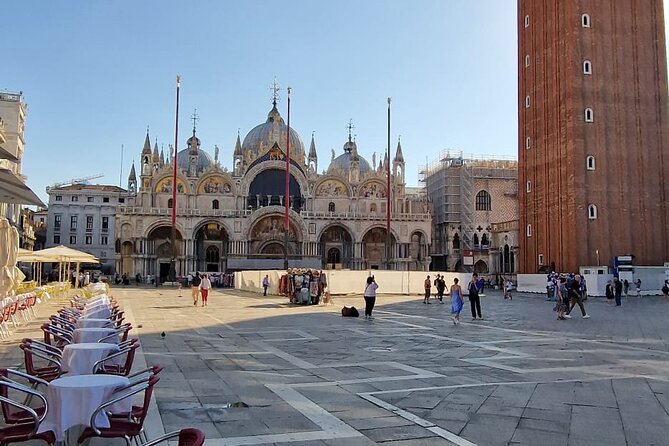
From Campo San Zulian, the tour moves into the St Mark’s Square area and toward St Mark’s Basilica, the city’s cathedral and the place tied to the relics of Saint Mark the Evangelist.
Your guide’s job here is practical: help you understand what the site represents and what to look for while you’re standing there. The basilica has a lot of layers—religious role, civic power, and Venice’s long relationship with identity—so having a guide to translate the big messages saves you from a lot of guesswork.
Admission at this stop is not included. That means you’ll likely be deciding on the spot how much you want to spend beyond the tour itself. If you’re aiming to get inside, plan for the extra time that comes with entry. If you’re more about exterior views and orientation, you can still benefit fully from the guided context during your allotted stop.
This is a good point in the day to ask your guide questions. For example: where to stand for the best views, what’s worth focusing on first, and which details people usually overlook.
You can also read our reviews of more private tours in Venice



Palazzo Ducale and the Doge’s Palace area: Venetian power in stone
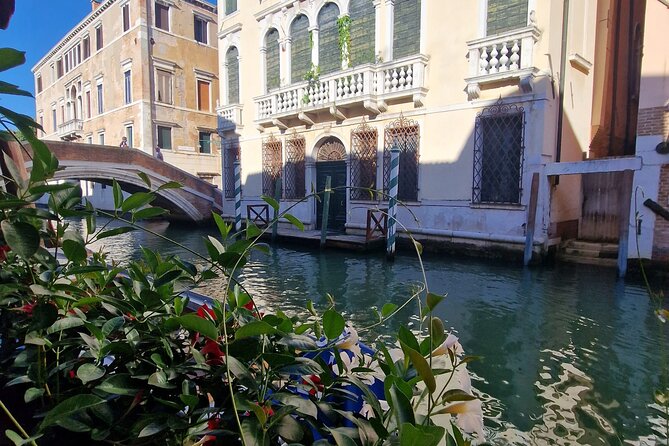
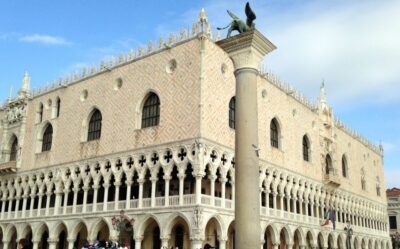
Then you head to Palazzo Ducale, the Doge’s Palace, built in Venetian Gothic style and tied to the former Republic’s supreme authority. Your guide can frame why this matters: it wasn’t only a home for the Doge; it was part of a political system that shaped how Venice governed itself.
The key date given is that construction began around 1340, with later extensions and modifications. Even without going fully into museum mode, this kind of timeline helps you read the building as something that evolved with power, not just a single-era monument.
Admission at this stop is listed as not included, so again, you’ll want to decide whether you want the full interior. Either way, the tour’s value is in the explanation: you’ll learn what the spaces represented and why certain architectural choices fit the story of a maritime republic.
If your schedule is tight, the guided orientation still works. You can keep your day moving and save the full museum visit for another time.
Bridge of Sighs: the story between prison and interrogation
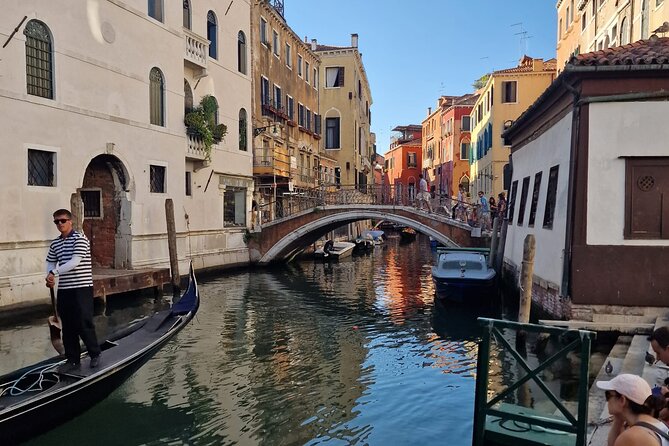
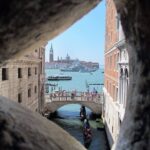
The tour ends at the Ponte dei Sospiri, the Bridge of Sighs. This isn’t just a postcard bridge. It connects the New Prison to interrogation rooms in the Doge’s Palace, and the tour explains the bridge’s enclosed design made of white limestone with windows and stone bars.
The detail about how it was designed also helps: it was created by Antonio Contino, whose uncle, Antonio da Ponte, designed the Rialto Bridge. That family connection gives you a neat way to link the start and end points of your walk.
Notably, admission at this stop is listed as not included, but this location often works well as a photo-and-story finish even if you don’t add extra ticket time. The bridge is compact, so a guide can usually point out what makes it distinctive quickly, and then you can take a few minutes to reflect on the darker side of Venetian government.
Pace, start times, and how to keep the day from feeling like a sprint
This experience runs for about 2 hours and is described as a light to moderate walking pace. That’s ideal for visitors who want a structured path but still want to stop for photos, a quick look at facades, or a question that comes up mid-sentence.
You’ll also have schedule control. Pick a start time that fits your energy and your other plans. Venice can wear you out. If you’re doing big ticket sights after, consider whether this walk is your warm-up or your main event.
One more practical note: the tour is near public transportation, and the provider offers pickup from your central Venice hotel if you request it. That’s a major quality-of-life benefit in Venice, where getting to the right corner can take longer than you expect.
The tour ends at Arsenale di Venezia (Campo de la Tana), so it’s worth checking your next stop on the map ahead of time. Venice days go smoother when you’re not trying to reposition across multiple canals with no plan.
Price and value: what $162.40 buys you
At $162.40 per person for a 2-hour 100% private walking tour, you’re paying for three things: time with a licensed guide, the private pacing, and a route that hits major landmarks plus street-level context.
This doesn’t compare to a no-frills group tour price, because it’s not that kind of product. Instead, think of it as paying for a smart way to reduce decision fatigue. You’re not trying to figure out the sequence of sights by yourself. You’re not wondering what matters at each stop. And you can ask questions without feeling like you’re holding up a crowd.
You’ll also see value in the way the tour mixes free and ticketed stops. Rialto Bridge and Campo San Zulian are listed as free admissions, while major attractions like St Mark’s Basilica and Palazzo Ducale are listed as not included. That balance helps you budget and choose how much you want to spend inside.
Finally, the fact that it’s often booked about 30 days in advance suggests demand is solid. If Venice is your one big city stop and you want a specific time, booking earlier is a safe move.
Who this tour suits best
This is a strong fit if you:
- want a private guide and hate feeling rushed
- like walking but don’t want a full-day endurance plan
- want a guided way to understand the connection between Rialto, St Mark’s area, and the Doge’s Palace zone
- prefer asking questions directly, rather than passively following a script
It also works well for small groups (including families and mixed ages) as long as everyone is comfortable with normal walking in Venice.
If you only want indoor museum time with no stops outside, you might find the timing more mixed, since some key places have admission not included and the stops are around 20 minutes each.
Should you book the Venice Private Walking Tour?
I’d book it if you want Venice orientation plus cultural context in a short, guided format—especially if it’s your first time in the city or you want to connect the big sights with the lived-in spaces between them. The route makes sense, the guide format is flexible, and you start at Rialto with a clean, free anchor point.
I’d think twice if you’re mainly interested in long, uninterrupted interior visits at St Mark’s Basilica and Palazzo Ducale and you don’t want to manage additional entry decisions. In that case, you may prefer a dedicated attraction plan.
FAQ
How long is the Venice Private Walking Tour?
It’s listed as about 2 hours.
Is this tour private or shared with other groups?
It’s 100% private, meaning only your group participates.
What language is the tour offered in?
The tour is offered in English.
Is pickup available from my hotel?
Yes. Pickup is offered from your central Venice hotel (you request it).
Where does the tour start and end?
It starts at Rialto Bridge (Ponte de Rialto) and ends at Arsenale di Venezia (Campo de la Tana).
Are entrance tickets included for St Mark’s Basilica and Palazzo Ducale?
No. Those stops are listed as admission ticket not included.
Are there any stops with free admission?
Yes. Rialto Bridge and Campo San Zulian are listed as admission ticket free.
Is free cancellation available?
Yes. You can cancel up to 24 hours in advance for a full refund.