REVIEW · VENICE
Verona Guided Tour from Venice by Train
Book on Viator →Operated by Amigo Tours Spain · Bookable on Viator
Your Verona worries end with one train ride. This day trip strings together included train tickets and a guided walking loop so you can focus on the sights instead of route planning.
I really like the way the tour gives you a fast, high-signal overview: you hit big landmarks like Piazza Bra and the ancient Porta Borsari without needing to constantly check a map. And with a small group (up to 30), your guide can actually keep track of everyone as you move.
One consideration: the start is early (6:45 am), and you’ll have free time—but if you’re hoping for a long, slow wander or extra monument stops, you may feel a bit pressed for time.
In This Review
- Key highlights at a glance
- Verona, handled: what makes this train-and-guided plan work
- Price and logistics: what you’re paying for at $79.79
- Getting there: Santa Lucia at 6:45 and the Porta Nuova start
- Romeo and Juliet Verona: more than the postcard
- Piazza Bra and the Arena di Verona: seeing opera’s Roman stage
- Porta Borsari: the Roman gate with a name that tells a story
- Piazza delle Erbe: where Roman forum energy meets medieval street life
- Ponte Pietra and the view toward Castle of San Pietro
- How the free time works (and how to use it well)
- Group size and guide style: what you can expect
- Timing reality check: why the early start matters
- Value check: trains included, entrances not guaranteed
- Who this Verona day trip suits best
- Should you book it?
- FAQ
- FAQ
- What time does the tour start in Venice?
- How long is the Verona guided day trip?
- Are train tickets included?
- Where does the guided tour begin once you arrive in Verona?
- What’s included in the guided portion?
- Which languages are the guides?
- Is there admission included for monuments?
- Is this tour limited in group size?
- Do I need to pay a Venice access fee?
- Is free cancellation available?
Key highlights at a glance
- Train tickets included (Venice to Verona and back), so the day stays simple
- A guided walk plus free time, which is ideal if you want both direction and breathing room
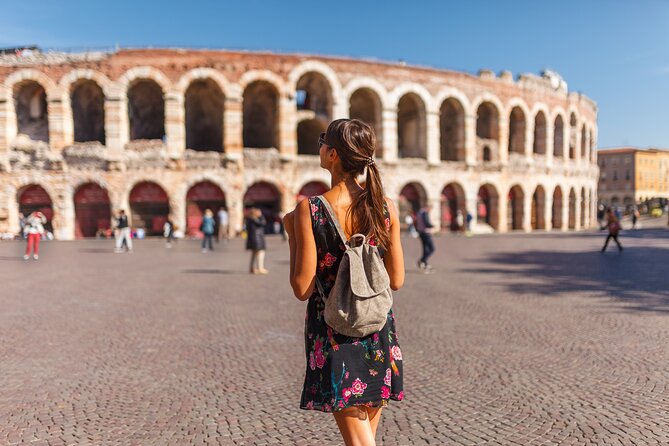
- Arena di Verona viewing time with context about its role in operas and concerts
- Porta Borsari and Piazza delle Erbe stops for Roman-to-medieval layers you can actually see
- Ponte Pietra for a rare Roman-bridge perspective, plus views toward San Pietro
Verona, handled: what makes this train-and-guided plan work
Verona is one of those cities where it’s easy to waste time. You arrive, you think you’ll follow your instinct, and suddenly you’re crossing the river twice just to find one landmark. This format removes that stress. You take the train with tickets sorted, then a guide handles the walk so you can get your bearings fast and move on while everything is still open.
The best part is the balance of structure and freedom. The tour gives you a clear route through major sights tied to Verona’s Roman roots, medieval street life, and the Romeo and Juliet connection. Then you get free time to do your own thing—grab lunch, linger for photos, or double back if something catches your eye.
Also, the tour runs with a professional guide available in English and Spanish, which matters in a place like Verona where details can be lost if you can’t read signage.
You can also read our reviews of more guided tours in Venice

Price and logistics: what you’re paying for at $79.79
At $79.79 per person, you’re mostly paying for three things: transportation to and from Verona, a guided overview, and the value of not having to design your own day from scratch.
Here’s what that means in practice. Since the train tickets are provided, you don’t have to:
- hunt down the right departure times,
- figure out which station to use,
- or worry about missing a train while trying to beat the crowd at the platform.
What isn’t included is equally important. The tour doesn’t include entrances to other monuments beyond what’s specifically part of the experience stops. So if you’re planning to add museum visits or timed entry experiences, budget extra. With Verona, you’ll likely want at least a little flexibility so you don’t feel like you must do everything in one rush.
One more logistics note: this operates with mobile tickets and a group limit of 30 travelers. That usually helps the process feel organized rather than chaotic.
Getting there: Santa Lucia at 6:45 and the Porta Nuova start
The meeting point is Stazione di Santa Lucia in Venice, and the start time is 6:45 am. Expect an early wake-up. The upside is that you’ll reach Verona while the day still feels manageable, and you’ll get to see major sights without them being fully overrun.
Once you arrive, the tour begins at Stazione Ferroviaria Verona Porta Nuova, which dates to 1914–1915 and was renovated in later years. After that, you walk up toward the city center to start the guided portion, which is about one hour.
This “walk from the station to the center” detail is more useful than it sounds. You’re not dropped in Verona and left to guess where to go next. You get the orientation step built in, and it helps your eyes learn the city’s layout quickly.
Romeo and Juliet Verona: more than the postcard
Yes, Verona is tied to Shakespeare’s Romeo and Juliet. But a guided day trip is most valuable when it translates that famous theme into real places you can stand in.
On this route, the guide weaves the story around the city’s physical landmarks—Roman structures, medieval squares, and bridges that connect neighborhoods. That matters because Verona doesn’t feel like a theme park. It feels layered. A gate isn’t just a gate. A square isn’t just where people meet. A bridge isn’t just for crossing. Each one points to a different era of the city’s growth.
If you’re a fan of the play, you’ll likely enjoy the way the tour connects the dramatic reputation of Verona to the quieter, older fabric you can actually see. And if you’re not a big Shakespeare person, you’ll still get plenty out of it because the stops are grounded in Roman and medieval context.
Piazza Bra and the Arena di Verona: seeing opera’s Roman stage
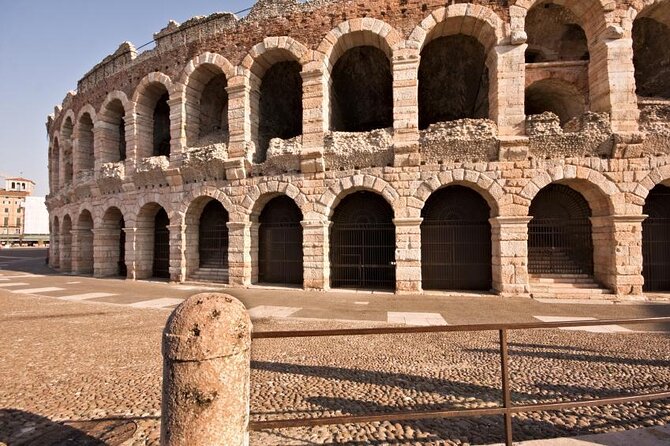
One of the big targets is Piazza Bra, Verona’s central square. It’s one of the largest squares in Italy and has mixed architectural influence that reflects how Verona’s civic life shifted over time. Today it’s also where the practical day-to-day vibe lives—bars and restaurants, plus a lot of places to pause.
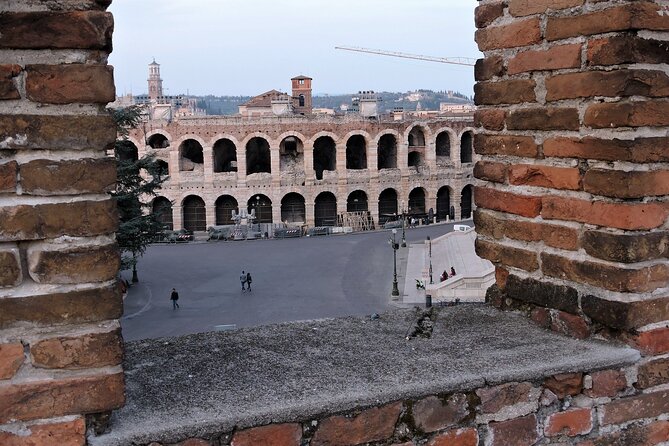
From there, the tour focuses on the ancient Roman Amphitheater (the Arena di Verona). This amphitheater is where operas and concerts are performed, and it seats about 22,000 spectators.
What I like about this stop is the way it makes the Arena feel less like a photo and more like a function. You’re not just seeing stone—you’re seeing a Roman engineering concept that still shapes modern performance culture. Even if you’re not catching a show, standing there gives you a sense of how built-for-audience design can survive centuries.
Practical tip: if you stop for photos, don’t only aim straight at the Arena. Walk a few steps around the edges of the square so you can read the space from different angles. That helps you understand the relationship between the amphitheater, the flow of people, and the surrounding streets.

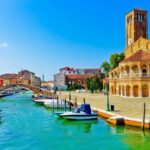
Porta Borsari: the Roman gate with a name that tells a story
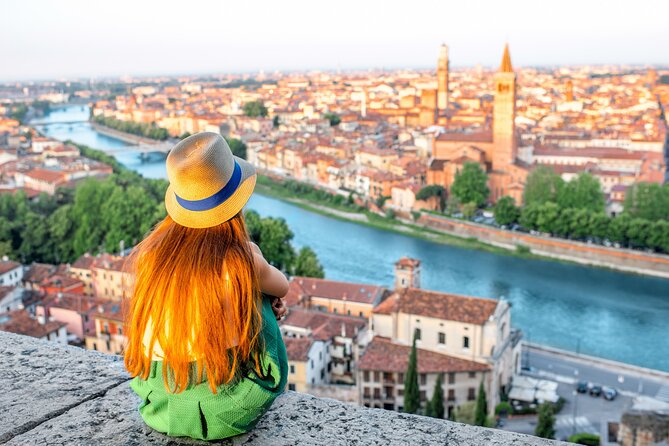
Porta Borsari is the kind of sight that’s easy to miss if you’re moving too fast. It’s an old gate in Verona’s walls, with construction dating back to the 1st century AD.
The name is tied to the soldiers who collected tariffs when entering the city—the term borsari is connected to those gate charges. That little linguistic detail changes how you view the structure. Instead of thinking of it as an ancient doorway that happened to survive, you start seeing it as part of daily administration: who entered, what they paid, and how the city managed movement.
And since the tour places Porta Borsari on the walk route, you get it as part of the bigger story instead of a quick detour. It’s a strong stop if you enjoy Roman remnants that still sit in the modern street.
Piazza delle Erbe: where Roman forum energy meets medieval street life
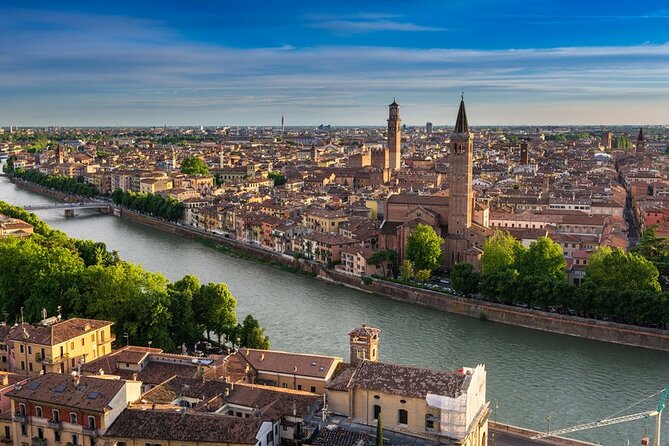
Next up is Piazza delle Erbe, a square with buildings blending Roman, Baroque, and medieval influences. The Roman forum used to be here, so you’re essentially standing where civic life once clustered—trade, decision-making, and all the public-facing business of the city.
The big win on a guided day trip is that you’re not just looking at old stone—you’re learning what kind of space it used to be. Forum squares often feel different from modern plazas because the layout was designed for crowd function, not just strolling.
If you like people-watching (and who doesn’t), this is a good place to linger during the day, especially if you end up grabbing snacks or drinks nearby. It’s also a useful stop for getting your bearings for whatever you want to do next—because you can orient yourself around major open spaces.
Ponte Pietra and the view toward Castle of San Pietro
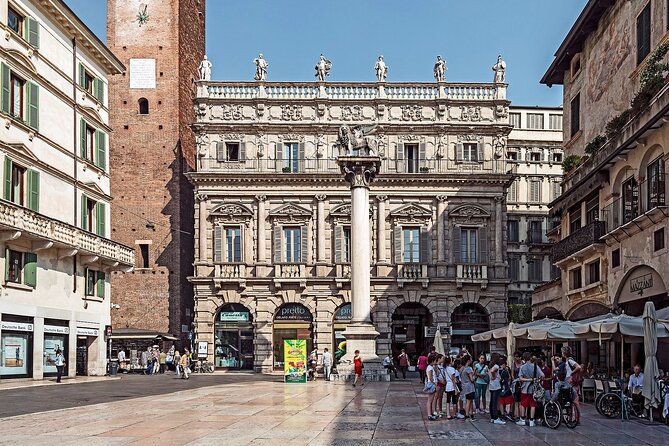
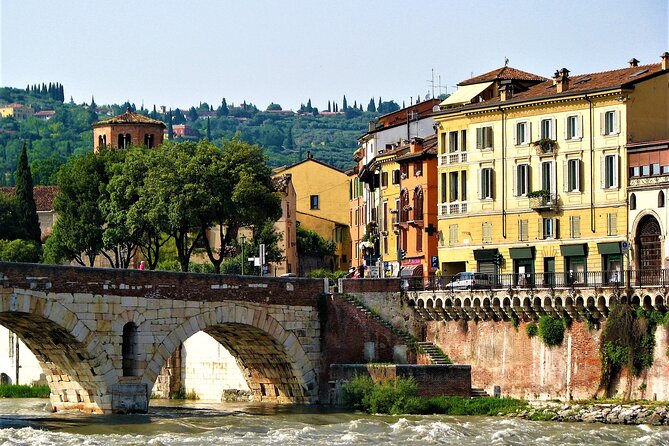
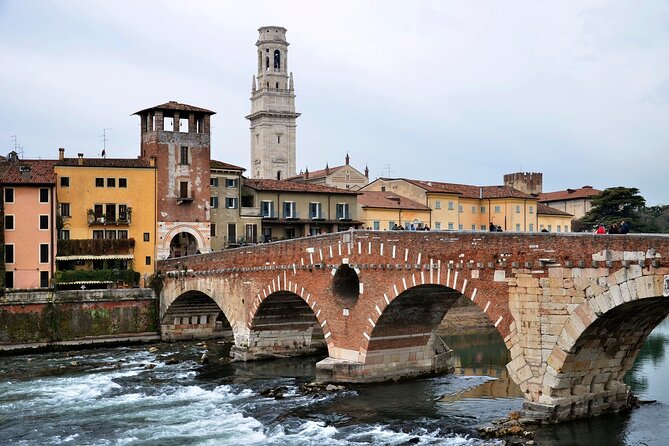
If you want one stop that gives you both a landmark and a view, it’s Ponte Pietra, the only Roman bridge left in the city. It has five arches and connects the city center with the shore area where the Castle of San Pietro sits.
This is where Verona starts to show you its “river as a character” quality. Standing on or near the bridge makes it easier to see how the city’s geography shaped movement and viewpoints.
Even if you don’t go up to the castle itself, the bridge crossing is a satisfying end to a day packed with stone landmarks. You get that sense of connection across parts of the city, which you don’t always get when you’re only doing square-and-street sightseeing.
How the free time works (and how to use it well)
After the guided walking portion, you’re given free time to spend as you prefer. That free window is your chance to turn the highlights into a personal Verona.
Since the tour covers the main sights in a fairly packed way, I recommend you choose one goal for your free time:
- a longer photo stop where you felt drawn in,
- a slow sit-down meal in a central square,
- or a quick additional monument visit if you’re comfortable managing time.
Also, if you’re the type who likes to chase museums or specific ticketed attractions, plan carefully. The day is structured, and some time for extra monument entries isn’t built in by default.
In other words: use free time to deepen what you already saw, not to invent an entirely new plan that will fight the schedule.
Group size and guide style: what you can expect
The tour caps at 30 travelers, which tends to keep things more manageable. With that size, you’re not stuck behind a wall of people whenever you want a closer look at a gate or amphitheater viewpoint.
I’ve also found that guide quality can make a huge difference on walking tours. When a guide adds clear context—where you are, what you’re looking at, and why it matters—the same itinerary feels richer. When the narration is too “move on to the next stop” paced, it can feel like you’re collecting locations instead of understanding the city.
If you care about story and detail, bring a little patience and ask questions when you get a chance. You’ll get more out of the day if you treat the guide like a live source of orientation and not just a walking timer.
Timing reality check: why the early start matters
The biggest constraint is the start time: 6:45 am. That means you’ll be grateful for the included train, because it turns a long day into something that feels organized rather than stressful.
Also, you’re working on an overall schedule of about 7 hours 30 minutes total. And once you’re in Verona, the time on the ground is structured around seeing several key sites plus guided walking and then free time.
So the day is ideal if you want a top-sights overview. It’s less ideal if you’re hoping for a slow, no-rush, independent day. Verona rewards wandering, but this tour is built to compress the best highlights into one plan.
Value check: trains included, entrances not guaranteed
Let’s talk value in a practical way. This price point feels fair if you’d otherwise spend money and energy on:
- train tickets (Venice ↔ Verona),
- a guide-led route covering the core sights,
- and the convenience of not managing transit timing yourself.
On the other hand, don’t assume that every monument you see will be covered. Entrances to other monuments are not included, so you should expect extra costs if you want more than exterior views and basic access.
If you like the idea of “see the big stuff, then choose one or two extras,” this works well. If you want a ticket-heavy day packed with paid attractions, you might find the day trip’s inclusions don’t cover everything you expect.
Who this Verona day trip suits best
This is a strong match if you:
- want an efficient way to see Verona while staying based in Venice,
- prefer a guided overview with the option to roam,
- and like Roman and medieval architecture as much as the Romeo and Juliet connection.
It’s also a good option if you’re traveling without a car. The train route is the backbone here, and that removes a lot of potential friction.
If you’re the kind of traveler who wants deep museum immersion or long time in a single neighborhood, you may feel the schedule squeeze. In that case, you might prefer a longer Verona stay so you can return for slow exploration without “clock pressure.”
Should you book it?
I’d book this tour if your goal is a high-value, well-structured Verona overview from Venice—especially because the train tickets are handled and the walking route hits major sights like Piazza Bra, the Arena area, Porta Borsari, Piazza delle Erbe, and Ponte Pietra.
I wouldn’t book it if early mornings wreck your plans or if you need lots of flexible time for extra monument entrances. This is a “see the highlights, then add your own small choices” kind of day.
FAQ
FAQ
What time does the tour start in Venice?
The tour starts at 6:45 am from Stazione di Santa Lucia in Venice.
How long is the Verona guided day trip?
It runs about 7 hours 30 minutes.
Are train tickets included?
Yes. Train tickets to Verona from Venice and back are included.
Where does the guided tour begin once you arrive in Verona?
The walking tour begins at Stazione Ferroviaria Verona Porta Nuova.
What’s included in the guided portion?
You’ll have a professional guided walking tour in Verona for about one hour, followed by free time to spend as you prefer.
Which languages are the guides?
The professional guided tour is offered in English and Spanish.
Is there admission included for monuments?
The tour includes access details noted for the stops, but entrances to other monuments are not included.
Is this tour limited in group size?
Yes, it has a maximum of 30 travelers.
Do I need to pay a Venice access fee?
On certain dates, travelers staying outside Venice planning a day visit may need to pay a €5 access fee. You’ll need to check the applicable days and possible exemptions on cda.ve.it.
Is free cancellation available?
Yes, you can cancel up to 24 hours in advance for a full refund. If you cancel later than that, the amount paid won’t be refunded.