REVIEW · VENICE
Basilica San Marco, Pala D’oro, Loggia Cavalli Priority Entrance
Book on Viator →Operated by Golden Ticket · Bookable on Viator
Venice can feel like a line contest at St Mark’s.
This experience makes the big sights feel calmer, with fast-track entry built for the hardest-to-get places.
I especially love how it hits the true highlights in a short window: St. Mark’s Basilica first, then the Pala d’Oro (the famous golden altarpiece), and finally the museum area that lets you see the Horses from up close. One practical consideration: the route is limited (no bell tower), and there’s no in-person guide, so you’ll want a little curiosity on your side to enjoy everything fully.
In This Review
- Key things I’d prioritize before you go
- Priority access at St Mark’s: why this is the smart way to do it
- The entrance experience: Porta San Pietro and the Dome of Genesis
- St. Mark’s Basilica highlights: Narthex, Tethrarcs, Marangona, Lion of San Marco
- Pala d’Oro: the golden altarpiece worth planning around
- St. Mark’s Museum and Loggia Dei Cavalli: mosaics, tapestries, rugs, and the horses area
- Finishing view from the Horses Loggia: getting your Venice moment
- Dress code and the “don’t lose time” mindset
- Price and value: what you’re really paying for
- Who this experience fits best
- Quick practical tips so your visit feels smooth
- Should you book? My honest take
- FAQ
- What is the duration of this experience?
- What parts of St. Mark’s are included?
- Are tickets included for the Bell Tower?
- Is there an in-person guide during the visit?
- Do I need to meet someone to get tickets?
- Where does the tour start and end?
- What is the dress code?
- Is the group size limited?
- What happens if the weather is poor?
- Can I re-enter later with the same ticket?
Key things I’d prioritize before you go
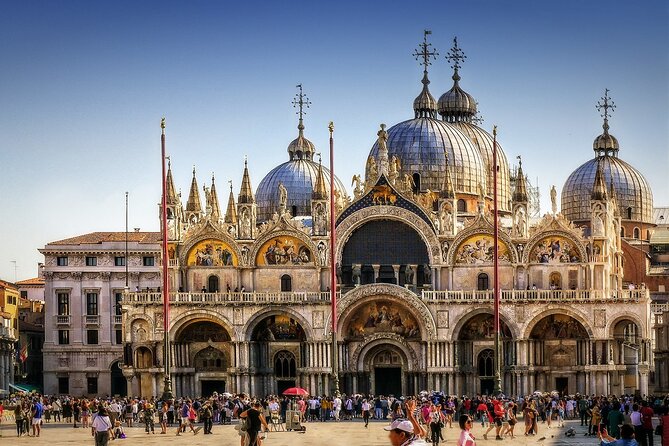
- Skip-the-line entry at Porta San Pietro gets you into the basilica quickly
- Pala d’Oro access lets you focus on the golden Gothic masterpiece without line stress
- Loggia Dei Cavalli museum time is designed around seeing the mosaics and the Quadriga/Horses area
- 24/7 virtual assistant + e-tickets means you’re not hunting for a meeting point
- Small group size (max 6) keeps things moving and manageable
- Dress code matters: shoulders and knees covered for this holy place
Priority access at St Mark’s: why this is the smart way to do it
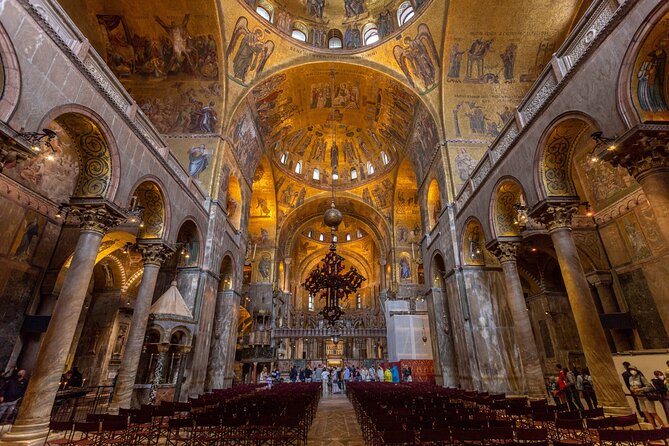
St Mark’s Basilica is one of those places where timing can make or break your mood. Outside, the crowds can look endless. Inside, the best parts are tightly packed—mosaics, altarpieces, and the parts you came for (like the Pala d’Oro) don’t have a lot of wiggle room once you’re in the flow.
That’s why I like this setup. You get fast-track entry for three key parts of the complex: the basilica itself, the Pala d’Oro, and the museum space at the Loggia Dei Cavalli. The practical win is simple: more time looking, less time waiting.
Also, this isn’t a big, chaotic group tour. It’s capped at 6 people, which helps you keep your bearings and actually spend time on details instead of getting swept along.
You can also read our reviews of more tours and experiences in Venice.


The entrance experience: Porta San Pietro and the Dome of Genesis
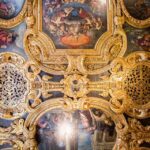
The visit begins at St. Mark’s Basilica using the Skip the Line entrance through Porta San Pietro. That’s a big deal here. Instead of losing your best energy to queue choreography, you’re moving into the church’s quieter “arrive and absorb” phase.
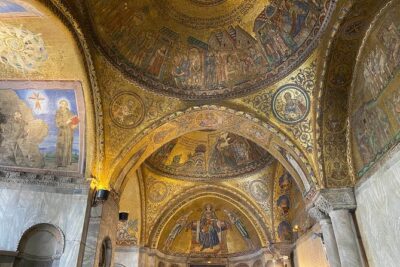
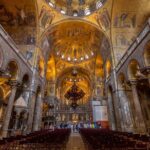
From there, you pass under the Dome of Genesis and enter the lower part of the basilica. This matters because the basilica isn’t one single “wow” moment—it’s a layered space. Going in with a plan helps. Early on, you’ll catch the visual shock of Byzantine-style design: depth, gold, and the feeling that the church is built from light.
What to expect:
You’re not just walking into a room. You’re stepping into a carefully arranged visitor flow that brings you toward the mosaics and altar area without stalling.
A small note for your timing mindset:
Your first segment is about 30 minutes. That’s enough to see the key visual zones without feeling rushed, but not enough to read every inscription if you’re the type who needs to study every corner.
St. Mark’s Basilica highlights: Narthex, Tethrarcs, Marangona, Lion of San Marco
Once you’re inside, the experience is built around named, high-impact areas rather than random wandering. Among the included highlights you’ll encounter are the Narthex, the Tethrarcs, the Marangona, and the Lion of San Marco.
Here’s why I think that list is useful for you:
- The Narthex is often where the basilica first starts to feel like a living museum—an entry space with strong visual identity. Even if you only have a short visit, this is a place where your eyes can orient fast.
- The Tethrarcs (those famous sculptural figures) are a “stand still” moment. They give you something solid and human to anchor your attention while the rest of the church pushes toward gold and mosaic.
- Marangona and the Lion of San Marco are the kind of details that make the basilica feel specific to Venice, not just impressive in general. When you’re skipping lines and moving quickly, having these signposts helps you avoid that feeling of seeing a lot but remembering little.
Pala d’Oro: the golden altarpiece worth planning around
Then you move to the heart of the route: the Pala d’Oro, also described as the world’s only intact example of large Gothic goldsmithing.
Even without technical knowledge, you can tell immediately why people spend time here. The mosaics and Byzantine look are impressive, but the Pala d’Oro is different: it’s dense, bright, and crafted in a way that makes your eyes keep returning to the details. It’s the kind of object where you start with a quick glance and end up slowing down without realizing it.
The visit gives you about 30 minutes at this stop. That length is right for a few close looks without turning it into a never-ending “stare contest.” If you want a method, try this:
1) First, look for the overall pattern.
2) Then shift to small sections at a time.
3) Finish by checking how the gold catches the light as you move.
One of the strongest value signals here is that the Pala d’Oro alone can justify choosing a pass like this. If your time in Venice is limited, this is the portion where priority access feels most directly tied to your enjoyment.
St. Mark’s Museum and Loggia Dei Cavalli: mosaics, tapestries, rugs, and the horses area
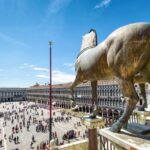
After the basilica, you head toward the museum portion. You’ll walk up the Foresti staircase to enter the Museo di San Marco, then follow the route to the museum displays and end near the Horses Loggia, where you get an enchanting view back toward St. Mark’s Square.
This part is about “seeing the same genius from another angle.” Instead of just admiring the church as a space, you get a closer look at the materials and artifacts that make the basilica’s art story feel real.
Included museum items you can expect include:
- Mosaics you can view more closely than the church allows
- Flemish and Medici tapestries
- Altar frontals
- Persian rugs
- The Quadriga (the four-horse carriage used for chariot racing)
Why this matters: museum time turns your earlier impressions into understanding. You’ll start to notice patterns across art types—how images are composed, how materials are chosen, and how the church’s collection connects to wider European and Middle Eastern influences.
The good news: your museum stop is also about 30 minutes. That’s a sweet spot for a concentrated art hit.
The possible downside: if you’re expecting a full, narration-heavy experience, this doesn’t include an in-person guide. You’ll still be able to enjoy the objects, but you’re steering your own pace and interpretation.

Finishing view from the Horses Loggia: getting your Venice moment
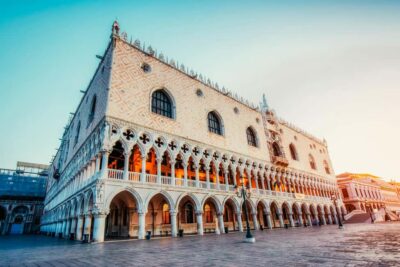
Your experience ends as you exit at the Horses Loggia with the view over St. Mark’s Square.
This is a smart ending for two reasons:
- It gives you a visual reward that feels like Venice, not just art objects.
- It helps you reset after indoor light. When you’re done, you can step back into the square with better energy.
Also, this is a one-time-use ticket situation. A second entry isn’t guaranteed. So if you plan to pop back in later for “just one more look,” don’t count on it.
Dress code and the “don’t lose time” mindset
Because this is a holy place, you need shoulders and knees covered to enter. I treat that as non-negotiable. It’s the kind of rule that can ruin your day if you show up with the wrong clothes and spend time figuring out what to borrow or where to buy something quickly.
Plan your outfit with that in mind before you ever get near the basilica. Once you’re inside, time is your friend, and the priority access works best when you don’t add costume drama to the schedule.
Price and value: what you’re really paying for
This costs $52.36 per person, and it’s booked on average 24 days in advance. You’re paying for three things that matter in Venice:
1) Time saved through fast-track entry
2) Focused access to the Pala d’Oro and museum section tied to the Horses Loggia
3) Support structure with a 24/7 virtual assistant and e-tickets
Without priority access, your experience can get throttled by queue time. Here, you’re paying to protect your visit window so you can actually spend your minutes where your eyes will land: the Pala d’Oro and the close-up museum artifacts.
If you’re the type who wants the basilica highlights but also hates waiting, this is a strong match. If you’re hoping for a full guided talk with an expert speaking the whole time, note that an in-person guide isn’t included—you’ll still get the key access, but you won’t get a live storytelling layer.
Who this experience fits best
I’d point you toward this if:
- you have limited time in Venice and want the “must-see” portion done efficiently
- you care about the Pala d’Oro and close-up sculpture/museum objects
- you prefer a structured route and small group size
- you want a plan with e-tickets and not a meeting-point scavenger hunt
I’d look elsewhere (or pair it with another activity) if:
- you specifically want the St. Mark’s Bell Tower (not included)
- you want a guided explanation from a person in the room throughout
- you need lots of free roaming time with no set sequence
Quick practical tips so your visit feels smooth
- Wear clothing that meets the shoulders/knees rule, even if it’s warm.
- Treat it like a highlights sprint, not a slow art pilgrimage—your stops are each around 30 minutes.
- When you reach the Pala d’Oro, don’t just skim. Give it real attention because that’s where the value spikes.
- At the end, enjoy the Horses Loggia view, then move on. This ticket is one-time use, and the experience is designed to flow forward.
Should you book? My honest take
Yes, I’d book this if your goal is to see the essentials at St Mark’s without losing your day to lines. The big win is that it’s not just admission—it’s priority access to the moments that tend to get stalled in crowds, especially the Pala d’Oro. Add the small group size and the 24/7 virtual assistant support, and it feels like a practical Venice upgrade.
If you’re okay exploring on your own inside the basilica and museum, this makes a lot of sense. If you want a full guide-led experience or you’re set on the bell tower, you may want to combine different options.
FAQ
What is the duration of this experience?
It’s approximately 1 to 2 hours.
What parts of St. Mark’s are included?
You get included admission/fast-track entry to St. Mark’s Basilica, the Pala d’Oro, and the St. Mark’s Museum (Loggia Dei Cavalli).
Are tickets included for the Bell Tower?
No. Tickets for the St. Mark’s Bell Tower are not included.
Is there an in-person guide during the visit?
No in-person guide is included.
Do I need to meet someone to get tickets?
No. You receive e-tickets online, and you also get access to a 24/7 virtual assistant.
Where does the tour start and end?
It starts in San Marco, 30100 Venice and ends at St. Mark’s Museum, P.za San Marco 328, 30124 Venezia.
What is the dress code?
You must have shoulders and knees covered to enter.
Is the group size limited?
Yes. The experience has a maximum of 6 travelers.
What happens if the weather is poor?
This experience requires good weather. If it’s canceled due to poor weather, you’ll be offered a different date or a full refund.
Can I re-enter later with the same ticket?
Tickets are one time use only, and a second entrance is not guaranteed.