REVIEW · VENICE
Murano: Glass Museum Entry Ticket
Book on GetYourGuide →Operated by Venezia Unica by Vela Spa · Bookable on GetYourGuide
Murano glass feels like time travel. This Murano Glass Museum ticket takes you into one of the world’s largest historical collections of Murano glass, with pieces spanning centuries. It’s a great way to understand why Venetian glass stayed famous.
I love the chronological layout—it helps you retrace how Murano glass art evolved over time. I also like that the museum spotlights 17th-century glasswork and well-known masterpieces, so you see both the craft and the big-name results.
One consideration: this is entry only with no live guide, so if you want constant explanations, you’ll be relying on labels and your own pace. That works fine if you like wandering, but it’s not built for people who need a narrator to keep things moving.
In This Review
- Key takeaways before you go
- Murano Glass Museum in plain terms: what you’re buying
- Getting to Murano without stress (and using the 1-day transport ticket)
- Inside the museum: a chronological story of Murano glass
- The big wow factor: 17th-century glasswork and famous masterpieces
- Learning the craft: how glass-blowing secrets come through
- Timing your visit: make it work as a 1-day plan
- Price and value: is $11 worth your time?
- Who should book this ticket (and who should think twice)
- Access Fee note for Venice dates in 2025
- Should you book the Murano Glass Museum entry ticket?
- FAQ
- What does the Murano Glass Museum entry ticket include?
- How long is the experience valid?
- Is there a live guide included?
- Is the visit self-paced?
- How much does it cost?
- Is the museum wheelchair accessible?
- What should I check before going?
- Are the tickets refundable?
- Is there an Access Fee in Venice on certain dates?
Key takeaways before you go
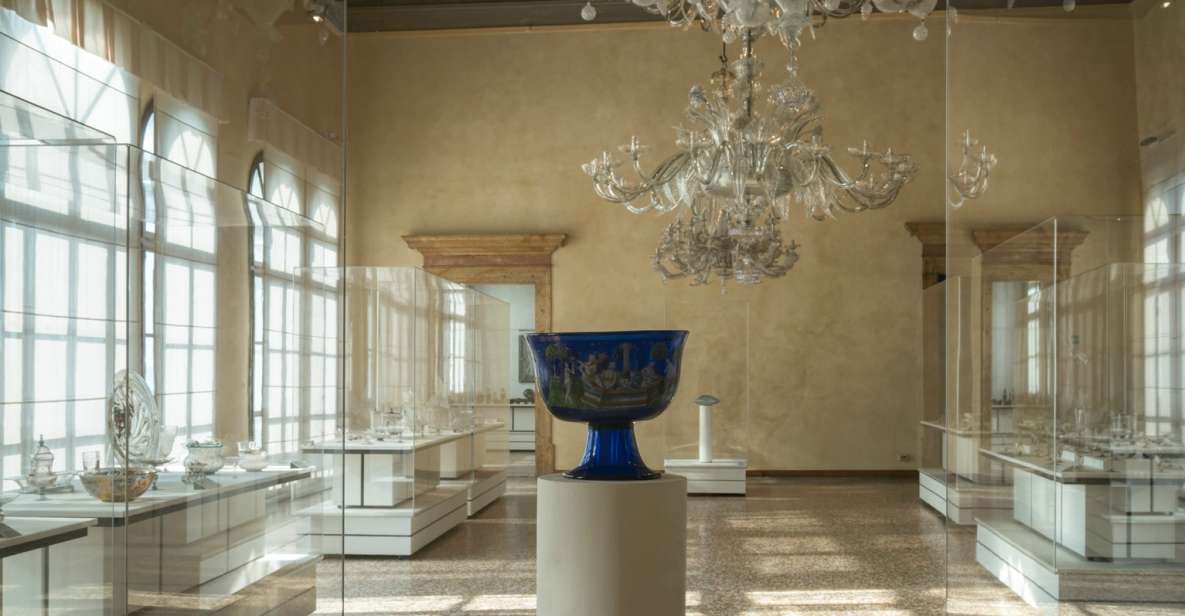
- World-famous scope: you’re seeing one of the largest historical collections of Murano glass in the world
- Chronological order: the story unfolds over time, so you can track techniques and styles
- 17th-century focus: you’ll spend real time with older glasswork, not just modern looks
- Glass-blowing know-how: you’ll come away with a clearer sense of how Venetian glass techniques work
- Self-paced visit: you can slow down or speed up, depending on what you care about
Murano Glass Museum in plain terms: what you’re buying
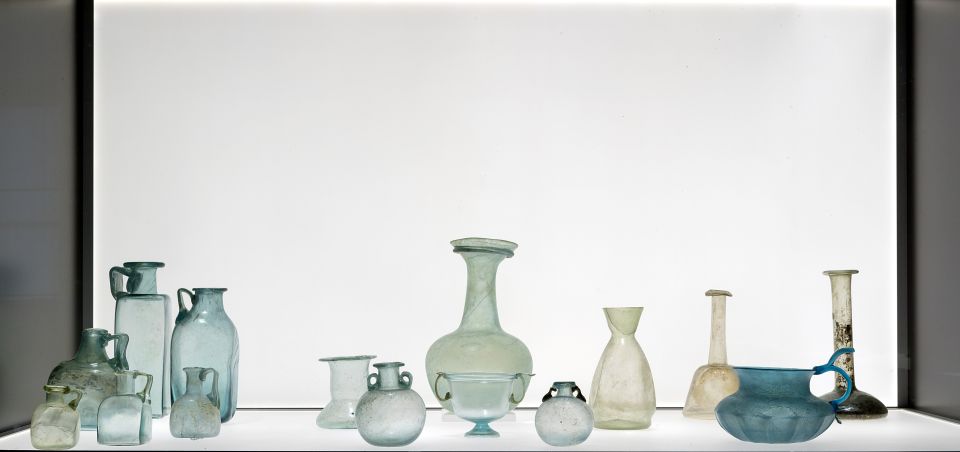
This experience is simply a ticket to the Glass Museum on Murano island. You go in on your selected day and you explore at your own pace. There’s no live guide included, so your “tour” is the museum itself—its displays, labels, and how the collection is arranged.
What makes it special is the size and focus. The museum is described as the largest historical collection of Murano glass worldwide, and it covers Venetian glass techniques over the centuries. That means you’re not only shopping for pretty objects—you’re learning how the craft developed.
If you’re the type who pauses in front of glass objects and thinks, How did they make that?, this ticket fits you well. If you mainly want quick photo stops with minimal reading, you may feel it moves at your pace rather than guiding you.
You can also read our reviews of more tours and experiences in Venice



Getting to Murano without stress (and using the 1-day transport ticket)
The ticket is tied to your day on Murano, and you can choose an option that includes a 1-day public transport ticket. If you add that option, you remove a small headache: you don’t have to keep re-deciding how to move around for the day.
If you already have a transport plan for Venice and you’re comfortable figuring out the short hop to Murano, you might not need the added transport option. The value comes down to how you like to travel—do you want fewer decisions, or do you prefer managing transport separately?
Either way, plan around the fact that this is a 1-day experience. Don’t book it as a last-minute “maybe” for a packed day. Give yourself enough time to arrive, settle in, and enjoy the museum without racing the clock.
Inside the museum: a chronological story of Murano glass
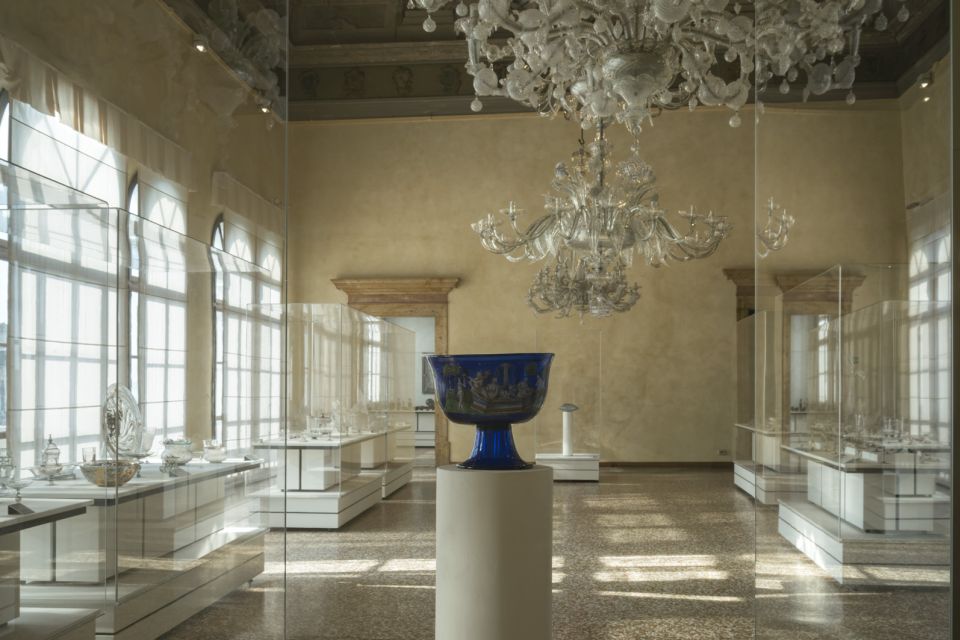
The museum is built around a clear idea: you retrace the history of Murano Glass Art as you move through the collection. That chronological ordering is a big deal. It turns a room full of glass into a timeline you can actually follow.
Here’s what that means in practice. You’re more likely to notice how styles and techniques change—what shifts, what stays consistent, and how older traditions lead to famous later masterpieces. Instead of glass being just “beautiful stuff,” it becomes a craft with steps, eras, and signatures.
The displays are highlighted for including astonishing glasswork and major pieces—so you’re not only seeing everyday work. You’re seeing what helped Murano gain lasting recognition. And because the museum is focused on Venetian glass technique, the learning payoff is higher than a general art stop.
The big wow factor: 17th-century glasswork and famous masterpieces
One of the most compelling selling points here is the museum’s attention to older work—especially 17th-century glasswork. That’s the kind of detail you don’t always catch when you visit a modern showroom or when you only see Murano glass through jewelry store displays.
When you focus on 17th-century pieces, you start to understand why people still chase Murano glass today. The museum helps you compare what you’re seeing with the broader development of Venetian glassmaking over time.
You’ll also encounter world-famous masterpieces, which matters because it anchors the collection. It’s easier to stay interested when you can point to standout creations and then look for the techniques and changes around them.
A practical tip: don’t assume you’ll rush through this. Reviews note that a visit can feel fairly quick, but the key phrase is that it’s still very interesting. If you want the history to actually stick, plan for a slower route—skim less, pause more.
Learning the craft: how glass-blowing secrets come through
The museum is presented as a place where you can grasp some of the secrets of glass blowing and see stunning work. Since a live guide isn’t included, the learning happens through what the museum chooses to show: the arrangement of pieces, the way the collection tells its timeline, and the explanations that accompany what you’re looking at.
Over the centuries, Venetian glass technique is part of the story. So instead of treating glass like magic, you’re learning the “how” behind it. That’s especially satisfying if you love Murano glass jewelry, because jewelry often reflects the choices glassmakers made long before modern mass production.
If you’re not obsessed with technical details, you can still enjoy the craftsmanship and artistry. The museum doesn’t require you to become a glass expert on day one. But if you are into jewelry and material, you’ll likely enjoy how much there is to spot once you start looking.
You can also read our reviews of more museum experiences in Venice






Timing your visit: make it work as a 1-day plan
Because this is one day, the best strategy is to treat it like a focused museum block, not a quick walk-through. You do have flexibility because it’s self-paced, so you can choose your tempo.
If you like museum sprints, you may finish sooner than you expect. The review tone suggests people can get through it without spending a full day on autopilot. But if you want the history to land, build in time to read. Chronological rooms reward patience.
Also note the ticket is valid for 1 day, and you should check availability to see starting times. That’s important for planning your arrival. Don’t assume every time slot is available every day—confirm the day you want and plan transportation accordingly.
Finally, check the museum website before you go to double-check opening dates and times. This kind of visit is easy to waste if you rely on old hours.
Price and value: is $11 worth your time?
At about $11 per person, the basic question is: what do you get for that money? You’re getting entry to the Glass Museum and access to the collection described as the largest historical Murano glass collection in the world. That’s a big promise, and the ticket’s value mostly depends on whether you care about craft, technique, and history.
Here’s the value math I’d use as a traveler:
- If you already plan to get to Murano anyway, you’re mostly paying for the museum admission. For many people, that’s a fair rate for a museum centered on a single specialty.
- If you choose the option with the 1-day public transport ticket, you get extra value because you’re not adding transport costs on top. It’s most helpful when you want fewer decisions and a smoother day.
- The only trade-off: there’s no live guide included. You’re paying for access to the collection, not interpretation from a person. If you love reading labels and learning at your own pace, that’s a non-issue. If you prefer a human explainer, you may find you want more than the museum provides on its own.
Overall, for $11, this is a strong “specialty museum” deal—especially if Murano glass jewelry is part of your travel interest.
Who should book this ticket (and who should think twice)
This ticket is a good match if:
- You’re obsessed with Murano glass jewelry and want deeper context than store displays
- You like museum experiences with a clear structure, like a chronologically ordered collection
- You’re happy exploring at your own pace and spending time with objects
It may be less ideal if:
- You strongly prefer a live guide to explain what you’re seeing
- You’re short on time and want only a very quick stop (even though it can be “fairly quick,” the most satisfying experience comes when you slow down a bit)
Also, it’s wheelchair accessible, which is a helpful practical point for travelers with mobility needs.
Access Fee note for Venice dates in 2025
One planning detail you can’t ignore is the Venice Access Fee that applies on certain dates in 2025 (between 18 April 2025 and 27 July 2025). The info says it’s required for every visitor to Venice, except for specific exemptions. For dates, exemptions, and payment methods, you’ll need to consult the official site listed as cda.ve.it.
Even though your museum visit is on Murano, you’ll still be dealing with Venice entry rules as part of getting around that window. I recommend checking this early so you don’t get stuck with a surprise cost.
Should you book the Murano Glass Museum entry ticket?
Yes—if you want a focused, self-paced Murano glass experience and you like learning through objects. The big wins are the world-class collection and the chronological path that turns glass into a real story.
Book it if you’re the type who enjoys craft details, especially 17th-century glasswork and well-known Murano masterpieces. At $11, it’s hard to argue against the value when you’re getting access to a museum claimed to be the largest historical collection of its kind.
Skip or reconsider if you need a live explainer to make museum time feel worthwhile. With no live guide included, the experience works best when you’re comfortable reading and wandering at your own rhythm.
FAQ
What does the Murano Glass Museum entry ticket include?
It includes entry tickets to the Glass Museum on Murano island. If you select that option, it also includes a 1-day public transport ticket.
How long is the experience valid?
The ticket is valid for 1 day. You’ll need to check availability to see starting times.
Is there a live guide included?
No. A live guide is not included.
Is the visit self-paced?
Yes. You can explore the museum at your own pace.
How much does it cost?
The price is listed as $11 per person.
Is the museum wheelchair accessible?
Yes, the activity is wheelchair accessible.
What should I check before going?
Check the museum website for opening dates and times to confirm details before your visit.
Are the tickets refundable?
No. The activity is non-refundable.
Is there an Access Fee in Venice on certain dates?
Yes. Between 18 April 2025 and 27 July 2025, every visitor to Venice is required to pay an Access Fee directly to the City of Venice, with specific exemptions. Check cda.ve.it for details.