REVIEW · VENICE
Skip the Line St. Mark’s Basilica Tour
Book on Viator →Operated by The Tour Shop · Bookable on Viator
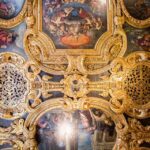
Gold mosaics and quick entry change everything. This Skip the Line St. Mark’s Basilica tour is built for the main event: a guided walk through one of Venice’s most important churches, with the ceiling and interior mosaics covering nearly 8,000 square meters. I like that the ticket is designed to get you past the long entrance line, and I also like that the guide connects what you’re seeing to the New and Old Testament stories shown in the mosaics.
The main thing to watch is group logistics. The small “tour” time window is tight, and the experience can feel crowded, so if your guide’s English is harder to follow, staying close and keeping your device’s speaker in range matters.
In This Review
- Key highlights you’ll care about
- St. Mark’s Basilica and why skipping the line is worth it
- Where you start: Campo S. Zaccaria to Piazza San Marco
- The 45-minute flow: what happens after you enter
- Byzantine mosaics: the main event you’ll be looking for
- Architecture and the symbolism of St. Mark
- The fun part: gates, sculptures, and looking up on purpose
- Headsets, English quality, and how crowds affect your hearing
- Pricing and value: is $28.95 a good deal?
- Who should book this St. Mark’s Basilica skip-the-line tour
- Should you book it?
- FAQ
- How long is the Skip the Line St. Mark’s Basilica tour?
- Where does the tour start and end?
- What is included with the ticket?
- Is bottled water included?
- How big is the group size?
- Do I need to bring anything to hear the guide?
- What’s the cancellation policy?
Key highlights you’ll care about
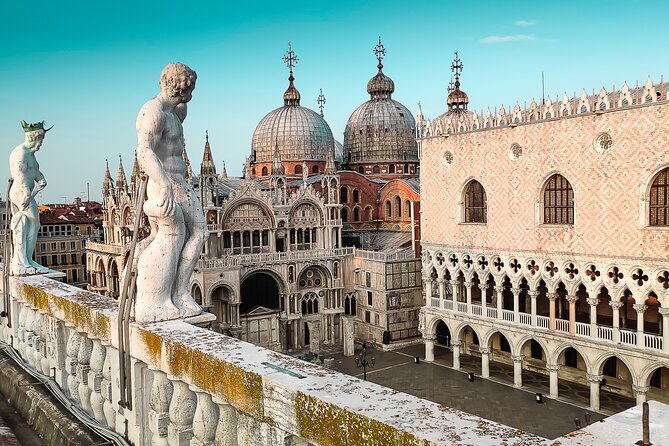
- Skip-the-line ticket that helps you get inside St. Mark’s faster than the usual queue.
- Headsets and audio receivers, so mosaic explanations can reach you even in a busy church.
- Mosaic storytelling that links scenes to Biblical events across the walls and ceilings.
- Iconography prompts, including attention to the dual role of Mark and a fun moment counting sculptures on the gates.
- A short, 45-minute format, which works well if you don’t want to spend half a day in one stop.
St. Mark’s Basilica and why skipping the line is worth it
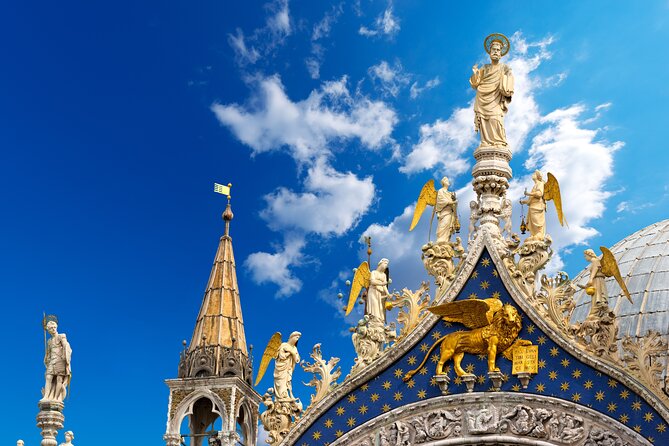
St. Mark’s Basilica is famous for a reason, but the practical reality in Venice is simple: lines can eat your time. Even if you’re excited, that kind of waiting drains energy you could put into actually looking—upward, slowly, and on purpose.
This tour uses a skip-the-line ticket approach, which matters more than it sounds. The basilica is visually overwhelming at first. If you’ve already spent an hour shuffling forward in a crowd, it’s harder to notice details like the mosaic scenes across the ceiling or the way different areas relate to each other. Getting in faster gives you a better chance to land in the right mindset: look closely, listen, and let the guide point out what you’d otherwise miss.
Also, the visit is short enough—about 45 minutes—that you’re not stuck inside with fatigue. That time limit can be a benefit. St. Mark’s is not a “quick peek” place if you want meaning. But it’s also not ideal to plan as your only activity for the entire day. This tour offers a good middle ground.
You can also read our reviews of more tours and experiences in Venice

Where you start: Campo S. Zaccaria to Piazza San Marco
The meeting point is Campo S. Zaccaria, 4683g, 30122 Venezia VE, Italy. The end point is at the exit of St. Mark’s Basilica (near P.za San Marco, 328, 30124 Venezia VE).
That matters for planning because St. Mark’s sits in the most walkable, center-of-everything area. Once the tour ends, you’re already positioned to keep moving through the square and nearby streets without needing an extra transfer or long backtrack.
One practical tip: plan to arrive a bit early. The official start is listed at Campo S. Zaccaria, and in Venice those streets can feel like a maze when you’re trying to match addresses quickly. Being early gives you a buffer so you can get your headset and get settled before the group moves.
The 45-minute flow: what happens after you enter
There’s only one stop: Basilica di San Marco (St. Mark’s Basilica). In practice, that means your time is focused. You’re not bouncing between viewpoints. You’re getting organized, entering the basilica, and then listening while the guide points out key areas of the interior.
The tour is designed around a guided walk-through with time for you to look at the major visual elements: the mosaic coverage, the notable architectural features, and the religious scenes represented through the church’s artwork.
Because this is about timing and hearing the guide, your best strategy is to treat the headset as essential gear. The tour includes audio receivers and headphones, which helps you follow the narrative even when the room gets noisy. Still, it can be hard to keep a consistent position in a crowd. So if you tend to drift back, this is your reminder to stay where you can hear clearly.
Byzantine mosaics: the main event you’ll be looking for
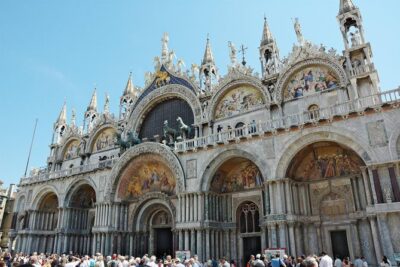
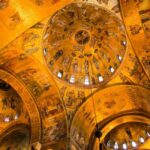
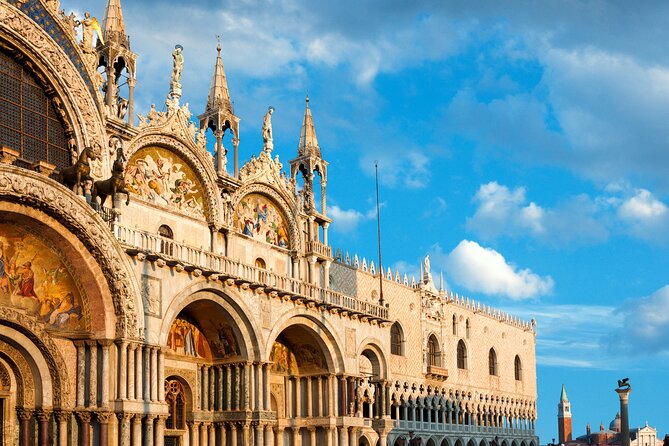
St. Mark’s Basilica is known for Byzantine art, and the centerpiece is the gold mosaics. The tour description calls out that nearly 8,000 square meters of mosaic cover the ceiling. That number is useful because it tells you what to expect: this is not one pretty ceiling panel. It’s a full environment built out of mosaic.
What I like about this tour structure is that it doesn’t just say, “Look at mosaics.” It frames the mosaics as visual storytelling—specifically scenes from the New and Old Testament represented throughout the interior.
That changes how you look. Without guidance, you might admire the craftsmanship and then move on. With guidance, you can start asking better questions while you’re there:
- Which scenes are being referenced?
- How does the artwork create a narrative across different parts of the basilica?
- Why do certain images appear where they do?
Even if you only catch part of the guide’s explanations, having someone point out the pattern and meaning helps you see more than shine. The church is stunning either way. But meaning gives it staying power.
Architecture and the symbolism of St. Mark
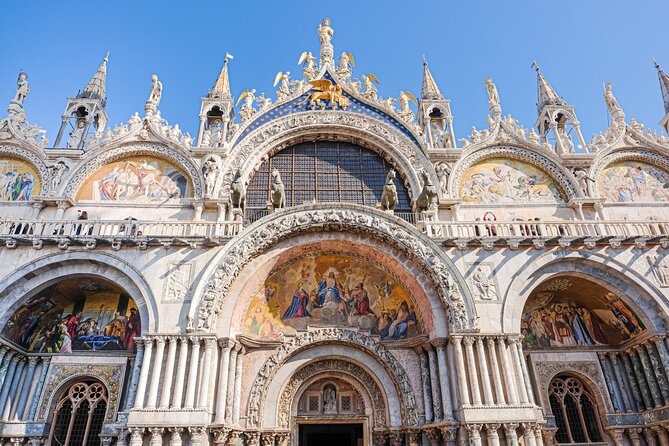
St. Mark’s Basilica wasn’t built as an ordinary parish church. It’s described as the private chapel of the Doge at one point, and that adds context to why the building feels so ceremonial and grand. This tour focuses on that big picture: the history of St. Mark, architectural aspects, and how the visual program was meant to communicate power and faith.
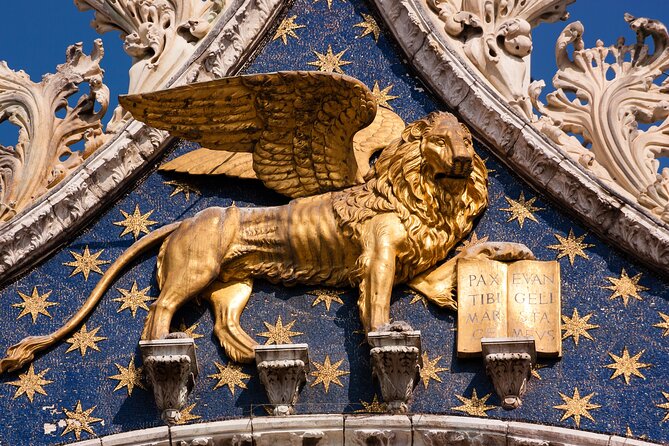
A standout element from the tour experience is the way the guide explains Mark himself. One of the strongest notes in the feedback is the guide calling out Mark’s dual role as an apostle and saint as represented on the walls. That’s the kind of detail you’d never guess just from looking.
If you go in with that idea in mind, you’ll probably have an easier time connecting symbolism to design. You’re not just touring decoration. You’re reading a visual system that’s meant to instruct.


The fun part: gates, sculptures, and looking up on purpose
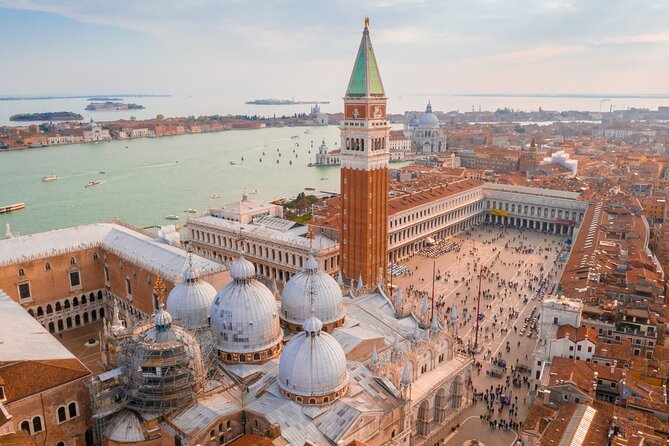
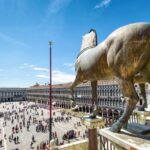
St. Mark’s has lots of visual moments, and one of the most memorable prompts mentioned is to look at the iconic gates and take a moment to count the sculptures on top.
That may sound like a small activity, but it’s a good travel tactic: when a guide gives you a specific task, your brain stops glazing over the environment and starts doing active observation. For a basilica that’s otherwise easy to overwhelm you, that helps a lot.
As you’re standing near the main gates, lift your eyes and slow down. Try the counting prompt. If you lose track, no problem—just keep looking and noticing the shapes and the placement.
Headsets, English quality, and how crowds affect your hearing
Let’s be honest: St. Mark’s Basilica is busy. This tour can run with a maximum of 99 travelers, which means it’s not exactly a tiny private group.
In the feedback, the most common practical complaint is that crowds can make it hard to keep together and that staying in speaker range isn’t always easy. Add on the reality that some people may have a harder time hearing a guide with a strong accent, even if the guide has deep knowledge.
Here’s how you can make the best of it:
- Stay near the front or center when the group stops. Don’t hang back in doorways where audio drops.
- Keep your headphones on and adjust if the receiver seems quiet.
- If someone is blocking your view, change your angle slightly instead of moving away from the guide.
- Use the headset to follow the story, then use your eyes to confirm what you heard.
The audio equipment is included for a reason, and it’s your tool for protecting your experience in a lively church. If the guide’s style doesn’t click, the combination of headsets plus your own careful looking still keeps the visit worthwhile.
Pricing and value: is $28.95 a good deal?
The price is $28.95 per person, and the tour runs about 45 minutes.
For value, I look at three things:
- How much time it saves you (skip-the-line).
- What you get for that money (guide + headsets + ticket).
- Whether the duration matches the setting (45 minutes is realistic for one major stop).
Here, you’re paying for a guided, structured visit with the key convenience: getting past the entrance line. You also get audio receivers and headphones, which can make a big difference if the crowd noise is high or if the guide’s voice carries differently than you expect.
Is it worth it if you’re the independent type and love walking around solo? Maybe not, because St. Mark’s is famous enough that you might want to spend time at your own pace. But if you like context—why something looks the way it does, and what specific scenes are showing—then this price starts to make sense.
Also note what’s not included: bottled water. It’s a small detail, but in a long day in Venice, you’ll want hydration ready so you don’t cut your own visit short.
Who should book this St. Mark’s Basilica skip-the-line tour
This works best for you if:
- You want a structured introduction to the basilica’s mosaics without spending a whole afternoon inside.
- You value a guide pointing out meaning, not just general sightseeing.
- You like having audio support in busy interiors.
- You’d rather pay for convenience than gamble on timing with regular entry lines.
It may not be the best fit if:
- You hate group movement and want total control of pace.
- You’re sensitive to crowds and tight positioning near speakers.
- You prefer to read signs quietly rather than follow a spoken narrative.
Given the format, I’d call this a solid “anchor stop” for a Venice day plan. Do it early in your schedule if you can. You’ll likely feel less rushed, and you’ll have more energy to interpret what you’re seeing.
Should you book it?
If your goal is to get into St. Mark’s quickly and leave with a clearer sense of what the mosaics are communicating, I’d book this skip-the-line tour. The combination of a local guide, headsets, and a focused 45-minute visit is a good match for one of Venice’s most visually intense interiors.
If you’re a solo wanderer who wants long, unstructured looking time, you might prefer to go at your own pace. But if you want help reading the basilica—especially the Testament stories and the details around St. Mark—this tour is the kind of value purchase that saves frustration and improves what you notice.
FAQ
How long is the Skip the Line St. Mark’s Basilica tour?
It lasts about 45 minutes.
Where does the tour start and end?
The tour starts at Campo S. Zaccaria, 4683g, 30122 Venezia VE, Italy, and it ends at the exit of St. Mark’s Basilica, near P.za San Marco, 328, 30124 Venezia VE, Italy.
What is included with the ticket?
You get audio receivers and headphones, a skip-the-line ticket, and a local guide.
Is bottled water included?
No. Bottled water is not included.
How big is the group size?
The tour has a maximum of 99 travelers.
Do I need to bring anything to hear the guide?
The tour provides audio receivers and headphones, so you can listen through the included equipment.
What’s the cancellation policy?
Free cancellation is available up to 24 hours in advance for a full refund.