REVIEW · VENICE
Venice Murano Island Glass Factory Tour with Glass Blowing Demonstration
Book on Viator →Operated by Glass factory Colleoni Murano · Bookable on Viator
Hot glass, fast hands, and real craft. This Murano Island stop gives you a guided look inside Colleoni Murano, then you’ll watch a master glassblower shape pieces from molten glass right in front of you. I especially like the live demonstration and the way the visit finishes with time to browse the showroom after. One downside to plan for: the demo is brief, and a good chunk of the time is spent walking through the sales floor.
You start on Murano at the factory entrance and get a narrated walkthrough that ties the craft to what’s happening today. The format is straightforward: tour first, demo next, then shop time with credit.
If you buy nothing, you still get to see how the work is done. If you do buy something, the included €10 credit plus the 20% shop discount is where the value can really show up.
In This Review
- Key Things to Know Before You Go
- Murano Glass Factory Reality Check: What This Tour Feels Like
- Where to Meet at Vetreria Artistica Colleoni (and Not Waste Time)
- The Studio Tour Portion: A Quick History Plus What’s Happening Now
- Watching a Master Glassblower Create Shapes From Molten Glass
- The Showroom Walk: Finished Works and the €10 Credit Moment
- Price and Value: Is $12.01 Worth It?
- Timing, Group Size, and How to Fit It Into Your Day
- Who This Murano Glass Blowing Tour Suits Best
- Final Call: Should You Book This Tour?
- FAQ
- Where do I meet for the Murano glass factory tour?
- How long does the experience take?
- Is the tour available in English?
- What is included in the tour price?
- How do the €10 credit and 20% shop discount work?
- Does the price include transportation to and from Murano?
- Can I cancel for free?
- Is there an extra access fee on certain dates for day visitors outside Venice?
Key Things to Know Before You Go
- Live glassblowing by a master glassblower, with you seeing the process in real time
- Narrated studio tour that explains how Venetian glassmaking fits into the modern workflow
- Shop time at the end with a €10 credit per adult and a 20% discount
- Short overall duration (about 40 minutes), so expect a quick highlight reel
- Small group feel with a maximum of 50 people
- Mobile ticket and an English option, with the chance of multi-language presentation
Murano Glass Factory Reality Check: What This Tour Feels Like
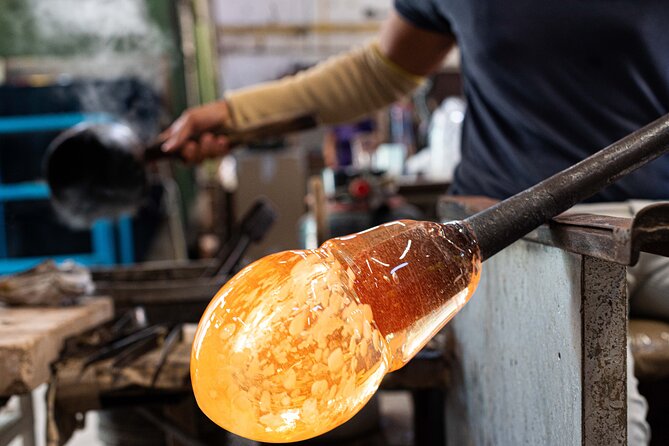
This isn’t a long museum visit. It’s a compact, production-focused glass tour on Murano—built around watching the craft happen and then moving you into the showroom. That structure can be perfect if you want the highlights fast. It can also feel sales-forward if you were picturing a longer, more technical demo.
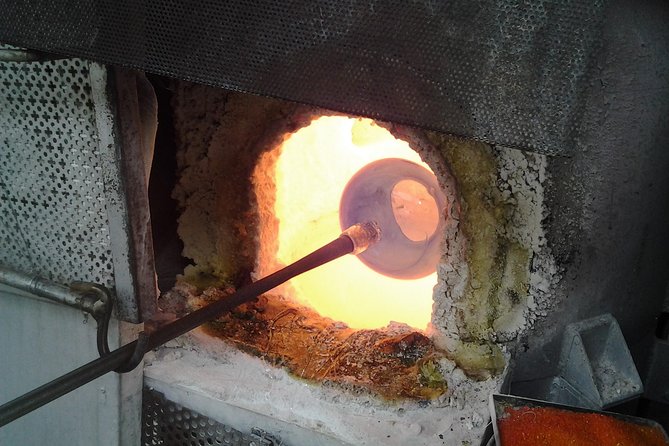
The biggest draw is simple: you get to see molten glass turned into finished pieces. In reviews of this type of experience, you’ll often hear about classic Murano forms—like a vase and a small animal figurine—created during the demonstration. Even when the exact objects vary, the real value is the controlled chaos: heat, tools, shaping, reheating, and final details that look easy only because someone already spent years learning.
For people who love watching skilled hands work, it’s a treat. For people who dislike shopping pressure, you’ll want to decide in advance how much time you’ll spend in the shop area.
You can also read our reviews of more tours and experiences in Venice.


Where to Meet at Vetreria Artistica Colleoni (and Not Waste Time)
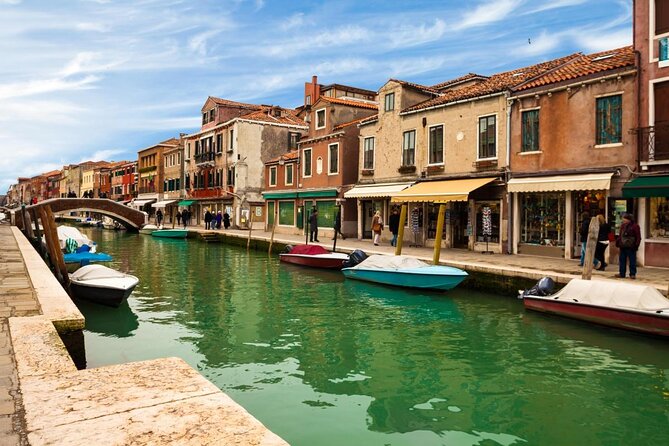
You meet at Vetreria Artistica Colleoni, the Murano glass factory entrance:
Fondamenta S. Giovanni dei Battuti, 12, 30141 Venezia VE, Italy
Plan to arrive about 10 minutes early. The experience instructions are clear that you should show up a little before your scheduled time so you can check in and get settled before the tour starts.
Murano has a bunch of glass studios, and the islands’ network of small streets can make it feel like you’re walking in circles—especially if you’re arriving by boat and trying to orient yourself. I recommend you keep your confirmation info handy on your phone, and confirm you’re at the correct Colleoni address before your group time starts.
One practical tip: if you want the most stress-free visit, give yourself extra buffer. You’re only on the island for about an hour total, so losing even 15 minutes to getting turned around changes the experience fast.
The Studio Tour Portion: A Quick History Plus What’s Happening Now
The visit opens with a guided walkthrough of the factory facilities. The goal here is to place Murano glassmaking in context, then connect that tradition to the modern production process you’ll see during the demo.
This part typically lasts around 20 minutes. It’s not designed to be an academic lecture. Instead, it’s a guided tour that helps you understand what you’re about to watch: why the glass starts as molten material, why temperatures and timing matter, and how different techniques create different shapes.
Where this really helps you as a visitor is in comprehension. If you’ve never watched glassblowing up close, the demonstration can look like a sequence of random transformations. A little framing during the tour makes you spot the practical steps: forming a gather, shaping the piece, controlling the neck or body, and adding colors or details.
Also keep an eye out for the space itself. Even without technical explanations, a factory layout shows you how work moves—from preparing materials to working stations to the finished showroom.
Watching a Master Glassblower Create Shapes From Molten Glass
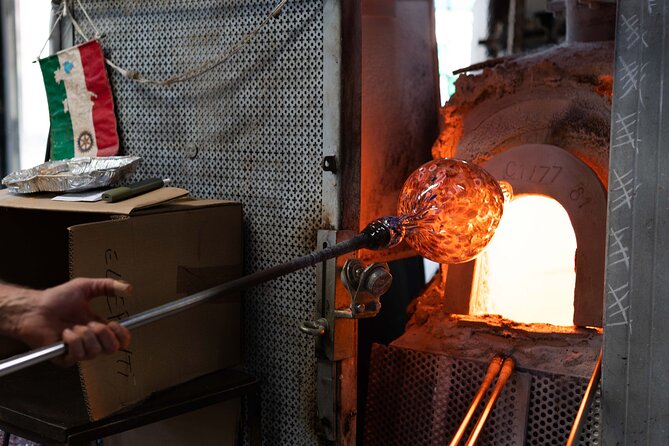
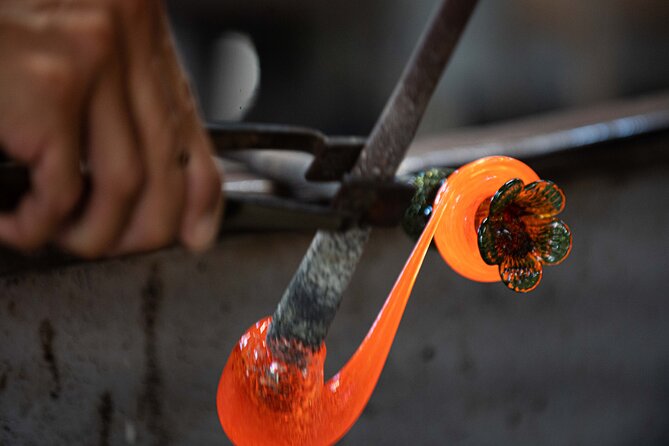
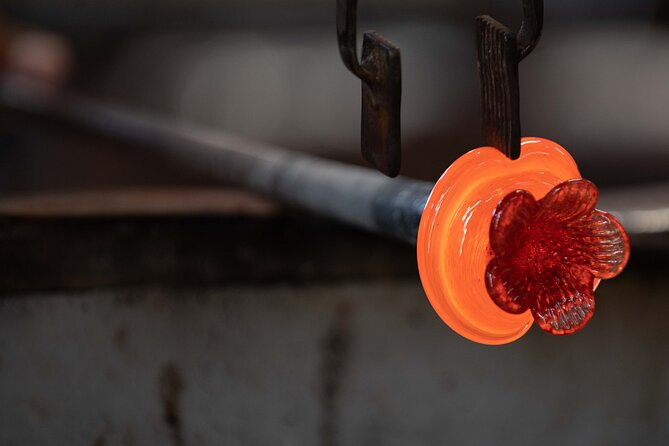
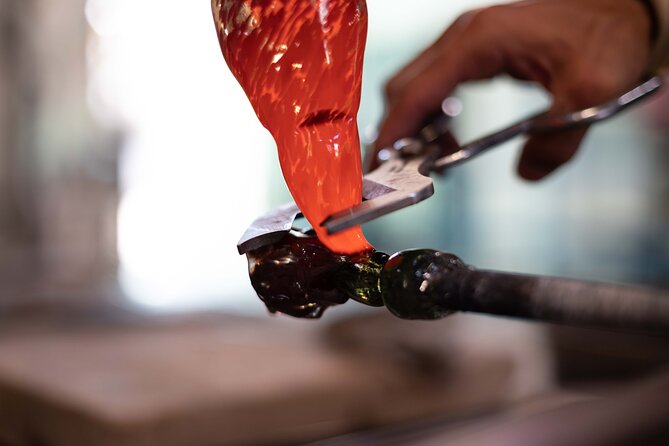
The heart of the experience is the live demonstration. This is where you see a master glassblower making multiple pieces using different techniques, using molten glass and the tools of the trade.
The demo is short by design. Overall duration is about 40 minutes, and the working time in front of you is typically a slice of that. Some people love this pace because it keeps the energy up. Others find it too brief, especially if you hoped for step-by-step technique detail for a single object.
What to pay attention to during the demo:
- How quickly the glass changes once it’s gathered and heated correctly
- How the artist uses tools to shape and refine, instead of relying on brute force
- Reheating cycles, where the piece looks close to done, then gets reshaped again
- Color and pattern effects, where the final look is built through small additions and controlled movements
Language can matter here. The experience offers English, but it may be multi-lingual. In practice, that means you might hear a mix of languages while the action is happening. If you’re sensitive to audio confusion, position yourself where you can clearly see the glassblower and the guide’s gestures.
The best-case scenario is you leave feeling like you watched something real and handmade, not just a staged performance. If you’re there for craft appreciation first and shopping second, this part will land.
The Showroom Walk: Finished Works and the €10 Credit Moment
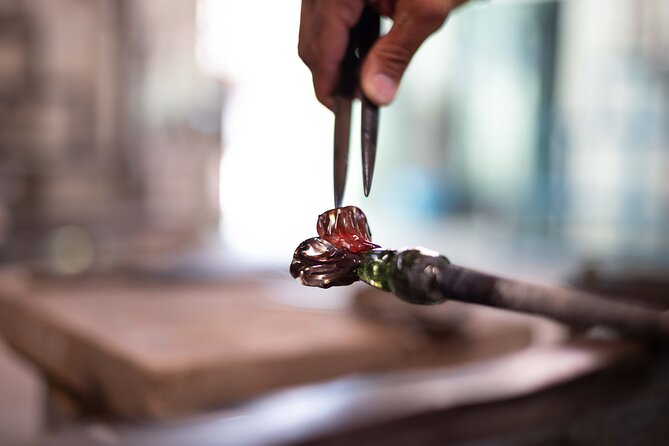
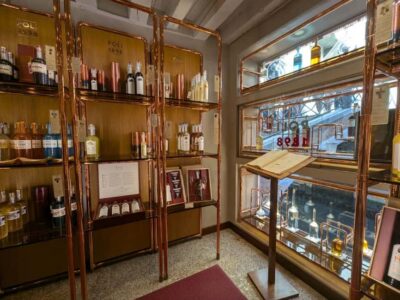
After the demonstration, the experience shifts into a showroom format. This is where you get to see finished pieces up close—colors, textures, and the kind of details you can’t really appreciate when the object is still molten and changing by the second.
The tour then includes what amounts to a guided browse plus your ability to use the ticket value in the shop. You’ll spend time looking through multiple rooms of glass art. Expect a lot of variety: small items you can take home, plus larger showpieces that can feel like real collector objects.
Here’s the value piece that matters: your entrance ticket works as full credit to spend in the shop, and you also get a 20% discount on purchases at the factory. Each adult gets Euro 10,00 credit included.
That can change the math of Murano shopping. Murano glass is often expensive, so it helps to know you aren’t starting from zero if you want a souvenir. The question is whether you want a souvenir that day, or if you’ll be hunting for better prices elsewhere on the island.





Price and Value: Is $12.01 Worth It?
At about $12.01 per person, the cost is low compared with what Murano glass itself tends to cost. The tour isn’t priced like a premium multi-hour workshop. It’s priced like a quick “see how it’s made” pass, with retail included as part of the experience.
So when is it good value?
- If you want a short, focused Murano activity that takes about an hour total
- If you plan to buy a small item, where the €10 credit and 20% discount can meaningfully reduce the final bill
- If you enjoy watching skilled artisans at work more than reading museum-style explanations
When is it not a great deal?
- If you were expecting a longer, deeper technique session with more time watching one piece being crafted slowly
- If you feel uncomfortable with a showroom experience that’s clearly set up for purchases
The sweet spot is people who treat the tour as an intro. You’ll see the process and then decide, with fresh eyes, whether a souvenir is worth the money.
Timing, Group Size, and How to Fit It Into Your Day
This activity runs about 40 minutes. It’s also capped at 50 travelers, which usually helps keep things moving. Still, you should assume you might spend some time waiting for your group to start, especially during busy periods on Murano.
The meeting instruction to arrive 10 minutes early is your best tool. Since your time on Murano can be short, I’d rather you show up early and settle in than arrive at the exact time and gamble on check-in speed.
After the tour, you can treat it like a springboard. Murano is a small island with plenty of walking options once you’ve seen glassblowing. If your schedule is tight, you can come for the demo, then use the remaining time to explore at your own pace—without needing to spend another hour on a separate attraction.
Who This Murano Glass Blowing Tour Suits Best
This is a strong match for:
- People who want a high-impact, low-time Venice day activity
- Anyone curious about how Murano glass is actually made, not just what it looks like
- Souvenir shoppers who are open to buying from a workshop showroom, especially with the discount and €10 credit
It’s not the best match if:
- You’re hoping for a long, technical class with lots of hands-on time (this is a factory tour with a demo, not a workshop session)
- You want zero sales atmosphere
- You dislike audio confusion if the guide uses multiple languages during the presentation
Final Call: Should You Book This Tour?
I’d book it if you want the core Murano experience in under an hour: a guided factory glimpse and a live glassblowing demonstration, ending with a fair reason to buy something if you truly love it. The included €10 credit and 20% discount are what turn the price into something you can justify quickly.
I’d think twice if your main goal is deep technique explanation or a long demonstration. The structure is quick and showroom-heavy, so make peace with that before you go. Also, double-check you’re headed to the correct Colleoni meeting address on Murano so your credit and souvenir expectations match what you actually get at the right factory entrance.
FAQ
Where do I meet for the Murano glass factory tour?
You meet at Vetreria Artistica Colleoni – Murano Glass Factory, Fondamenta S. Giovanni dei Battuti, 12, 30141 Venezia VE, Italy.
How long does the experience take?
The duration is about 40 minutes (approx.).
Is the tour available in English?
English is offered, though the guide may be multi-lingual on some operations.
What is included in the tour price?
It includes a local guide, a glass blowing demonstration, a free small glass souvenir (as described), a 20% discount in the shop, and a Euro 10,00 credit each adult.
How do the €10 credit and 20% shop discount work?
Your ticket includes Euro 10,00 credit each adult, and there is a 20% discount on purchases in the factory shop.
Does the price include transportation to and from Murano?
No. Transportation to/from the attractions is not included.
Can I cancel for free?
Yes. Free cancellation is available up to 24 hours in advance for a full refund.
Is there an extra access fee on certain dates for day visitors outside Venice?
Possibly. On certain dates, people staying outside of Venice who plan to visit for the day may need to pay a €5 access fee. You can check details and exemptions at https://cda.ve.it.