REVIEW · VENICE
Da Vinci Interactive Museum Venice Scuola di San Rocco
Book on Viator →Operated by Leonardo da Vinci Museum · Bookable on Viator
Leonardo’s ideas turn into things you can touch. I like this museum’s practical, hands-on way of making da Vinci feel usable, not dusty, with working replicas and other playful learning touches. You can also wander the exhibits at your own pace during opening hours.
The big win for me is the way the museum pairs engineering imagination with high-resolution, backlit copies of da Vinci’s paintings. It’s a smart combo: you see the mind behind the art, then you get to play with the mechanisms.
One thing to consider: this is a small museum. If you’re expecting a huge, immersive production, you may finish sooner than you planned.
In This Review
- Key things I’d note before you go
- Entering the Leonardo da Vinci Museum setup in Venice
- How the exhibits are organized: Earth, Water, Air, Fire
- A practical tip
- Working replicas and hands-on models (the part most people remember)
- What you should watch for
- Backlit da Vinci paintings: close looking without the headache
- Anatomy studies: why this inventor felt so human
- Multimedia, short film, and how to use it
- Languages and explanations: what you’ll find on the walls
- Layout notes: two floors, steps, and how long it really takes
- My timing suggestion
- Value check: $10.21 for interactive da Vinci in Venice
- Getting oriented in Venice: avoid the nearby-da Vinci confusion
- Who this is best for (and who might be disappointed)
- FAQ
- FAQ
- How long does the visit take?
- Is there a professional guide included?
- Are audio guides available?
- What languages are the explanations available in?
- What are the opening hours and last entrance time?
- Can I bring food or drinks into the exhibits?
- Should you book this Da Vinci Interactive Museum in Venice?
Key things I’d note before you go
- Four themed areas (Earth, Water, Air, Fire) that keep the inventions easy to follow
- Working replicas built to da Vinci’s proportions whenever possible
- Backlit painting displays that help you actually look closely
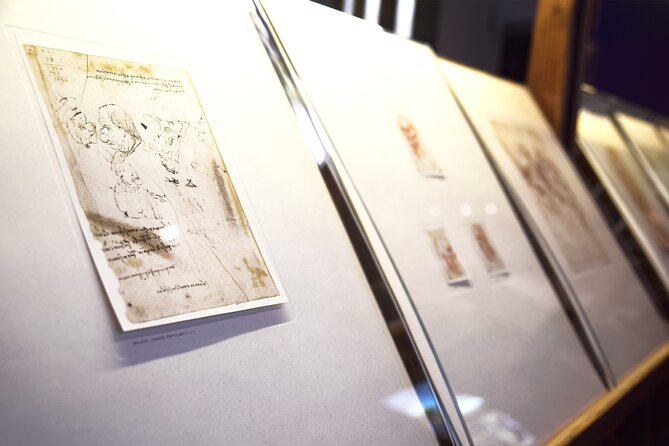
- Anatomy studies alongside the machines, showing how wide his curiosity ran
- Self-guided visit with interactive models included, but no professional guide
- Audio guides available for free on request at the entrance
Entering the Leonardo da Vinci Museum setup in Venice
This is one of those Venice stops that works even when your day feels packed. The museum is open daily from 10:30 AM to 4:30 PM, with last entrance at 4:00 PM, so you don’t have to stress about finding the one perfect time slot.
You’ll also appreciate the format. Your ticket is mobile, and the museum is set up for you to move at your own speed. That matters in Venice, where walk time and detours are part of the day. For this kind of exhibit, that freedom is a feature, not a bug.
The museum’s vibe is family-friendly, with learning designed to keep kids curious while still giving adults plenty to chew on. It’s organized to be readable without feeling like a school textbook. Expect a self-paced circuit that feels more like “try it and see” than “sit and listen.”
You can also read our reviews of more museum experiences in Venice

How the exhibits are organized: Earth, Water, Air, Fire
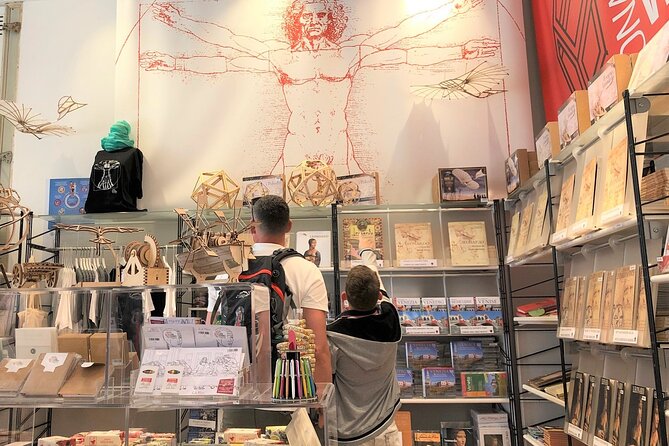
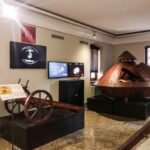
The museum is organized into four sections: Earth, Water, Air, and Fire. That structure is genuinely helpful. Instead of a random pile of inventions, you get a clear way to group the ideas and connect them to themes.
In each area, the displays focus on da Vinci as an inventor who watched the world closely. You’ll see how his engineering thinking connects across fields—whether it’s movement, force, or how systems might work. The museum also notes that the machines are built according to da Vinci’s design, and unless changes were necessary, they follow the original proportions. That’s a detail that helps the experience feel grounded rather than just decorative.
A practical tip
Give yourself room to slow down in the Earth and Air areas if you like mechanical thinking. The layout is designed so you can pause on the interactive parts, then come back to read the context right there.
Working replicas and hands-on models (the part most people remember)
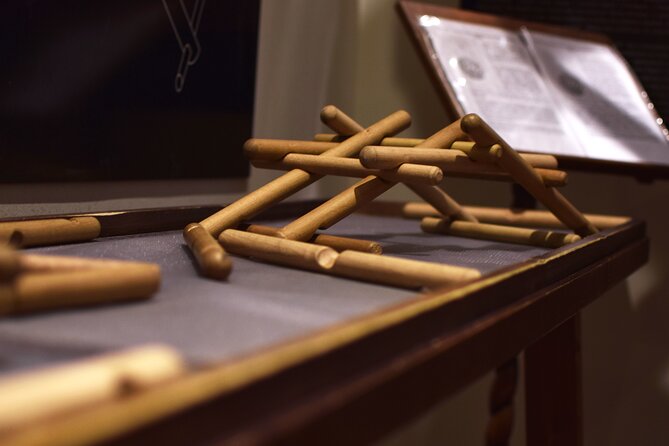
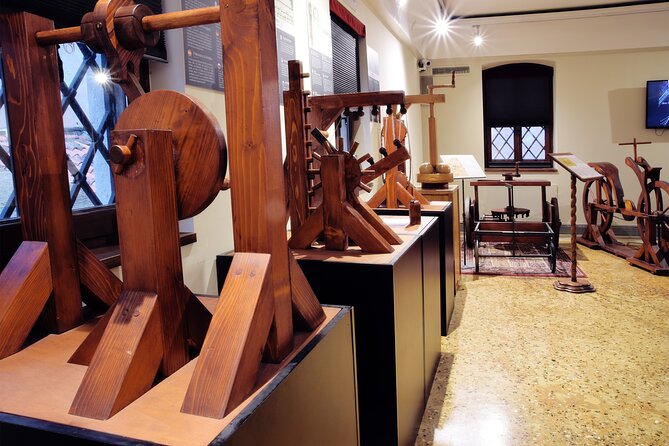
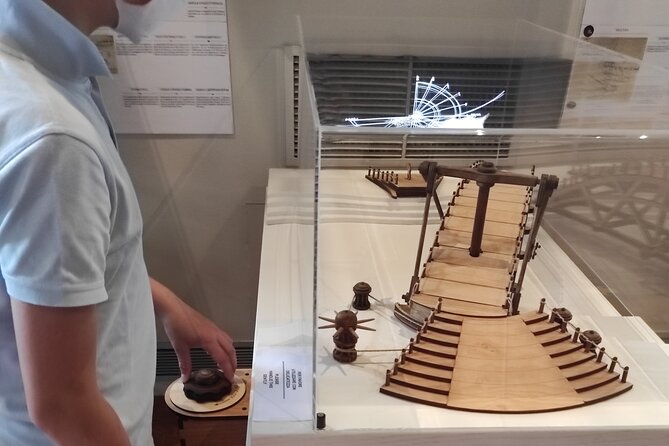
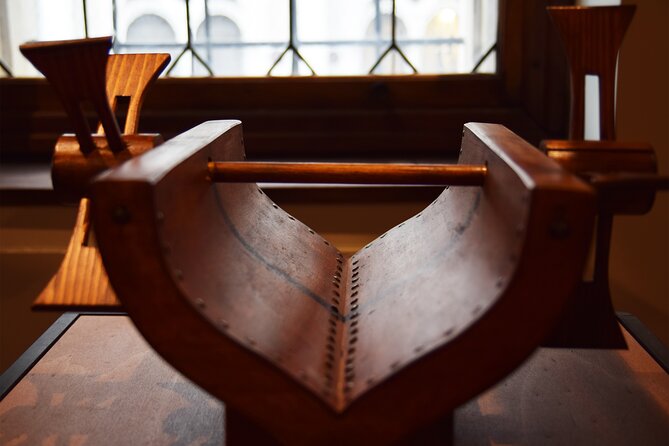
If you want the da Vinci concept in physical form, this is where the museum delivers. The highlight is the collection of working replicas of his fantastical machines. They aren’t just “look at the picture” exhibits. They’re built so you can interact with the designs and get a sense of how the pieces might move and function.
This hands-on approach is especially strong for families. Kids tend to stay engaged longer when they can manipulate parts, try configurations, and figure things out visually. Adults also tend to enjoy it because the mechanical logic becomes easier to understand when you can test it rather than just imagine it.
The interactive parts are also one reason the museum’s reputation is so consistently positive for value. At around 45 minutes (approx.), you’re not paying for hours of passive viewing. You’re paying for a compact museum where you do things.
What you should watch for
Not every single display is “hands on.” Some sections are more about studying drawings, explanations, and the science logic behind the inventions. If you’re the type who wants pure interaction the whole time, you may want to plan for a mix.






Backlit da Vinci paintings: close looking without the headache
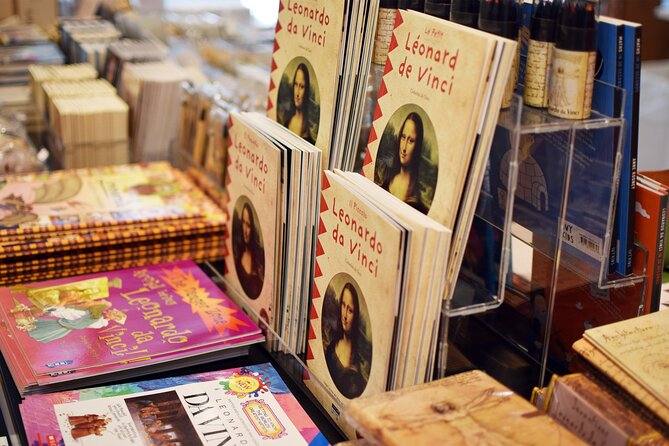
Da Vinci is famous for art, but he wasn’t just a painter. He was also a student of observation, light, and anatomy—so it makes sense that the museum includes high-resolution, backlit replicas of his major paintings.
These backlit displays are a clever choice for a small museum. Bright, evenly lit replicas help you actually focus on details instead of squinting at dim printed images. The museum also pairs this with explanations that guide your eye, especially around how his thinking connects to the body and the world.
You’re not looking at original masterpieces here. But you are looking at reproductions presented in a way that supports learning, not just “check a box.” For people who love art history, it’s one of the most satisfying areas because it turns viewing into analysis.
Anatomy studies: why this inventor felt so human
One of the more distinctive elements is the inclusion of da Vinci’s major studies of anatomy. This is where you start to see him as more than an engineer.
The museum places these studies alongside the machines and the art. That pairing makes the inventions feel more plausible. You’re reminded that he wasn’t working in isolation—he was constantly observing living form and trying to understand how things work.
It’s also a nice change of pace. If you come in thinking this is only about gears, you’ll likely be surprised by how much attention the museum gives to medical and scientific thinking. It’s part of why the museum appeals to both adults and kids: different interests find something to connect with.
Multimedia, short film, and how to use it
Beyond objects and replicas, the museum uses multimedia displays to explain Leonardo’s life and work. You may also notice a video-style introduction or film segment that sets context quickly.
Here’s my practical advice: don’t rush the multimedia. Even if you only catch part of it, it helps you make sense of what you’re seeing. Da Vinci can feel like a blur of big ideas, but the museum’s media is there to help you connect the dots while you’re still in the building.
If you’re the type who likes to read, you can focus on the signage first, then use the video later as a “summary.” If you’re the type who listens better than reads, flip that order.
Languages and explanations: what you’ll find on the walls
The museum provides descriptions in Italian, English, French, German, Spanish, and Russian. On top of that, there are multimedia elements that support the text.
For you, that means fewer translation gaps. You can spend more time looking at the models and less time guessing what a label is trying to say. It also makes the museum a good choice when you’re with mixed-language groups.
If you want extra support, there’s also mention of audio guides. They may not be obvious at first, but they’re available free of charge upon request at the entrance. If you care about details, this is worth asking for when you arrive.
Layout notes: two floors, steps, and how long it really takes
This museum is small enough that timing can surprise you—in both directions.
Some visitors feel like they’re done quickly (think around 20 minutes). Others slow down to interact, read labels, and spend time with the backlit artwork, finishing closer to the 45-minute expectation or a bit longer.
Also plan for a bit of movement between levels. The museum experience is described as being on two floors with steps. If you need step-free routing, it’s smart to check on-site staff when you arrive so you don’t get stuck mid-visit.
My timing suggestion
If you only have one museum stop in a day, aim to arrive with enough margin for a calm circuit. Since last entrance is 4:00 PM, don’t leave it until late afternoon unless you’re nearby.
Value check: $10.21 for interactive da Vinci in Venice
At about $10.21 per person, this museum is priced for a quick, meaningful stop. The value comes from the combination of:
- Interactive models
- Clear thematic organization
- High-quality backlit art replicas
- Anatomy studies
- A visit length that usually fits a real Venice day
If your goal is an all-day program, this won’t be that. But if you want something compact that doesn’t require a guide to be rewarding, it’s a solid deal.
One more value point: the museum includes what you need to learn on your own. You’re not paying for a “tour premium.” The ticket is basically the admission plus the interactive experience.
Getting oriented in Venice: avoid the nearby-da Vinci confusion
Venice has more than one Leonardo-themed stop. So do yourself a favor: confirm the exact museum you’re heading to before you walk across the city.
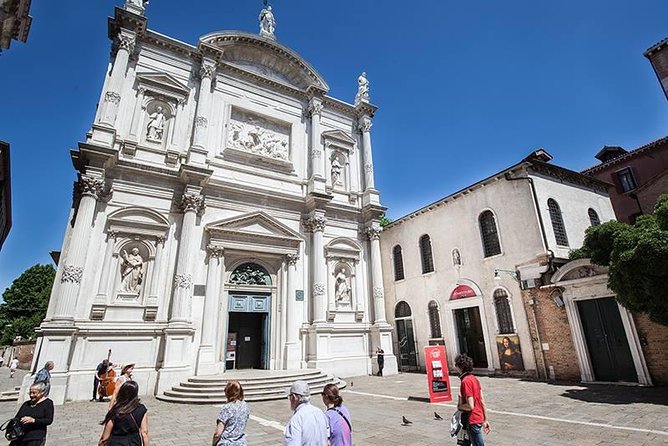
One helpful clue is the museum’s connection to Campo San Rocco. If you plug that into your map app, you’re more likely to land in the right area instead of wandering into a different Leonardo da Vinci exhibit nearby.
This is one of those small practical tips that can save your whole trip from turning into a last-minute scavenger hunt.
Who this is best for (and who might be disappointed)
This place is excellent for:
- Families who want kids to touch and test ideas
- Adults who enjoy science-meets-art thinking
- Visitors who like hands-on learning more than lectures
- People who want a compact museum stop that doesn’t swallow the entire afternoon
It may be a letdown if you’re expecting:
- Original masterpieces (you’re looking at replicas and high-resolution copies)
- A huge, production-style immersive show
- A guided “storytelling” experience (a professional guide is not included)
For the “adult-only” traveler who wants deep art history, you may still enjoy it—especially the backlit painting section and the anatomy studies. But you should go in knowing it’s engineered for curiosity and interaction first, not for museum-scholar immersion.
FAQ
FAQ
How long does the visit take?
It’s listed as about 45 minutes (approx.), though you can likely move faster or take longer depending on how much time you spend interacting with the models.
Is there a professional guide included?
No. A professional guide is not included, and the experience is set up so you can explore on your own.
Are audio guides available?
Yes. Audio guides are available free of charge upon request at the entrance.
What languages are the explanations available in?
Descriptions are available in Italian, English, French, German, Spanish, and Russian, with multimedia support.
What are the opening hours and last entrance time?
The museum is open 10:30 AM to 4:30 PM daily (Mon–Sun), and the last entrance is 4:00 PM.
Can I bring food or drinks into the exhibits?
No. Food, chewing gum, and beverages are prohibited in exhibit areas.
Should you book this Da Vinci Interactive Museum in Venice?
I’d book it if you want a compact Venice activity that mixes interactive engineering, backlit art viewing, and anatomy study without needing a guide. The price is fair for what you get, and the time fit is realistic.
I’d skip it or adjust expectations if you’re hunting for original masterpieces or a big, immersive stage production. This is more hands-on museum learning than mega-show.
If your day is tight and you still want a Leonardo fix, this one is a smart, low-stress stop. And if you’re going with kids, it’s one of the few places where the experience is designed so they’re not just standing and listening.