REVIEW · VENICE
The Majestic Teatro La Fenice: Guided Tour in Venice
Book on GetYourGuide →Operated by Bucintoro Viaggi · Bookable on GetYourGuide
A famous opera stage, with a real story behind it. Teatro La Fenice is one of Venice’s most dramatic interiors, and this guided stop helps you see beyond the gold and velvet to the people, premieres, and changing artistic focus that shaped it.
I especially like how the tour links the building to major composers and standout operas, from Rossini and Bellini through to modern works. I also like getting inside the theatre itself with an English-speaking guide, so you’re not just passing by a landmark.
One consideration: it’s not suitable for wheelchair users, so if accessibility matters for your group, check other options first.
In This Review
- Key things to know before you go
- Why Teatro La Fenice in Venice feels different from other stops
- The 1-hour inside look: where you spend your time
- Opera premieres you can picture as you walk the rooms
- The theatre’s scale: seating, orchestra, and why sound matters
- New direction: classic rooms, modern premieres
- Royal box moments and other stops you’ll remember
- Price and value: is $28 fair for La Fenice?
- Who this tour suits best
- Practical tips for a smooth start at the Fenice
- Should you book the Teatro La Fenice guided tour?
- FAQ
- How much does the Teatro La Fenice guided tour cost?
- How long is the tour?
- Is the tour offered in English?
- Where do I meet the guide?
- Where does the tour end?
- What’s included in the ticket price?
- Is the explanation outside or inside the theatre?
- Can I cancel for a refund?
- Can I book now and pay later?
- Is this tour suitable for wheelchair users?
- Can I stay inside the theatre after the tour?
Key things to know before you go
- You meet at the Fenice entrance: the hostess meets you directly outside, then the explanation happens once you’re inside
- It’s built around opera specifics: expect composer and title context, including Rossini and Bellini, plus contemporary programming
- You’ll look from the best angles in the hall: several people highlight time spent in special seating areas like the royal box
- You may see more than just seats: some tours include glimpses like rehearsals or related exhibits (when available)
- 98 musicians and strong acoustics: the theatre’s scale and sound design are part of the story during your visit
- Short and focused: at about 1 hour, it’s easy to fit into a packed Venice day
Why Teatro La Fenice in Venice feels different from other stops
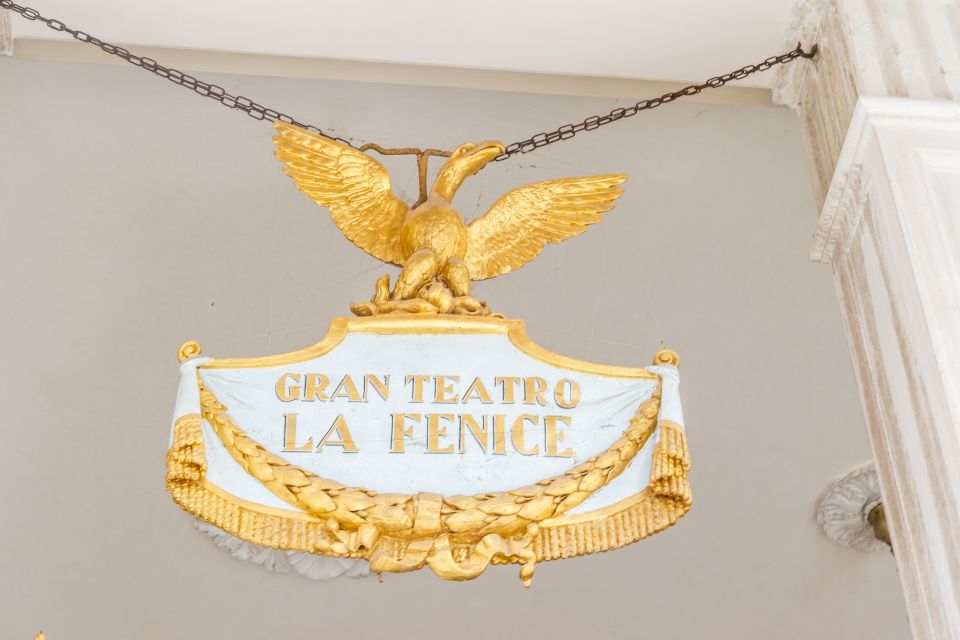
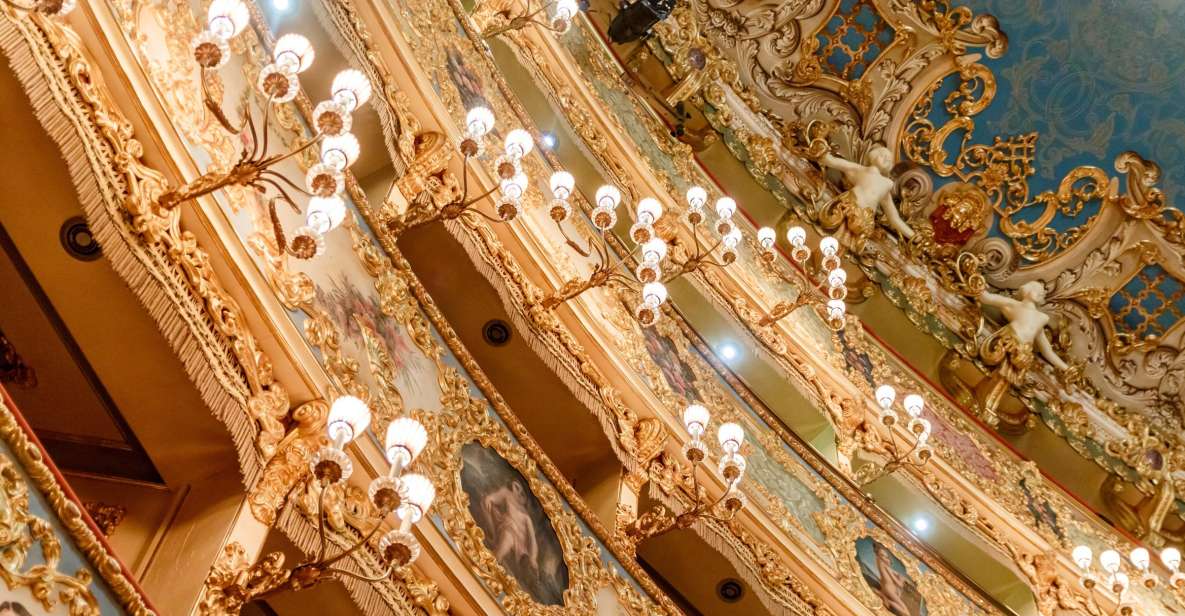
Teatro La Fenice has a way of putting you in the middle of the drama. From the outside, it reads as a top-tier opera venue. Inside, it becomes a full-on stage world—designed for sightlines, sound, and big moments—so the building itself starts acting like part of the performance.
What makes this guided tour work is that it gives you a set of handles. Instead of walking through rooms with no context, you learn why La Fenice mattered so much to composers and premiere audiences at the turn of the 18th century. The guide’s framing helps you look at details in a smarter way: where you’re standing, what the space was built to do, and why the theatre keeps evolving.
And yes, opera is the hook. But even if you don’t treat opera like a hobby, you’ll still get value from the architecture and the programming story—how La Fenice has moved from famous classic premieres to contemporary direction.
You can also read our reviews of more guided tours in Venice


The 1-hour inside look: where you spend your time
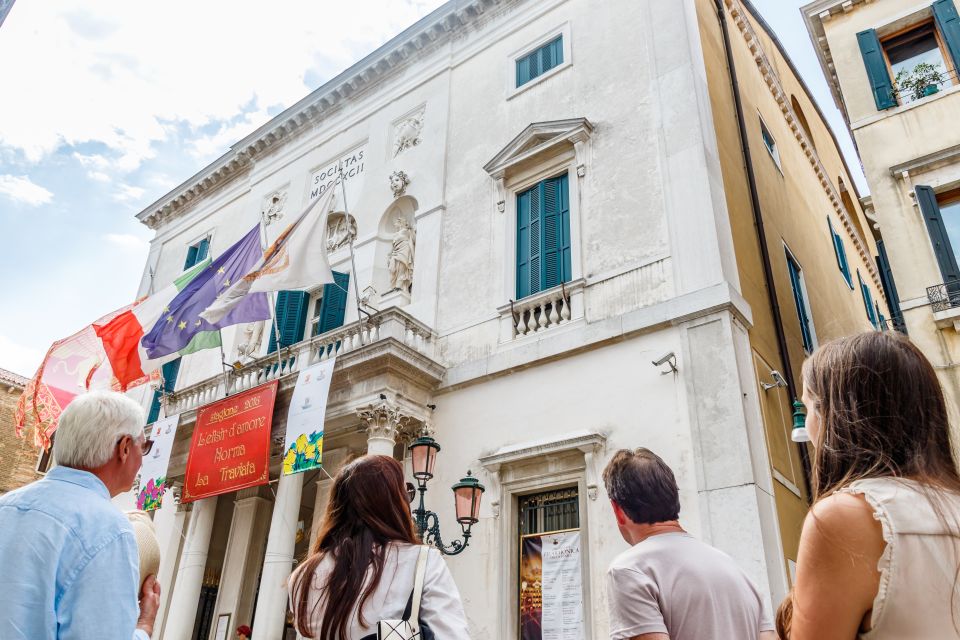
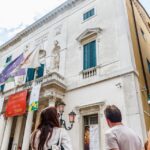
This is a guided visit inside the theatre that lasts about 1 hour, with start times depending on availability. You don’t start with a wandering walk-by. The hostess meets you directly in front of the Fenice entrance, and the explanation takes place once you’re inside.
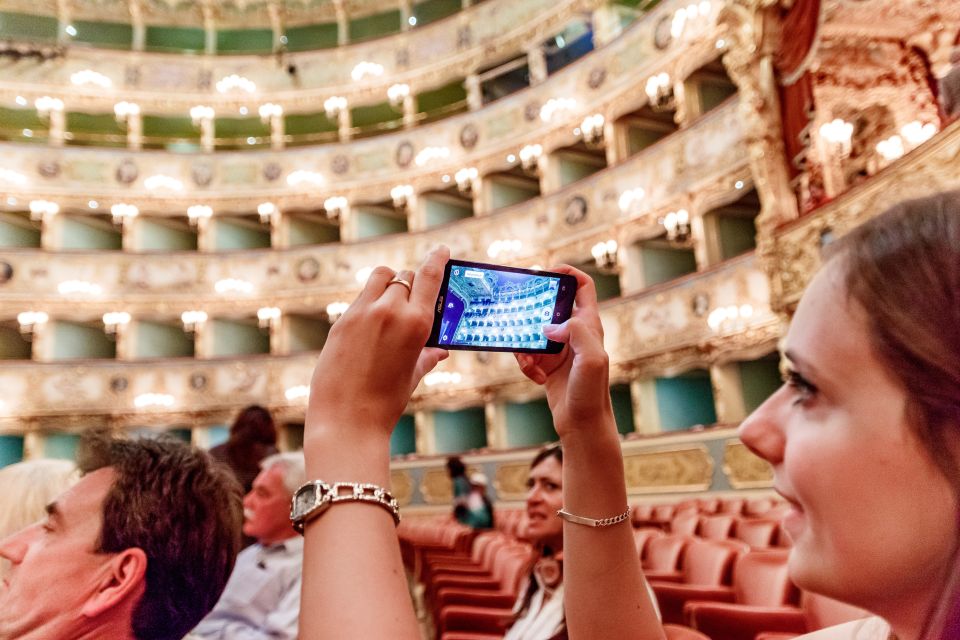
Because the tour is short, it tends to feel efficient. You get just enough background to make the building meaningful, then you’re shown the key spaces that people associate with the theatre’s status. In particular, several visitors mention going up to areas like the royal box—those spots help you understand how performances were designed for both the stage and the audience.
A few practical notes that matter once you arrive:
- If you’re using the meeting point as your anchor, arrive a bit early. One person said they had trouble finding it and the guide waited for them, which is reassuring but not something to gamble on.
- The focus is inside the hall and adjacent rooms, not long stretches outside in the street.
Opera premieres you can picture as you walk the rooms
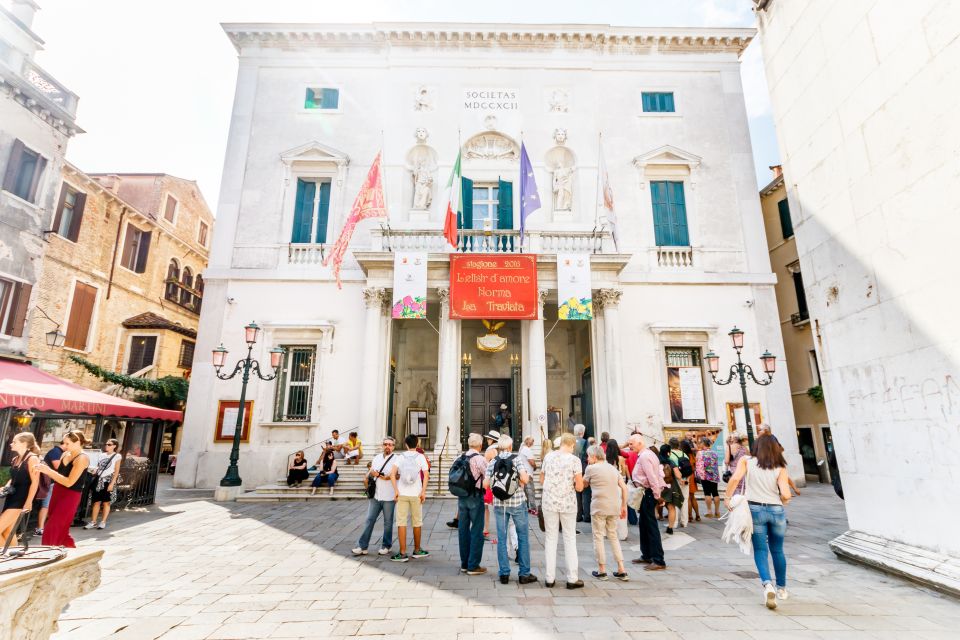
This tour is built to make history feel immediate. La Fenice opened at the close of the 18th century and quickly became the place where big, opulent premieres happened. The guide typically ties what you see to the operas that shaped the theatre’s identity—so you can start mentally placing scenes where your feet are standing.
If your taste runs toward classic Italian opera, you’ll likely enjoy the way these titles get woven into the visit:
- Rossini’s works such as Tancredi, Sigismondo, and Semiramide
- Bellini’s The Capulets and the Montagues
- Additional famous titles tied to the theatre’s premier reputation, like Beatrice di Tenda
One nice bonus is that the guide doesn’t treat this as museum trivia. The point is to help you envision what the room would have been like for a premiere crowd—where the energy would sit, where the audience attention would land, and why the theatre’s design mattered.
Also, you might get different emphasis depending on the day and the guide. People mention different guides by name—like Nicole, Sara, Marina, Matilda, and Sabin—and they’re praised for clarity and strong storytelling. Even if you don’t know opera, a good guide makes the context click.
The theatre’s scale: seating, orchestra, and why sound matters
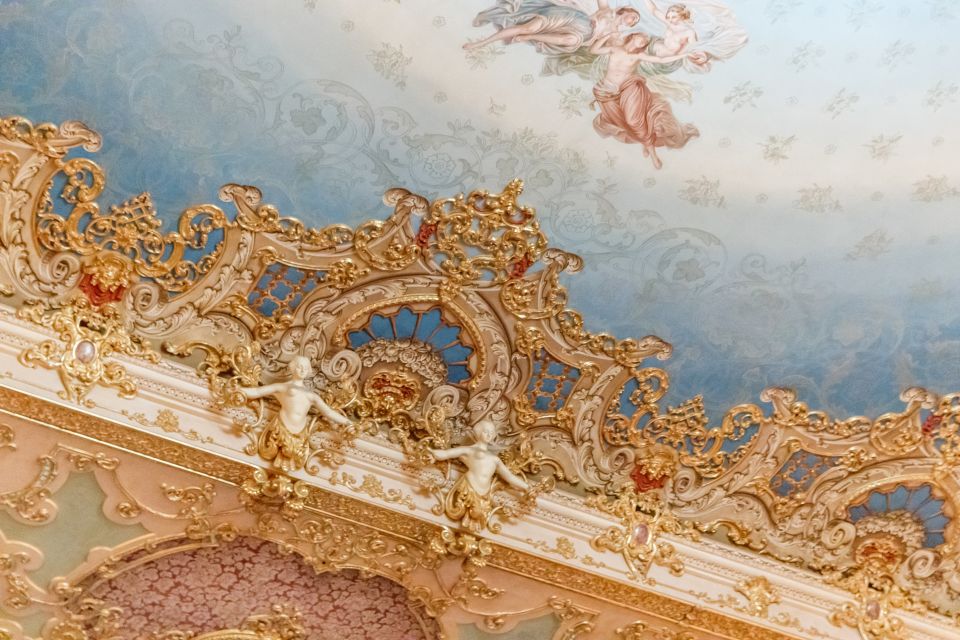
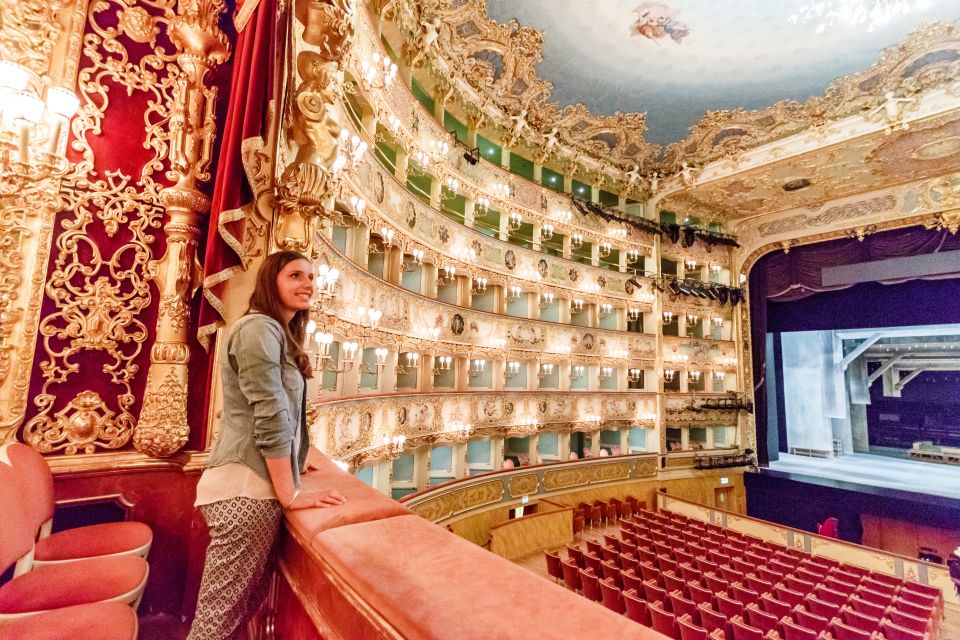
La Fenice isn’t a small, cozy opera house. It holds over 1,000 people, and that capacity connects directly to why it became so central to Venice’s cultural life. The theatre is also known for excellent acoustics, which changes how you should look at the space while you’re there.
During your visit, you’ll hear facts that help you understand the theatre as a working machine:
- A 98-member orchestra
- A 66-person opera chorus
If you like to pay attention to details, this is where you start noticing the practical choices behind the drama. Big venues need design discipline. Great acoustics aren’t luck; they’re geometry and materials doing their job so performers can reach the audience without feeling distant.
Even if the guide doesn’t ask you to test anything with your voice, you’ll still walk away with a better sense of why La Fenice became a performance destination for major premieres—and why it still attracts attention now.
New direction: classic rooms, modern premieres
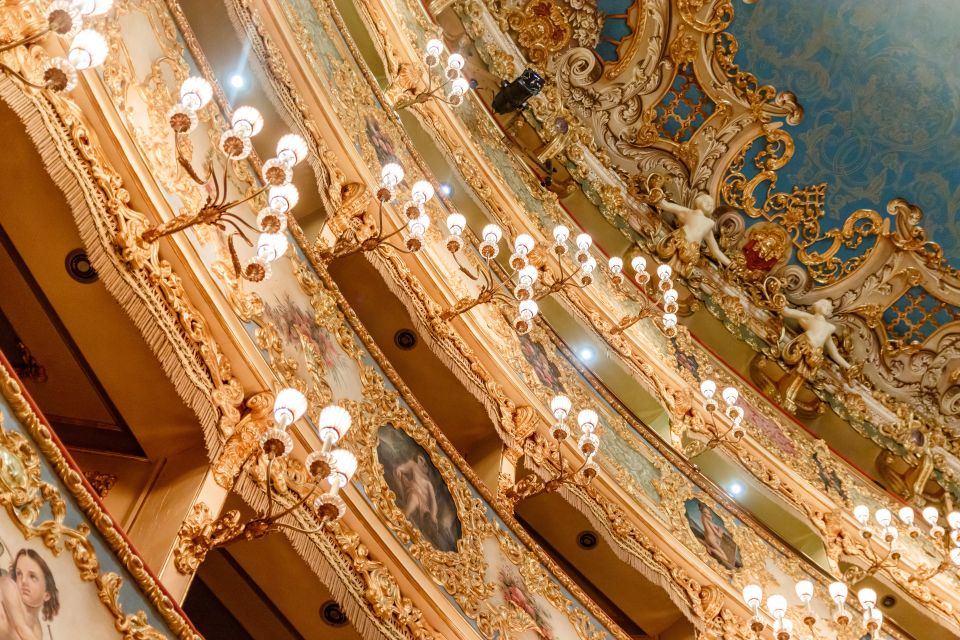
A big part of why this tour feels worth your time is that it doesn’t freeze La Fenice in the past. Today, the theatre places special emphasis on contemporary productions. The information shared during your visit includes modern work such as:
- Stravinski’s The Rake’s Progress
- Britten’s The Turn of the Screw
And the theatre is described as welcoming world premieres of these kinds of works. That matters because it reframes what you’re seeing. You’re not only standing inside an old costume. You’re standing inside a living institution that still plans major artistic events.
This is a smart way to tour an opera house. If you only focus on historic titles, you can leave feeling like the building is a relic. When the guide also connects you to current programming direction, you leave with a fuller picture of what La Fenice is today.



Royal box moments and other stops you’ll remember
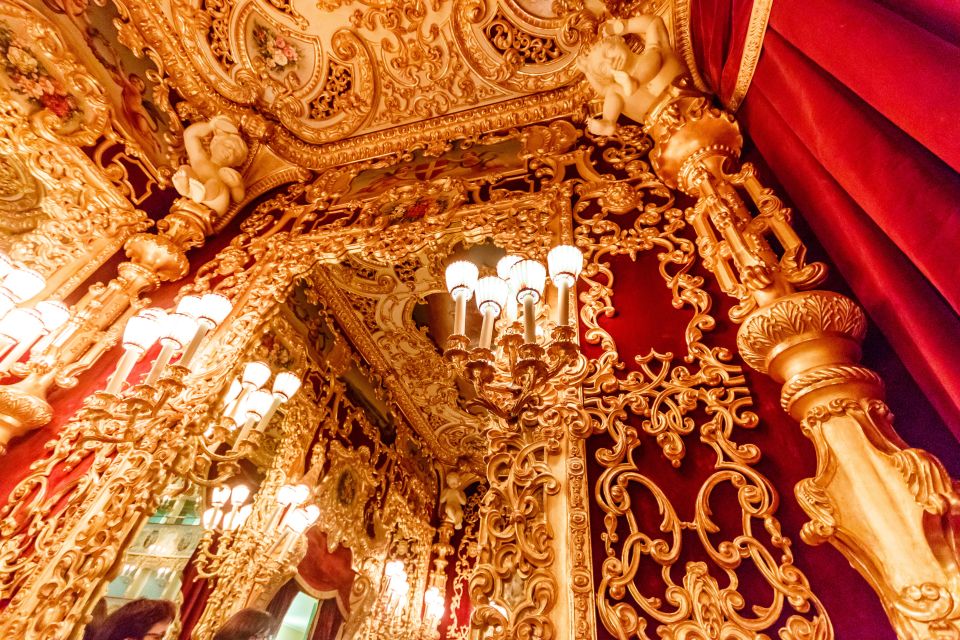
Most of the memories people take from this experience center on “I got to go there” moments—spaces that feel ceremonial and slightly cinematic. A common highlight is visiting areas like the royal box, which helps you understand how important certain viewpoints are in opera.
If you like extra context, look out for details that go beyond the seating diagram. One person mentioned an exhibition tied to Maria Callas, which adds a layer of meaning if you care about performers and not just composers.
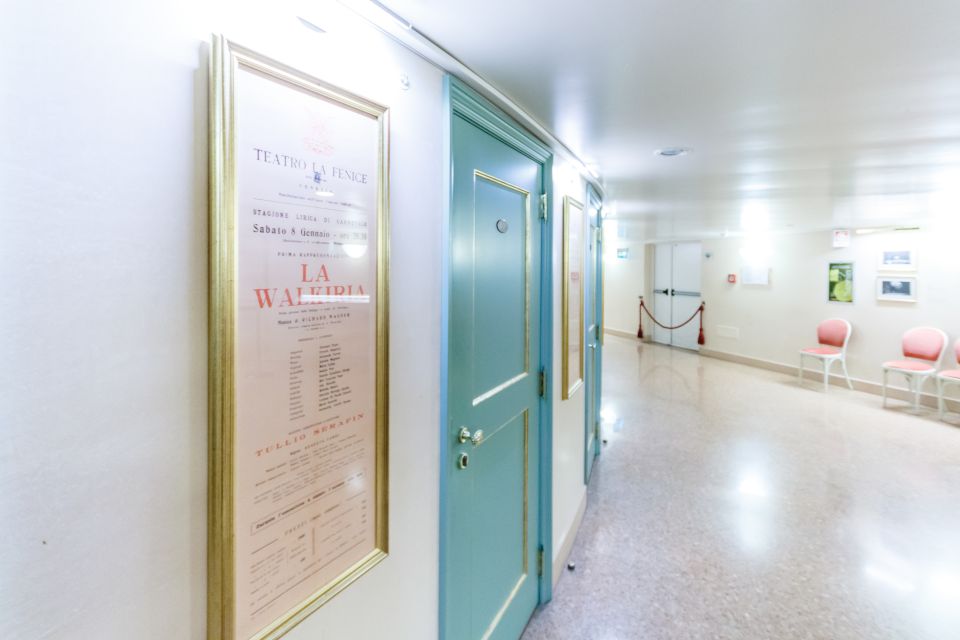
You might also hear about additional access elements depending on conditions. For example, someone reported seeing rehearsals, and another person said the guide worked around the theatre being closed for lighting testing. Translation: the tour is designed to show you the core highlights, but what’s available can vary behind the scenes.
There’s one more practical detail that’s worth knowing. A visitor noted that there’s a small cafe inside, and that they could stay after the tour to take in the atmosphere longer. If that works with your schedule, it’s a nice way to stretch the value of a short guided visit.
Price and value: is $28 fair for La Fenice?
At $28 per person for about 1 hour with a live English guide, this is the kind of Venice activity that fits both budgets and attention spans.
Here’s why I think it’s good value:
- You’re paying for interpretation, not just entry into a pretty building. The guide turns the space into something you can understand.
- It’s short enough to be low-risk. If your day is packed, you won’t feel stuck for half a morning.
- If you’re planning to see opera in Venice during the same trip, this kind of visit gives you a mental map of the venue so the performance day feels less confusing.
The main “value tradeoff” is that it’s not a long tour. If you’re hoping for a heavy backstage program or a super deep technical walkthrough, this won’t replace a full-day opera-focused experience. But for most people, it hits the sweet spot: enough context to make the building memorable.
Who this tour suits best
This works especially well if you:
- Want a high-impact Venice interior experience without a long time commitment
- Like classical music context, even if you don’t call yourself an opera person
- Are going to an opera performance around the same time and want to understand the venue first
- Prefer guided explanation in English rather than wandering alone
If you’re traveling with someone who isn’t sure about opera, this can still be a win. The theatre’s visual drama and the story behind major premieres give you enough non-music hooks to make it enjoyable.
Just keep in mind the accessibility limitation: it’s marked not suitable for wheelchair users.
Practical tips for a smooth start at the Fenice
The tour is straightforward, but Venice is Venice. A few small habits make a difference:
- Show up at the front of the Fenice entrance. That’s where the hostess meets you.
- Expect the main explanation inside the theatre, not on the walk.
- Bring a little patience if you arrive late. One guide apparently waited when someone had trouble locating the meeting point.
- Wear comfortable shoes. You’ll be moving through indoor spaces, and theatre tours often involve stairs or quick changes of viewpoint.
If you want to maximize the day, plan your tour so you still have time afterward—either to linger in the theatre atmosphere (some people report being able to stay longer) or to pair it with an opera evening nearby.
Should you book the Teatro La Fenice guided tour?
Yes, if you want a fast, high-meaningway way to experience one of Venice’s most famous opera houses. At $28 and about 1 hour, you get an English guide, clear historical context tied to famous composers and titles, and access to key interior spaces like areas associated with the royal box. That’s a strong deal for a city where time is always in short supply.
Skip it only if you need wheelchair accessibility, or if you’re looking for a long backstage-style program. Otherwise, this is one of those Venice tours that helps you see the city’s art side with your eyes wide open.
FAQ
How much does the Teatro La Fenice guided tour cost?
The price is $28 per person.
How long is the tour?
The tour runs for about 1 hour. Starting times vary, so check availability.
Is the tour offered in English?
Yes. The live tour guide speaks English.
Where do I meet the guide?
You meet in front of the Teatro La Fenice (Fenice) theater entrance.
Where does the tour end?
The activity ends back at the meeting point.
What’s included in the ticket price?
It includes a guided visit inside the theatre.
Is the explanation outside or inside the theatre?
The hostess meets you outside at the entrance, but the explanation takes place inside the theatre, not on the walk.
Can I cancel for a refund?
Yes. You can cancel up to 24 hours in advance for a full refund.
Can I book now and pay later?
Yes. You can reserve now and pay later to keep your plans flexible.
Is this tour suitable for wheelchair users?
No, it is not suitable for wheelchair users.
Can I stay inside the theatre after the tour?
Some people report that they can stay after the tour with their ticket, and one also mentioned a small cafe inside.