REVIEW · VENICE
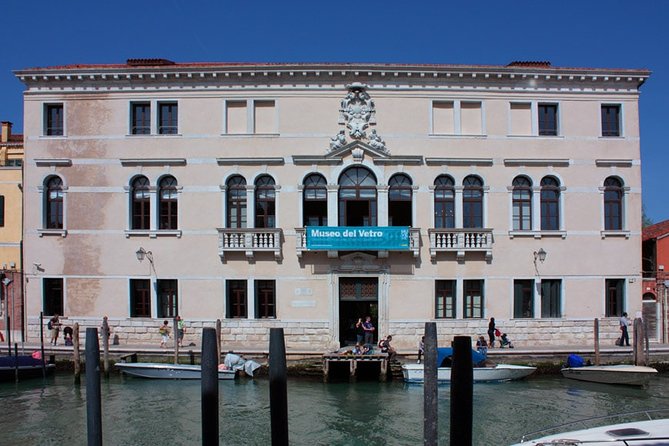
The Murano Glass Museum in Venice
Book on Viator →Operated by Weekend in Italy · Bookable on Viator
Venice’s glass story starts with old Roman shards. With this admission ticket to Museo del Vetro on Murano, you get ticketed entry meant to cut down on line stress, plus an English option so you can actually follow what you’re seeing. It is a focused visit, not a long tour, which is great when your day is packed with islands, bridges, and decisions.
I like that the collection is organized in a way that makes the history readable. You start with Roman-era works from the 1st to the 3rd century A.D., then move into the museum’s biggest payoff: the largest historical collection of Murano glass, with pieces dating from the 15th to the 20th century. That chronological flow helps you understand how styles and techniques evolved instead of feeling like you are randomly looking at glass cases.
One thing to consider: this museum experience is mostly looking and reading, not hands-on or interactive. If you are planning a visit with younger kids, plan on a shorter attention span than you might hope, since the exhibits are not built like a kid-focused activity.
In This Review
- Key highlights worth planning for
- Museo del Vetro on Murano: why this ticket fits Venice days
- The museum’s timeline: Roman clues to Murano glass masterworks
- Ground floor: Roman works (1st–3rd century A.D.)
- First floor: the core Murano story (15th–20th century)
- Following the rooms: how to use the audio guide without rushing
- Garden break and the museum shop: a pleasant add-on, not the main event
- How much time you really need for 1 to 3 hours
- Price and value: what $26.43 buys you in Venice time
- Getting to Murano and the €5 access fee on some day trips
- Watch-outs: vouchers, time-saver expectations, and fit for your group
- Who should book this Murano Glass Museum ticket
- Should you book this Murano Glass Museum ticket?
- FAQ
- How long is the Murano Glass Museum visit?
- What does the ticket price include?
- Is this experience available in English?
- When will I receive confirmation after booking?
- Are there any extra fees for day visitors staying outside Venice?
- Can I change or cancel the booking?
Key highlights worth planning for

- Ticketed entry that helps you get in smoothly and keep your Murano day on track
- Ground-floor archaeological section featuring Roman glass works from the 1st to the 3rd century A.D.
- First-floor chronological display leading to the museum’s large historical Murano collection (15th–20th century)
- Audio guide in multiple languages to help you pace the rooms you care about most
- A calm garden area that is peaceful but not huge, so treat it as a bonus pause
Museo del Vetro on Murano: why this ticket fits Venice days
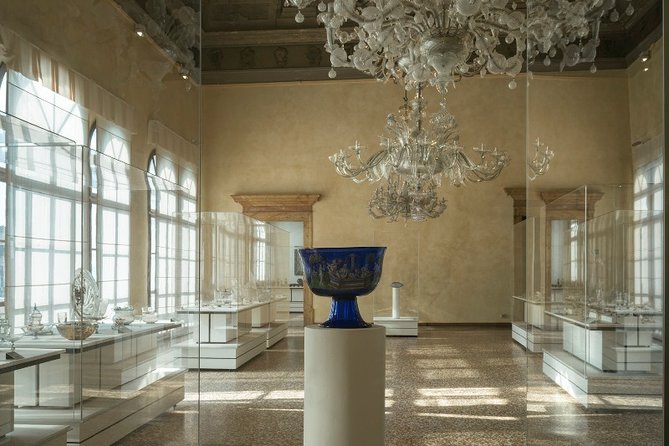
Murano can feel like a quick detour or a whole separate plan, depending on how you schedule your Venice time. This ticket works well when you want a clear, museum-centered block: get in, see the main collection, then move on. The visit is listed at about 1 to 3 hours, which is a realistic range for a museum where you might skim or slow down depending on your interest.
The best practical value here is the included admission ticket plus secure entry. Venice days have a rhythm. You do not want to lose that rhythm hunting for lines or figuring out the last steps at the door. This option is designed to simplify entry so you can spend your energy on the experience instead of the queue.
Another small but meaningful point: the tour is offered in English. That matters in a museum, because your enjoyment rises fast when you can actually track what each room is telling you.
You can also read our reviews of more museum experiences in Venice


The museum’s timeline: Roman clues to Murano glass masterworks
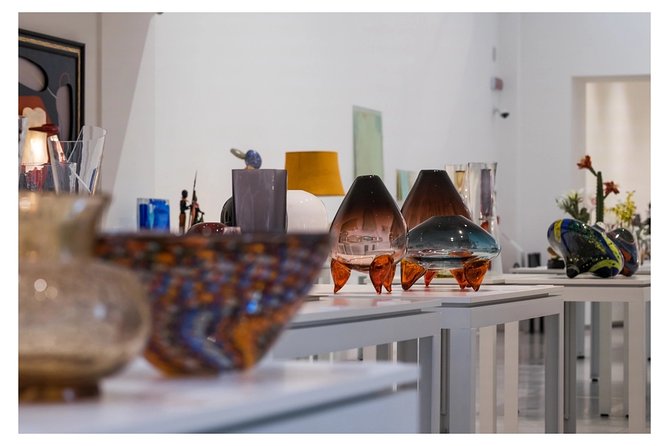
The museum experience is built around a timeline, and it pays off. On the first floor, the collection is arranged chronologically, starting with an archaeological section on the ground floor and then expanding into the major historical collection. If you like seeing how design changes over time, this layout makes it easier to connect the dots.
Here is the key structure you should expect:
Ground floor: Roman works (1st–3rd century A.D.)
This is where you begin before Murano glass fully takes center stage. The ground-floor archaeological section includes noteworthy Roman works dating from the 1st to the 3rd century A.D. Even if you are only half-paying attention at first, this part helps you understand that glassmaking long predates the famous Murano style.
Why it matters: it gives you context. When you later see the 15th–20th century masterpieces, you are not just admiring objects in isolation. You are seeing a tradition with earlier roots.
First floor: the core Murano story (15th–20th century)
The first floor is where the museum earns its reputation. This is home to the largest historical collection of Murano glass in the world, with pieces dating from the 15th to the 20th century. Many items are described as world-famous masterpieces, which tells you what to aim for if you only have time to hit the highlights.
What makes this collection especially useful for a self-guided visit is that the museum’s rooms are organized by time period. That means you can decide how deeply to go room-by-room instead of trying to absorb everything at once.
Following the rooms: how to use the audio guide without rushing
If you want to enjoy a museum like this, pace is everything. You will likely find it easiest to move through the rooms in order, letting the time periods guide you. One of the biggest practical helps mentioned in feedback is that the museum offers a free audio guide in different languages. When you have an audio track, you can slow down in the rooms that grab you and skip ahead when you are ready.
Here is a smart way to do it:
- Start with the ground-floor Roman area just long enough to set your context.
- On the first floor, commit to the chronological path. Pick one or two rooms to linger in longer, and let the rest support your overall timeline understanding.
- If you feel yourself getting glass-fatigued, step back and focus on what is changing: shape, ornament, color choices, and decorative techniques.
One caution: this is not a “press buttons, do activities” museum. It is exhibit-focused. If you come expecting hands-on learning, you may feel a bit let down. But if you show up ready to look closely, you will likely enjoy how much variety you can notice across the centuries.






Garden break and the museum shop: a pleasant add-on, not the main event
After you work through the main rooms, you may have time to stretch your legs in the garden area. It is described as tranquil, which is exactly what you want after time indoors. It is also noted as not extensive, so treat it as a quiet reset rather than a second attraction with its own time demand.
The museum shop is small, and that is not necessarily a negative. You are on Murano, where you can find glass shops throughout the island, so you do not need the museum to be your only shopping stop. If you are the type who likes to browse for smaller items like paperweights, ornaments, or simple souvenirs, the wider Murano shop scene is likely more fun than trying to judge the museum shop alone.
How much time you really need for 1 to 3 hours
The “1 to 3 hours” range is accurate enough that you can tailor your visit. If you are chasing major highlights, you can do it closer to the shorter end. If you read and listen carefully, you will naturally drift toward the longer end.
Here is how I’d plan your pacing based on the museum’s structure:
- Around 60–90 minutes: Fast but not frantic. Ground-floor context plus the first-floor rooms at a moderate speed, using the audio guide lightly.
- Around 2 hours: The sweet spot for most people who actually want to understand glass design evolution. You linger in a few time periods and take your time with the world-famous pieces.
- Near 3 hours: Best if you like reading labels and listening through multiple language tracks, plus adding the garden pause.
If you are visiting with kids, plan shorter. A museum without interactive elements can work, but it usually has a better chance when the kids are already curious about art, design, or history. One example mentioned was that a 10-year-old’s interest faded quickly, which is a helpful warning for planning your day.
Price and value: what $26.43 buys you in Venice time
The listed price is $26.43 per person. For Venice, that is not an impulse-cheap museum ticket, but it is also not priced like a high-end guided experience. The value comes from what is included: the entrance ticket and secured entry meant to save time.
This is the key way to judge whether it is worth it for you:
- If you hate waiting, the time-saving angle can make the price feel fair fast.
- If you are traveling during busy periods when lines and uncertainty are common, this kind of admission product usually pays for itself in stress reduction.
- If you are the type who loves museums but does not care about cutting lines, you might question whether the extra cost is necessary. Still, the ticketed approach can keep your day from going off-script.
Also, the average booking window is about 23 days in advance. That suggests demand is real enough that planning early can help you get the slot you want rather than gambling on whatever is left.
Getting to Murano and the €5 access fee on some day trips
Practical detail that can affect your day: there is mention of an additional €5 access fee on certain dates. This fee applies to most people staying outside Venice who are visiting for the day. If that sounds like you, check the official info here: https://cda.ve.it for the exact dates and exemptions.
It is worth factoring this in when you are building your budget, because it changes the real cost of your outing. Even if the museum ticket itself is straightforward, Murano day trips can include other fees depending on your routing and when you go.
Also, the museum is near public transportation. That helps because Murano logistics can be easiest when you keep the plan flexible and don’t rely on private transport you did not arrange.
Watch-outs: vouchers, time-saver expectations, and fit for your group
A ticket product is only helpful if you can actually use it at the door. One problem that comes up is that if your ticket details do not arrive as expected, you can get stuck at the entry point. The practical advice is simple: confirm everything before you leave and keep your booking confirmation accessible. If you are booking through an outside platform, double-check that the voucher you receive is valid for the date and time you plan to enter.
On the experience side, two fit-related watch-outs matter:
- Not interactive: This museum is for looking, listening, and learning at your own pace. If your group needs activity-based entertainment, you may feel impatient.
- Garden and shop are small: They are pleasant extras, but they are not the reason to book. Your time should be mostly spent in the glass galleries.
Finally, note that this experience is marked as non-refundable and cannot be changed. That is common for timed admission. If your travel plans are fragile, think twice and make sure you can commit to your date.
Who should book this Murano Glass Museum ticket
This is a good match if you:
- Care about art history, design, or the evolution of decorative techniques
- Want a structured museum visit where the timeline layout does the organizing for you
- Prefer a calm, self-paced experience rather than a busy guided scramble
- Like the idea of a free audio guide to support your pacing
It is less ideal if you:
- Want hands-on activities for kids
- Need lots of modern interactivity to keep attention
- Are looking for more than one major attraction worth of entertainment in the same stop
The rating average is 3.5 based on 33 reviews, which tells me expectations are mixed. The most positive feedback centers on the museum’s organization and the usefulness of the audio guide, while the negatives tend to cluster around ticket delivery problems and the mismatch between what people expected and how the museum is actually presented.
Should you book this Murano Glass Museum ticket?
If you want a focused Murano stop and you care about glass design and history, I think this is a solid booking. The combination of admission included, ticketed entry, and a chronological collection gives you real value, especially if you are trying to protect your time in a city that can swallow hours fast.
Book it if you’re the type who enjoys reading, listening, and looking closely at objects across time periods. Skip it if your group wants interactive activities or if you are worried about committing to a fixed date.
If you do book: plan for a real museum pace, bring your confirmation details, and decide ahead of time how long you want to spend so you can enjoy Murano after the galleries instead of watching the clock.
FAQ
How long is the Murano Glass Museum visit?
The experience is listed as lasting about 1 to 3 hours.
What does the ticket price include?
Your ticket includes entrance to the Museo del Vetro.
Is this experience available in English?
Yes, the experience is offered in English.
When will I receive confirmation after booking?
Confirmation is expected within 48 hours of booking, subject to availability.
Are there any extra fees for day visitors staying outside Venice?
On certain dates, most people staying outside of Venice who visit for the day may need to pay a €5 access fee. Check https://cda.ve.it for details and exemptions.
Can I change or cancel the booking?
No. The experience is non-refundable and cannot be changed for any reason.