REVIEW · VENICE
Private tour Rialto area and Frari Church 2-Hour Tour
Book on GetYourGuide →Operated by Bucintoro Viaggi · Bookable on GetYourGuide
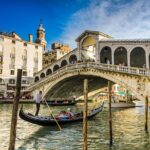
Rialto then Frari, in two focused hours. What makes this tour fun is how quickly it gets you from the city’s most symbolic bridge-and-market scene to one of Venice’s most impressive Gothic interiors. I love the way a private guide helps you read Rialto Bridge (Antonio Da Ponte’s one-arch design and the loggia above), and I like that you finish with Frari Church, where Bellini, Titian, and Vivarini share space with the celebrated Monument to Antonio Canova.
One thing to plan around: Rialto Market is closed on Sunday and Monday, and church visits can be limited during religious functions. If that’s your travel day, it’s worth reserving with the provider and confirming what access looks like.
In This Review
- Key things you’ll notice on this Rialto-to-Frari private walk
- Starting at Campo San Luca: the easiest way to orient yourself fast
- Rialto Bridge up close: the one-arch icon and the shops above
- From the New and Old buildings: Sansovino and Scarpagnino’s footprint
- San Giacometto Church: a rebuilding story you can feel in the neighborhood
- The fruit and fish market area: what you’re really there to see
- Walking toward Frari Church: Gothic style in a very Venetian setting
- Inside Frari: Bellini, Titian, Vivarini, and Canova’s monument
- How the 2-hour private format works (and who it suits)
- Price and value: $226.57 per group up to 10
- Small risks to know before you commit
- Should you book the Rialto area and Frari Church private tour?
- FAQ
- How long is the Rialto area and Frari Church private tour?
- Where does the tour start and end?
- What’s included in the price?
- Are entrance tickets to churches included?
- Which languages are available for the guide?
- Is the tour wheelchair accessible?
- Is the Rialto Market open every day?
- Can you always visit the churches inside?
Key things you’ll notice on this Rialto-to-Frari private walk
- Antonio Da Ponte’s Rialto Bridge in context: you’ll see the one great arch and the shop-lined loggia with the right local explanations.
- Sansovino and Scarpagnino buildings along the way, including what’s housed there today and how the façade fits the neighborhood.
- San Giacometto Church: you’ll hear the story of its XVI-century rebuilding after the fire that destroyed it almost completely.
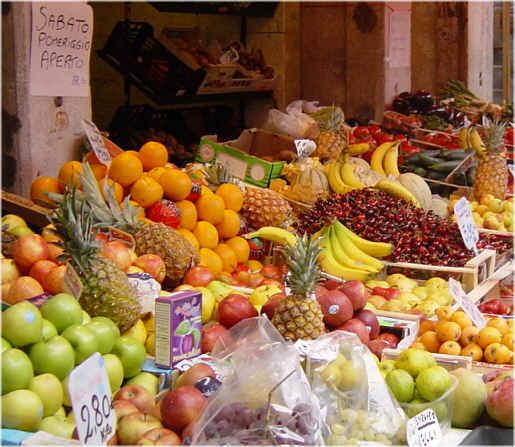
- Fruit and fish market colors (when open), plus what you’re looking at beyond the obvious.
- Frari Church art and sculpture: paintings by Bellini, Titian, and Vivarini, plus the Monument to Antonio Canova.
- A real private pace: 2 hours with a guide meant for questions and slower walking when you want photos.
Starting at Campo San Luca: the easiest way to orient yourself fast
You begin at Campo San Luca, right in front of the Bucintoro Viaggi agency. That matters because you’re not dropped into Venice’s maze with no plan. You start at a place that naturally feeds into Rialto, and from there the guide shapes your walk into a sensible first introduction to a “less tourist-free” slice of the city.
From the first steps, I like the logic of the route: Rialto isn’t just a postcard. It’s a working-feeling zone with architecture that tells you who built, sold, ruled, and traded here over time. In two hours, you won’t see all of Venice, but you can absolutely get your bearings—and that’s a big win on a first trip.
You can also read our reviews of more private tours in Venice
Rialto Bridge up close: the one-arch icon and the shops above
The tour’s walk begins with Rialto Bridge, and it’s exactly the right choice. This bridge is famous for a reason, but it also has details that are easier to spot with a guide standing beside you.
You’ll learn that the bridge was built at the end of the XVI century by Antonio Da Ponte. The design is centered on one great arch, and then above it you get the loggia that runs along both sides with shops. That loggia isn’t just decoration. It explains the bridge’s role as a public trading corridor, not only a crossing point.
If you’re the type who likes structure—how buildings and streets relate—this stop helps you understand Venice as a set of human systems: movement, commerce, and ceremony all packed into one dense footprint.
Practical tip: Rialto gets crowded. With a private guide, you can time your photos and keep moving without playing leapfrog across groups.
From the New and Old buildings: Sansovino and Scarpagnino’s footprint
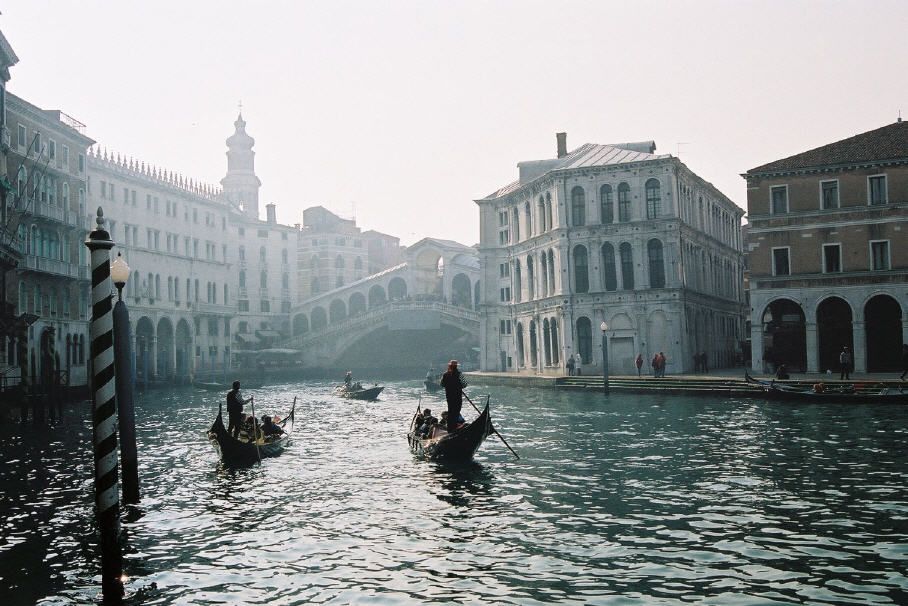
After the bridge, the tour shifts into what I think is the best part of “architecture walking”—you don’t just look at a façade, you learn what it used to do and what it does now.
You’ll pass the New Buildings built by Sansovino in the XVI century. Today, this area is home to the Judicial Court and Offices. Seeing that change in use in the same block helps you understand how Venice evolves without fully tearing itself apart. The older shell still carries the city’s identity; it just serves different needs.
You’ll also see the Old Buildings built by Scarpagnino, again from the XVI century. This is the kind of contrast that makes a guide’s narration worthwhile: even if the buildings look similar at first glance, the details and intentions behind them help you “read” the street instead of just taking it in.
If you care about how cities keep older layers while still functioning, this is a stop that rewards paying attention.
San Giacometto Church: a rebuilding story you can feel in the neighborhood
The tour includes San Giacometto Church, rebuilt by Scarpagnino in the XVI century after a fire destroyed it almost completely. That’s a key detail because it changes how you look at the church building itself. You’re not just seeing a structure—you’re seeing resilience written into stone and design.
Venice has plenty of surviving buildings, but fires, flooding, and reconstruction are part of the city’s reality. When your guide points out that this church rose again after near-total loss, the stop becomes more than a quick glance. It becomes part of the city’s timeline.
Do note: the tour mentions church access can be restricted during religious functions. So if you’re hoping for maximum interior time, plan for that possibility.
The fruit and fish market area: what you’re really there to see
A major highlight is the colorful fruit and fish market area. If your day isn’t Sunday or Monday, you’ll get the atmosphere that makes Rialto feel like a living marketplace rather than a museum street.
Even if you don’t buy anything, you’ll benefit from standing where the action happens and hearing what your guide points out—what’s being sold, how the market structure shapes the flow of people, and why this area is so tied to Rialto’s identity.
What I like about including the market is that it breaks the “only churches and palaces” rhythm. It grounds the tour in everyday Venice, where commerce and culture share the same space.
Again, check your calendar: Rialto Market is closed on Sunday and Monday, so your experience there will be different on those days.
You can also read our reviews of more tours and experiences in Venice
Walking toward Frari Church: Gothic style in a very Venetian setting
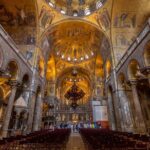
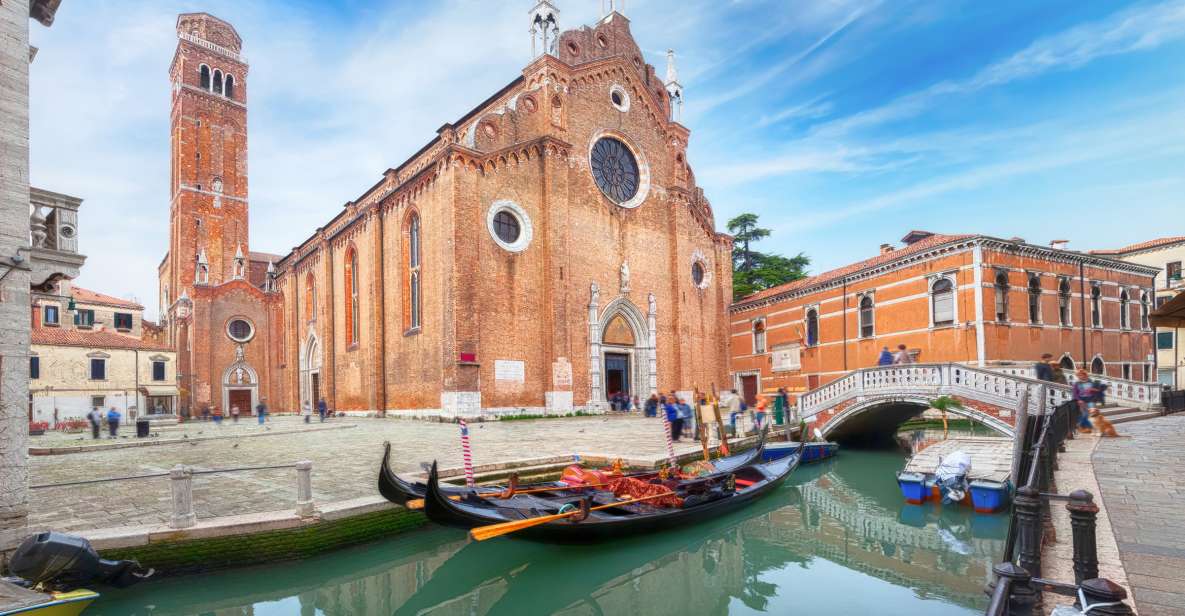
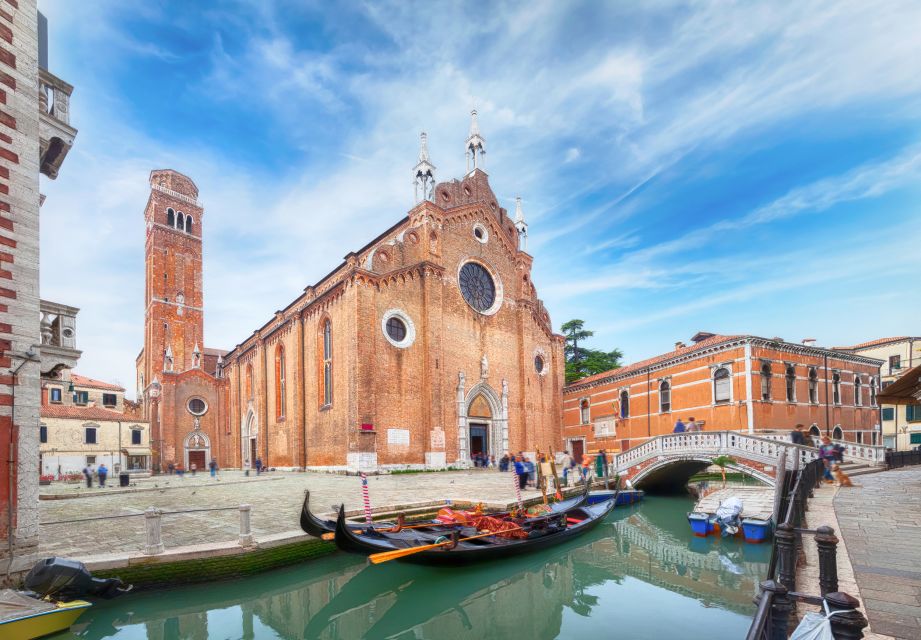
Then you head to Frari Church, officially the Basilica di Santa Maria Gloriosa dei Frari. The building dates to the early XIV century and is known for its Gothic style—exactly the kind of contrast that helps you appreciate Venice more broadly than just the lagoon and bridges.
Your guide’s job here is to get you to notice the interior as a designed experience. Gothic churches tend to draw your eye upward and organize light, space, and attention around major artworks and monuments. When that’s explained in the moment, the church stops being a generic “big building” and becomes a place with purpose.
Inside Frari: Bellini, Titian, Vivarini, and Canova’s monument
This is the part that many people remember, and for good reason. Frari’s interior includes significant paintings by Bellini, Titian, and Vivarini. Even if you’re not a hard-core art person, those names do carry weight because they represent major Venetian painting traditions.
Your guide also points out the Monument to Antonio Canova, designed by the artist himself. That’s a special angle: you’re not only looking at art that happened to be in Venice—you’re seeing a work tied directly to one of the most famous Neoclassical sculptors of the time.
If you like your art with context, this stop is valuable. The guide can help you understand what you’re looking at—composition, placement, and why these works live in this particular church.
One more practical thing: entrance tickets are not included. So you’ll want to budget a bit extra for church admission depending on how access is handled during your visit.
How the 2-hour private format works (and who it suits)
This is a 2-hour private tour with private guide 2 hour disposal. That timing is not an accident. It’s long enough to connect the dots between Rialto and Frari, but short enough that you can still enjoy Venice afterward without feeling “locked” into a schedule.
I think this format works best if:
- You want your first Venice day to feel organized.
- You like compact routes with expert guidance.
- You’re traveling with kids or anyone who won’t enjoy a long church-only marathon.
Because it’s private and your group can ask questions, you get more from small moments—like why Rialto’s bridge design mattered or what the Sansovino and Scarpagnino buildings represent in the neighborhood’s power structure.
Starting times vary, so check availability for the schedule that fits your energy level and crowds.
Price and value: $226.57 per group up to 10
The price is $226.57 per group up to 10 for 2 hours. That’s how you should read it: not as a “per person” deal, but as a group cost for a private guide.
Value depends on your group size:
- If you’re a couple or small group, you’ll pay more per person than a “join a group” style tour, but you get control of pacing and questions.
- If you’re traveling with friends or family and can fill out the group cap, the price can feel quite reasonable for a focused, guided route that includes two major anchors: Rialto Bridge area and Frari Church.
Also remember: church entry tickets are not included, so your real “all-in” cost will be a little higher if you plan to go inside during your visit.
Small risks to know before you commit
This experience is usually straightforward, but I’d keep two real-world considerations in mind.
First: access changes by day and by religious activity. The market is closed on Sunday and Monday, and the tour notes that churches can’t be visited during religious functions. If you’re set on a specific date, request confirmation as early as possible.
Second: private guide availability can sometimes be the weak link in any local-provider tour system. There can be cases where a provider cancels close to the start time if a guide can’t be arranged. It’s not something you can “solve” as a customer beyond planning with flexible options, but it’s worth keeping in mind if your trip is tight.
On the upside, the tour offers flexibility tools like free cancellation up to 24 hours in advance and a reserve now, pay later style option.
Should you book the Rialto area and Frari Church private tour?
If your goal is smart first orientation—Rialto’s architecture and market energy, then a major art-filled church—this tour is a strong fit. It’s short, guided, and built around two anchors that give you a lot of Venice “meaning” quickly.
I’d especially consider booking if you:
- Want private pacing instead of herding with a crowd.
- Like learning the “who built it and why” behind famous sights.
- Want a route that ends with one of Venice’s most significant interiors.
Skip or think twice if your travel dates land on Sunday or Monday and you’re counting on the market atmosphere, or if your schedule makes it hard to adjust to possible church-visit limitations during religious functions.
If you can travel on a day when the market is open and you’re flexible about church timing, this is the kind of compact private tour that can make your whole Venice trip feel easier.
FAQ
How long is the Rialto area and Frari Church private tour?
The tour lasts 2 hours.
Where does the tour start and end?
It starts at Campo San Luca, in front of the Bucintoro Viaggi Agency. It ends back at the same meeting point.
What’s included in the price?
You get a private guide for 2 hours.
Are entrance tickets to churches included?
No. Entrance tickets to churches are not included.
Which languages are available for the guide?
The guide is available in English, Italian, German, and French.
Is the tour wheelchair accessible?
Yes, the tour is wheelchair accessible.
Is the Rialto Market open every day?
No. Rialto Market is closed on Sunday and Monday.
Can you always visit the churches inside?
Church visits can be limited during religious functions, and the tour notes that reservation on request is needed for these situations.