REVIEW · VENICE
Venice Film Tour: Explore Iconic Movie Locations
Book on Viator →Operated by deTourist Venice Valerio Coppo · Bookable on Viator
Cinema fans, this walk rewrites Venice. This Venice Film Tour maps famous scenes onto real spots across the city, so you don’t just look at landmarks—you understand why filmmakers kept coming back to them. I like how you get movie-location context tied to specific films, and I also like that the pacing is quick, with a guide like Valerio Coppo steering you toward lesser-walked corners instead of only the big-photo routes.
A heads-up: you’ll do lots of short stops in a compact area, so it’s not a sit-down tour. Also, the experience needs good weather, and if you’re visiting Venice as a day trip from outside the city on certain dates, you may face a €5 access fee.
In This Review
- Key highlights you’ll feel during the walk
- Why Venice movies work so well in real life
- How the 2-hour pace actually feels
- From the station that starts the story
- Campo del Ghetto: Visconti’s passion begins in plain sight
- San Stae church and the canal-facing funeral boats
- Grand Canal: where cinema started moving
- Rialto markets: Spiderman stunt and Bond-style fiction
- Santa Maria dei Miracoli: Welles’ wedding scene in marble
- Scuola Grande di San Marco and modern prestige TV
- Ca’ Rezzonico: Drax’s office in Moonraker
- Teatro La Fenice: theater glamour with fire history
- The Bovolo stair: Othello’s house and a legend
- Campo Santa Maria Formosa: where Spiderman staged damage
- San Barnaba: Indiana Jones clues and a canal mishap
- Gritti Palace: from Doge residence to Woody Allen scenes
- Santa Maria della Salute and the Ripley moment across the canal
- Piscina Sant’Agnese: jogging and freshening up in summer stories
- Hotel Danieli: de Sica, Bond, and a wedding night
- Doge’s Palace and San Marco’s film-ready energy
- Price and value: is $185.43 worth it?
- Who this tour suits best
- Should you book the Venice Film Tour?
- FAQ
- How long is the Venice Film Tour?
- What language is the tour guide using?
- Is pickup included?
- What’s included in the price?
- Are tickets needed for the stops?
- Is there an access fee for some day visitors?
Key highlights you’ll feel during the walk
- Real scenes, not just trivia: you connect story moments to exact streets, churches, and palaces
- Tablet clips for quick recognition: you can see a scene right alongside the setting
- Routes that dodge the worst crowds: expect more breathing room than the standard checklist
- Film plus Venice context: the guide shares city history as it relates to what’s on screen
- Two hours with plenty of famous stops: Bond, Visconti, Welles, Allen, and more, all in one loop
Why Venice movies work so well in real life
Venice is built for cinema: tight passages, dramatic facades, water that frames everything, and neighborhoods that feel like they’re already half a set. That’s what makes this tour fun even if you’re not a hardcore film person. You start seeing the city like a director sees it—what angles look good, where a crowd would naturally gather, and how the same square can feel royal in one decade and spooky in another.
What’s smart here is that the guide doesn’t treat the city like a scrapbook of random references. The route is designed around the way Venice “shows up” in movies: arrival points, ritual spaces, theatrical backdrops, and the waterline that turns a simple boat ride into spectacle. I also like that the tour uses very recognizable titles—Bond, Indiana Jones, Othello, Woody Allen—so you can jump in fast without homework.
You can also read our reviews of more tours and experiences in Venice.

How the 2-hour pace actually feels
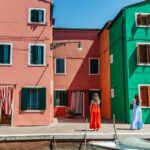
The tour runs about 2 hours, with many stops ranging roughly from 5 to 15 minutes. That format works in Venice. You’re not waiting around for long entries, and most locations are quick to view from the outside—perfect when the weather changes, or when you want to keep moving while the light is good.
It’s also a practical setup for a private experience. This is a private tour/activity, meaning it’s only your group. In real terms, that often translates into fewer interruptions and more room for questions—especially if you’re going with kids or you want restaurant advice afterward.
Tip for your comfort: wear shoes that handle uneven stones and short curving bridges. You’ll be standing, turning, and walking between stops, even if each stop is brief.
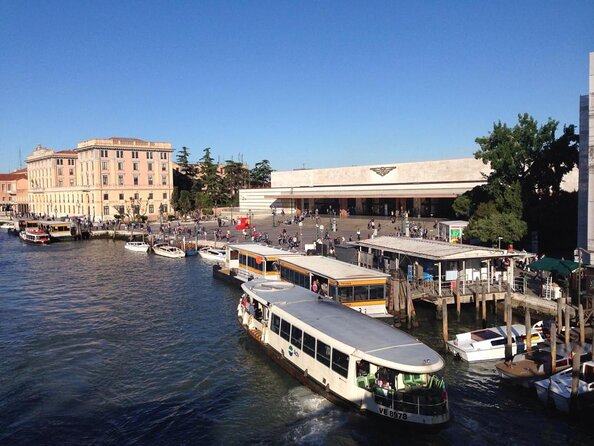
From the station that starts the story
The tour’s start is at a railway station that shows up in multiple movies—so it’s a clever way to begin. It’s where you’d naturally meet a character arriving in the Floating City.
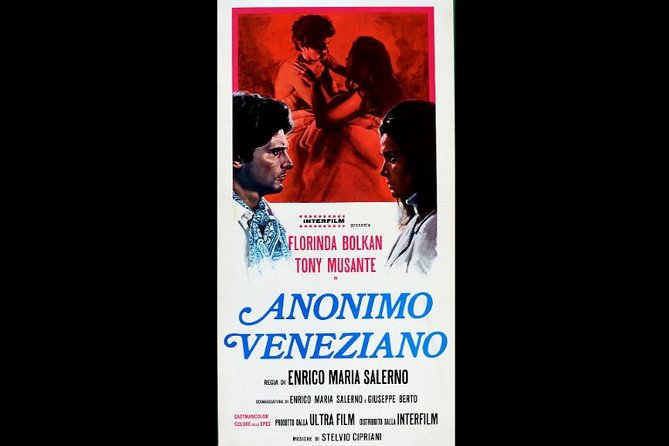
This station appears in The Anonymous Venetian (1970) and The Tourist (2010), and it’s especially unforgettable in Venice, the moon and you (1958). That one is tied to Alberto Sordi, including a memorable moment where his character “hooks” foreign tourists—something that sounds silly on paper until you see how Venice stages arrivals so well.
Why this matters: it sets the tone. Venice in movies isn’t only about romance and costumes. It’s also about the moment you step into a place that already feels dramatic.
Campo del Ghetto: Visconti’s passion begins in plain sight
Next is campo del ghetto in the Jewish Ghetto, where Luchino Visconti sets the opening passion in Senso (1954). You’re in the kind of large campo that makes courtship feel both public and private at once—wide enough to frame emotion, quiet enough that details stand out.
This stop is a good example of why this tour is more than “point and look.” When the guide connects the setting to the character dynamic—Countess Livia Serpieri and Austrian lieutenant Franz Mahler—you don’t just see old streets. You understand why the scene starts here and what the space adds to the mood.
San Stae church and the canal-facing funeral boats
At Chiesa di San Stae (Eustachio), the tour points you toward the kind of cinematic ending that sticks. In Don’t Look Back Now (1973), funeral boats in the final scenes moored in front of this church, with its imposing Baroque facade overlooking the Grand Canal.
This is a short stop, but it’s visually powerful. Even if you don’t remember the exact shot, you can usually spot why the director chose this church: it sits in a way that makes the canal feel like a stage floor.

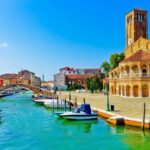
Grand Canal: where cinema started moving
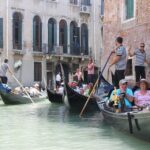
Then comes the Grand Canal, and this stop is a big deal for film nerds and casual fans alike. In 1896, Alexandre Promio filmed what’s often described as the first rundown in cinema—boats and men at work. That’s not a modern movie fact. It’s a “Venice has been on camera for a long time” fact.
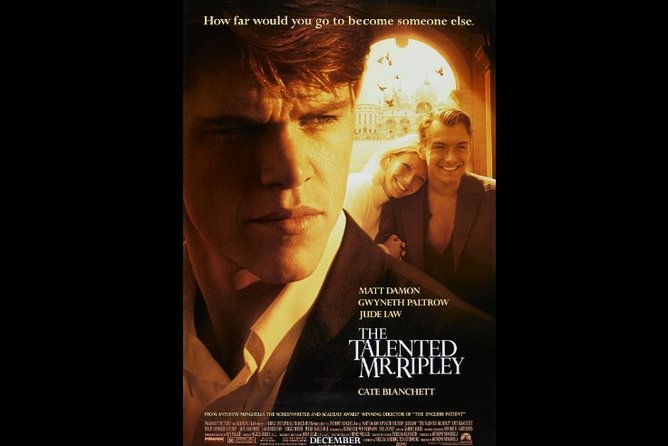
The Grand Canal keeps showing up across decades and genres. The tour highlights how the canal and its buildings appear in films like The Talented Mr. Ripley (1999), where Ripley’s Venetian apartment is described as a fusion of two buildings overlooking the water. You also get The Merchant of Venice (2004) in the mix.
Practical note: this is also the most “photo-friendly” stop, which means it can feel busy. The advantage here is that the guide’s route helps you spend your time where you can actually register the details, not just fight for angles.
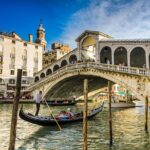
Rialto markets: Spiderman stunt and Bond-style fiction
At Mercati di Rialto, the tour brings you to the fish market where a The Tourist (2010) scene shows Johnny Depp launching himself from a terrace onto a stall. It’s a reminder that Venice can look whimsical and chaotic on film—because the city is already full of movement.
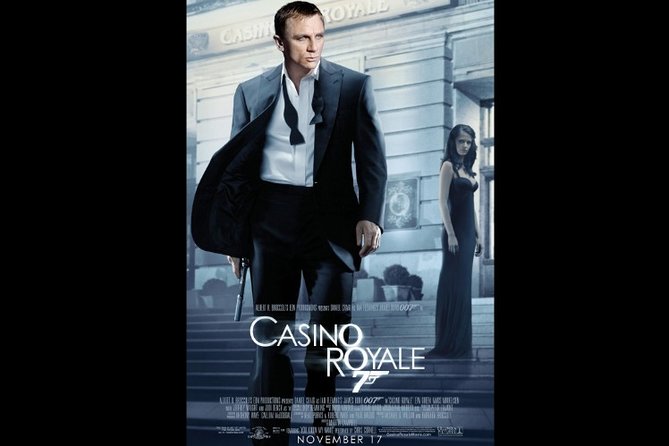
Across the canal, the stop connects to Casino Royale (2006), where a palace collapsing is part of the movie’s fiction. Seeing the real surroundings makes the “impossible” feel like it’s at least playing near something believable.
This is also one of those stops where your brain starts doing the matching work. You’ll likely find yourself noticing terraces, sightlines, and the way crowds naturally gather in the same kind of places the camera likes.
Santa Maria dei Miracoli: Welles’ wedding scene in marble
Next is Chiesa di Santa Maria dei Miracoli, a small but striking church adorned with polychrome marble. It appears in Othello (1952), where Orson Welles chose it for the wedding of Otello and Desdemona.
Just behind the church, the tour also mentions the flower shop from Bread and Tulips (1999)—a shop that exists in the story, not in the same way in real life. This is one of the tour’s best tricks: it teaches you how to notice what’s real, then how filmmakers borrow the look of real places.
Scuola Grande di San Marco and modern prestige TV
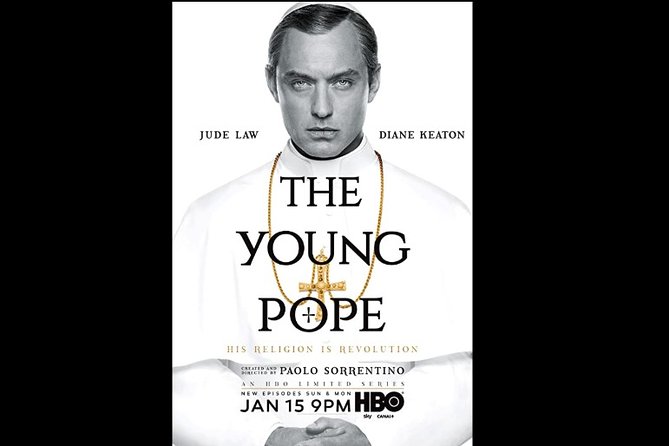
At Scuola Grande di San Marco, the tour connects you to the Netflix series The New Pope (2019) directed by Paolo Sorrentino, starring Jude Law.
Even if you haven’t seen it, this stop is useful because it shows how Venice isn’t stuck in old cinema. The city’s power translates to modern storytelling too—especially when the camera wants grand interior drama without leaving Venice.
Ca’ Rezzonico: Drax’s office in Moonraker
Ca’ Rezzonico is a civic museum today, and the tour spotlights it as the fictional Drax’s office in Moonraker (1979). Bond movies love places with scale and elegance, and that palace setting has the right feel for big-screen villains and secret meetings.
You’ll get a quick sense of how production design piggybacks on real architecture. The palace already reads as important. The movie just decides what kind of important it becomes.
Teatro La Fenice: theater glamour with fire history
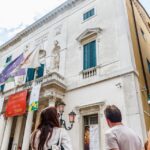
At Teatro La Fenice, the tour reaches one of Venice’s most emotional cultural landmarks. In Senso (1954), the film begins during a performance of Il Trovatore staged here, giving you a cinematic first impression of the theater’s splendor.
Here’s the real-world twist the guide highlights: the theater was devastated by a fire in 1996, rebuilt, and reopened in 2003. The name La Fenice means the phoenix, tied to a history of destruction and rebirth, including an earlier fire in 1836.
This is one of the stops that makes the city feel alive in time, not just in film.
The Bovolo stair: Othello’s house and a legend
Then you climb into (figuratively) the world of Scala Contarini del Bovolo. The tour points to a legend: this is connected to Desdemona’s house in Othello (1952), where Orson Welles chose it for Brabanzio’s home (in the story set in Cyprus).
Even without chasing the legend, you’ll appreciate the structure itself. Venice loves vertical drama—stairs, terraces, and sightlines—and this stairway fits that language perfectly.
Campo Santa Maria Formosa: where Spiderman staged damage
At campo Santa Maria Formosa, the tour references Spiderman: Far From Home (2019), where the area was shown as destroyed. Don’t worry—any devastation is purely fictional on screen.
This stop is worth it because it turns a familiar Venice corner into something you can “rewatch” in your head. When you see the real plaza and facades again after hearing the movie connection, the city feels like it’s playing along with your imagination.
San Barnaba: Indiana Jones clues and a canal mishap
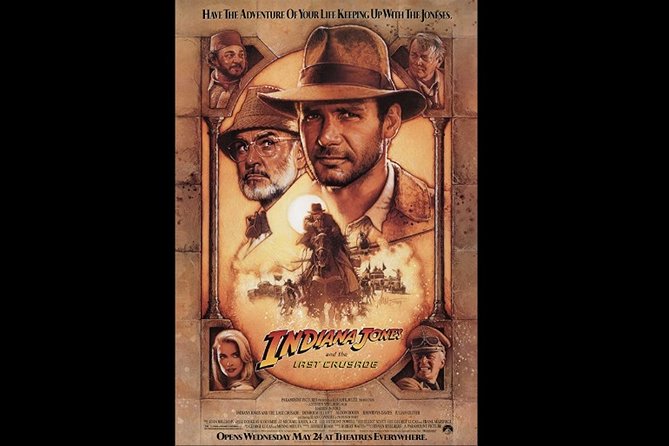
Campo San Barnaba brings the tour into adventure territory. The basements of the San Barnaba church tie to Indiana Jones and the Last Crusade (1989)—specifically the X that never indicates the place to dig.
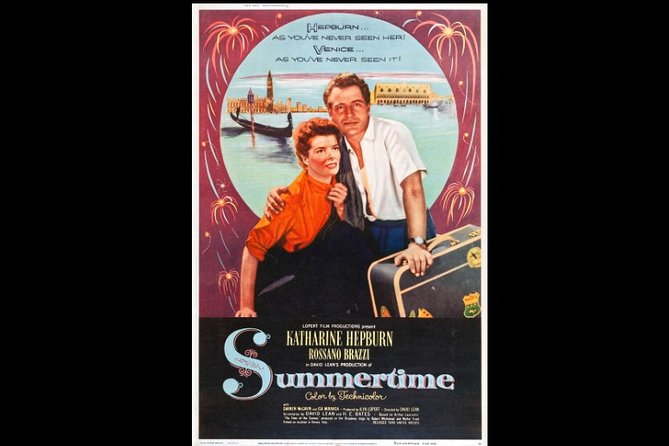
The tour also links this area to Summer Time (1955) with Katharine Hepburn, where an American tourist wanders and accidentally falls into the San Barnaba canal. It even mentions the remake connection to The Italian Job (2003).
This stop is a fun one because it demonstrates a key idea: cinema often repurposes normal spaces into plot devices. Venice doesn’t need to be altered to feel story-ready.
Gritti Palace: from Doge residence to Woody Allen scenes
At The Gritti Palace, now a luxury hotel, you get a mix of real prestige and movie glamour. The building was a Doge’s family palace and a residence of Vatican ambassadors. The tour also notes famous guests like John Ruskin, Ernest Hemingway, and Somerset Maugham.
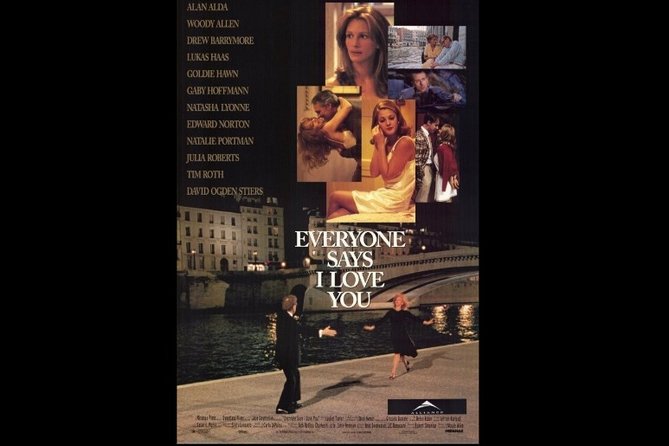
For cinema, it connects to Woody Allen’s Everyone Says I Love You (1996), where the hotel appears in multiple scenes with Julia Roberts.
The benefit of this stop is contrast. You see the difference between a film’s polished version of Venice and the long real timeline behind the walls.
Santa Maria della Salute and the Ripley moment across the canal
Basilica di Santa Maria della Salute is next, and the tour uses it in two very different ways.
In Lara Croft: Tomb Raider (2001), the tour mentions the Illuminati sect gathered in this context—though the room shown on screen is actually linked to a Painted Hall in London. Then, in The Talented Mr. Ripley (1999), the basilica appears behind Ripley during a dialogue with Dickie’s father. That conversation is described as taking place on the terrace of the Hotel Westin Europa & Regina on the other side of the canal.
This is a great reminder: movies sometimes borrow the exterior and build the interior somewhere else. You’ll learn to notice both layers as you go.
Piscina Sant’Agnese: jogging and freshening up in summer stories
At Piscina Sant’Agnese, the tour connects location to character routines. Julia Roberts used to jog here in Everyone Says I Love You (1996), and Katherine Hepburn freshens up there during the venetian vacation of Summer Time (1955).
It’s a short stop, but it helps you see Venice as lived-in, not only photographed.
Hotel Danieli: de Sica, Bond, and a wedding night
Hotel Danieli gets a quick spotlight—about 5 minutes, so think of it as a taste of its film life. The tour says it hosted Wolfgang Goethe, Richard Wagner, and Honoré de Balzac, and it also ties to a famous relationship between George Sand and Alfred de Musset.
In movie terms, Vittorio de Sica used it in The Journey (1974) with Sophia Loren and Richard Burton. It also appears in Moonraker (1979) as the hotel of Holly Goodhead. Then there’s a connection to Viaggi di Nozze (1995) for that first tragicomic wedding-night setup.
This is another place where the city feels like a casting call. Venice hotels don’t just host people; they host plot.
Doge’s Palace and San Marco’s film-ready energy
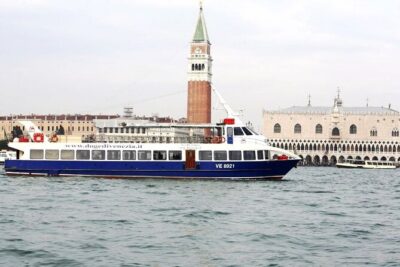
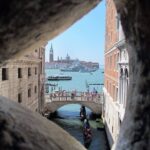
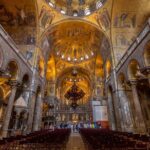
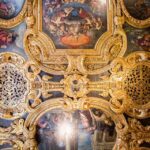
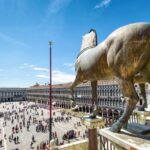
Finally, the tour reaches Doge’s Palace, which is one of the most cinematic backdrops in Venice. The tour connects it to the James Bond setting where a gondola-hovercraft appears in Moonraker (1979). It also notes Casino Royale (2006), including Bond’s hotel with a view right on San Marco square.
The Welles connection continues here too: the tour mentions a dramatic dialogue moment tied to Othello (1952) on the side facade south of the basilica. It also connects Doge’s Palace and nearby cafe tables in The Talented Mr. Ripley (1999), plus references to scenes shot for The Young Pope.
If you only remember one thing after the tour, make it this: San Marco square works on film because it already feels like a stage.
Price and value: is $185.43 worth it?
At $185.43 per person for about 2 hours, you’re paying for a few things at once: a licensed guide, a focused route, and a private format where your group gets attention rather than getting packed into a giant herd.
The value also comes from how the tour teaches you to see. Instead of “here’s a place,” it’s “here’s why filmmakers chose this place,” plus where those choices create mood. That kind of recognition tends to make a second day in Venice more enjoyable, because you start spotting details on your own.
One more value detail: many stops are marked as ticket-free to view, so you’re not paying extra just to stand in front of a facade. Still, keep in mind the €5 access fee can apply on certain dates for day visitors staying outside Venice, so check before you go.
Who this tour suits best
This tour is ideal if you fit any of these:
- You love movies and want a practical way to see Venice through specific scenes
- You want a guided route that helps you avoid the worst crowds
- You’re traveling with a kid who knows Venice from pop culture, not guidebooks
- You want restaurant and Venice tips from a guide during and after the walk
It’s also a good fit for first-time visitors who want iconic Venice highlights fast—without spending your whole day in lines.
Should you book the Venice Film Tour?
If you’re the type who gets excited when you spot a familiar setting on screen, book it. The mix of classic and modern films makes it more fun than a generic landmark tour, and the guide’s approach helps you connect the city’s look to the stories you know.
I’d skip it only if you want a long, museum-style day with lots of indoor time. This is a walking-and-looking experience with quick stops. If you’re fine with that—and you like your Venice with movie references baked in—this one is an easy yes.
FAQ
How long is the Venice Film Tour?
It’s about 2 hours.
What language is the tour guide using?
The tour is offered in English.
Is pickup included?
Pickup is offered.
What’s included in the price?
A licensed tour guide is included.
Are tickets needed for the stops?
The tour lists admission tickets as free for the locations on the route, so you’re not expected to buy separate entry tickets at each stop.
Is there an access fee for some day visitors?
On certain dates, day visitors staying outside Venice may need to pay a €5 access fee. You can check applicable days and exemptions at https://cda.ve.it.