A gondola ride can change how Venice clicks into place. This private option trades the loud, crowded approach for a route that mixes hidden canals with big-name views, from Palazzo Ca’ Zenobio to Rialto and, on longer rides, San Marco and Chiesa della Salute.
I like two things right away: you get your own gondolier and your own boat, so the pace stays calm, and you can choose how chatty (or not) the experience is. One thing to keep in mind: Venice’s weather and timing matter—if you arrive late, your ride can get shortened, and cold canals are no joke in winter.
In This Review
- Key points to know before you board
- Why a private gondola route feels different in Venice
- Choosing 30 minutes, 1 hour, 1.5 hours, or 2 hours
- The 30-minute option: enough for a first taste
- The 1-hour option: San Polo enters the story
- The 1.5-hour option: Rialto Market makes an appearance
- The 2-hour option: Grand Canal to San Marco and the Salute church
- Entering the gondola: silence, commentary, and how your gondolier works
- Meeting point at P.le Roma (Fondamenta Cossetti): where timing really matters
- The route experience: palazzi, churches, and why the stops feel personal
- Early pass: Carmelite church frontage and nearby romantic streets
- Palazzo Ca’ Zenobio: elegance and possible film days
- Cicogna Palace and the Fondamenta Briati stretch
- San Polo and the Carlo Goldoni connection
- Then, the Grand Canal swing (on longer rides)
- Grand Canal landmarks you can actually point at
- Ask about Calatrava Bridge
- Degli Scalzi Bridge (1846) and the railway-era connection
- Pisani-Moretta Palace: Venetian Gothic at canal speed
- Ca’ Farsetti and the old mint name
- Ca’ d’Oro: gold rumors and Gothic sweetness
- Rialto, San Marco, Doge’s Palace, and Chiesa della Salute: the big finales
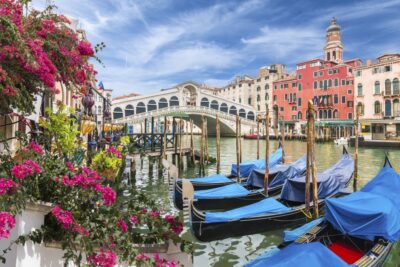
- Rialto Bridge from the water: the photo angle changes
- Rialto Market: color, produce, and noise you can smell
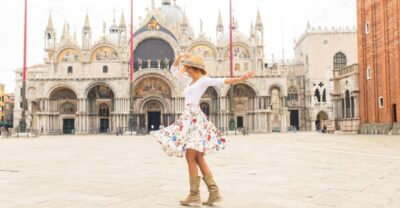
- San Marco Square passes in a clean line
- Bridge of Sighs: legends work better at water level
- Chiesa della Salute: plague gratitude in baroque form
- Price at $95.78 per person: when it’s worth it (and when it isn’t)
- Cold-water reality: what to wear so the ride feels fun
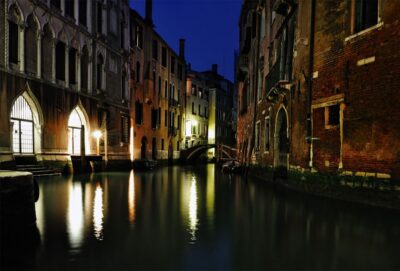
- Night ride option: when the moonlight is the main attraction
- Should you book this private gondola ride? My decision checklist
- FAQ
- How long is the gondola ride?
- Does the tour include a private gondola?
- Is commentary included?
- What sights can I expect on the longer rides?
- What if it rains?
- Where does the tour start?
- What happens if I arrive late?
Key points to know before you board
- Private ride, only your group: you’re not sharing the boat with strangers.
- Short routes still cover real Venice: 30 minutes can include San Polo and palace-and-church waterfronts.
- Route mixes quiet canals and showpieces: the point is contrast, not just the Grand Canal.
- Commentary is optional: your gondolier will ask if you want it, and silence is common.
- Dress for wet and cold: the water feels colder than the shore, especially at night.
Why a private gondola route feels different in Venice
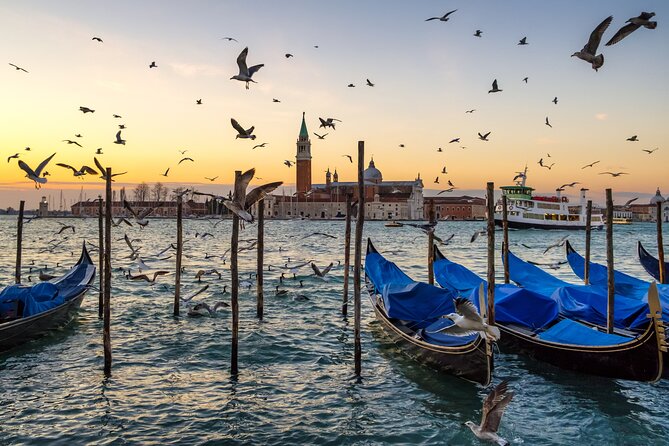
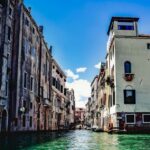
Most gondola plans boil down to: get on, get pointed at the Grand Canal, take photos, get off. This one aims for a better rhythm. You’ll spend time on quieter waterways where the city looks lived-in, then (on longer time slots) you’ll swing back toward the famous sights people crowd around on foot.
I also like that the ride is designed for variety. Even within the same hour, you’ll see elegant facades, narrow residential canals, and then the wider waterways where you feel the scale of Venice. It’s a simple trick: contrast makes the place feel bigger and more real.
The possible downside is what you’re paying for. A gondola from the pier can be booked directly, and the city sets gondola rates. If you’re only chasing a fast photo at the Grand Canal, the tour add-ons may feel like extra.
You can also read our reviews of more private tours in Venice
Choosing 30 minutes, 1 hour, 1.5 hours, or 2 hours
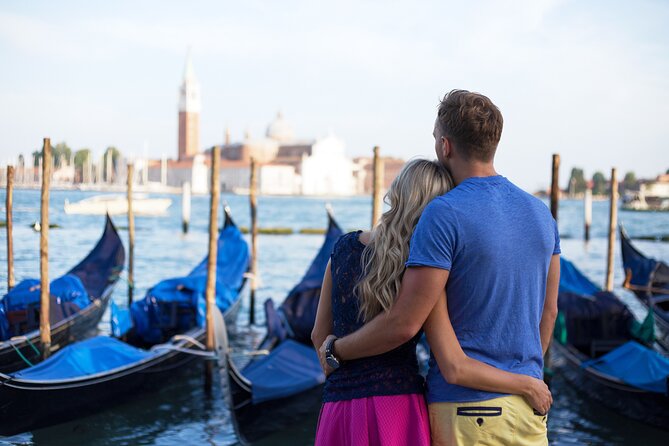
You pick your duration up front, and the longer you go, the more Venice landmarks you’ll pass. The tour also notes that the ride length can change with canal traffic, so think of your time slot as a target.
Here’s the practical way to choose:
The 30-minute option: enough for a first taste
The 30-minute ride goes up to Palazzo Briati before turning back toward the meeting point. You’ll also catch classic canal scenery early in the experience—church frontage and palazzo streetscape moments—before the clock runs out.
If you’re short on time, this can be a smart win. It’s also a good way to test whether you even like sitting in a small boat for an extended stretch.
The 1-hour option: San Polo enters the story
The 1-hour ride goes up to San Polo and then returns. San Polo is Venice’s biggest square, and it’s the kind of neighborhood where everyday life mixes with historic buildings. This is where the tour becomes less postcard and more street-level Venice.
If you want one clear district stop and a calm pace, this is a strong choice.
The 1.5-hour option: Rialto Market makes an appearance
At 1.5 hours, the route goes up to Rialto Market before heading back. You’ll see the area’s color and energy—fresh produce, lively activity, and that “you can smell it” market feeling.
Pick this if you want the Rialto area but don’t feel like committing to the full San Marco stretch.

The 2-hour option: Grand Canal to San Marco and the Salute church
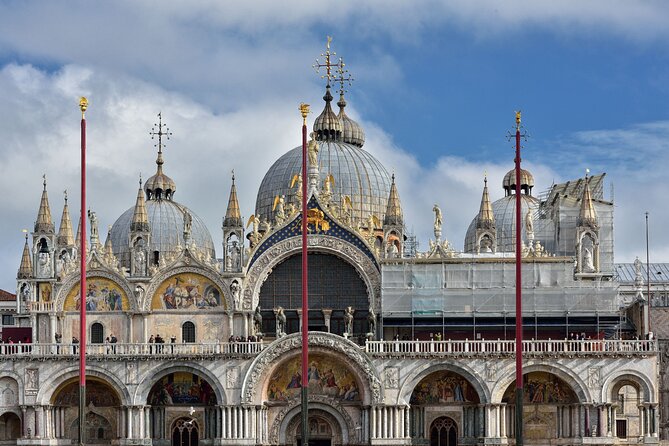
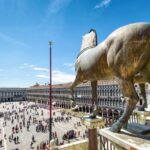
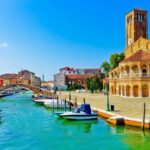
The 2-hour option is the full itinerary. That means you’ll go well past the Rialto area and into the San Marco zone, with key sights along the way—cathedral and bell tower area (rebuilt in 1902), the Bridge of Sighs, Doge’s Palace, and finally Chiesa della Salute at the Grand Canal edge.
This is the best fit for a slower Venice afternoon that turns into an evening. It’s also the one most likely to feel like an “experience,” not just a ride.
Entering the gondola: silence, commentary, and how your gondolier works
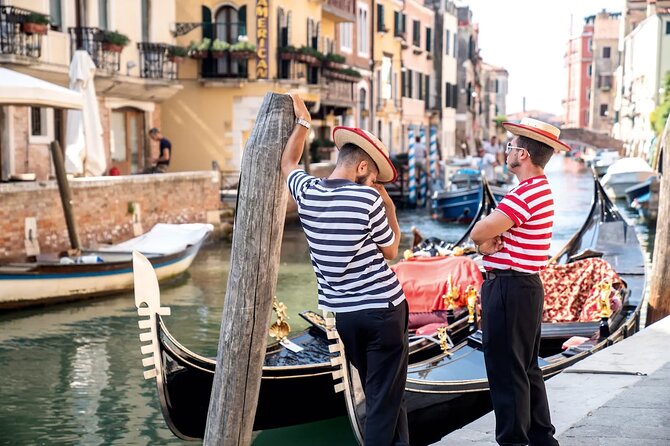
Before you push off, your gondolier will ask whether you want commentary during the ride or prefer a quieter experience. In practice, many rides lean toward calm and scenic. And that can be great—Venice is noisy on land; on water, the city feels different.
That said, don’t expect a licensed-guide style monologue. A gondola ride is built around steering and timing, not a scripted tour. Some gondoliers are chatty; others share a few landmarks and let you enjoy the canals. If you care about facts, ask questions early.
You’ll also notice how skilled gondoliers are at moving through traffic. Venice canals are narrow and crowded, and the ride can feel tense if you’re watching too closely. But the most memorable moments usually come when you realize how smoothly they thread the boat through it all.
Language can vary. One gondolier experience I saw described English that wasn’t perfect, but the key points still landed—and you still get the family tradition angle. If you want heavy storytelling, bring a few specific questions, like bridge facts.
Meeting point at P.le Roma (Fondamenta Cossetti): where timing really matters
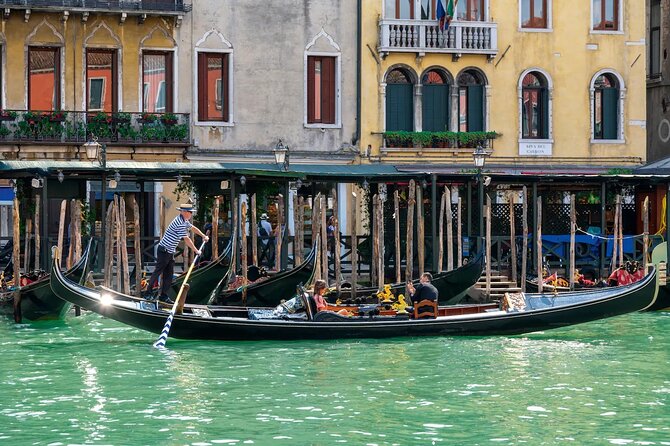
The meeting point is listed as InGondola – Servizio Gondole P.le Roma at Fondamenta Cossetti, address 458-458a, Venice. The activity starts when you board, and they ask you to arrive 10 minutes early.
This is the part that can make or break your experience. Some people report confusion finding the exact gondola stand area, or instructions that felt vague. Your best move: check the map before you leave your hotel, then allow extra time to walk the final stretch.
Also remember: if you arrive late, the ride can be shortened. If you’re more than 15 minutes late, it can be treated as a no-show. That’s not a “maybe” situation; it’s the posted rule.
The route experience: palazzi, churches, and why the stops feel personal
Even without a formal guided script, the ride has built-in storyline beats. The itinerary structure uses neighborhoods and landmarks rather than just “take a photo under X bridge.”
Early pass: Carmelite church frontage and nearby romantic streets
At the start, the tour highlights passing a Carmelite church with a Renaissance façade. Right after that, the route mentions Torres’ neo-medieval home. These aren’t big famous monuments from a distance. They’re the kind of buildings you’d miss unless you’re looking from the water at the right angle.
It’s a good way to remember that Venice isn’t only about mass landmarks. The city has texture.
Palazzo Ca’ Zenobio: elegance and possible film days
Palazzo Ca’ Zenobio is called out for its lavish halls and a bit of intrigue, with a note that a film shoot could happen. That’s one of those “no guarantee, but keep your eyes open” moments.
Whether there’s filming or not, palazzo exteriors from the canal still feel different than from a street. The scale and details read better when you’re at water level.
Cicogna Palace and the Fondamenta Briati stretch
The ride mentions cruising past Cicogna Palace along Fondamenta Briati, then seeing a quiet courtyard and an Istrian stone well. These are the kinds of details you won’t catch from a narrow footbridge.
Even if you don’t know the building’s full story, you’ll feel the shift from busy public sightseeing to something calmer and more private.
San Polo and the Carlo Goldoni connection
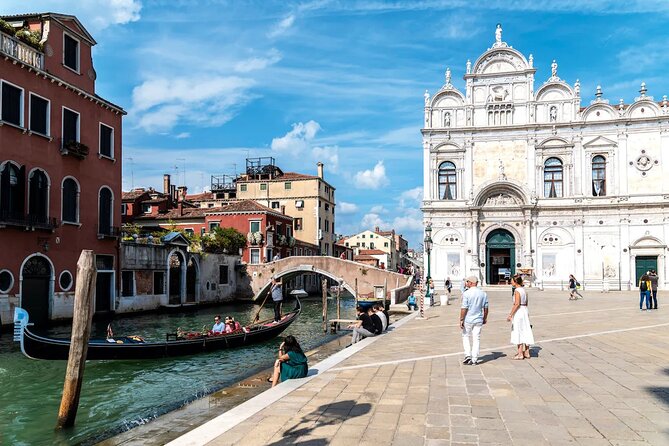
San Polo shows up as both the “big square” feel and the neighborhood feel. The ride highlights historic churches and the birthplace of playwright Carlo Goldoni. It also notes the smell of fresh pastries from lively taverns.
That’s a sneaky advantage of doing the gondola after you’ve already been on foot elsewhere: you understand what you’re looking at. San Polo becomes a living district, not just a stop on a map.
Then, the Grand Canal swing (on longer rides)
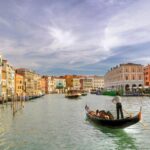
For many time slots, the ride includes the Grand Canal—the “Canalasso” locals call it. On water, the Grand Canal looks like a moving theater set. You get multiple palazzo fronts in sequence, and you can understand why Venice’s wealth clustered here.
This is where your gondolier’s skill matters. You’re sharing space with lots of boats, and the best rides are the ones where you glide through without constant braking and last-second maneuvers.
Grand Canal landmarks you can actually point at
This part is the payoff for people who come to Venice for big sights. You’ll pass or view key structures along the water.
Ask about Calatrava Bridge
The tour specifically suggests asking your gondolier about Calatrava Bridge. You may have crossed it on arrival, but the gondola view is different. It’s especially enchanting when illuminated at night.
Practical tip: if night is on the menu, ask your gondolier when you’ll get the best light. They often know which angles look best depending on the hour.
Degli Scalzi Bridge (1846) and the railway-era connection
The ride calls out Degli Scalzi Bridge, built in 1846, designed to connect districts (including San Polo, Rialto, Santa Margherita) with the rail era. From the water, the bridge isn’t just an architectural object—it’s a clue to how Venice changed when rail arrived.
Pisani-Moretta Palace: Venetian Gothic at canal speed
The itinerary highlights Pisani-Moretta Palace as Venetian Gothic, structured into three sections. Gondola speed matters here. You don’t have time to study stone carvings like you would on a slow walking museum visit—but you do get the full façade composition in a way that photos from land rarely capture.
Ca’ Farsetti and the old mint name
As the tour moves along, Ca’ Farsetti is described as a 13th-century Venetian-Byzantine palace, now home to City Hall. The tour also notes that the old mint once stood at the bridge’s eastern end, giving rise to the former name Ponte della Moneta.
This is the kind of detail that makes a gondola feel smarter than just scenic. Suddenly you’re not only looking; you’re linking names and places.
Ca’ d’Oro: gold rumors and Gothic sweetness
Ca’ d’Oro is highlighted with a note that it was once believed to be adorned with real gold. Whether or not that belief was true, the story adds flavor to what you see. This palace is one of those Venice façades that looks almost too perfect until you’re right beside it.
Rialto, San Marco, Doge’s Palace, and Chiesa della Salute: the big finales
If you book 1.5 hours or 2 hours, you get the real “Venice greatest hits” along the way.
Rialto Bridge from the water: the photo angle changes
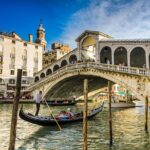
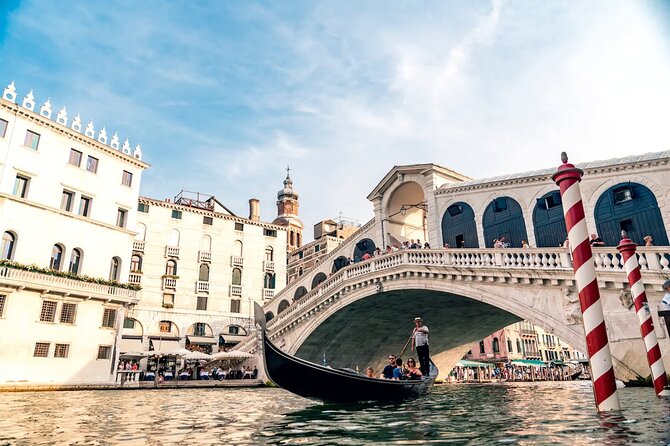
The ride highlights the Rialto Bridge as Venice’s oldest celebrated crossing, and you’ll see it from the water for a privileged view. From ground level, Rialto feels like a busy crush. From the gondola, it becomes a frame.
Surroundings matter too: shops and restaurants cluster near the bridge, and the tour connects the name Rialto to the nearby market’s rise by the mid-13th century.
Rialto Market: color, produce, and noise you can smell
At the 1.5-hour mark, the tour notes the Rialto Market coming into view with fresh produce and lively voices. Even when the ride itself stays calm, this landmark gives you a sense of Venice’s daily economy, not just sightseeing.
San Marco Square passes in a clean line
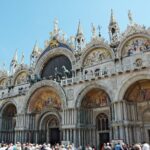
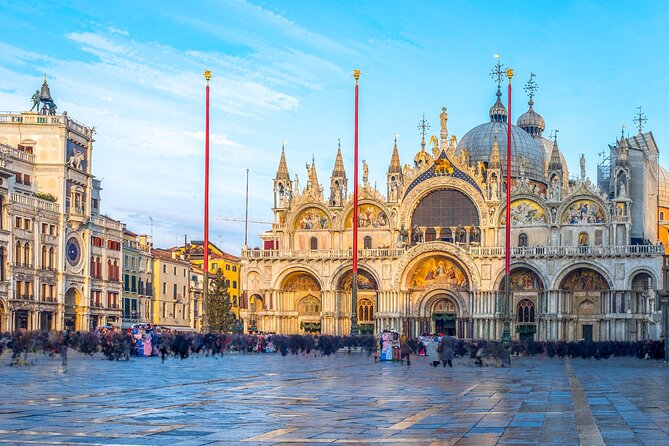
On the full itinerary, you pass San Marco Square and see the cathedral and bell tower area. The tour mentions the bell tower rebuilt in 1902 after centuries of awe. It also includes the Bridge of Sighs and passes beneath Doge’s Palace shadowed arches.
These are the stops where you might expect history-heavy narration. Since commentary is optional, you may want to ask direct questions once you reach the most recognizable structures.
Bridge of Sighs: legends work better at water level
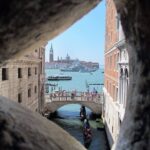
The itinerary includes the Bridge of Sighs and a romantic legend about a kiss at sunset. If you’re on a night or late ride, this bridge tends to feel extra dramatic.
Chiesa della Salute: plague gratitude in baroque form
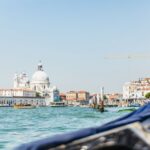
For the 2-hour finish, the tour heads to Chiesa della Salute, rising at the Grand Canal edge. The ride frames it as built in gratitude after the plague, with baroque beauty that reads as hope in stone and light.
This is a strong closing moment because it feels solemn. Even if you didn’t plan a museum day, you end up at a place that defines Venice’s spiritual center.
Price at $95.78 per person: when it’s worth it (and when it isn’t)
At $95.78 per person, this isn’t a cheap impulse buy. The value depends on what you want.
If you want the comfort of knowing you’ll be on a private boat at a chosen time, with English commentary available, and you like the idea of being looked after by a provider, the price starts to make sense. One big practical advantage is timing control: you’re not gambling on the next gondola availability at the pier.
But you should also know what can change your math. Some people feel gondola pricing is set by the city and that you can book for less directly at the pier. If you’re traveling as a small group and you’re confident you can find a nearby station without stress, DIY can beat the tour price.
My take: this tour is best when you value time, comfort, and a specific route style. If you mainly want a quick Grand Canal photo, you can likely do it cheaper on your own.
Cold-water reality: what to wear so the ride feels fun
Venice gondolas look romantic in photos. In real life, they can feel cold and wet. Multiple experiences note that it’s much colder on the water than on shore, especially in January and on night rides.
Bring:
- warm layers (not just a light jacket)
- something windproof
- a small towel or extra layer for splashes
If you’re offered extra warmth, great. If not, you’ll still be happy you packed. One complaint I saw was that no knee rug or blanket was offered, even when people felt icy. Don’t count on it.
Also consider rain. The tour says it runs rain or shine, unless high tides or heavy rain force a cancellation. One gondolier named Flavio reportedly lent an umbrella during rain, so help might exist—but it’s not something you should rely on as your plan A.
Night ride option: when the moonlight is the main attraction
The experience includes a night ride option. That matters more than you’d think because Venice’s lighting changes the canals completely.
Night rides can feel extra magical because you’re watching façades and bridges glow from a moving vantage point. If your ride happens close to sunset, you might end up basically in a night setting even if you booked daytime. One account described arriving just as clocks changed, turning a daytime slot into a nighttime feel—and it became a highlight.
If night is your goal, pack for cold and aim for a time that lets you see the city in both daylight and evening light if possible.
Should you book this private gondola ride? My decision checklist
Book it if:
- you want a private boat and a calmer pace than a crowded public gondola station
- you’re excited by side canals and palazzi views, not just a single bridge photo
- you’re okay paying more for guidance through timing, route style, and a chosen duration
- you want the option to ask questions about landmarks like Calatrava Bridge
Skip it (or downgrade duration) if:
- you’re only chasing the Grand Canal and don’t care about quieter neighborhoods
- you don’t want to deal with cold weather planning
- you prefer doing things flexibly without time-slot expectations
If you book, go in with the right mindset: this is a scenic gondola ride with a human steering lead, not a full museum lecture. When you lean into the water-level views and use the gondolier for specific questions, the value usually clicks.
FAQ
How long is the gondola ride?
You can choose about 30 minutes, 1 hour, 1.5 hours, or 2 hours. Actual timing can vary with canal traffic.
Does the tour include a private gondola?
Yes. It’s listed as a private activity, and only your group participates.
Is commentary included?
Your gondolier will ask if you want commentary during the ride or prefer silence.
What sights can I expect on the longer rides?
The 2-hour option includes the full itinerary, passing major landmarks such as Rialto Bridge, Bridge of Sighs, Doge’s Palace area, and Chiesa della Salute.
What if it rains?
The tour runs rain or shine, but it may be cancelled for exceptionally high tides or heavy rain, with a full refund if that happens.
Where does the tour start?
It starts at InGondola – Servizio Gondole P.le Roma, Fondamenta Cossetti, 458-458a, 30135 Venezia VE, Italy, and ends back at the meeting point.
What happens if I arrive late?
Arrive at least 10 minutes early. If you arrive late, the ride can be shortened, and more than 15 minutes late may be treated as a no-show.