REVIEW · VENICE
Venice: Tickets to Negozio Olivetti
Book on GetYourGuide →Operated by FAI - Fondo Ambiente Italiano · Bookable on GetYourGuide
Design lovers, this one’s specific. In St Mark’s Square, Negozio Olivetti lets you study Carlo Scarpa’s architectural thinking in a place built for everyday objects, not grand speeches. I love how the design uses light and carefully chosen materials to turn a showroom into a room you actually want to slow down in, even if you’re only here for a short stop.
I also like the fact that the visit is about a real, preserved workspace: the interior presents the original Olivetti showroom setup from 1957–58, restored and returned to public view after careful conservation. It’s an easy way to connect Italian industrial design (the famous typewriters and calculators) to the craft of space-making.
One thing to consider: the space is small. Even with limited group size, the room can feel crowded if timing doesn’t go your way, so plan for close quarters and take your time with the audio guide.
In This Review
- Key things to notice before you go
- Where this fits in Venice (and why it’s worth a ticket)
- Finding Negozio Olivetti near St Mark’s Square
- Carlo Scarpa’s architecture: where light and materials do the talking
- The 1957–58 Olivetti showroom you’re actually paying to see
- Audio guide in Italian or English: use it like a map, not a soundtrack
- The FAI connection: why conservation feels part of the visit
- Price and what you get for $11
- Group size and why timing can change your comfort level
- What’s allowed (and what will end your visit fast)
- Best fit: who should book this, and who might skip it
- Should you book tickets to Negozio Olivetti?
- FAQ
- How long is the visit?
- Is the audio guide included?
- What languages is the experience available in?
- Are food and drinks allowed inside?
- Is there a limit on group size?
- Can what you see inside change?
Key things to notice before you go
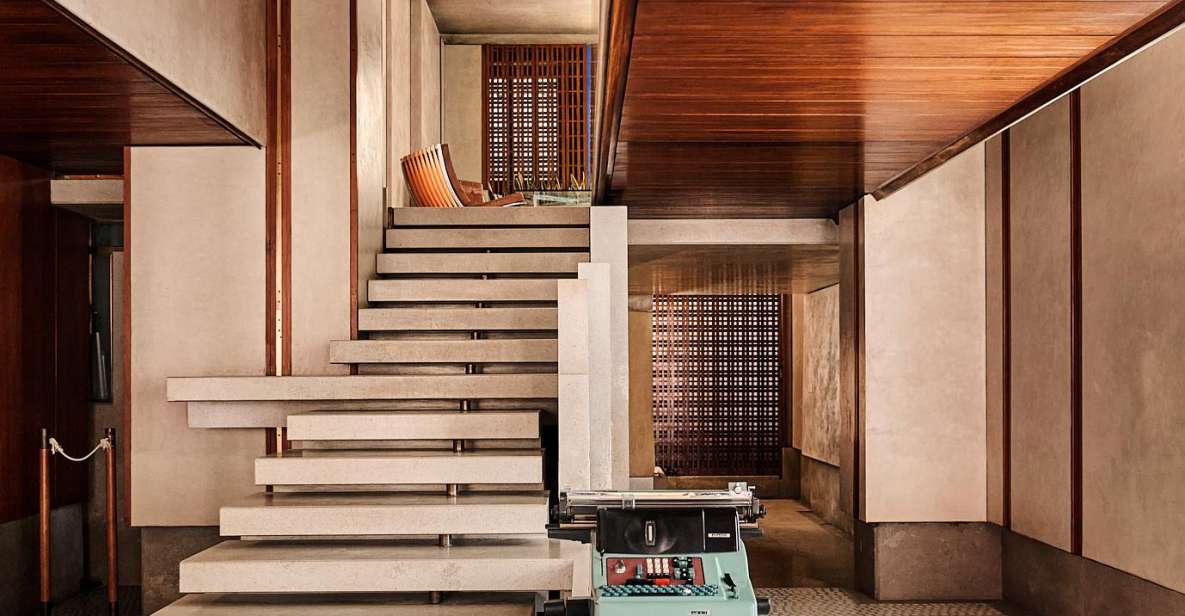
- Carlo Scarpa’s spatial tricks: reorganization of volumes and a dialogue with the decorative surroundings
- Aisle-level design: you’re close enough to really see how the showroom layout works
- 1957–58 Olivetti authenticity: the preserved setup is the point, not just a themed replica
- Materials you can spot: including Aurisina marble and ebony
- FAI stewardship: the space is property of FAI, entrusted in concession by Assicurazioni Generali
- Audio guide in Italian or English: designed to help you read the details without rushing
Where this fits in Venice (and why it’s worth a ticket)

Venice is full of masterpieces, but most are paintings, mosaics, or churches. Negozio Olivetti is different. This is a chance to see how 20th-century design culture shows up in architecture and interior planning—right at street level in the area of Procuratie Vecchie along St Mark’s Square.
The experience also rewards the kind of traveler who likes “how it works.” You won’t just look at machines. You’ll look at the space that made those machines feel important—how objects were displayed, how circulation was planned, and how light was allowed to do its job instead of fighting the room.
And because the interior is the historical one (presented as the original showroom layout), your visit has a strong sense of “place.” You’re not standing in a general exhibition hall. You’re inside a designed envelope with an unusually specific purpose.
You can also read our reviews of more tours and experiences in Venice


Finding Negozio Olivetti near St Mark’s Square
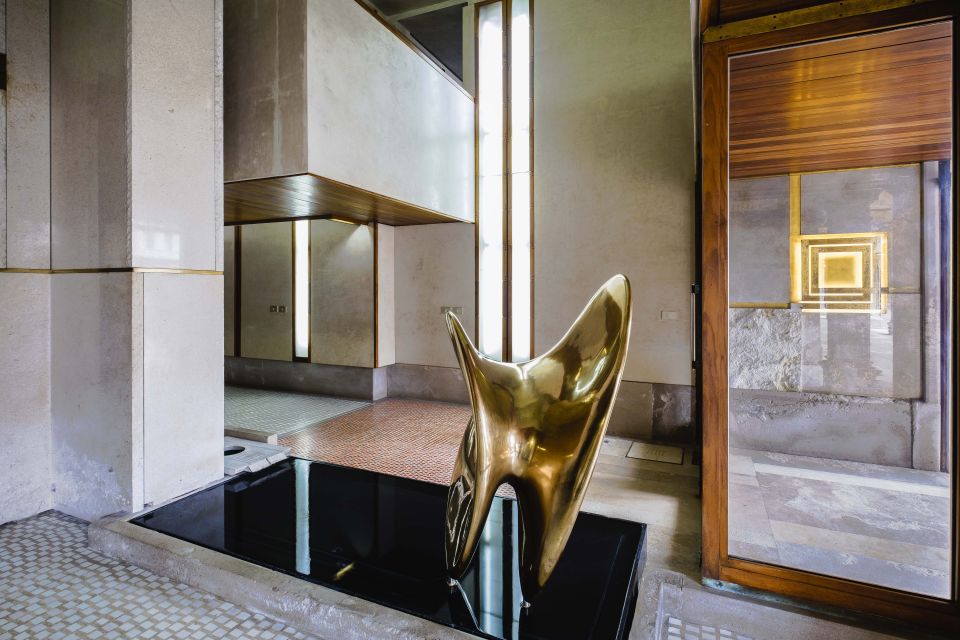
You’ll be visiting in the St Mark’s Square area, within the colonnades of the Procuratie Vecchie. That matters because it changes how you move through Venice that day. Instead of hopping from one major sight to another, you’re staying in one concentrated zone and using the colonnades as a kind of “buffer” between the busy square and a quieter interior.
In simple terms: you’re looking for a small corner premise in a historic setting. The idea behind the commission was to express Adriano Olivetti’s cultural values in a modern, innovative way while still respecting the historic surroundings.
Practical tip: give yourself time to get your bearings in that part of town. St Mark’s Square can feel like a constant camera flash contest—then you step into a design room where the whole point is careful attention.
Carlo Scarpa’s architecture: where light and materials do the talking
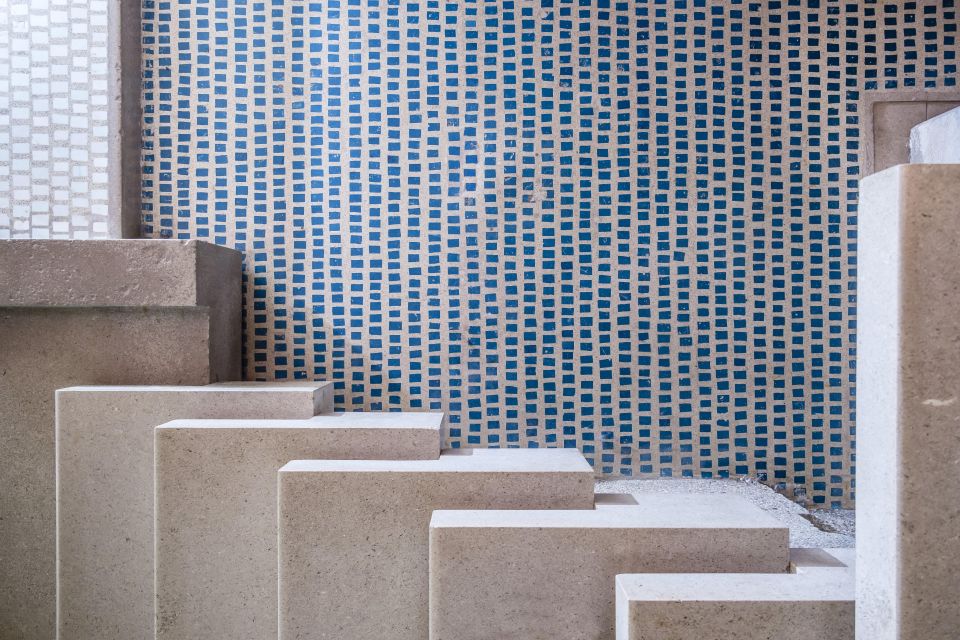
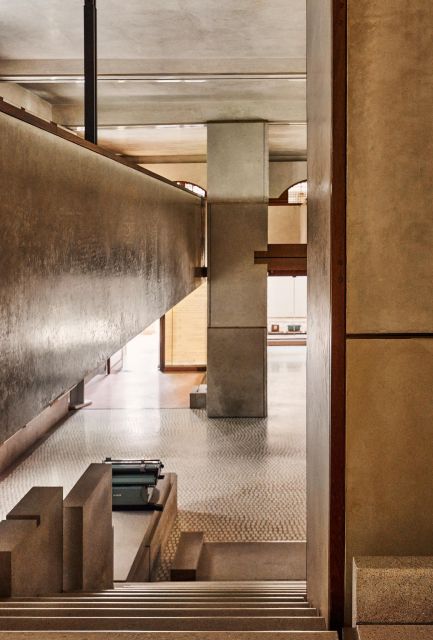
Carlo Scarpa is the reason this ticket feels like more than a quick peek. The commission demanded a heavy rethink of the original unit. Scarpa didn’t just decorate. He overhauled the original spaces, reshaping volumes and reorganizing layout so the room performs for visitors—and so it engages with the surrounding decorative elements.
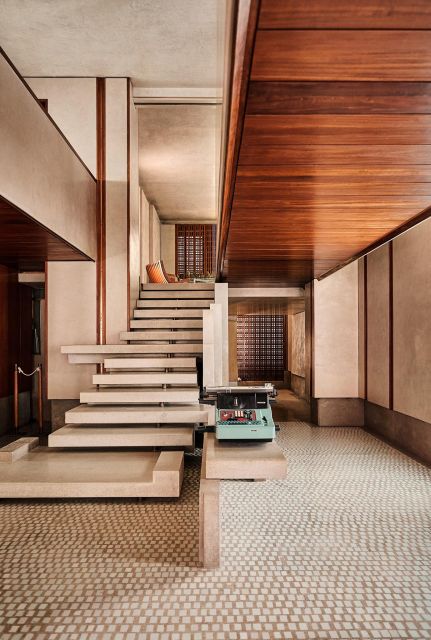
What you’ll notice is that the design treats details as meaningful, not decorative. The showroom space has a crafted rhythm: edges, transitions, and the way surfaces meet. Even if you aren’t an architecture nerd, you’ll feel it when you walk around slowly instead of trying to “cover” everything in one pass.
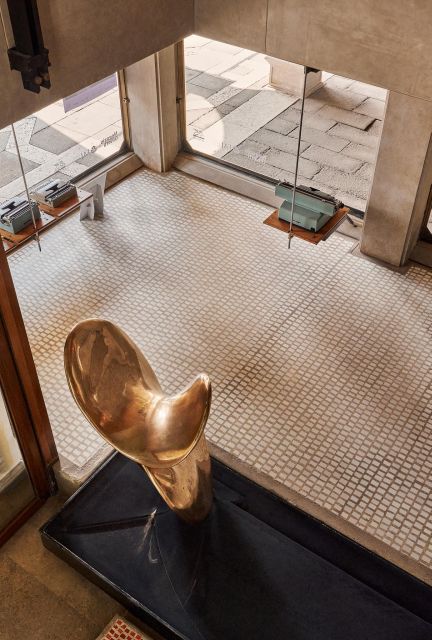
The materials are part of the story. You may see references to Aurisina marble and ebony, both of which help create a strong visual contrast with the historic setting outside. The result is a room that feels luxurious, but not showy for its own sake. It feels like a controlled environment built for attention.
And yes, there’s conservation at work here too. The highlights of the experience include the careful preservation of Scarpa’s work and the way the space maintains its integrity, even though Venice is… Venice.
The 1957–58 Olivetti showroom you’re actually paying to see
This is the core of the experience. The interior presents the original Olivetti showroom from 1957–58, restored in 2010 and reopened to the public in 2011. That timeline matters because it explains why the room feels specific and intentional: you’re not looking at a generic “Olivetti-themed” interior.
You can expect to study how a major Italian brand presented products in the late 1950s—how space, display, and craft combined to tell a story. The setting also connects directly to the main protagonists named in the experience: Adriano Olivetti (the cultural force behind the brand) and Carlo Scarpa (the architect who shaped the environment).
What’s especially satisfying is that the visit isn’t just about the idea of design. It’s about the real physical experience of it: how the interior is arranged, how the light behaves in the room, and how the architecture supports the objects and the atmosphere around them.
One more note: the space can present temporary exhibitions. When that happens, the content and the number/organization of objects may change a bit. So if your goal is the original showroom setup, it’s worth going with an open mind—because the architecture is the constant, while the display may shift.
Audio guide in Italian or English: use it like a map, not a soundtrack
An audio guide comes with your ticket, and it’s available in Italian and English. The audio guide approach is practical here because the room is compact. You can’t wander for long like you would in a museum with big galleries. Instead, you move in short segments and use the guide to focus your eye.
I like audio guides in architectural spaces for one reason: they help you connect what you’re seeing to why it was done. Scarpa’s design is all about relationships—between light and surfaces, between circulation and display, between modern intent and historic context.
A good strategy:
- Start listening once you’re inside, not while you’re still trying to locate the entrance.
- When the guide points out a detail, pause your walking. This is one of those interiors where standing still for 30 seconds pays off.
- If you’re in a hurry, skip ahead only if the audio guide layout lets you do it—otherwise you’ll miss the “read” of the room.
Also note the rules: no flash photography and no touching the exhibits. It’s not just etiquette. Scarpa’s space and the showroom details are meant to be preserved, so follow the boundaries.





The FAI connection: why conservation feels part of the visit
Negozio Olivetti is property of FAI (Fondo per l’Ambiente Italiano), entrusted in concession by Assicurazioni Generali. That might sound like paperwork, but it matters to you as a visitor because it explains the kind of care the site gets.
The highlights explicitly mention conservation, and the experience is designed around the idea that the interior is preserved and restored, not endlessly re-styled. When a place is cared for over time, you get to experience it as it was intended, instead of as it has been forced to become.
In a city where environmental factors are real, that stewardship adds weight to the visit. Even if you don’t know a thing about restoration, you can feel it in how the room holds together visually and physically.
Price and what you get for $11
At $11 per person for a 1-day ticket, this is priced in a way that makes a smart “design detour” easy. You’re not paying for a whole day itinerary with multiple stops. You’re paying for access to one focused space: Negozio Olivetti, with an entrance ticket and an included audio guide.
Value here comes from three things:
- Specific architecture: Carlo Scarpa’s work isn’t available in most regular sightseeing loops.
- Authentic interiors: the original 1957–58 showroom layout, presented and restored, is the centerpiece.
- Time-efficient experience: since the venue is small, you can often fit it into a busy Venice day without planning a whole separate half-day.
Also, the experience has a 4.4 rating out of 39 reviews, which is a solid indicator that the architecture-and-design concept lands for most people.
Group size and why timing can change your comfort level

This visit is listed as a small group, limited to 10 participants. That’s important, because the space is intentionally compact. In small interiors, crowding isn’t just annoying—it changes the whole experience. You can’t study details or read the room when everyone is walking at once.
Here’s the practical takeaway: if you care about a calm look (and you probably do, if you’re considering a Scarpa-designed showroom), aim for a time slot that feels less likely to be peak crush. Even a small group can feel tight if another group enters the same window.
One review issue highlights how crowding can spoil the visit when space fills up. So don’t treat the timed reservation as a guarantee of silence. Treat it as a best-effort system in a small room.
When you enter:
- Look for the quietest moment and settle into listening right away.
- Keep moving gently. Don’t stop abruptly in walkways.
- Give other visitors space to stand where they can actually look.
What’s allowed (and what will end your visit fast)
Follow the rules and you’ll have a smoother experience.
Not allowed:
- Food and drinks
- Smoking indoors
- Flash photography
- Touching the exhibits
These rules are especially relevant in an interior with restored materials and careful conservation. If you’re the kind of traveler who likes to snack while sightseeing, you’ll need to plan for that outside. If you want photos, keep them without flash.
Best fit: who should book this, and who might skip it
This ticket is ideal if you:
- like architecture that you can see at human scale
- enjoy design history tied to real places, not just big museum collections
- want a break from the heaviest crowds of St Mark’s Square, but still stay nearby
- appreciate craft details and the logic of display design
You might not love it if:
- you hate small spaces or struggle with close quarters
- you’re looking for a long, wandering museum visit (this is a focused stop, not a huge complex)
- you need lots of interactive freedom—because the experience includes rules like no touching and a controlled interior flow
Should you book tickets to Negozio Olivetti?
Yes, you should book this if you’re in Venice for more than just postcard highlights and you like design you can actually study. The combination of Carlo Scarpa’s architecture, the preserved 1957–58 Olivetti showroom, and the included audio guide makes it feel like a ticket that buys attention—not just access.
If you’re on a tight schedule, it’s also one of the easiest “worth it” additions near St Mark’s Square. Just remember the main tradeoff: it’s a small interior, so your comfort depends on how crowded the entry window feels. Go with patience, use the audio guide as your pace-setter, and you’ll get more out of fewer minutes.
FAQ
How long is the visit?
The ticket is valid for 1 day. The experience itself is designed as a focused visit inside the showroom space.
Is the audio guide included?
Yes. Your ticket includes an audio guide available in Italian and English.
What languages is the experience available in?
The audio guide is offered in Italian and English.
Are food and drinks allowed inside?
No. Food and drinks are not allowed.
Is there a limit on group size?
Yes. The experience is a small group, limited to 10 participants.
Can what you see inside change?
Yes. The space could have a temporary exhibition, which may slightly modify the content and the number/organization of objects.