REVIEW · VENICE
Venice: Walking Tour with Native Venetian Guide
Book on GetYourGuide →Operated by ShoMe Venice Tours · Bookable on GetYourGuide
Venice gets quieter when locals lead the way. This walking tour takes you through the parts of the city that feel less like a postcard and more like everyday life, with stories, legends, and craft details along the way. You’ll also get a real sense of how the Venetian Republic shaped street life, not just the big sights.
I especially like the native Venetian guide approach. You’re not stuck with generic facts; you’re hearing history as local storytelling, and the language skills are strong—guides such as Nicolas and Sebastiano are specifically praised for clear English and entertaining, easy-to-follow explanations. Another plus I value is the included map with local tips. It’s not just a stamped brochure; it’s meant to help you keep exploring after the walk ends.
One consideration: this is rain or shine, and it’s a walking-heavy route in areas that aren’t recommended for people with limited mobility (and it’s not suitable for mobility impairments). Bring comfortable shoes and plan to move at a steady pace for the full 2 hours.
In This Review
- Key things that make this walk worth your time
- Why a 2-Hour Walk Changes How Venice Feels
- Meeting at HOTEL ANTICHE FIGURE: get your bearings the local way
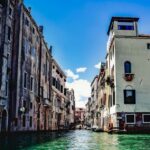
- Cannaregio’s small canals and legends (where Venice feels lived-in)
- Back to the 1400s: Venetian Republic secrets you can walk through
- Rialto Bridge: understanding the old trade center from a new angle
- San Polo and the mascareri: Carnival mask makers still practicing tradition
- The map and local tips: what you get after the walk
- Guides: when language and humor make the stories easier to follow
- Price and value: what $46 buys you in Venice
- Who should book this tour (and who should skip it)
- Should you book this Venice walking tour?
- FAQ
- FAQ
- How long is the Venice walking tour?
- Where do I meet the guide?
- What time should I arrive?
- What languages are available for the live guide?
- Is food or drinks included?
- What should I bring with me?
- Will the tour run in bad weather?
- Is this tour suitable for people with mobility impairments?
- Is a private group option available?
Key things that make this walk worth your time
- Native-guide storytelling that ties legends and tradition to real streets, not staged viewpoints
- Cannaregio’s small canals plus local lore, with a feel that’s different from the busiest Venice routes
- A timeline jump to the 1400s through Venetian Republic secrets and mysteries
- Rialto Bridge from the trade-center angle, so you understand what you’re looking at
- San Polo and the mascareri tradition, where Carnival mask makers are still part of the scene
- Guide talent across languages, with English French Russian Spanish and Italian options
Why a 2-Hour Walk Changes How Venice Feels
Venice can be loud. Even when you’re trying to “see the real city,” it’s easy to get pulled toward the same loops: the same photos, the same crowds, the same souvenir windows.
This tour is built to break that pattern fast. In just 2 hours, you move into quieter, more traditional districts where the pace feels more like locals are still running the day. You’re also guided through the city’s backstory—especially the Venetian Republic era—so you understand Venice’s power and style before you look at it as decoration.
If you care about Venice beyond landmarks, this is a smart time investment. It’s short enough to fit into a packed schedule, but focused enough that you don’t feel like you spent the morning just getting from Point A to Point B.
You can also read our reviews of more walking tours in Venice

Meeting at HOTEL ANTICHE FIGURE: get your bearings the local way
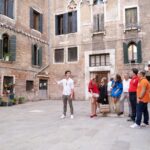
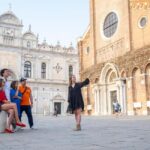
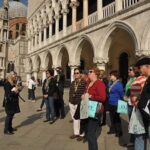
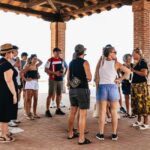
You meet in front of HOTEL ANTICHE FIGURE, right next to San Simeon Piccolo Church. The guide holds a board with the tour name, and the instruction is to arrive about 10 minutes early.
That matters more than you’d think. Venice streets can feel confusing even when you think you know the area, and arriving early helps you avoid the frantic scramble. You’ll start with the right mindset: calm, curious, and ready to walk into neighborhoods where you won’t automatically recognize what to look for.
Also, this is not a pickup-and-drop-off tour. You’re expected to make your own way to the meeting point with a map in your pocket afterward. If you like independence, that’s a good fit.
Cannaregio’s small canals and legends (where Venice feels lived-in)
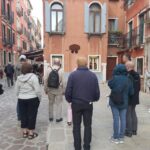
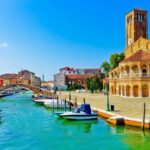
The walk begins by steering you toward Cannaregio, one of the districts that often feels more “real” because everyday life still dominates the streets. Instead of aiming at the obvious big-photo corners, you’re guided toward smaller canals and quieter lanes.
This is where the legends start doing real work. You don’t just hear that Venice had a colorful past. You hear stories tied to specific places—so a canal edge, a turn in the street, or a particular local landmark starts making sense in context. That’s how you stop “touring” and start noticing.
You also get the sense of how communities differed within the same city. The tour describes life in Cannaregio as different from the rest of Venice, and that’s exactly what you should look for: a shift in rhythm, a different texture in the neighborhood, and fewer attempts at entertaining visitors.
Back to the 1400s: Venetian Republic secrets you can walk through
One of the most useful parts of the tour is the way it time-travels. You’re taken back to the 1400s, with the Venetian Republic as the anchor.
What makes this valuable isn’t the century number. It’s the explanation style: secrets, mysteries, and traditions told from a Venetian viewpoint. When history is connected to physical locations, it becomes easier to remember and easier to “see” while you’re walking.
You’ll come away with a clearer mental map of how Venice worked. The Republic wasn’t just an elegant brand; it was a political and trading powerhouse, and that power shaped daily patterns—from commerce to neighborhood identity. It’s the kind of context that makes later sightseeing feel sharper, not fluffier.
Rialto Bridge: understanding the old trade center from a new angle
Then you hit Rialto Bridge, and the focus is not just on the bridge itself. Your guide shows the old trade center from a perspective that changes what you notice.
Here’s the practical benefit: once you understand what Rialto meant for merchants, the area stops being only a dramatic photo stop. You start seeing it as a place designed for movement, deals, and bustling exchange. That doesn’t just add meaning—it also makes your photos more intentional because you’re looking for the “why,” not only the “what.”
This is also a good moment to slow down your expectations. Rialto can be busy, but the tour’s storytelling helps you cut through the crowd noise. You’re not standing there hoping something interesting happens. You’re being guided to pay attention to the right details.
You can also read our reviews of more guided tours in Venice



San Polo and the mascareri: Carnival mask makers still practicing tradition
The final stretch focuses on San Polo and one of Venice’s most hands-on traditions: the oldest mascareri, meaning creators of Carnival masks, who are still working in keeping with centuries-old practice.
If you’ve only seen Carnival masks as costumes behind glass, this part can feel like a reality check—in a good way. It reminds you that Venice’s famous celebrations still depend on actual craftspeople doing actual work. You’re not just learning “about” Carnival. You’re seeing that its roots run through real local trades.
You’ll hear histories, legends, and secrets through Venetian eyes, which is a strong phrase for what you’re looking for here: not a textbook voice, but a local storyteller’s voice. The best guides manage to make tradition sound specific rather than generic.
This stop also tends to land well with different travel styles. If you love art and craft, it gives you something tangible. If you prefer history, it shows you how history survives through everyday craft rather than only through monuments.
The map and local tips: what you get after the walk
Included with your booking is a city map per person that includes the best local tips. This is more useful than it sounds, because Venice can be a “read the map, then wander” city.
After a tour like this, you’ll likely know a few districts beyond the usual highlight trail. The map helps you turn that knowledge into a plan. You can use it to choose where to return later, where to walk next, and what kinds of places to look for—especially the ones you’d otherwise miss.
It also keeps your momentum after the 2 hours. A lot of city tours end with “Thanks for coming.” This one gives you a tool, which is why I’d call it good value, not just good entertainment.
Guides: when language and humor make the stories easier to follow
This tour runs with live guides in multiple languages: English, French, Russian, Spanish, and Italian. That variety matters in Venice, because the best storytelling is still dependent on clarity.
The guide style is a recurring strength in the feedback. I’ve seen praise tied to guides being funny, sympathetic, and easy to understand, including examples like Nicolas for excellent French and Sebastiano for lots of explanations. Another notable point is adaptability: one account mentions a guide adjusting how he talked when children were involved, which is a good sign if your group needs extra patience and clarity.
Even if you’re traveling solo, you benefit from that. A good guide doesn’t just tell you what you’d read on a sign. They help you interpret what you’re seeing, and they keep you oriented so you’re not constantly asking where you are.
Price and value: what $46 buys you in Venice
At $46 per person for a 2-hour walk, the cost is fairly modest for a guided experience that focuses on off-the-beaten tracks and neighborhood depth.
Here’s why it feels like value. You’re not paying for a long day, expensive transport, or multiple attractions. You’re paying for a native guide plus storytelling that explains why places matter. You’re also getting a map with local tips, which extends the value beyond the guided hours.
Could you wander these neighborhoods on your own? Sure. Venice is walkable, and Cannaregio, Rialto area, and San Polo are all reachable. But without a local guide, it’s easy to miss what those streets mean—especially the legends, the Republic-era context, and the craft tradition around mascareri.
If you want your time in Venice to be practical—useful knowledge plus better choices for what you do next—this price makes sense.
Who should book this tour (and who should skip it)
This works best if you want a calmer, more local-feeling Venice and you like history told in a human way.
You’ll probably enjoy it if:
- You like walking tours that go beyond the obvious photo stops.
- You want district context, not just monument facts.
- You care about crafts and traditions, especially Carnival mask making.
- You’re comfortable walking for about 2 hours.
You should think twice or choose another option if:
- You have limited mobility. The tour is not recommended for people with limited mobility and isn’t suitable for mobility impairments.
- You hate walking in the rain. It runs rain or shine, so you’ll want to bring shoes that can handle damp stone.
Should you book this Venice walking tour?
Yes—if your goal is to see Venice as locals do, not as a checklist. The standout idea is that the tour balances atmosphere and explanation: quieter districts like Cannaregio, history framed around the Venetian Republic, a meaningful look at Rialto, and a real craft link in San Polo with mascareri still at work.
I’d especially recommend it early in your trip. You’ll leave with a better mental map of neighborhoods and a stronger sense of what you’re looking at when you return on your own. And because you get a map with local tips, the value doesn’t end the moment the tour stops.
FAQ
FAQ
How long is the Venice walking tour?
It lasts 2 hours.
Where do I meet the guide?
Meet in front of HOTEL ANTICHE FIGURE, next to San Simeon Piccolo Church. The guide will have a board with the tour name.
What time should I arrive?
Arrive about 10 minutes before the starting time.
What languages are available for the live guide?
The tour offers live guides in English, French, Russian, Spanish, and Italian.
Is food or drinks included?
No. Food and drinks are not included.
What should I bring with me?
Wear comfortable shoes.
Will the tour run in bad weather?
Yes. It takes place rain or shine.
Is this tour suitable for people with mobility impairments?
No. It is not suitable for mobility impairments, and it is not recommended for people with limited mobility.
Is a private group option available?
Yes. Private group availability is listed.