REVIEW · VENICE
Venice: City Center Historical Guided Walking Tour
Book on GetYourGuide →Operated by CITY TOURS CO LTD · Bookable on GetYourGuide
Venice history without the museum fatigue. For St. Mark’s Square and Rialto Bridge alone, this short guided route gives you real context fast, and the included VR adds a cool time-hop into old Venice. I also like how the tour sprinkles in quieter calli and campi so you’re not stuck only at the postcard stops. One thing to consider: you need a reasonably steady walking pace, and the schedule doesn’t slow down much if people fall behind.
When the guide is on their game, the whole city clicks. I especially noticed how guides like Ana and Natalia framed the big sights with practical stories, not just dates. And with options for English, German, French, Italian, or Spanish, you can usually match the language you want for your day.
There’s also an optional gondola ride, but there’s a time gap between the walking portion and the boat. If you’re the type who likes your schedule locked in, plan your rest of the day around that break.
In This Review
- Key Things to Know Before You Go
- St. Mark’s Square to Rialto: Why This Short Walk Feels Like a Full Orientation
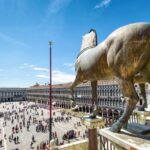
- St. Mark’s Square: How You Learn What You’re Looking At
- Teatro La Fenice and the Calli/Campi Side Streets: Venice Off the Main Line
- Rialto Bridge Panoramas Over the Grand Canal (Plus the Bridge Story)
- VR in the Venice Gallery: A Time-Hop That Makes the Walk Stick
- Gondola Ride Option: The Water View, the Mist Factor, and the Time Gap
- Pace, Language, and Group Size: What You Need for a Smooth Day
- Price and Value for $14: What’s Included and What You Should Budget
- Should You Book This Venice City-Center Walk?
- FAQ
- How long is the Venice City Center Historical Guided Walking Tour?
- What areas will the walking tour cover?
- Is the gondola ride included?
- Do I need to pay for monument entrances?
- Is the tour offered in multiple languages?
- What happens if there are exceptionally high tides?
Key Things to Know Before You Go
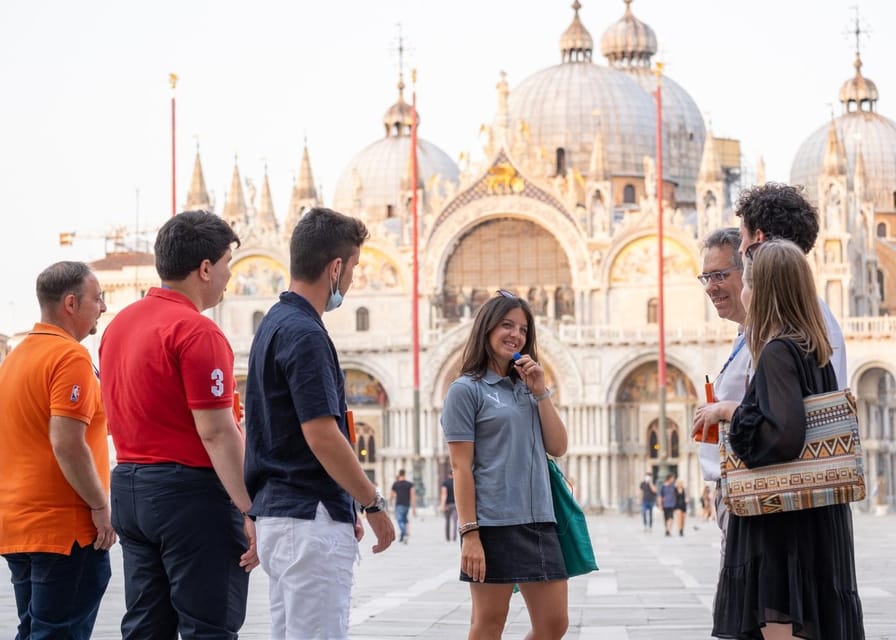
- St. Mark’s Square to Rialto in 1–2.5 hours: enough time to get oriented without burning your whole morning.
- VR in a dedicated Venice Gallery: you watch Piazza San Marco and glide along the Grand Canal through history.
- Rialto Bridge viewpoints: you get photo stops at the foot of the bridge and learn how it evolved.
- Calli and campi focus: you’re guided through narrow lanes and small squares, not just the main crowds.
- Teatro La Fenice pass-by: you’ll see one of opera’s biggest names while you’re already in the right area.
- Gondola option with a gap: the walk and boat aren’t instantly connected, so timing matters.
St. Mark’s Square to Rialto: Why This Short Walk Feels Like a Full Orientation
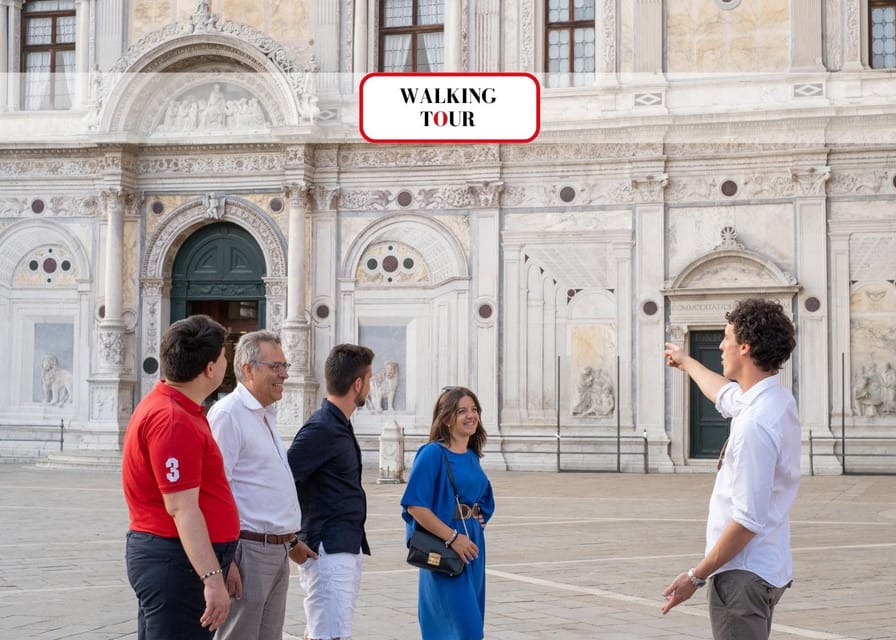
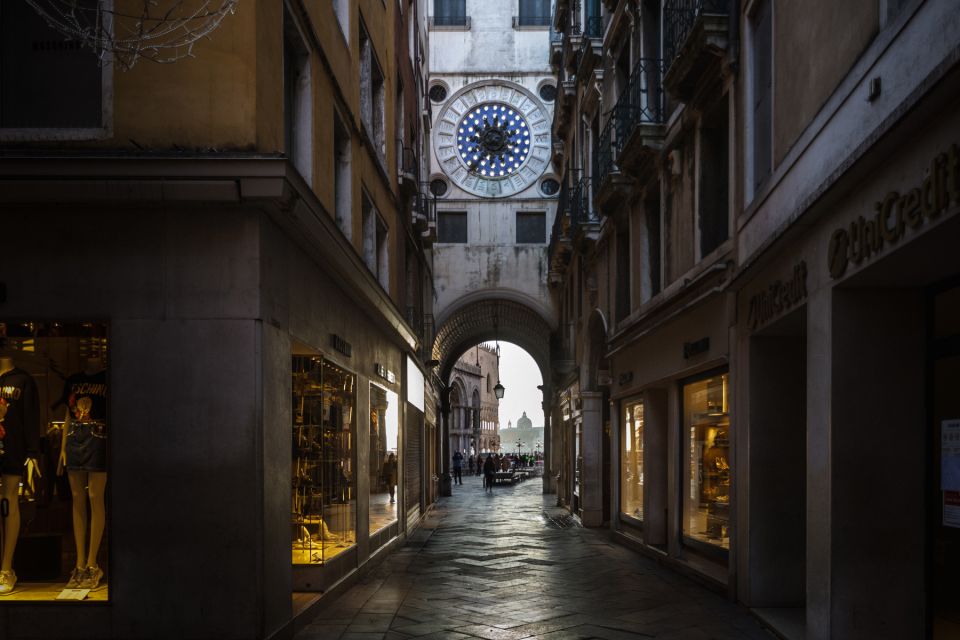
Venice can overwhelm you in about ten minutes. Streets loop, bridges appear like magic, and every corner seems “important.” This tour works because it targets the two zones that anchor first-time understanding: San Marco (the political and ceremonial heart) and Rialto (the commercial center of daily life).
For $14, you’re not just buying the right to stand near famous buildings. You’re paying for an efficient guide who helps you read what you’re seeing: why those buildings look the way they do, how the Grand Canal shaped trade, and how the city’s layout forces the water-based way of life. The included VR stop is also a smart add-on because it gives you a mental map of Venice as it looked centuries ago.
The tour is rated 4.2/5 across a large sample, so it’s not just good on paper. Guides are repeatedly praised for fitting a lot into a short window without turning it into a rushed lecture.
You can also read our reviews of more walking tours in Venice


St. Mark’s Square: How You Learn What You’re Looking At
You start in the St. Mark’s area and move through it with a guide who connects architecture to purpose. This isn’t just a quick sweep of the obvious. You’re there to understand how the square and surrounding area functioned over time—what people came for, what power looked like, and how the city used its public space.
I like that the tour doesn’t pretend Venice is only grand facades. You also get time on the edges of the square and nearby paths where daily movement happens. That’s where you start to notice Venice’s logic: the way a building faces the canal, the way foot traffic funnels along calli, and the way small open spots (campi) act like little breathing rooms.
Some guides also add extra context that makes Venice feel more “real,” like how the city managed essentials such as water access. If you enjoy practical history—how a city actually worked—this is the sort of tour that keeps you engaged.
Teatro La Fenice and the Calli/Campi Side Streets: Venice Off the Main Line
A pass by Teatro La Fenice is part of the route, which is helpful even if you don’t go inside. It’s a famous landmark, but the real value is how it links the city’s cultural identity to the streets you’re walking. Venice didn’t just trade; it performed, funded art, and turned spectacle into something people gathered around.
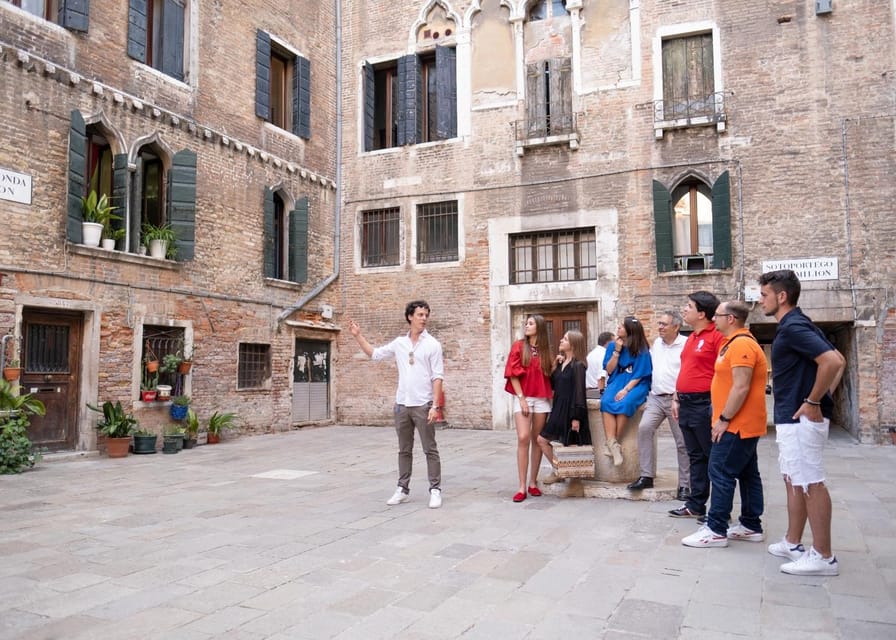
Then you get into the calli and campi—Venice’s narrow lanes and hidden little squares. This is where the tour feels less like a checklist and more like understanding the city’s rhythm. You’ll notice how the architecture compresses the street, how sound travels, and how the city changes character block by block.
One practical benefit: these quieter lanes also reduce the sense of being swept along by the biggest crowds. It’s not that the main sights disappear, but you get chances to slow down and take photos without always fighting for space.
Rialto Bridge Panoramas Over the Grand Canal (Plus the Bridge Story)
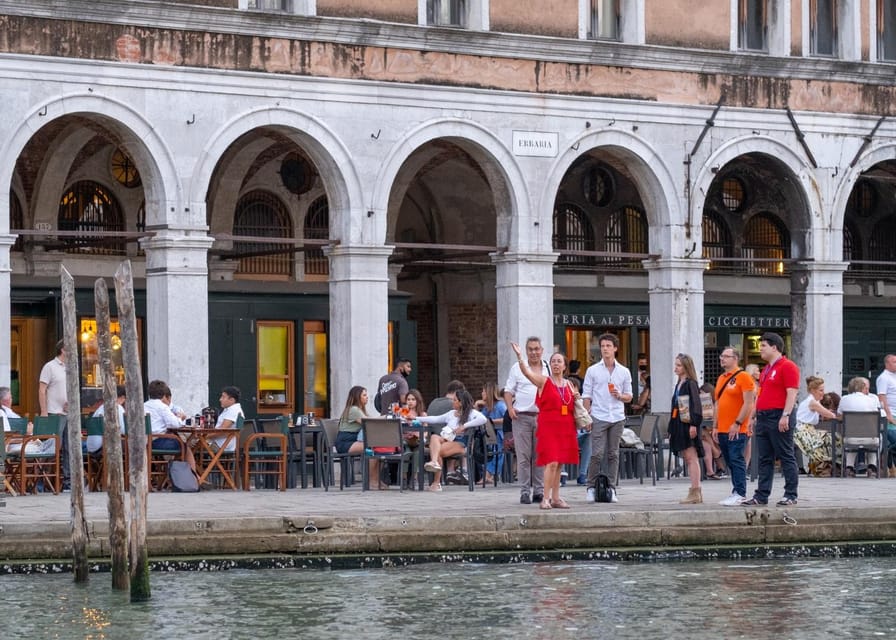
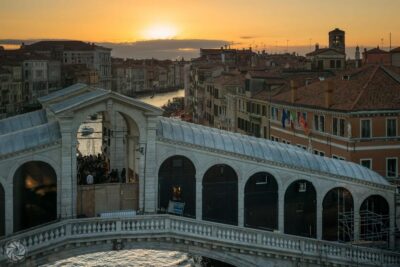
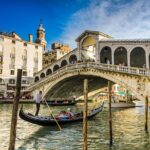
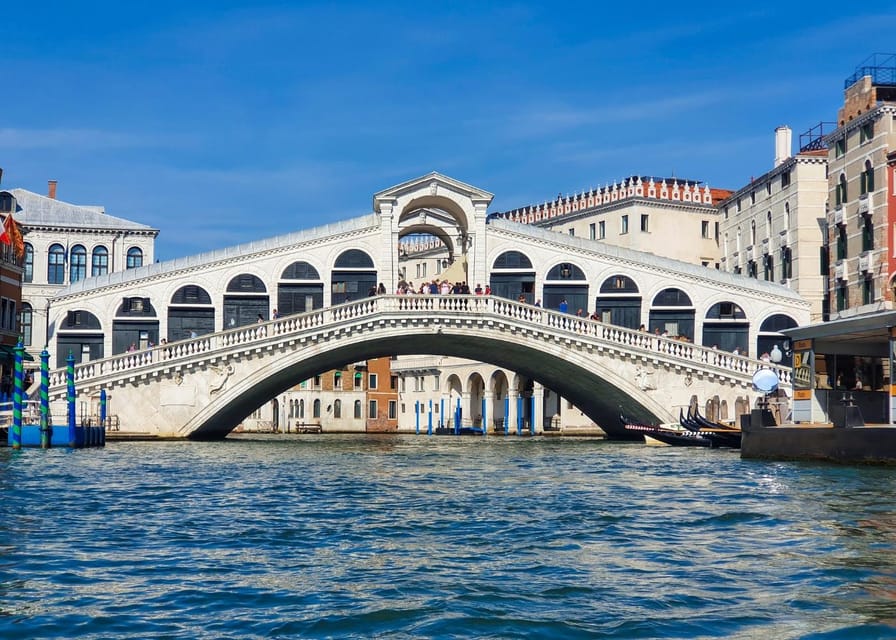
Next comes the big showpiece: the Rialto Bridge and the view over the Grand Canal. This is the part where you’ll see why Rialto mattered so much. You’re standing where merchants and traders would have had a reason to converge—because water access was everything.
The guide builds in a clear photo moment at the foot of the bridge. From there, you get a good sense of scale: gondolas, palaces, and the canal all line up in one frame. If you’ve only seen Venice from canals (or only from viewpoints), this gives you a satisfying “third angle” that helps you picture how the city functions.
You’ll also learn how the bridge evolved—from earlier wood structures to the stone landmark you see today. That story matters because it explains Venice’s core strength: they kept rebuilding smarter, not just more often. You end up understanding the bridge as infrastructure, not just a photo backdrop.
VR in the Venice Gallery: A Time-Hop That Makes the Walk Stick
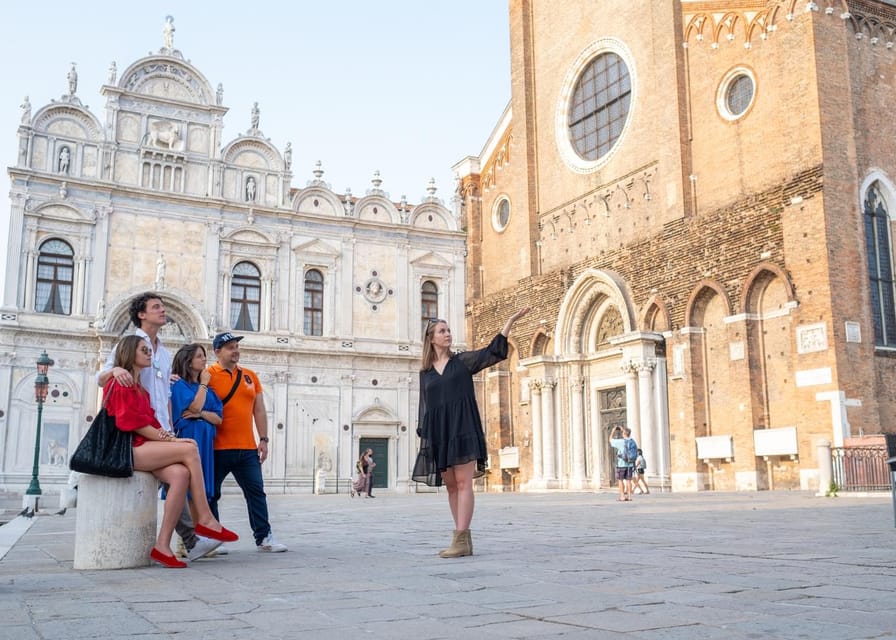
One of the most praised parts is the Venice Gallery VR journey, where you wear a headset and watch Piazza San Marco and the Grand Canal through centuries of change. The big win here is mental. After you’ve walked the real streets, VR adds the missing “then” layer. It helps you stop thinking of Venice as a frozen postcard.
The VR experience is designed around the same places the walking tour covers—so it supports your tour rather than feeling like a separate activity. You watch Piazza San Marco evolve, then you glide along the Grand Canal as part of the storytelling.
I also like that this is a good “weather insurance” option. On foggy or odd days, you may not get perfect views outside, but VR still delivers the history layer. One guide’s gondola day may look like mist from the water, and VR helps you keep the whole experience cohesive.
You can also read our reviews of more guided tours in Venice




Gondola Ride Option: The Water View, the Mist Factor, and the Time Gap
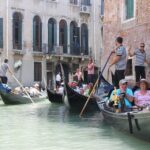
If you select the gondola option, it’s a meaningful upgrade because it changes your relationship with Venice. Walking gives you structure and landmarks; a gondola gives you movement and scale on the waterway the city is built around.
Two practical points. First, there’s a stated gap of time between the walking tour and the gondola ride. That means you should plan a buffer in your schedule—don’t assume you’ll step onto the boat immediately after the VR stop.
Second, conditions can shape the vibe. People mention gondola moments in mist that feel surreal, almost like a movie scene. Even if you don’t get mist, the water level view tends to make Venice feel more intimate than any viewpoint.
If you’re choosing between skipping the gondola and adding it, ask yourself: do you want Venice to feel like a living city, or like a sightseeing route? The gondola pushes it toward living-city energy.
Pace, Language, and Group Size: What You Need for a Smooth Day
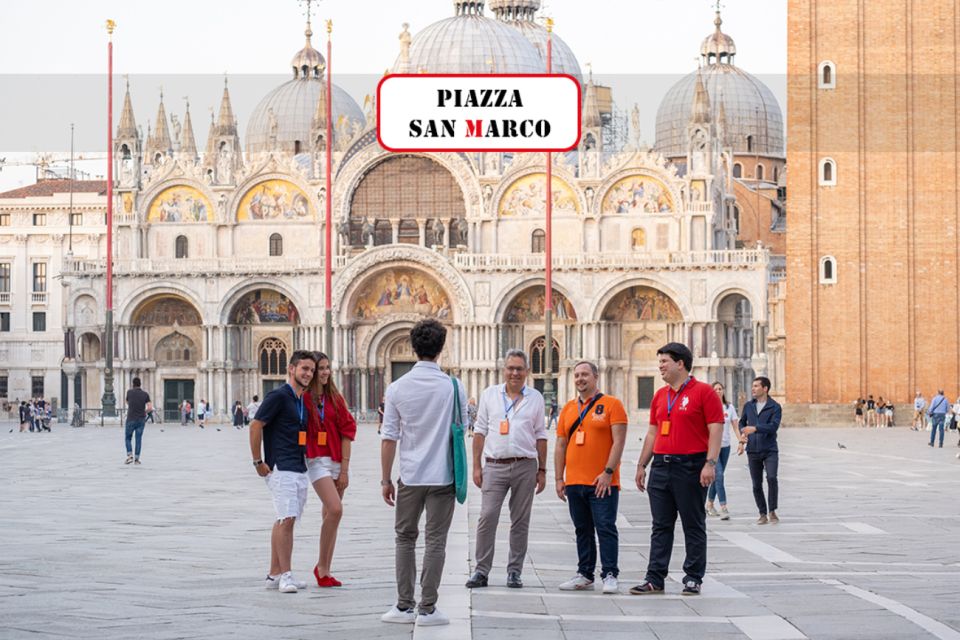
This tour runs for about 1 to 2.5 hours, depending on timing and how the day flows. That’s short enough to be efficient, but it’s also long enough that you’ll be on your feet most of the time.
The tour is listed as monolingual, even though multiple languages are offered. In plain terms: you’ll hear the guide in one language per departure, depending on what you book. If your group language is a priority, double-check you’re selecting the one you want.
If you’re with a larger group (more than ten people), you’ll use audio-receiver devices, which helps a lot in places where sound bounces off buildings. In Venice, that little detail makes a difference—especially on busy corners.
One caution from real-world pacing: if you walk slowly or have mobility limits, this may not feel comfortable. The route has to keep moving because other tours are coming after you. If you need a slow, flexible pace, you might do better with something more private or less time-pressured.
Price and Value for $14: What’s Included and What You Should Budget
Let’s talk value, because $14 in Venice is either a bargain or a trap—and this one reads like a bargain done right.
What’s included:
- a qualified guide
- VR inside the Venice Gallery (that time-hop)
- audio receivers for groups over ten people
- a gondola ride if you select the option
- a claim to skip the ticket line (useful for keeping your day efficient)
What’s not included:
- hotel pickup or drop-off
- entrance to monuments (so don’t count on ticketed sites being included)
So, you’re paying for guided orientation plus VR, and possibly the gondola. For first-time visitors, that’s a lot of “why this matters” packed into a short block of time. For repeat visitors, it can still work if you want a focused route plus an extra VR layer without spending all day on museum tickets.
Also worth noting: the tour is designed to be flexible with timing windows, with starting times depending on availability.
Should You Book This Venice City-Center Walk?
Book it if:
- you want a fast way to understand San Marco + Rialto
- you like history that explains how Venice works, not just what it looks like
- you’re curious about the VR gallery experience
- you’re considering the gondola and want a guided structure that leads you to the water viewpoint naturally
Skip it (or be cautious) if:
- you need a slow pace or have mobility concerns, because the route can’t always accommodate drop-offs
- you don’t want to manage a time gap between walking and gondola
- you expect entrances to major monuments to be included (they aren’t)
If you’re like most people visiting for a few days, this is a smart “anchor tour” you can build the rest of your Venice day around.
FAQ
How long is the Venice City Center Historical Guided Walking Tour?
The duration is listed as 1 to 2.5 hours, depending on the starting time and how the tour runs that day.
What areas will the walking tour cover?
You’ll explore St. Mark’s Square, Rialto, and additional calli and campi (narrow streets and hidden squares). You’ll also pass by Teatro La Fenice.
Is the gondola ride included?
A gondola ride is included only if you select that option. There is also a stated gap of time between the walking tour and the gondola ride.
Do I need to pay for monument entrances?
No. Entrance to the monuments is not included.
Is the tour offered in multiple languages?
Yes. The live guide is available in German, French, English, Italian, and Spanish. The tour is described as monolingual, meaning each departure runs in one language.
What happens if there are exceptionally high tides?
If exceptionally high tides happen, the walking tour does not operate. It can be postponed to the day after, and otherwise it will be refunded.