REVIEW · VENICE
Palladio. A wonderful live tale through time&soul, from Ve/Pd/Vr
Book on Viator →Operated by Palladian Routes · Bookable on Viator
Palladio can turn one ordinary trip into a full-time story. This private outing strings together key Palladian sites in Venice and Vicenza, with a “live tale through time” approach and built-in entry for many UNESCO stops. I especially like how the pacing keeps you moving between architecture, art, and city streets, and how the guide’s history-and-design explanations stay practical. One thing to weigh: some major villas have entry not included, and access rules for Villa La Rotonda depend on the season and day.
If you want your Veneto trip to feel like it has a spine, this gives you one. You’ll spend about 8 hours on the route, with private transportation, optional water-taxi pickup in Venice (extra cost), and a mobile ticket. It also ends in a different location, with options to head back to Venice faster or slower by train.
In This Review
- Key highlights you should care about
- Why this Palladio day feels different than a basic sightseeing loop
- Getting set up in Venice: pickup, mobile tickets, and the rhythm of the day
- Villa Chiericati: the Door of Time stops the clock (and sets the story)
- Palazzo Valmarana Braga: a private reception-style introduction to the UNESCO story
- Piazza dei Signori: Vicenza’s salon moment
- Basilica Palladiana: the architect of the city, inside and out
- The Loggia contrast: seeing Vicenza and Venice share the same scene
- Strada Maior: where Palladio’s name meets daily life
- Palazzo Chiericati and the civic museum: art, civic identity, and the nobility behind the architect
- Teatro Olimpico: the dream theater show (and why it still matters)
- Contrà Porti: old virtues, new ideas, and the feeling of cultural edges
- Palladio Museum: models that help you understand how he thought
- Private aperitif in the Palladian loggia: a comfortable ending with real atmosphere
- Villa La Rotonda and Villa Foscari: the two villas that can swing the day
- Transportation, pacing, and what your body will feel
- Value for the price: what you’re paying for beyond admissions
- Who this tour suits best
- Should you book Palladian Routes for this Palladio day?
- FAQ
- How long is the Palladio Venice to Vicenza tour?
- Is pickup available in Venice?
- Is this a private tour?
- What language is the tour offered in?
- What’s included in the price besides the guide?
- Are entrance tickets included for every stop?
- Is lunch included?
- Can I choose how to return to Venice at the end?
- Is an e-bike provided?
- Is there any Venice access fee I should know about?
Key highlights you should care about
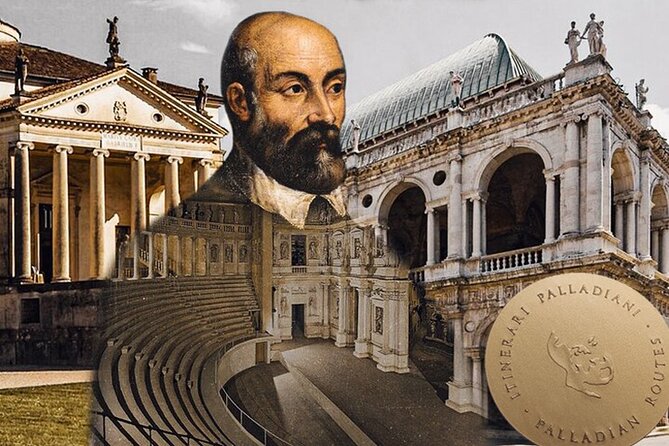
- A private group only: you’re not sharing the day with strangers.
- UNESCO Palladio stops in Vicenza: Basilica Palladiana, Teatro Olimpico, Palazzo Chiericati, and more.
- Included admissions at most major sites: you avoid a lot of ticket wrangling.
- Villa La Rotonda is the wildcard: entry is not included and timing rules can affect what you can see.
- Loggia aperitif with Palladian views: an easy win for atmosphere near the end.
- Optional e-bike to Villa La Rotonda: a comfortable way to get there if it’s running.
Why this Palladio day feels different than a basic sightseeing loop
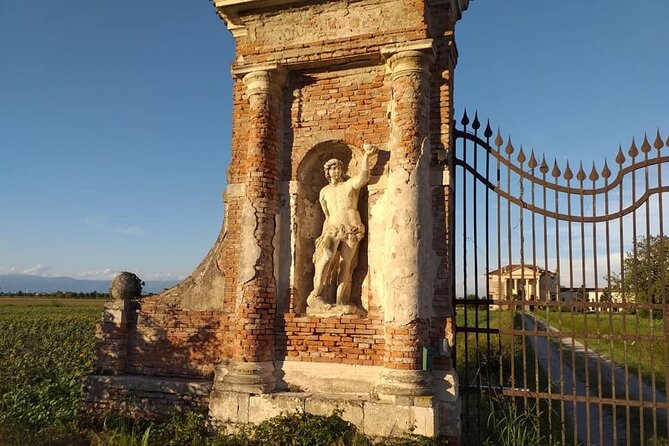
This tour’s core idea is simple: Palladio wasn’t just a builder. He was a translator of ideas, and you feel that as you move from place to place. In Vicenza, the buildings and streets are set up like chapters—facades, courtyards, fresco ceilings, theaters, museum rooms—each one explaining a different layer of how Palladianism spread and why it still looks so modern.
I like that it balances big-ticket architecture with human-scale moments. You get “living room” squares and street walks, not only museum time. And you also get the type of guided narrative that helps you read what you’re seeing instead of just snapping photos.
There’s also a real-world convenience factor. You have private transport, planned stops, and entry fees for many locations handled. The day stays coherent, which matters when you’re trying to see a lot without feeling rushed at every doorway.
You can also read our reviews of more tours and experiences in Venice.

Getting set up in Venice: pickup, mobile tickets, and the rhythm of the day
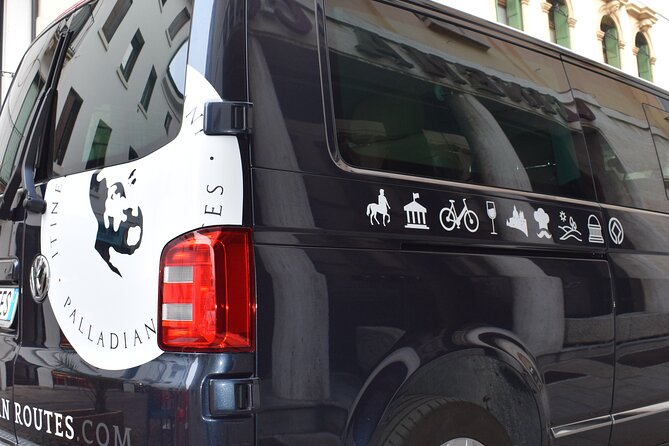
The day runs from Venice, with a total duration of about 8 hours. Pickup may be offered (and on some occasions a water taxi transfer from your hotel in Venice can be arranged for an extra cost). You’ll receive confirmation at booking time, and you’ll have a mobile ticket.
Pacing is built around short “arrival and see” blocks and longer moments where you can actually look and listen. Expect plenty of walking in historic centers, with the kind of tight city layout where a group van helps more than you’d think. The itinerary also includes a practical decision point at the end: you can return to Venice more quickly, or take it slower by taking the next train an hour later.
One practical note for some visitors staying outside Venice: there may be a €5 access fee on certain dates for people planning a day visit. The tour info points you to the city guidance at cda.ve.it, including exemptions.
Villa Chiericati: the Door of Time stops the clock (and sets the story)
Your first stop is Villa Chiericati. The program frames it as a “Door of Time” moment—more romantic ruin than checklist item. Even though you’re not entering here (no entry), it’s one of those places that helps your brain switch into narrative mode.
This is a smart opener. Before you hit major Vicenza highlights, you get to set expectations for what the day will do: connect past and future through design, ideas, and cultural flow. If you love architecture that feels like a character in a story, this works.
Keep an eye on time here. The stop is short (about 5 minutes), and the value comes from seeing the mood and form rather than spending long inside.
Palazzo Valmarana Braga: a private reception-style introduction to the UNESCO story
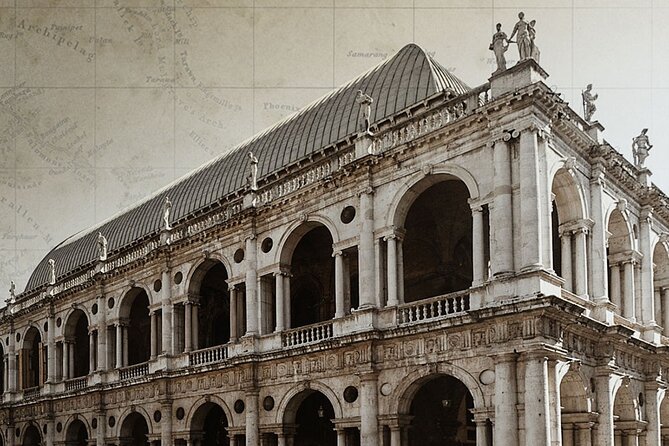
At Palazzo Valmarana Braga, the tour shifts into a more formal vibe: a welcome in one of the most beautiful palaces of the UNESCO heritage. You’re introduced to the UNESCO heritage context in relation to Palladio Villas—specifically via the network of the owners of Palladio’s villas.
This stop is also where you’ll appreciate details that many standard tours gloss over. You’ll contemplate the extraordinary facade and a Renaissance fresco with a cosmology ceiling in the Count’s study. The program also references the experience of the Empress of Austria during her visit to these places, and the history of how Palladianism spread through the fabric of the region.
Timing here is about 25 minutes, and the entrance ticket is included. So you’re paying for a real on-site experience, not just a roadside photo stop.
Piazza dei Signori: Vicenza’s salon moment
Next comes Piazza dei Signori, described as the city’s living room. This is a palate cleanser after the palazzo interior. You get a relaxing pause in the heart of Vicenza, along with a spectacular view over the patrician square.
The practical win is that it teaches you how Vicenza feels at street level: more intimate than Venice, with a sense of elegance that’s close enough to touch. The stop is about 20 minutes and the admission is free.
If you’re sensitive to fatigue, treat this as your reset moment. Sit for a minute, look at the architecture around you, and let the earlier “time tale” start making visual sense.
Basilica Palladiana: the architect of the city, inside and out
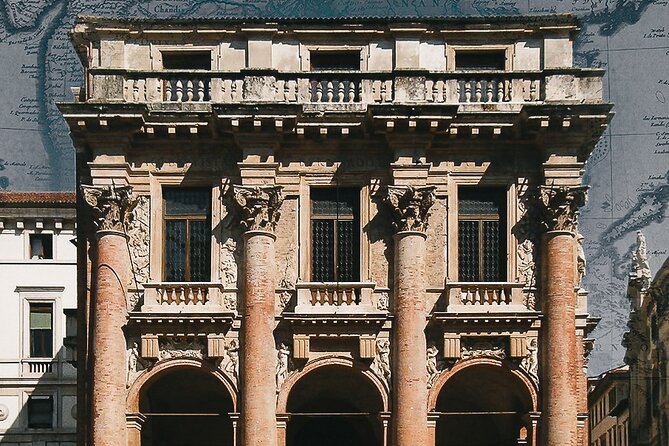
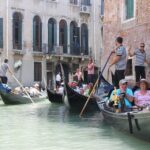
This is one of the anchors of the day. You enter the Basilica Palladiana, and the program includes admission. The tour includes time to admire terrace views over Piazza dei Signori, then move down between arcades where the Vicenza tradition of goldsmith work shows up in the context of the Jewelery Museum.
Basilica Palladiana is important because it’s not only a building; it’s a viewpoint. The terraces give you a way to see the square as a composition, which is exactly how Palladio’s thinking often translates into design: structure, proportion, and perspective.
You get about 30 minutes here, which is enough to take in views and understand what you’re seeing without feeling like you’re sprinting between rooms.
The Loggia contrast: seeing Vicenza and Venice share the same scene
There’s a shorter stop called Venice is silent, but present, set at the Loggia in front of the Basilica. The focus is on closeness and contrast—how Vicenza and Venice can share the same scene while still feeling different.
This is the kind of moment I like on architectural tours because it helps you read the region as a cultural network, not two separate places. It’s brief, but it lands the theme: Venice’s influence isn’t a rumor; it’s visible in how spaces relate.
Strada Maior: where Palladio’s name meets daily life
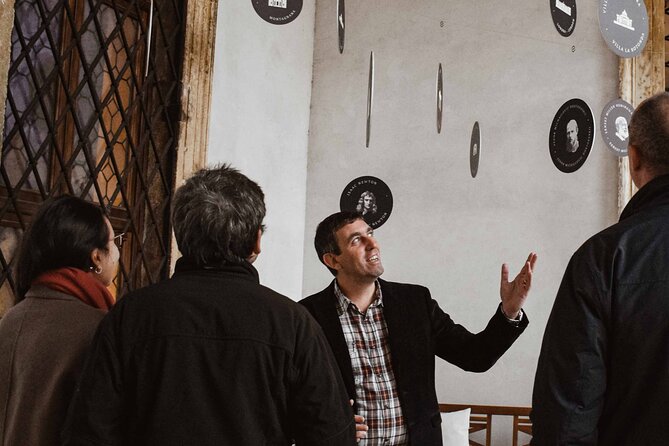
Strada Maior is dedicated to Andrea Palladio. This stop ties the monumental to the everyday. You’ll see historic shops and watch architecture act as the backdrop to how locals live, right in the real center of Vicenza.
The tour also frames it through “Genius Loci”—a spirit of place that you can feel even if you’re not thinking about it consciously. It connects Palladio’s work to a longer Roman tradition of city design and movement.
This is about getting your bearings, not collecting tickets. Admission is free, and the stop is around walking time (about 15 minutes). Wear comfortable shoes. The route matters here.
Palazzo Chiericati and the civic museum: art, civic identity, and the nobility behind the architect
Next is Museo Civico di Palazzo Chiericati, another UNESCO World Heritage Site. You’ll get the impressive façade and understand how the building relates to Venice: the palace was a river landing place from Venice.
Inside, you focus on Venetian works of art, with artists named like Tintoretto, Veronese, and Sansovino. The tour also narrows the lens on portraits of the men who, in different ways, helped “create” the architect. That angle is useful. You’re not only learning Palladio the individual; you’re seeing the network that supported him.
Entrance is included and the time is about 30 minutes. This is a strong stop if you like art history that actually connects back to the spaces where it lived.
Teatro Olimpico: the dream theater show (and why it still matters)
Then you reach Teatro Olimpico, with entry included. This theater is described as unique and exciting, with an evocative light and sound show. The program highlights that it was the first covered theater in history and also references the Greek ideal Palladio and his circle pursued.
This isn’t just a building to look at; it’s staged. Even with only about 35 minutes total, it’s the emotional peak for many visitors because the atmosphere does part of the explanation for you.
If you’re wondering what makes Palladian design feel timeless, theaters are one reason. They show how architecture can choreograph experience—light, sight lines, and drama—without needing to change every year.
Contrà Porti: old virtues, new ideas, and the feeling of cultural edges
Contrà Porti is described as one of Vicenza’s most aesthetically beautiful streets. It’s presented as a layering point: buildings spanning different layers of history and cultures.
The theme here is especially interesting. Vicenza sits at a northern end of a Renaissance world, but also at a southern end influenced by the Reformation coming from the continent. The program frames this street as a meeting point where ancient virtue and newer thought (even heresy) coexist in a way that created something previously unseen.
This stop is short (about 15 minutes) and free. It’s for people who enjoy walking and reading architecture like text. If you prefer strictly ticketed interiors, you’ll still get value, but you’ll want to pay attention instead of treating it as a casual stroll.
Palladio Museum: models that help you understand how he thought
At the Palladio Museum, entry is included (about 40 minutes). The big value here is seeing the legacy of Palladio’s villas through wooden models. Models are where architecture tours often become clearer: drawings and facades can confuse you, but a scale model shows spatial logic.
The program also mentions you can open it for you even outside standard opening hours. That’s a practical quality-of-life detail. It can help you avoid a day that starts or ends in a scramble.
If you’re the type who likes to come home with understanding, not just images, this is a stop you’ll appreciate.
Private aperitif in the Palladian loggia: a comfortable ending with real atmosphere
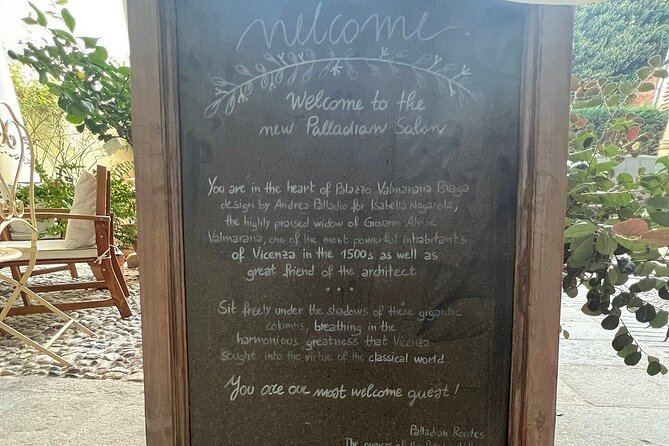
After the museum, you return to Palazzo Valmarana Braga for a private aperitif in the Palladians’ loggia. You’ll toast in a magical place among quotes of the ancients and gigantic columns that evoke virtues. The program also frames it as a moment connecting you to the noble mindset of Vicenza, before those boundaries of the region were pushed worldwide.
Entrance is included here, and the time is about 25 minutes. Alcoholic beverages are included, and this stop also includes a little final Palladian gift.
Even if you’re not a wine person, aperitif time is a good reset for the body. It slows you down at the right moment, after you’ve already seen the best visual and interpretive stops.
Villa La Rotonda and Villa Foscari: the two villas that can swing the day
This is the part to plan for carefully. Villa La Rotonda (also known as Villa Capra) is the headline villa, a World Heritage Site. You’ll have options to reach it by pedaling an e-bike, described as comfortable, or travel by the group’s transport. There’s a catch: entrance ticket is not included.
Timing and access rules matter:
- The tour notes entry conditions based on calendar windows (up to 10 December and starting 11 March, excluding Mondays).
- From Tuesday to Thursday, entry to Villa La Rotonda is described as exclusive, and the villa is normally closed to the public on those days.
- Mondays are excluded.
You’ll also have about 20 minutes here, and you can only enter until 10 December and starting 11 March, based on the program window. So, on certain dates, you might not be able to go inside as planned.
Next, Villa Foscari is another stop where entry is excluded. The tour describes the villa transformation into a princely country palace dominating the placid Brenta canal. It also points out a specific architectural change: a pronaos appears on the main facade in place of the loggia, marking a beginning of Palladio’s language that spread beyond borders.
There’s mention that possible entry on the villa’s opening days can be arranged at an extra cost, with the program reduced in Vicenza proportionally upon your indication. So you don’t just show up hoping; you may be able to personalize based on the villa’s access.
If you care most about the villas as interiors, this is the risk-and-reward zone. If you care more about the broader Vicenza architecture story, you’ll still enjoy the day even if one interior slot is limited.
Transportation, pacing, and what your body will feel
You’re on a day that hits multiple neighborhoods, with private transportation included. Expect short blocks inside and outdoors in historic settings. The walking isn’t described in exact meters, but the stop structure (pavements, terraces, arcades, street sections) implies you should plan for real feet work.
The tour also includes a decision at the end: you can return to Venice more quickly or more slowly by train, with the next train about an hour later. Because the activity ends in a different location, read your own return plan before the day begins. If you’re staying in Venice proper, you may want to know where the end point lands relative to your hotel or next reservation.
Value for the price: what you’re paying for beyond admissions
At about $612.81 per person for an ~8-hour private experience, value comes from a few things working together:
- Private transportation plus a guided story structure that connects stops.
- Entrance fees included for many major UNESCO sights and the aperitif setting.
- A strong narrative guide approach, built around architecture and art context, not random facts.
- Time-saving: fewer ticket issues for the included sites, and planned access for the theater, museum, and palazzos.
The main value caution is the two-villa structure. Villa La Rotonda and Villa Foscari have entry excluded, and that can add cost depending on date and access. If those interiors are your top priority, confirm expectations early (especially with Villa La Rotonda’s seasonal limits).
Also note lunch is not included, so you’ll either eat on your own near the route or plan a meal before or after.
Who this tour suits best
This tour fits best if you:
- Want a single day with a clear theme and not just a list of landmarks.
- Like architectural detail you can understand through explanation and models.
- Care about UNESCO sites and want many of the big-ticket ones handled in one run.
- Prefer a private group experience for smoother timing and easier questions.
If your idea of a perfect day is long museum hours and slow wandering with zero structure, you might find the itinerary feels paced. But if you like having stops that teach you what to look for, this is built for you.
Should you book Palladian Routes for this Palladio day?
I’d book it if you want your Venice vacation to connect to the bigger Palladio story in a meaningful, not superficial, way. The combination of Vicenza’s UNESCO anchors (Basilica Palladiana, Teatro Olimpico, Palazzo Chiericati), plus street-level context (Strada Maior, Contrà Porti), makes it more than a single-city tour.
The deciding question is simple: how badly do you want to go inside Villa La Rotonda and Villa Foscari? If you’re flexible on date and comfortable with the fact that entry is not included and follows access rules, this tour is a strong deal for what you get. If you’re traveling only for those interiors and hate uncertainty, you should double-check date fit before committing.
If you go, plan for a full day of walking, bring comfortable shoes, and treat the guide’s story as part of the attraction. The day works best when you let the architecture explain itself.
FAQ
How long is the Palladio Venice to Vicenza tour?
The tour lasts about 8 hours.
Is pickup available in Venice?
Pickup may be offered. The info also says a water taxi transfer from your hotel in Venice can be arranged for an extra cost (contact the provider at least 3 days before the tour date).
Is this a private tour?
Yes. It is private, meaning only your group participates.
What language is the tour offered in?
The tour is offered in English.
What’s included in the price besides the guide?
Included items are private transportation, entrance fees to places mentioned as included, an itinerant tale by the director of the Network of Owners of Palladio’s Villas, possible free use of the e-bike to ride to Villa La Rotonda, alcoholic beverages aperitif, and a little final Palladian gift.
Are entrance tickets included for every stop?
No. Entrance fees are included for several stops such as Palazzo Valmarana Braga, Piazza dei Signori (free), Basilica Palladiana, Palazzo Chiericati, Teatro Olimpico, Contrà Porti (free), Palladio Museum, and the aperitif stop. Entrance is not included for Villa La Rotonda and Villa Foscari, and the Door of Time stop notes no entry.
Is lunch included?
No, lunch is not included.
Can I choose how to return to Venice at the end?
Yes. After the Vicenza UNESCO visit, you can choose to return to Venice more quickly or take the next train an hour later.
Is an e-bike provided?
You can have possible free use of the E-bike for a pleasant ride to Villa La Rotonda.
Is there any Venice access fee I should know about?
The info says that on certain dates, travelers staying outside Venice who are planning to visit for the day may be required to pay a €5 access fee. It points to cda.ve.it for details and exemptions.