REVIEW · VENICE
The Secrets of Venice – Private Tour
Book on Viator →Operated by Nico Venice Tour · Bookable on Viator
Venice hides in plain sight. This private 2-hour route with Nico Venice Tour takes you from the quieter corners near the Jewish Ghetto to Venice’s most powerful buildings at the Grand Canal. You’ll get real context for why Venice looks the way it does, not just a list of famous stops.
Two things I really love: Nico’s storytelling sticks to what you’re actually seeing—arches, bridges, churches, trading spaces—and he adjusts to what you care about. And the itinerary keeps you moving through neighborhoods you might skip if you only chase the main squares.
One possible drawback: you’ll cover a lot of ground in a short time. If you’re hoping for a long gondola ride or lots of sitting breaks, set expectations now.
In This Review
- Key highlights worth getting excited about
- A smart way to see Venice in just 2 hours
- Where you start: St Mark’s area, then straight into the quieter Venice
- Ghetto Ebraico: the Jewish Quarter and what the word ghetto really means
- Madonna dell’Orto: a gothic church that feels off the main radar
- Casa del Tintoretto: birthplace of Jacopo Tintoretto
- Squero dei Muti: gondola workshop history, not just gondola photos
- Chiesetta dell’Abbazia della Misericordia: a quiet corner of ancient Venice
- Rialto markets and the commercial engine of the city
- What is a Fondaco? A Venetian trading-house clue you’ll remember
- Ponte di Rialto to St Mark’s Basilica: power at the water level
- Doge’s Palace and Ponte dei Sospiri: Venetian power up close
- The gondola part: expect a short ride, not an all-day fantasy
- Price and value: what you’re really paying for at $171.92
- Who this tour is best for
- Quick practical tips before you go
- Should you book The Secrets of Venice – Private Tour?
- FAQ
- How long is The Secrets of Venice – Private Tour?
- Is this a private tour?
- Where does the tour start?
- Is pickup available?
- Is the tour available in English?
- Do I get a mobile ticket?
- Are admission tickets included?
- Do I need to pay the €5 access fee?
- What if the weather is bad?
- Is free cancellation available?
Key highlights worth getting excited about
- A private guide (just your group), with a flexible pace
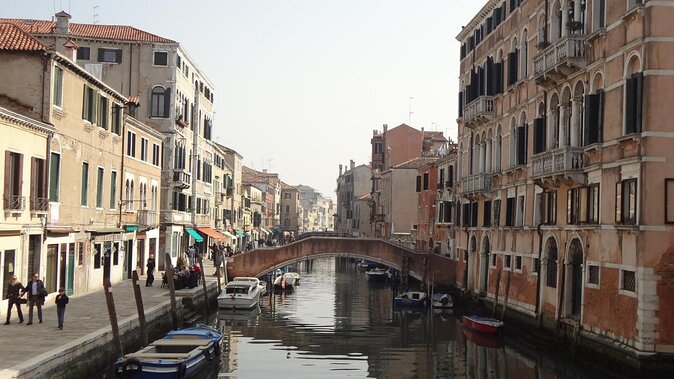
- Jewish Ghetto plus hidden churches, not only the big-name sites
- Rialto market time and real Venice commerce stops
- Gondola culture stops, plus a typically short local ride
- Big-ticket landmarks without feeling like you’re herded
A smart way to see Venice in just 2 hours
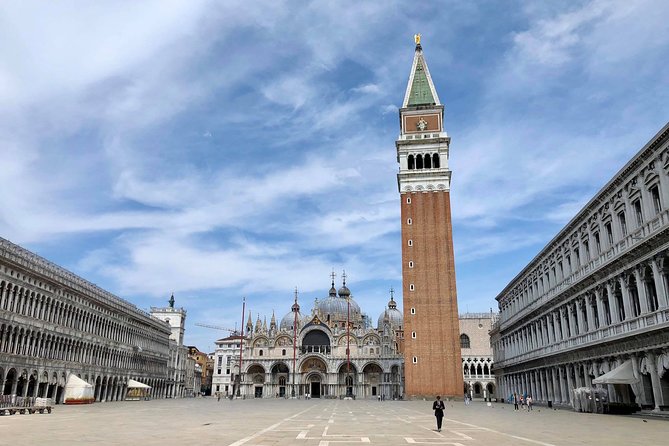
Venice is gorgeous, but it can also be confusing fast. Streets twist. Bridges pop up out of nowhere. And the most crowded sights often sit right next to spots that feel calm and local.
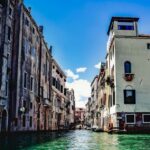
That’s where this tour wins. It’s private, so you’re not squeezed into a larger group rhythm. The route is built to give you a “map in your head” by walking across key areas—starting around St Mark’s and then shifting toward the older, working-side of Venice. In a couple hours, you get a workable sense of where things are and why Venice developed along these waterways and trade corridors.
The timing matters too. With an approx. 2-hour duration, you can still plan a full day afterward—more museum time, a longer lunch, or an evening stroll when the cruise crowds thin out.
You can also read our reviews of more private tours in Venice
Where you start: St Mark’s area, then straight into the quieter Venice
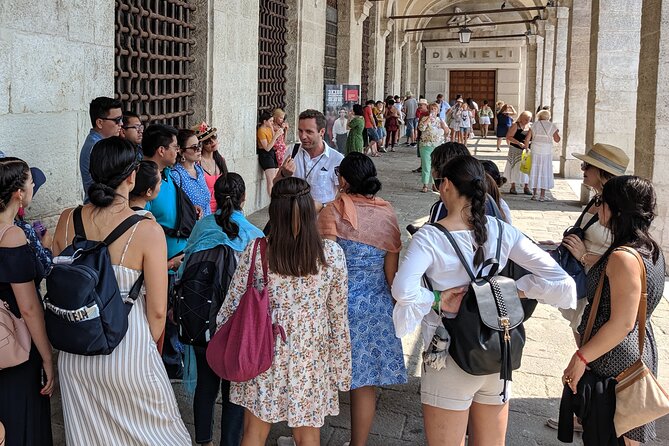
You meet at P.zt San Marco, 90, 30124 Venezia VE. If you’re using pickup, that option is listed, but the starting point gives you a clear anchor. This is ideal because it lets you walk in with confidence—no guessing where to begin when everything looks like it could be the wrong street.
From there, you don’t just bounce between famous photos. You start moving into districts that explain Venice beyond the postcard shell. That’s a big part of why the tour works well as an early experience: by the time you return later on your own, you’ll recognize the “logic” of the city.
Also helpful: the tour is offered in English, and you’ll use a mobile ticket. Service animals are allowed, and it’s labeled as suitable for most travelers. If you’re someone who likes a clear plan (even in Venice’s chaos), you’ll appreciate how the route is staged.
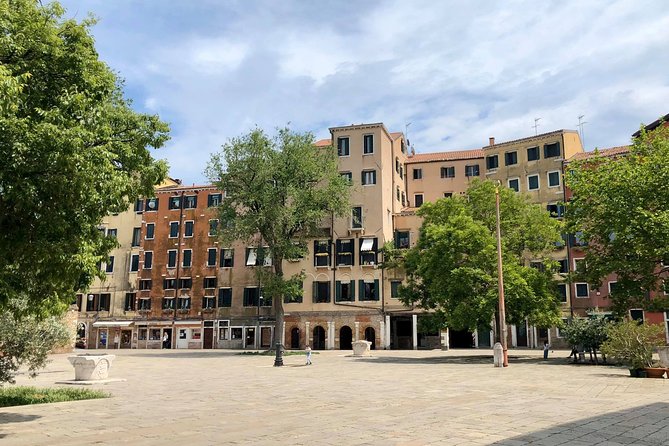
Ghetto Ebraico: the Jewish Quarter and what the word ghetto really means
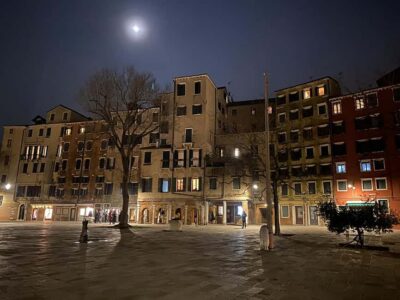
Your first stop is Ghetto Ebraico, with a focus on the Jewish community during the Serenissima Republic. This isn’t handled like a quick cultural checkbox. You get enough background to understand the neighborhood as part of Venice’s identity, not just a historical footnote.
Even the language lesson is worth it. You’ll hear how the word ghetto came from a Venetian term, and that its modern use doesn’t fully match how the term originally worked. That detail helps things make sense when you see the area today.
Practical note: this is a great stop early in the walk because it sets the tone. Venice can feel all shiny and grand. Here, you get a different emotional register—more human scale, more neighborhood feeling.
Madonna dell’Orto: a gothic church that feels off the main radar
Next comes Chiesa della Madonna dell’Orto, described as a wonderful hidden Gothic church. “Hidden” in Venice often means two things: it’s tucked into a side lane, and it’s not the first church most first-time visitors seek.
That’s why I like it for a guided format. A guide can point out what to look for—how the building’s style differs from the big showpieces nearby, and how a smaller church fits into a living city rather than a museum box. Even a short stop becomes meaningful when you know what you’re seeing.
If you’re someone who loves architecture but doesn’t want a full church marathon, this is a good match: you get a taste without burning your whole stamina.
Casa del Tintoretto: birthplace of Jacopo Tintoretto
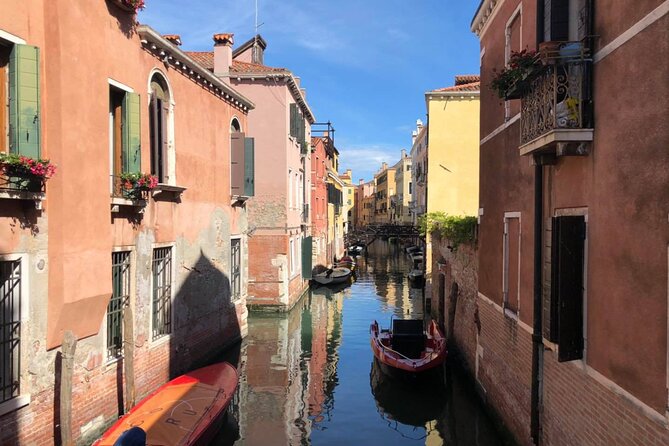
Then you’ll stop at Casa del Tintoretto, the birthplace of artist Jacopo Tintoretto. This isn’t about loading up on art facts. It’s about connecting Venice’s street-level reality to the artists and crafts that helped define the city.
Tintoretto is one of those names that becomes more interesting when you place him in the real geography of Venice. The building itself gives you a physical anchor—this isn’t abstract history, it’s tied to a specific address and neighborhood memory.


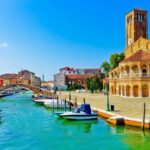
Squero dei Muti: gondola workshop history, not just gondola photos
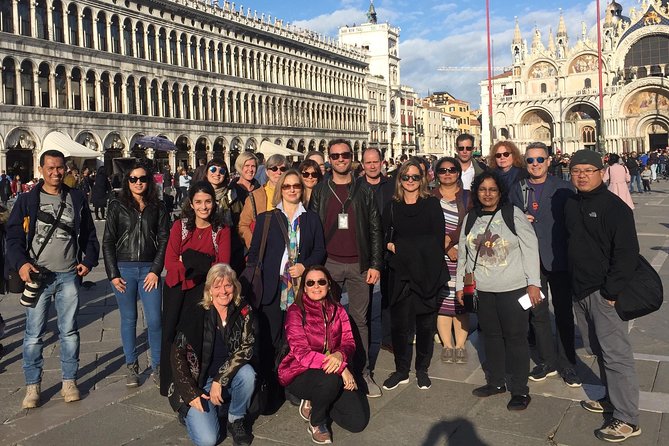
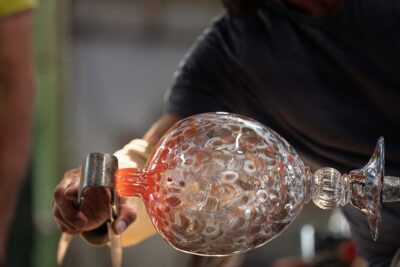
Squero dei Muti is an old gondola factory. This is a stop many people miss because they assume “gondola” is only a tourist ride. Here, you get the working foundation: the place where gondolas were shaped and crafted.
It also changes how you interpret Venice’s canals. Instead of seeing them only as scenery, you start seeing them as the city’s infrastructure. Gondolas weren’t just for romance. They were part of everyday movement and local industry.
You’ll likely appreciate this stop even more if you’ve been on or around gondolas before. It adds context to what those boats represent in Venetian life.
Chiesetta dell’Abbazia della Misericordia: a quiet corner of ancient Venice
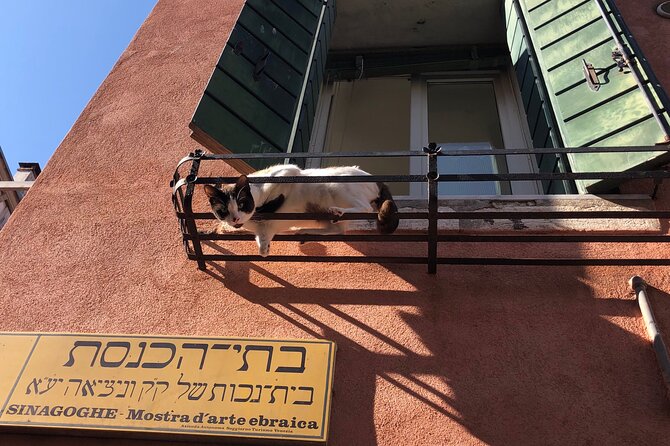
Your next church stop, Chiesetta dell’Abbazia della Misericordia, is described as an ancient and beautiful corner of Venice. This is one of those pauses that make the whole tour feel less rushed.
Venice is noisy at the big attractions. But step into smaller spaces and you feel the difference right away—scale, light, acoustics, and the sense that you’re not standing in a ticket line. These are the stops that help the city feel like a lived-in place again.
Short note: comfortable shoes matter here more than anywhere. Even “short stops” in Venice can mean negotiating uneven stone and crossing small bridges.
Rialto markets and the commercial engine of the city
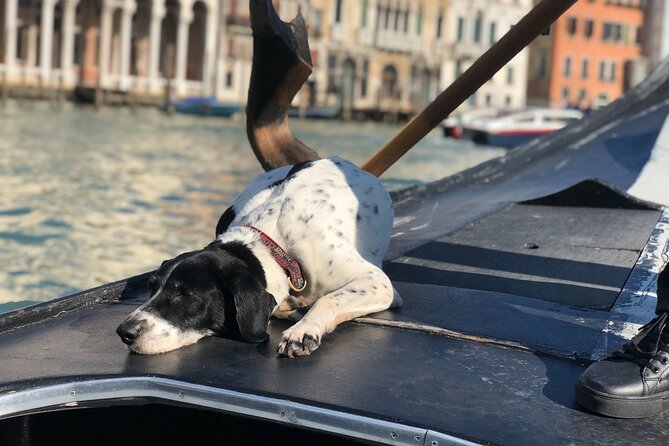
Then you reach Mercati di Rialto, the traditional Venetian local market. This is one of the most practical stops on the walk, because markets are where you understand daily life.
Even if you don’t plan to buy anything, you’ll benefit from seeing how Venice eats and trades—what kinds of stalls are organized where, and how “market” fits into the city’s canal-and-walk rhythm. It’s also a great moment to take photos that don’t scream tourist attraction.
From there, the tour moves to Palazzo dei Camerlenghi, described as highlighting the commercial importance of Venice. The palace context gives you a wider view: markets feed the city’s daily needs, and the bigger commercial institutions helped manage the system that kept Venice moving.
If you like understanding how a city worked, these stops are the glue between the old religious spaces and the big political ones later.
What is a Fondaco? A Venetian trading-house clue you’ll remember
Between the market area and the Grand Canal crossing, you’ll get the quick question: What is a Fondaco? This matters more than it sounds.
A fondaco is essentially a Venetian trading hub—where goods, merchants, and the city’s economy intersected. Learning the term in context helps you read Venice’s buildings as business tools, not only decorative architecture. Later, when you pass similar-looking structures on your own, you’ll have a mental label for what you’re seeing.
Think of it as giving yourself a key for Venice’s “hidden vocabulary.” It makes the city feel less random.
Ponte di Rialto to St Mark’s Basilica: power at the water level
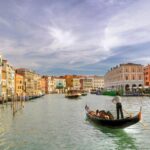
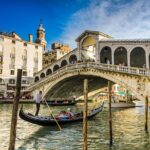
Next is Ponte di Rialto, described as the first bridge over the Grand Canal located at the most important place in Venice. That’s a bold claim for a tour stop, but the point is clear: Rialto is where major city traffic converged—physically and economically.
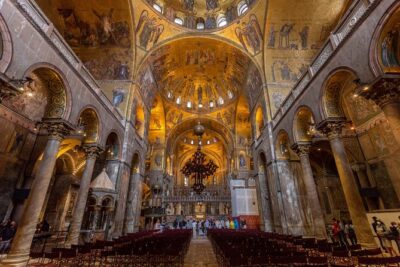
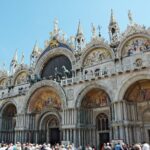
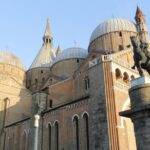
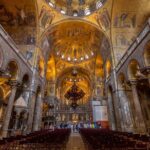
From there, you head to Basilica di San Marco, the resting place of San Marco. This is the moment where Venice’s scale and ambition show up at full volume. Even if you’ve seen photos already, walking into the area with a guide changes how you experience it. The architecture becomes part of a system—religion, rule, identity—all in one spot.
A helpful mindset: try to notice contrasts. The tour goes from trade and local life to the most symbolic religious landmark in the city. That contrast helps you feel how Venice built legitimacy: through both commerce and ceremony.
Doge’s Palace and Ponte dei Sospiri: Venetian power up close
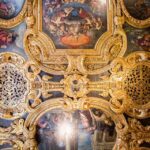
Then comes Doge’s Palace, described as the palace of Venetian power. This is where you stop thinking about Venice as scenery and start thinking about Venice as government—decisions made here shaped lives across the city and beyond.
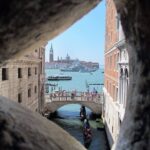
Next is Ponte dei Sospiri, the prison bridge. In Venice, bridges often carry stories. This one carries a heavy one, tied to confinement and the consequences of power. The stop works especially well at the end of the walk because it gives the route an emotional arc: from community and work, to authority and control.
The gondola part: expect a short ride, not an all-day fantasy
The title includes gondola language in how people talk about Venice, and some versions of this experience include a quick local ride. Based on what I’ve seen from real-world expectations, here’s the practical takeaway: don’t plan for a long gondola session.
One person noted the ride felt closer to a very short crossing (more “a taste” than a prolonged scenic trip). That’s not automatically a flaw. In a tour like this, the ride is usually a bonus that connects the gondola workshop culture with the real canal experience—while the walking does most of the education.
So if your main goal is a long ride where you can drift and take your time, you might want to pair this with a separate gondola plan.
Price and value: what you’re really paying for at $171.92
At $171.92 per person for about 2 hours, the cost is not “cheap,” but it’s also not just for standing in line with a stamp card. You’re paying for a private guide and a carefully designed route that keeps you out of the worst overload points.
This becomes better value when:
- you’re traveling as a small group (privacy saves time)
- you want context tied to what you’re walking past
- you’d rather ask questions than just follow a route on your phone
The itinerary also lists admission tickets free for the stops included. That doesn’t automatically mean there’s zero waiting anywhere in Venice, but it does reduce the mental load of planning what to buy.
Also, this tour is often booked well ahead—on average 63 days in advance. That’s a sign it’s popular for people who want a guided orientation without wasting vacation hours.
Who this tour is best for
I think this tour fits best if you:
- want a first-day-or-second-day orientation with more depth than the usual highlights
- care about Venice’s architecture and city structure, not only big monuments
- like the idea of mixing “famous” places with practical local stops like Rialto and a market area
- value a guide who can move at your pace (families often appreciate this)
If you hate walking, this might be a tough fit. Venice walking is real walking—bridges, stone, and short distances that still add up.
If you want a purely relaxed, sit-down experience, you may be happier with something longer and slower, or with a private tour that focuses on fewer sites.
Quick practical tips before you go
- Wear comfortable shoes with grip. Venice stone can be slick.
- Bring water. Two hours goes fast, especially with churches and bridges.
- Have realistic expectations for the ride component. It’s likely brief.
- Go ready to ask questions. Nico’s style is interactive, and the tour moves faster when you’re engaged.
Should you book The Secrets of Venice – Private Tour?
I’d book this if you want Venice to make sense quickly. The route balances major power landmarks with quieter, more local-feeling stops like the Jewish Quarter and Rialto’s market area. You also get a guide named Nico who’s known for being flexible and for tailoring the walk to what your group cares about.
Skip it if you’re seeking a low-walking, long-boat version of Venice, or if you only want the absolute top photo spots with minimal explanation. This tour aims for understanding and orientation, not just sightseeing trophies.
If you’re trying to do Venice smart—this is a strong choice.
FAQ
How long is The Secrets of Venice – Private Tour?
The tour lasts about 2 hours.
Is this a private tour?
Yes. Only your group will participate.
Where does the tour start?
The meeting point is P.zt San Marco, 90, 30124 Venezia VE, Italy.
Is pickup available?
Pickup is offered.
Is the tour available in English?
Yes, it’s offered in English.
Do I get a mobile ticket?
Yes, the tour offers a mobile ticket.
Are admission tickets included?
Admission tickets are listed as free for the stops included in the itinerary.
Do I need to pay the €5 access fee?
On certain dates, day visitors who are staying outside of Venice may need to pay a €5 access fee. For details and exemptions, check: https://cda.ve.it
What if the weather is bad?
This experience requires good weather. If it’s canceled due to poor weather, you’ll be offered a different date or a full refund.
Is free cancellation available?
Yes. You can cancel up to 24 hours in advance for a full refund.