REVIEW · VENICE
Secret Venice, an unusual walk – Private Walking Tour
Book on Viator →Bookable on Viator
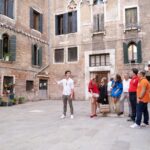
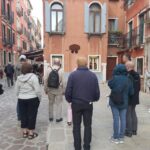
Venice gets noisy fast. This walk keeps it focused and personal, with a guide pointing you to church art in the exact places Titian and Tintoretto were painted for. You also get street-level stories that explain why Carnival matters, how the old red-light area fit into Venice, and why the city has so few wells.
Two things I really like: first, the way the guide connects famous names to the actual buildings you’re standing in, instead of treating them like museum labels. Second, the group stays small (numbers capped at eight), so Federico or Francisco can actually answer your questions instead of rushing everyone through.
One drawback: this experience is weather-dependent, so if conditions are rough, you’ll need to be flexible with dates.
In This Review
- Key highlights worth planning around
- A private, question-friendly Venice walk that actually teaches
- How the size (and “private” part) changes the whole experience
- Timing and route: what two hours feels like at Venice pace
- Stop 1: Chiesa di San Giacomo di Rialto and the 1,600-year story
- What to watch for
- Stop 2: Mercati di Rialto and the merchant pulse of the city
- A possible drawback
- Stop 3: Rio Terà de le Carampane and Venice’s red-light past
- Stop 4: Campo San Polo—why Venice has so few wells
- Why I think this stop is worth it
- Stop 5: Campo San Toma and Carnival, masks, and identity
- One extra you might see
- Stop 6: Basilica di Santa Maria Gloriosa dei Frari—Venice at its churchiest
- Practical note
- Stop 7: Scuola Grande di San Rocco—ornate finish and strong lasting memory
- Price and value: when $453 per group makes sense
- Who this private Secret Venice walk is best for
- FAQ
- FAQ
- How long is the Secret Venice walking tour?
- What language is the tour offered in?
- Where does the tour start and end?
- How big is the group?
- Are there entrance fees at the stops?
- Is the tour refundable if plans change?
- Should you book Secret Venice, an unusual walk?
Key highlights worth planning around

- Small group (capped at eight): plenty of time to ask questions and hear clearly
- Art tied to real churches: see works by Titian and Tintoretto in the settings they were made for
- Rialto’s story in walking order: history, merchants, and the market scene in sequence
- Venice past explained plainly: Carnival, masks, and the former red-light district
- Wells and altana talk: practical details about how Venetians lived with their environment
A private, question-friendly Venice walk that actually teaches

If you want Venice that feels like a conversation, not a checklist, this is a strong fit. The idea is simple: you meet your guide and then move through a tight loop of places where the city’s big themes show up in real life—church art, marketplace power, Carnival symbolism, and the odd social geography of old Venice.
The best part is how the tour turns famous culture into something you can point at. Instead of vaguely saying Venice has great paintings, your guide takes you to the churches and talks about the works you’d otherwise miss. That’s where the Titian and Tintoretto angle becomes more than a name-dropping moment.
And because the group is capped at eight, you’re not stuck listening from the back of a crowd. I like that the guide’s explanations are organized, but the tone stays human—clearly prepared, yet still willing to adjust based on what you’re curious about. In at least one session with Federico, the guide also threw in helpful restaurant and day-planning suggestions, which is exactly the kind of extra value that saves you time later.
You can also read our reviews of more walking tours in Venice
How the size (and “private” part) changes the whole experience
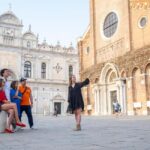
This is a private walking tour—only your group participates. But what really matters for how it feels on the ground is the cap of eight people. That number is big enough to share, small enough to keep it conversational.
In practice, that means three things:
- You can hear the guide without playing phone-at-the-wall.
- You can ask follow-up questions when something sparks your interest (art, politics, social life, city design).
- You’re not rushed past details that would slow down a bigger group.
If you’re traveling with family, this format tends to work well because different people can latch onto different parts—some will focus on the churches, others on Carnival and masks, others on the market and daily life.
Timing and route: what two hours feels like at Venice pace
The walk is about two hours, starting at 11:00 am. The pace is set up as short stop-and-go segments—around 15 minutes per main location—so you’re never stuck standing still too long, but you also aren’t sprinting nonstop.
You’ll start at Campo San Giacomo di Rialto, and the tour ends at Campo San Rocco, right in front of the Scuola Grande di San Rocco. That ending spot is handy because you’re already near a major, visually impressive building, so it’s a smooth finish rather than an awkward “back to where you started” loop.
Stop 1: Chiesa di San Giacomo di Rialto and the 1,600-year story
Your first stop is Chiesa di San Giacomo di Rialto. The guide uses this location as a launching point for Venice’s long timeline—about 1,600 years—and connects it to where the church was originally funded.
What I like about starting here is that it gives you a framework before the walk starts getting more specific. You learn how the city grew in layers, then you’re ready to understand why people cared about art, markets, and public spaces the way they did. Even if you’re not a “church person,” the guide’s approach tends to make it feel practical—like you’re learning how Venice worked, not just admiring a building.
What to watch for
- Look for the connection between the church’s setting and the role it played in early Venice.
- Ask questions early if you’re curious about how art ties into local power and funding.
You can also read our reviews of more private tours in Venice
Stop 2: Mercati di Rialto and the merchant pulse of the city
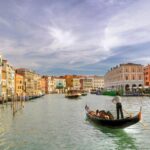
Next up is the Mercati di Rialto, where you’ll get an overview of the market and what you need to know about Venetian merchants.
This stop matters because Rialto isn’t just scenery. It’s a reminder that Venice ran on trade, shipping, and people who knew how to make deals. Your guide uses the market to explain why certain kinds of buildings, art commissions, and social patterns took the shape they did.
If you’ve only ever seen Rialto as a photo spot, you’ll get something different here: context. You’ll start noticing how markets shape everyday life, not just architecture.
A possible drawback
Markets can feel crowded and loud depending on the day. The upside is that your guide’s explanations are short and focused, so you’re not forced to “stand and endure” too long.
Stop 3: Rio Terà de le Carampane and Venice’s red-light past
Then the walk turns to Rio Terà de le Carampane, where the guide shares stories and curiosities about the former red light district.
This topic can sound sensational, but the tour’s value is in the explanation—how Venice’s social world worked and why certain areas became known for certain activity. The guide also ties it to why you’ll recognize patterns in Venice’s street layout and neighborhoods even today.
You’ll get the “how and why,” not just the shock factor. If you prefer your history told with sensitivity and context, this stop tends to land well.
Stop 4: Campo San Polo—why Venice has so few wells
At Campo San Polo, you get an explanation of wells and the altana (the rooftop terrace element common to Venetian architecture).
This is the kind of detail that makes Venice feel less like a dream and more like a place where people solved real problems. Your guide connects the idea of Venice having so few wells to how daily life worked in a city shaped by water, canals, and the lagoon environment.
Why I think this stop is worth it
Because it reframes what you’re seeing. After this, rooftops and terrace spaces make more sense, and you start looking up (politely) instead of only staring at façades.
Stop 5: Campo San Toma and Carnival, masks, and identity
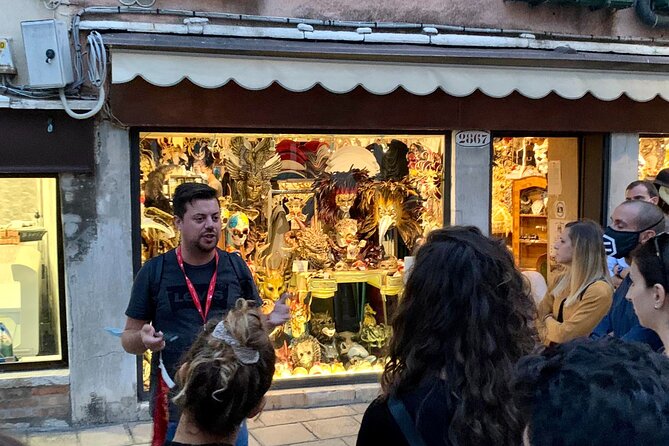
Next is Campo San Toma, where the guide explains Carnival and why masks are so important.
Carnival in Venice isn’t just costumes. Your guide treats masks as symbols—social tools, anonymity, and the way the city lets people play with identity for a limited time. If you’ve ever wondered why masks are so central to Venice’s image, this stop gives you the logic behind it.
It’s also a good moment to ask questions, because you’ll likely have opinions about how Carnival fits with Venice’s seriousness. Masks make people curious, and the guide can connect that curiosity to the city’s history.
One extra you might see
One session included time to see mask making. That part isn’t guaranteed by the core structure here, but it’s something worth asking your guide about when you confirm your meeting point.
Stop 6: Basilica di Santa Maria Gloriosa dei Frari—Venice at its churchiest
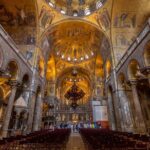
At Basilica di Santa Maria Gloriosa dei Frari, you’ll hear a description of one of Venice’s most important churches. This is where the tour really starts feeling like art education in motion.
Even though this is still a walk, this stop changes the energy. You’re in a major church setting, and the guide uses that space to connect paintings and commissions to the building’s purpose.
Practical note
Your time here is short (about 15 minutes), so don’t expect to read everything on your own. Instead, use the guide like a flashlight—focus on what they point out, then you can choose whether you want to spend longer on your own later.
Stop 7: Scuola Grande di San Rocco—ornate finish and strong lasting memory
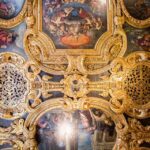
The tour ends at Campo San Rocco, in front of the Scuola Grande di San Rocco. The guide explains why this is one of Venice’s most beautifully decorated buildings.
This is a great closing choice because it gives you a visual payoff. You end with something that looks expensive in every direction, and the walk’s earlier themes—art, identity, power, and society—start to click together.
If you still have energy after the two hours, this is an easy place to keep wandering. The location makes it simple to extend your day rather than forcing a long trek.
Price and value: when $453 per group makes sense
The cost is $453.01 per group (up to 15 people), for about 2 hours. That sounds pricey until you translate it into the real experience you’re buying: a private guide, in English, built around specific sites, with a pace designed for questions.
Because the tour is capped at eight, the most realistic worst-case math is roughly $57 per person for an eight-person group. If you’re traveling as a smaller unit, it’s still often good value because you’re not competing with strangers for attention.
Where this tour shines for me is when you care about more than photos:
- You want art explanations in the exact place the art belongs.
- You want the city’s social history explained in a way that helps you interpret what you see.
- You want practical context so Venice feels coherent, not random.
If you only want a brief highlights walk with zero discussion, you might find cheaper options. But if you want “a guide who connects dots,” this price starts to feel fair.
Who this private Secret Venice walk is best for
I’d recommend this tour if you:
- Like small-group tours and asking questions.
- Care about Venice beyond canals and postcards.
- Want context for Carnival, masks, and the city’s social history.
- Prefer church and art storytelling that stays tied to the real buildings.
It might feel less essential if you already have a very art-heavy plan with long museum time and you’re mainly trying to “check off” landmarks quickly.
FAQ
FAQ
How long is the Secret Venice walking tour?
It lasts about 2 hours (approx.), with short stops of around 15 minutes each.
What language is the tour offered in?
The tour is offered in English.
Where does the tour start and end?
It starts at Campo San Giacomo di Rialto and ends at Campo San Rocco, specifically in front of the Scuola Grande di San Rocco.
How big is the group?
It’s a private tour for your group, and the tour numbers are capped at eight.
Are there entrance fees at the stops?
The listed stops show admission ticket free.
Is the tour refundable if plans change?
This experience is non-refundable and cannot be changed for any reason. If the tour is canceled due to poor weather, you’ll be offered a different date or a full refund.
Should you book Secret Venice, an unusual walk?
If your Venice trip includes at least one art-and-history day where you want real explanations, I think this is a smart booking. The combination of Titian and Tintoretto in the churches they were painted for, Carnival and masks, and the “why Venice works the way it works” details like wells and altana is a strong mix for the time you spend.
Book it especially if you like small groups and you want a guide who can respond to questions—Federico and Francisco sound like the kind of guides who keep the walk lively and useful. Just keep your plans flexible for weather, and note that day-trippers staying outside Venice may need a €5 access fee on certain dates.