REVIEW · VENICE
Venice Art and Architecture Private Walking Tour
Book on GetYourGuide →Operated by Venice Events srl · Bookable on GetYourGuide
Venice’s quieter corners have better stories. On this small-group art and architecture walk, you’ll trade the obvious stops for churches and squares that explain how La Serenissima looked and believed. I like that the tour is built around external architecture viewing, so you can enjoy the details without racing through lines.
What I really love is the way the route points you to standout landmarks like Santa Maria dei Miracoli and Santi Giovanni e Paolo while keeping you away from St Mark’s crush. The guide also has real room to shape the walk around your interests, not just run a script.
One thing to consider: it’s not wheelchair-friendly, and it stays outside the churches by default. If you want interiors, there’s an extra fee you pay on the spot.
In This Review
- Key points to know before you go
- The Big Idea: Architecture, Not Checklists
- Where You Start: Campo San Bartolomeo and a Fast Set-Up
- Corte del Milion: Marco Polo’s Name in the City Fabric
- Santa Maria dei Miracoli: Renaissance Architecture You Can Read
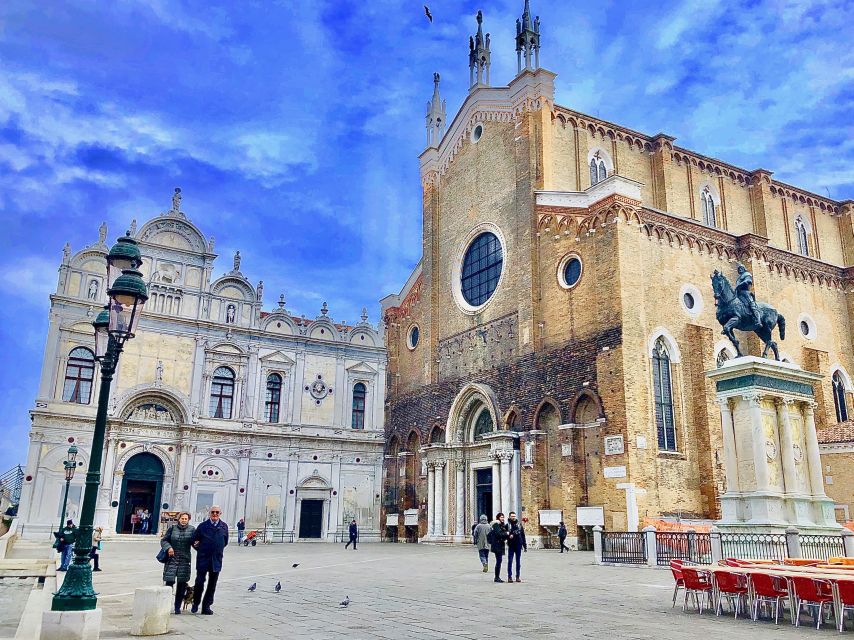
- Santi Giovanni e Paolo: The Pantheon of Venice (Without the Museum Feel)
- Campo San Giovanni e Paolo: One of Venice’s Best Public Rooms
- The Corte del Milion and Public Spaces Connection
- Timing and Pace: Two Hours That Actually Work
- Price and Value: What $150.10 Buys You in Venice
- Practical Notes You’ll Care About
- Who Should Book This Tour
- Should You Book This Venice Art and Architecture Private Walking Tour?
- FAQ
- Is this tour inside the churches?
- How long is the tour?
- Where do I meet the guide?
- Will the tour avoid St Mark’s area crowds?
- What are the main stops on the walk?
- What’s included in the price?
- What language options are available?
Key points to know before you go
- Skip the crowds: The route avoids St Mark’s and pushes you into lesser-visited architectural streets
- Santa Maria dei Miracoli: Renaissance design you can appreciate from the outside
- Santi Giovanni e Paolo: A massive church tied to Venice’s political power
- Campo San Giovanni e Paolo: One of Venice’s most beautiful squares becomes part of the architecture lesson
- Private licensed guide: You get Q&A time and flexible pacing in a group of up to 8
- Corte del Milion: A clever Marco Polo connection woven into the walk
The Big Idea: Architecture, Not Checklists
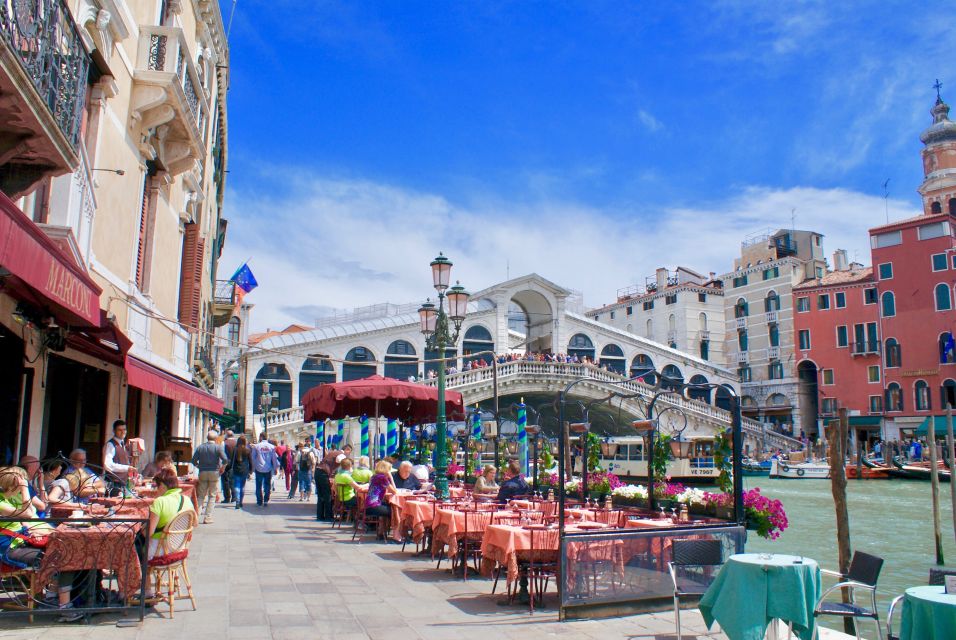
Venice can feel like a “see-it-all” race. This tour slows you down by focusing on how buildings, sculpture, and public spaces work together. You’re not just collecting photos of famous facades. You’re learning why Venice built the way it did, and what the art was trying to say.
I also like that the emphasis stays on areas with architectural richness but fewer people. That matters in Venice. When you’re trying to read details in stone, constant foot traffic turns a great facade into a blur. Here, you get more time to actually look.
Finally, because it’s a private licensed guide for about 2 hours, you can ask questions as you go. One standout review described a guide named Gentiana who answered lots of questions and adjusted the tour based on the group’s interests. That flexibility is rare on short walks.
You can also read our reviews of more walking tours in Venice
Where You Start: Campo San Bartolomeo and a Fast Set-Up
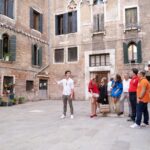
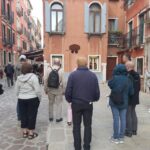
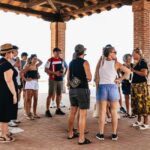
You meet at Campo San Bartolomeo, in front of the statue of Carlo Goldoni (Campo San Bartolomeo, Rialto 5282, 30124). Aim to arrive 15 minutes early and look for your guide holding a sign with your name.
This start point is more than a meeting spot. It’s a good way to get your bearings in the Rialto area before you drift into quieter neighborhoods. Within a short intro, your guide sets the “why” behind the buildings you’re about to see—so the walk doesn’t feel random when you turn down a side street.
If you’re staying near St Mark’s, you can also arrange hotel pick-up (within the St Mark’s area). That’s a practical time-saver on a tight two-hour plan.
Corte del Milion: Marco Polo’s Name in the City Fabric
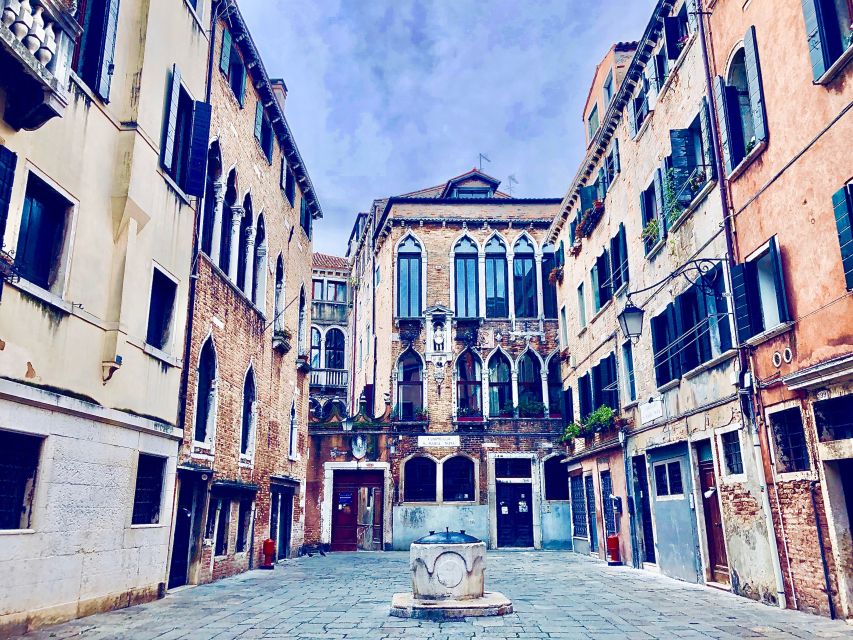
One of the first stops is Corte Seconda del Milion. The guide brings context to why this place is connected to Marco Polo’s account of his travels in the Far East. Even if you already know the broad Marco Polo story, it hits differently when you see how Venice stored that identity in its own streets and courts.
A “corte” (an interior court) is one of Venice’s favorite architectural moves: you get a calmer pocket of space, framed by surrounding buildings. In a normal walking day, you might pass a court without noticing. On this tour, it becomes a stage for history—how Venice turned commerce, curiosity, and storytelling into physical space.
What you’ll want to do here: slow down at the scale of the buildings. You’re looking for craftsmanship and proportion more than big-ticket monuments. And since the tour is about architecture from outside, you can focus on what’s right there in front of you.
Santa Maria dei Miracoli: Renaissance Architecture You Can Read
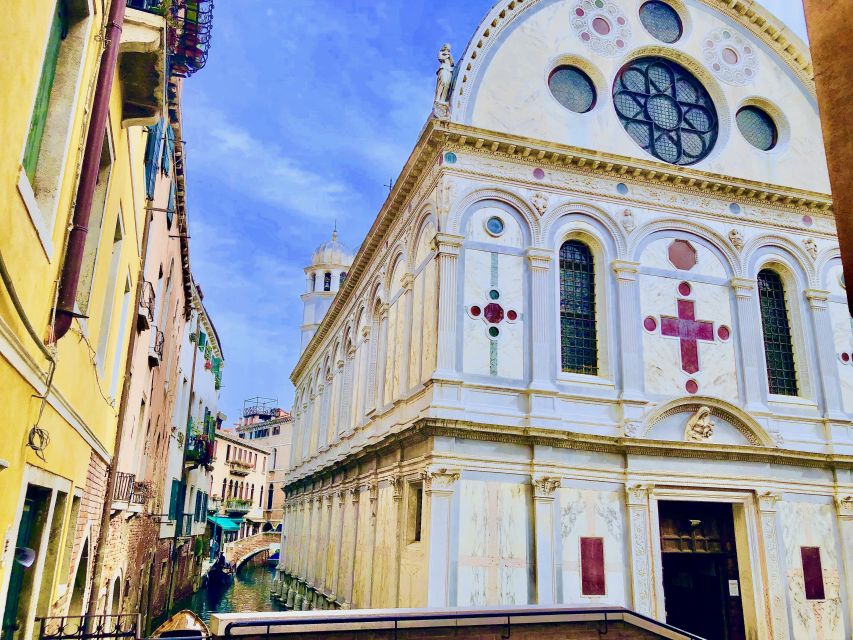
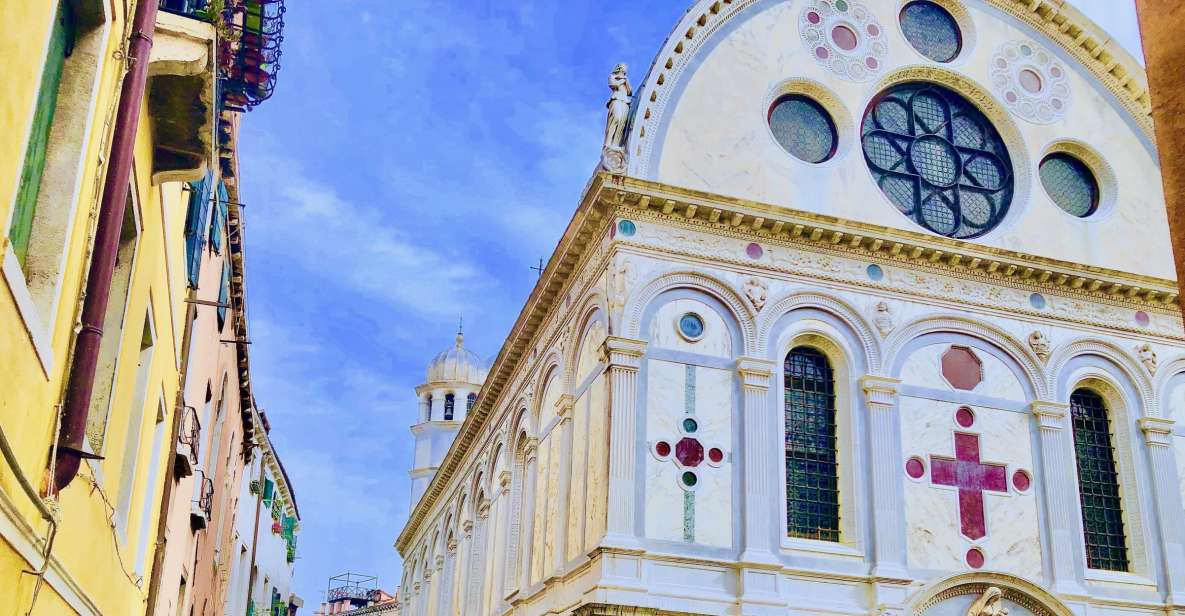
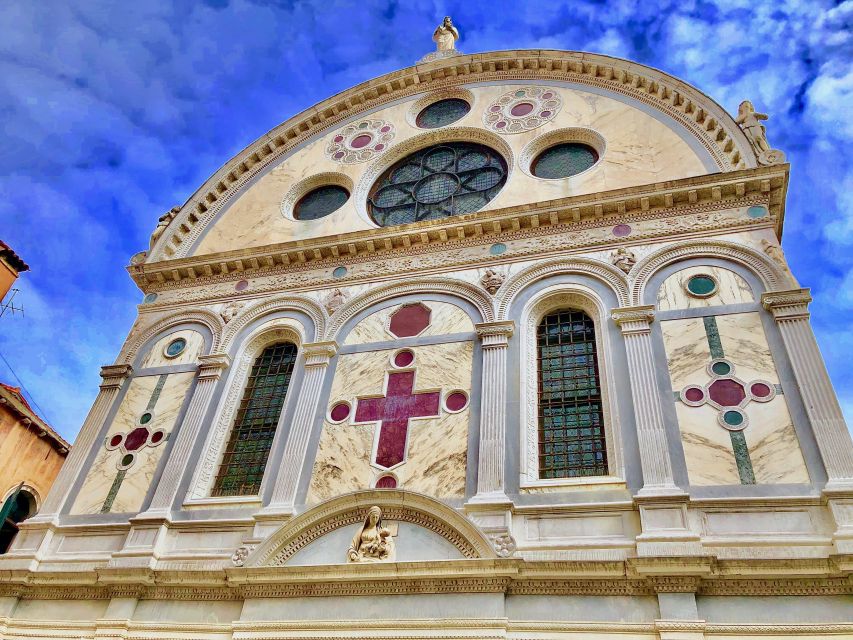
Next comes Santa Maria dei Miracoli. This church is famous for its Renaissance-era architectural design, and it earns its reputation through surfaces—its facade details, materials, and the way the building organizes visual focus.
Even though this tour is external only, the exterior of this church is the point. The guide helps you “read” it: what parts are meant to draw the eye, how ornament fits the structure, and how Venice’s artistic language changes across time.
Why this stop is valuable: it gives you a clear example of how Renaissance forms show up in Venice. Venice isn’t one style—it’s layers. Santa Maria dei Miracoli is one of the places where that layering becomes easier to understand without getting lost.
If you want to go inside, the tour can be adapted with an extra entry fee paid on the spot. Since entrance fees aren’t included, I’d treat interior time as optional rather than assumed.
Santi Giovanni e Paolo: The Pantheon of Venice (Without the Museum Feel)
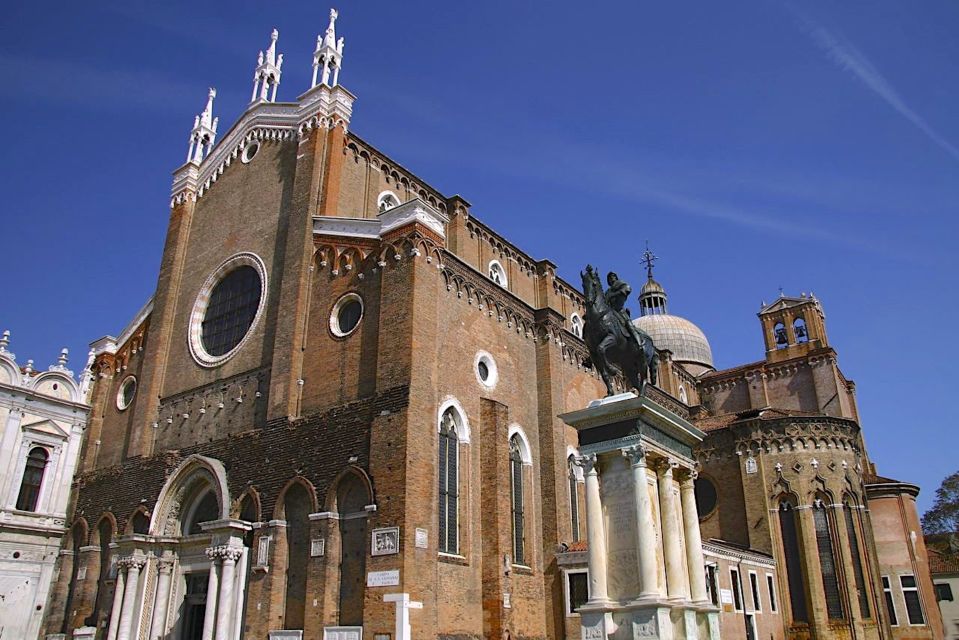
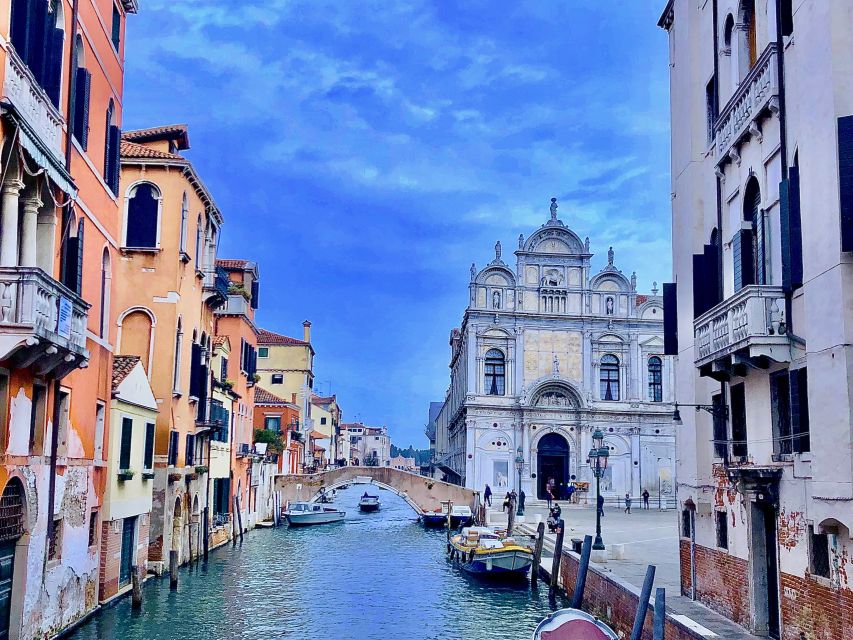
Then you reach Santi Giovanni e Paolo—often called the Pantheon of Venice. The scale alone is enough to command attention, but the guide connects it to power and politics, not just aesthetics.
This is where the tour really pays off for people who like context. You learn why this church is tied to Venice’s leadership, including the fact that after the 15th century, it became a burial site connected with Venetian doges. That detail helps you understand why the architecture feels monumental: it wasn’t built only for worship, but to express authority in stone.
Your guide also points you toward the logic of the space around the church. Venice’s big buildings aren’t just objects; they’re anchors that shape what people do and where they gather.
You can also read our reviews of more private tours in Venice
Campo San Giovanni e Paolo: One of Venice’s Best Public Rooms
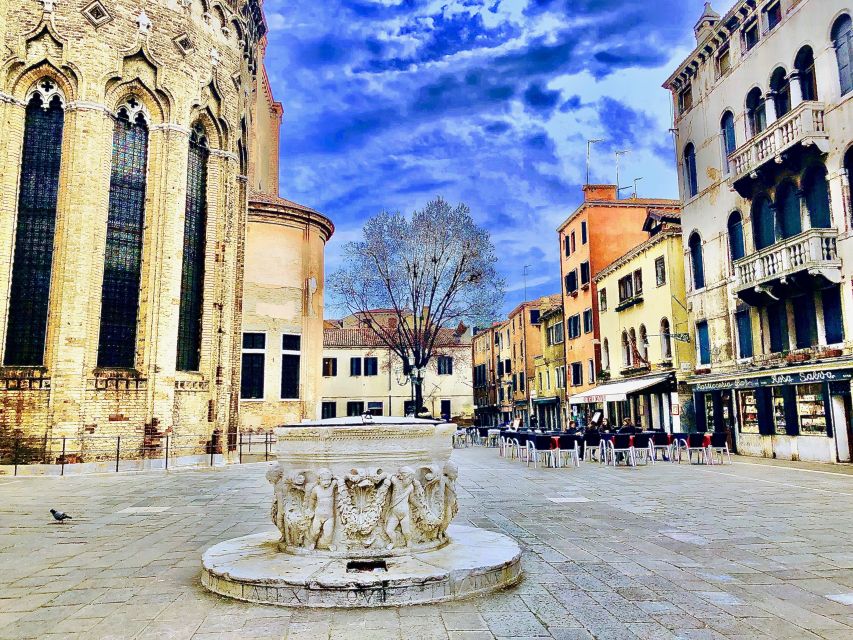
The tour also spends time at Campo San Giovanni e Paolo, one of Venice’s most beautiful squares. Think of a Venetian square as a public room with water-channel access. The buildings face into it, and the church acts like the room’s main wall.
This stop works because it’s both architectural and human-scale. You’ll see how the square holds the city’s everyday life while still functioning as an architectural statement. It’s an easy place to notice the relationship between facade design and how a crowd naturally moves.
If you’re tempted to treat Venice squares like photo backdrops, let the guide reset your brain for a few minutes. Notice sight lines, entrances, and how surrounding buildings frame the church without needing a single “famous landmark” label.
The Corte del Milion and Public Spaces Connection
Here’s a subtle thing I appreciate about how the route connects its dots: it links private-feeling spaces (courts like Corte Seconda del Milion) with public-feeling spaces (Campo San Giovanni e Paolo). Venice does both through architecture.
In practice, that means you’re not just looking at buildings in isolation. You’re seeing how La Serenissima shaped behavior:
- courts help define calmer, local zones
- squares turn civic identity into shared space
- churches combine both—religion plus civic memory
If your goal is to feel like you understand Venice, that pattern helps.
Timing and Pace: Two Hours That Actually Work
This is a 2-hour walking tour. The time limit matters in Venice. If a tour is too long, you start to accept fatigue as part of the price. Here, the structure is short enough that the architecture lesson doesn’t collapse under the weight of the day.
It’s also built for conversation. A small group of up to 8 participants keeps things from becoming a lecture. And because it’s a private guide, you can ask direct questions about the sites you’re seeing.
One caution from a negative review: a few people prefer a bit more personal space, and there was a complaint about the guide being too close and the tour ending early. That doesn’t match the overall tone of the experience, but it’s a reminder that you should speak up if your comfort level isn’t right.
Price and Value: What $150.10 Buys You in Venice
At $150.10 per person for a 2-hour private licensed guide, the value comes from concentration. In Venice, you pay for time spent not only walking, but interpreting what you’re looking at.
You’re getting:
- a guide for the full time, not a quick drop-in orientation
- a route that avoids the busiest major sights
- attention to specific architectural stops rather than a broad sweep
- small-group limits (max 8), which helps your questions land
Entrance fees to churches are not included, and the tour is external by default. So if you want to add interiors, you’ll pay extra on the spot. Still, for many people the exterior experience is enough—especially for Santa Maria dei Miracoli and Santi Giovanni e Paolo, where the facade and surrounding architecture tell a lot of the story.
If you’re traveling with another person or as a small group, private-format guiding tends to feel more reasonable because you’re splitting the cost of interpretation, not just transportation.
Practical Notes You’ll Care About
This walk is designed for people who like getting to the point and actually looking.
- It’s an external walking tour, so you won’t automatically go inside churches.
- The guide can offer the chance to enter, but you pay extra on the spot.
- It’s English, French, German, Spanish, Italian. If your language matters, you’ll likely be covered.
- The tour is not suitable for wheelchair users.
- It can end back at the same meeting point area, making the finish easy to manage.
Also note the tour is listed as skip the ticket line. Since you’re mostly outside unless you add entry, treat it as a convenience if you decide to go in.
Who Should Book This Tour
This is a great fit if:
- you want Venice architecture with less crowd stress
- you like explanations you can ask questions about
- you’d rather see a handful of meaningful places deeply than cover everything
- you enjoy how Venice ties art to civic identity and leadership
It’s less ideal if:
- you expect a fully inside-church tour without extra cost
- you need wheelchair access
- you dislike close guidance and want lots of space to yourselves (just communicate early)
Should You Book This Venice Art and Architecture Private Walking Tour?
Yes, if your priority is understanding Venice through buildings and public spaces, not checking boxes. The biggest strength is the focus: Santa Maria dei Miracoli and Santi Giovanni e Paolo aren’t random stops—they form a clear story about style and civic identity. Add the Campo squares and the Corte connection to Marco Polo, and you get a walk that feels purposeful in only two hours.
Book it especially if you like guided interpretation and want to avoid the crush near the main sights. If you’re planning to visit interiors, budget for extra entrance fees. And if comfort and pacing are big for you, it’s worth telling your guide what you need from the first minutes.
Overall, this is the kind of tour that makes Venice feel less like a blur of canals and more like a city with ideas—carved, placed, and remembered in stone.
FAQ
Is this tour inside the churches?
No. This is an external walking tour and does not go inside the churches. If you want to enter with your guide, you need to pay an extra fee on the spot.
How long is the tour?
The tour lasts about 2 hours.
Where do I meet the guide?
You meet at Campo San Bartolomeo, in front of the statue of Goldoni. The address given is Campo San Bartolomeo, Rialto 5282, 30124.
Will the tour avoid St Mark’s area crowds?
Yes. The tour is designed to keep you away from St Mark’s Square and the main sights, focusing on quieter, less known areas.
What are the main stops on the walk?
The tour includes Corte Seconda del Milion, Santa Maria dei Miracoli, and Santi Giovanni e Paolo, with the walk finishing at the Basilica dei Santi Giovanni e Paolo.
What’s included in the price?
Included are a private licensed guide for 2 hours, and hotel pick-up on arrangement from hotels within the St Mark’s area.
What language options are available?
The guide offers tours in English, French, German, Spanish, and Italian.