REVIEW · VENICE
Venice: Scuola Dalmata di San Giorgio e Trifone Audioguide
Book on GetYourGuide →Operated by lineadacqua edizioni · Bookable on GetYourGuide
A phone guide turns small rooms into big stories. At the Scuola Dalmata di San Giorgio e Trifone, the multimedia audioguide helps you follow art and context without rushing.
You get to explore the museum on your own terms, yet still stay oriented through key works and themes.
I love the way the audio puts you face-to-face with standout paintings, including Saint George Slaying the Dragon and Saint Tryphon and the Basilisk, with explanations you can actually use while you look. I also like that the guide connects what you see to the larger story of the Scuola Dalmata, including the life of Vittore Carpaccio, so the rooms feel less like random halls.
One possible drawback: this is a web-based guide. If you have trouble reaching the right link or if your access details don’t work smoothly, the museum visit can feel more confusing than it needs to.
In This Review
- Key takeaways before you go
- Scuola Dalmata di San Giorgio e Trifone: why this museum feels worth your time
- Using the web audioguide on your phone without the stress
- How to plan your timing: 8 hours from first activation
- What you’ll see: paintings and themes that the audio focuses on
- Saint George Slaying the Dragon
- Saint Tryphon and the Basilisk
- The Vision of Saint Augustine
- Vittore Carpaccio and the Scuola’s story
- The practical route: from the ticket office to Sala Terrena
- Price and value: $3.40 for the guide, plus the €6 museum ticket
- Who this audioguide suits best (and who might want another approach)
- Final decision: should you book this Scuola Dalmata audioguide?
- FAQ
- Where is the Scuola Dalmata di San Giorgio e Trifone located?
- How do I access the digital audioguide on my phone?
- What’s included with the $3.40 price?
- Is the museum entry ticket included?
- Which languages are available for the audio guide?
- What do I need to bring to use the audioguide?
- How long is the audioguide valid?
- Where is the ticket office?
- Is this experience wheelchair accessible?
Key takeaways before you go

- Start at Sala Terrena and follow the audio through the rooms at your own pace
- Multilingual audio is included on your phone (Italian, English, French)
- The guide spotlights major works like Saint George Slaying the Dragon and The Vision of Saint Augustine
- It also explains the Scuola’s story and Vittore Carpaccio’s role so art makes sense faster
- Plan on buying the museum ticket separately (€6 at the ticket office on the left)
- Your access is valid for 8 hours from first activation, so time your visit
Scuola Dalmata di San Giorgio e Trifone: why this museum feels worth your time
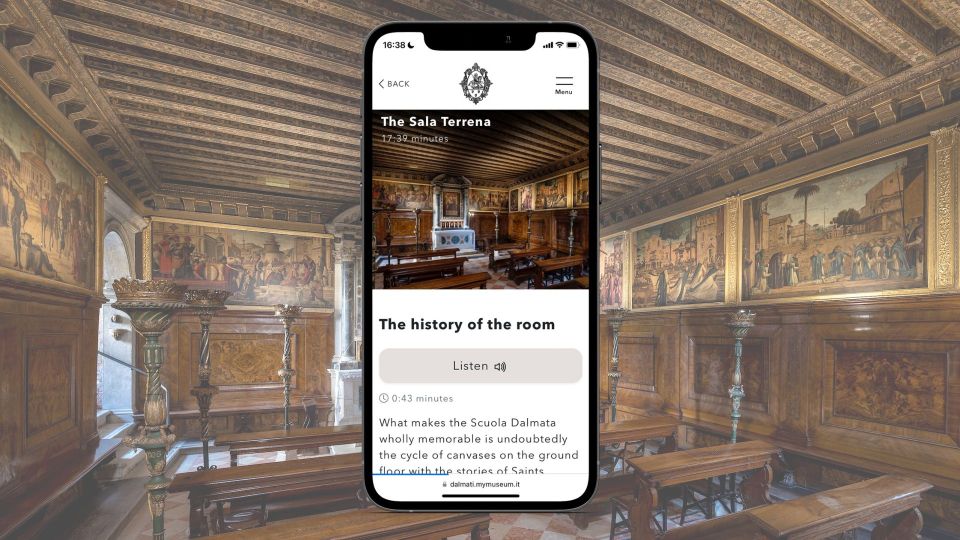
Venice has a lot of big-ticket sights. This one is smaller, calmer, and made for slower looking. The Scuola Dalmata di San Giorgio e Trifone—sometimes called the degli Schiavoni—centers on sacred art and the kind of visual storytelling that works best when you know what to look for.
This audioguide experience is interesting because it is not a live narration in a group. You get a digital multimedia guide on your phone, then you walk the museum and let the audio pace you. That matters in Venice, where you can spend energy just moving between sights. Here, you can trade some of that stress for attention: stop where the painting pulls you in, press play again if you want, and move on only when you’re ready.
Two things I’d count as the heart of the experience:
- You’re given context for religious artworks with clear, on-the-spot explanations.
- You’re also guided through the museum’s broader story, including the life of Vittore Carpaccio.
That combination is what turns a quick glance into something more satisfying.
You can also read our reviews of more tours and experiences in Venice.


Using the web audioguide on your phone without the stress
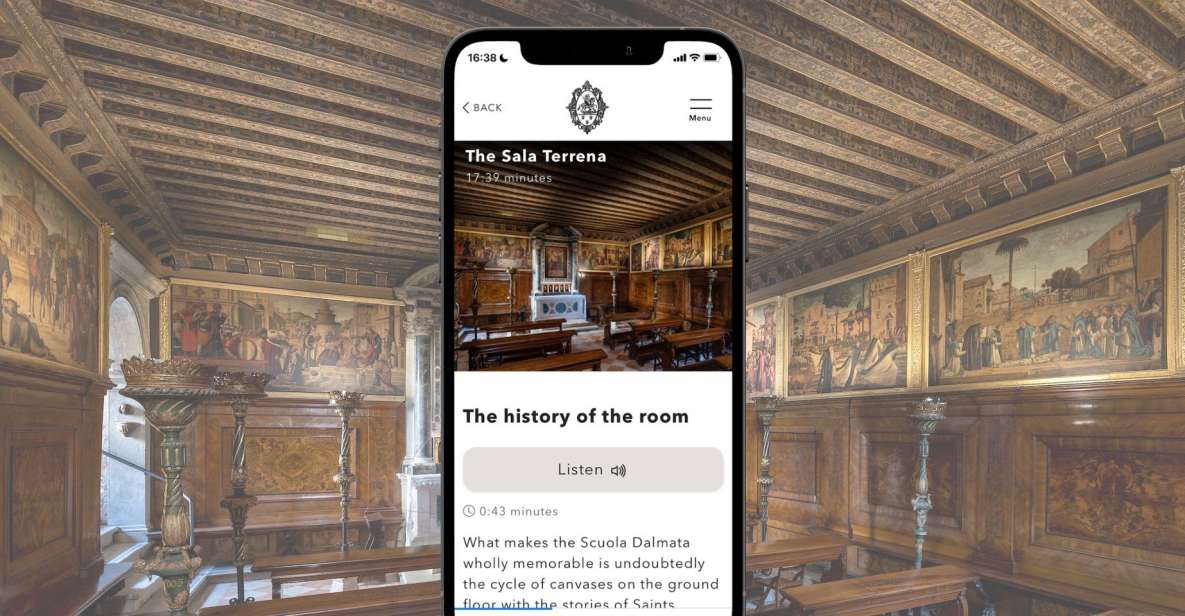
This experience is built around a web app. The audioguide is immediately available on your smartphone through this link: https://dalmati.mymuseum.it/. You do not pick up a printed booklet. You do not meet a guide at a microphone. Your phone is the guide.
That is great when it works well. It also means your setup matters more than you might expect. Here’s what you should do to keep things smooth:
- Bring headphones. The audio is for your ears, not for sharing.
- Use a charged phone. You’re relying on the device for the entire story.
- Before you settle into the first room, open the link on your phone and confirm it loads.
A small caution based on reported confusion: some buyers have said they struggled to find the link or that they received an access code and PIN but couldn’t get the experience to start. I can’t know what happened in each case, but the practical takeaway is simple—test the web page early. If it behaves oddly, you’ll have time to fix it before you’re standing in the museum trying to troubleshoot.
Also, remember this is a web-based setup. If you plan to rely on mobile data, have a backup strategy in mind, since you need the site to load and play audio.
How to plan your timing: 8 hours from first activation
The audioguide is valid for 8 hours starting from first activation. That’s a useful rule because it rewards you for getting ready before you enter. If you activate at home, you might burn the clock by the time you reach the museum. If you activate right when you arrive, you can use the full window.
For a practical visit plan, I suggest:
- Aim to activate and open the guide once you’re actually at the museum entrance area.
- Then take your time with the rooms that catch your eye. Since you’re not on a fixed group schedule, you can linger near the works that hold your attention.
This self-paced structure is part of the value. You’re not forced into a pace that’s too fast for art, especially in a place where you’ll naturally want to stand and look.
What you’ll see: paintings and themes that the audio focuses on
This audioguide is designed to guide you through the museum starting from Sala Terrena, moving through the rooms with explanations tied to specific works.
Here are the main highlights the guide sets you up to experience:
Saint George Slaying the Dragon
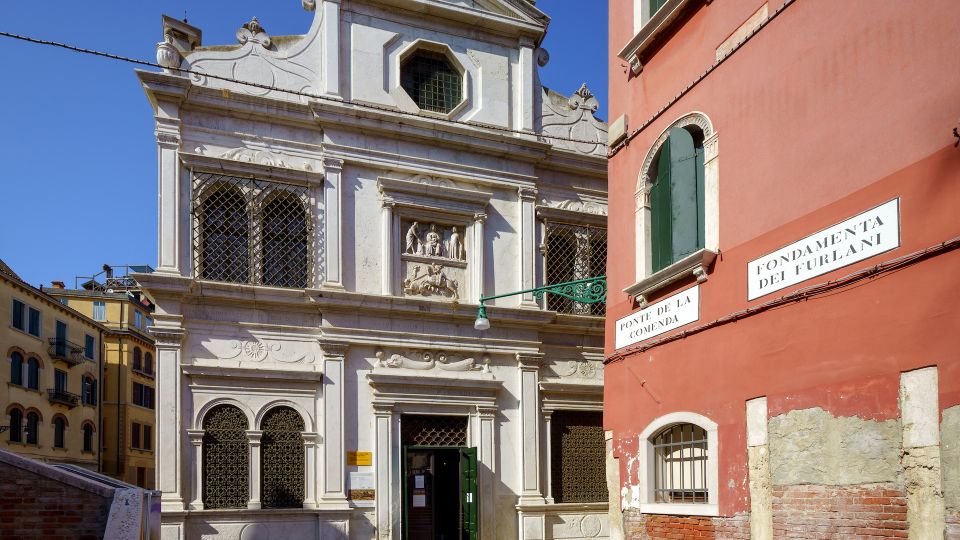
This is one of the key images mentioned in the guide content. If you like religious art with action and drama, this is the one that typically grabs attention fast. The useful part of having audio here is that you can listen to the story behind what you’re seeing, then connect the visual details to the religious meaning.
Even without any extra research, audio helps you stop guessing. You can focus on color, figures, and composition while the guide explains the scene.






Saint Tryphon and the Basilisk
Another major work included in the guide. A name like Saint Tryphon and the Basilisk already tells you there’s a creature story in the mix, and the guide is positioned to explain the painting’s secrets while you admire it.
If you tend to walk past paintings because you don’t know the context, this is where you’ll feel the value. You’re not just reading a label; you’re listening to what the image is doing and why it matters.
The Vision of Saint Augustine
This title gives you a different mood than the two saint-and-monster themes. Visions in religious art often rely on symbolism and spiritual meaning. With audio, you can slow down and interpret what might otherwise feel like symbolism without a key.
Again, the advantage here is timing. You’re hearing the explanation while you’re standing right in front of the painting, not 30 minutes later with your memory already fading.
Vittore Carpaccio and the Scuola’s story
The guide is not only about individual artworks. It also focuses on the history of the Scuola Dalmata di San Giorgio e Trifone and includes information on Vittore Carpaccio—one of the great Italian painters.
For you, that adds up to something practical: you start seeing connections. Instead of treating each painting as a separate moment, the audio helps you recognize that these works are part of a larger program and cultural identity. That is what makes the visit feel cohesive.
The practical route: from the ticket office to Sala Terrena
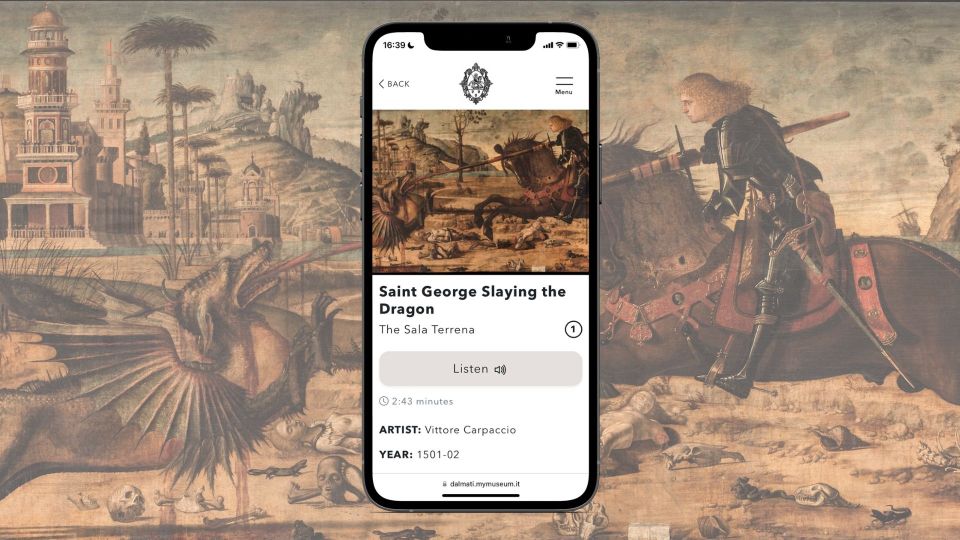
The Scuola Dalmata di San Giorgio e Trifone is in Venice, in Calle dei Furlani, 3259a. When you arrive, you’ll find the ticket office at the entrance, on the left.
Here’s how I’d handle the first minutes of your visit:
- Walk in and buy the museum entry ticket separately. The standard price is €6.00.
- Then shift your focus to the audioguide web link on your phone: https://dalmati.mymuseum.it/
- Start with Sala Terrena, since the guide begins you there.
This separation—ticket office for the museum, web page for the audioguide—matters because it reduces friction. If you try to do both at once, you can get distracted in a building entrance area. Better to handle the ticket quickly, then give your phone your full attention.
Also note: the activity is described as ending back at the meeting point area. So you’re not being escorted away after the last audio track. You can finish and exit when you’re ready.
Price and value: $3.40 for the guide, plus the €6 museum ticket
Let’s do the math in plain terms. The audioguide experience itself is priced at $3.40 per person. The museum ticket is not included, and it’s €6.00 at the ticket office.
So you should budget roughly $9-plus equivalent, depending on your exchange rate. Is it worth it? For most people, the answer hinges on one question: do you want context?
If you enjoy standing in front of art and having the story explained while you look, this guide has real value. The content is clearly tied to important works—Saint George Slaying the Dragon, Saint Tryphon and the Basilisk, The Vision of Saint Augustine—and it also covers the Scuola’s history and Vittore Carpaccio. That means your money is going to interpretation, not just audio for the sake of noise.
If you prefer a museum visit with no extra tech, you might feel like the value is lower. But if you can handle a phone-based guide, the cost is modest compared to paying for a live guided tour. And since it’s self-paced, you get your money back in flexibility.
One more value point: the audioguide is available immediately on your phone browser. No waiting for a download, no relying on a physical device from a shop.
Who this audioguide suits best (and who might want another approach)
This experience is a good fit if you:
- Want art explanations while you’re standing in front of paintings.
- Like a slower pace where you can linger.
- Travel with a smartphone you’re comfortable using for web pages.
- Prefer a structured visit that still lets you choose your timing.
You might be less satisfied if:
- You hate troubleshooting tech while on vacation.
- Your phone battery is usually low or you frequently lose connection.
- You’d rather rely on a printed museum label and keep things totally offline.
There’s also a practical match question: this guide is multilingual (Italian, English, French). So it works well for mixed-language traveling pairs, as long as everyone can use their own phone headphones or you’re comfortable sharing one device.
Final decision: should you book this Scuola Dalmata audioguide?
I think this is a smart booking if you want the museum to make sense fast and you’re okay using a web-based phone guide. The price is reasonable, the audio targets specific major works, and it brings in the bigger story, including Vittore Carpaccio.
My main caution is purely practical. Because the experience depends on accessing a web page, do a quick link check before you settle into the first room. Bring headphones and a charged smartphone. If you do that, you’ll likely get what this format promises: self-paced rooms with useful, on-the-spot explanations.
If your schedule is tight, you also get a helpful safety net: the audioguide is valid for 8 hours from first activation, so you can plan a real visit instead of guessing how long you’ll have.
If you want, I can also help you build a short Venice mini-itinerary around this museum based on how much time you’re allocating to smaller sights.
FAQ
Where is the Scuola Dalmata di San Giorgio e Trifone located?
It’s located in Calle dei Furlani, 3259a in Venice.
How do I access the digital audioguide on my phone?
Go to https://dalmati.mymuseum.it/ on your smartphone browser to access the audioguide.
What’s included with the $3.40 price?
The multilingual digital audioguide is included and available immediately on your smartphone.
Is the museum entry ticket included?
No. The museum entry ticket is not included. It can be purchased at the ticket office for €6.00.
Which languages are available for the audio guide?
The audioguide includes Italian, English, and French.
What do I need to bring to use the audioguide?
Bring headphones and a charged smartphone.
How long is the audioguide valid?
It’s valid for 8 hours from the first activation.
Where is the ticket office?
The ticket office is at the entrance of the building, on the left.
Is this experience wheelchair accessible?
Yes, it is wheelchair accessible.