REVIEW · VENICE
Venice: Entrance Ticket to the Naval Historical Museum
Book on GetYourGuide →Operated by D'Uva · Bookable on GetYourGuide
Naval history in Venice is unexpectedly fascinating. A ticket to MUNAV puts you in a former Serenissima granary, right near Piazza San Marco and beside the Ancient Arsenal—an easy walk that feels very Venice. I especially like how the museum connects the city’s shipbuilding roots to what the Italian Navy preserves today.
My second favorite part is the collection range: you go from ancient Venetian boats to modern Italian Navy models, plus an especially notable group of boats from China and the Far East. The museum covers roughly the full arc of Venice’s maritime tradition, with artifacts, ship models, paintings, and documents you can take your time with. One drawback: the museum is spread over 6000 square meters and five floors, so 1.5 hours means you’ll have to choose what to focus on.
In This Review
- Key Highlights to Know Before You Go
- Venice’s Naval Historical Museum (MUNAV): What the Setting Means
- Price and Value: Is $18 for 1.5 Hours a Good Deal?
- What You’ll Actually See: The Museum’s Main Content
- Your Walk-Through Plan for a Smooth 1.5-Hour Visit
- Skip-the-Line Entrance: Why It Matters in Venice
- MUNAV’s Focus: Venice’s Maritime Story, but With Defense-Era Continuity
- Who This Museum Fits Best (and Who Might Want to Skip)
- Practical Tips for Getting More From Your Ticket
- Does the 1.5 Hours Feel Enough?
- Should You Book MUNAV?
- FAQ
- Where is the Naval Historical Museum of Venice (MUNAV)?
- How long is the visit?
- How much is the ticket?
- What is included in the ticket?
- Is a guided tour included?
- Can I skip the line?
- Are small pets allowed?
- Is there free cancellation?
Key Highlights to Know Before You Go
- A former 15th-century granary setting: The building itself adds context for Venice’s maritime power.
- Five floors over 6000 square meters: Great if you like walking through history at your own pace.
- Ship models, documents, and paintings: It’s not just boats on display—there’s supporting paperwork and art.
- China and Far East boat collection: A standout that broadens the story beyond the Venetian lagoon.
- Owned/run under the Italian defense structure: Run by the Navy and managed under the Ministry of Defense.
- Skip-the-line through a separate entrance: Helpful for squeezing this into a busy Venice day.
Venice’s Naval Historical Museum (MUNAV): What the Setting Means
If Venice is a city of waterways, then MUNAV is the place that explains why. This museum, called the Naval Historical Museum of Venice, is housed in a 15th-century building that used to function as the granary of the Serenissima Republic. That detail matters because it frames the museum not as an isolated attraction, but as part of how Venice actually operated—storage, supply, and the logistics of maritime life.
You’re also in a smart location for sightseeing. The museum is about a 5-minute walk from Piazza San Marco and sits adjacent to the Ancient Arsenal of Venice. Translation: you can pair it naturally with major landmarks without needing a full transit plan. It’s one of those stops that feels like it belongs to the neighborhood, not tacked on.
Finally, this museum is described as the most important naval museum in Italy, and it’s owned and managed through the Italian defense world—the Italian Navy / Ministry of Defense structure is part of what keeps the material maintained and preserved. That’s a quiet advantage: you’re seeing collections treated as more than decorative history.
You can also read our reviews of more tours and experiences in Venice


Price and Value: Is $18 for 1.5 Hours a Good Deal?
The ticket price is $18 per person, and the visit lasts about 1.5 hours. On paper, that’s a pretty short slot for a museum spread across five floors, but the value comes from what you get in that time: a concentrated overview of Venetian maritime tradition plus materials tied to the modern Italian Navy.
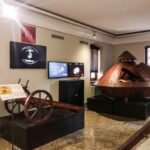
This is also a good value type if you prefer structured “see a lot, understand the big themes” museums. The museum includes artifacts, ship models, paintings, and documents, and the range from ancient Venetian boats to contemporary Italian Navy models helps you build a mental timeline without needing a guide.
If you’re the kind of visitor who loves to read every placard and trace names and dates slowly, 1.5 hours may feel tight. But if you’re okay with selecting the parts that grab you most—especially the models and the document-like materials—it’s a sensible spend.
What You’ll Actually See: The Museum’s Main Content
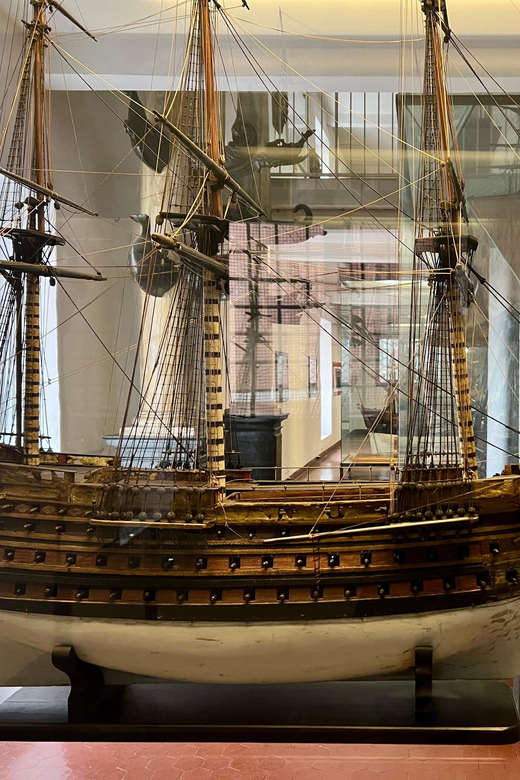
MUNAV covers a lot of ground because it’s designed as a multi-floor exhibition over 6000 square meters. That size is part of the point: it gives room for both visual displays (like models and paintings) and heavier historical material (like documents).
Here are the main categories you should expect to encounter during your visit:
Ship models and craft history
The museum focuses on boats and naval life through models and historical objects. You’ll see the story move from early Venetian maritime beginnings to later eras represented by the Italian Navy’s material. Even if you don’t consider yourself a “naval history person,” the models are often easier to grasp than long text panels.
Artifacts and supporting documents
The presence of documents is a big deal. It means you’re not only looking at objects—you’re also seeing the administrative or historical record that helped shape naval life. If you like history that has evidence behind it, this is your section.
Paintings and visual evidence
Paintings add context. They can help you understand the aesthetic and cultural side of maritime power: how ships were represented, how scenes were framed, and how Venice and later naval identity appeared in art.
The standout: boats from China and the Far East
The museum includes an exceptional collection of boats from China and the Far East. That matters because it widens the lens beyond just the Venetian lagoon. Even without deep technical detail, the variety of watercraft represented can give you a stronger sense that maritime history is interconnected, not isolated to one city.
Your Walk-Through Plan for a Smooth 1.5-Hour Visit
Because your ticket is timed to about 1.5 hours, I’d treat this museum like a smart sampler: get oriented fast, then spend most of your time where your interest is strongest.
Start by planning your priorities before you enter the main spaces. You’ll cover the museum’s content across five floors, but you don’t need to force yourself through everything. Instead, pick two or three “tracks,” like ship models plus documents, or Venetian craft plus the China and Far East collection.
A practical rhythm that works well here:
- Spend the first 10–15 minutes getting your bearings on the floor you start at.
- Choose one cluster of exhibits—boats/models and their context are usually the best place to focus.
- Save your final stretch for the section you’re most curious about (for many people, that’s the China and Far East boats).
Also, since the museum is next to the Ancient Arsenal area, it’s easy to let your brain connect what you see inside with the maritime industrial vibe outside. That pairing can make the whole visit feel more coherent.
Skip-the-Line Entrance: Why It Matters in Venice
Venice runs on walking time and patience. The museum’s ticket includes skip-the-line access through a separate entrance, which is more valuable than it sounds. You’re not just saving minutes—you’re reducing the chance of losing momentum while you’re already in “I have a plan for today” mode.
In real terms, this helps you do MUNAV without sacrificing other nearby stops. If you’re building a day around San Marco and the Arsenal district, cutting down waiting time lets you keep your schedule humane.
So yes, it’s still a museum visit. But with Venice logistics, the entry method is part of the experience quality.
You can also read our reviews of more historical tours in Venice






MUNAV’s Focus: Venice’s Maritime Story, but With Defense-Era Continuity
One thing I appreciate is how the museum’s ownership and management subtly shapes its perspective. It’s owned under the Italian defense ecosystem and managed by the Navy, with the Ministry of Defense structure involved. That usually means you get a serious curatorial approach rather than a purely casual “look and move on” attraction.
The result is a museum that links:
- Venice as a maritime republic with its own boat traditions
- the evolution of naval craft and identity over time
- modern Italian Navy models that show continuity and change
That continuity is one of the best ways to understand why Venice cared so deeply about watercraft in the first place. Boats weren’t just transportation; they were power, supply, and reputation. When the museum shows you early Venetian boats next to later models, the story becomes less abstract.
Who This Museum Fits Best (and Who Might Want to Skip)
This is a strong pick if you like museums that combine objects with context—especially if you enjoy:
- ship models and maritime artifacts
- historical documents and records
- a connection between Venice and later naval identity
It’s also a good fit for visitors who want something that works for a wide range of interests. The overall sentiment around the museum is that it works for all public types and feels informative without being overly technical.
You might want to choose your pace carefully if:
- you’re short on time (1.5 hours can disappear quickly across five floors)
- you need a guided tour experience to feel satisfied (this ticket is entry only, and a guided tour isn’t included)
If you’re traveling as a group with mixed interests, this can still work well, because the museum isn’t only “nautical nerd” content. You’ll find paintings and documents, not just boats.
Practical Tips for Getting More From Your Ticket
Here are a few ways to make the most of the time you have:
- Pick your “must-see” section first. If the China and Far East collection is what draws you, make that your anchor. If Venetian origins excite you more, start there once you’re inside.
- Scan the documents and then return to models. The documents can give meaning to what you’re looking at, so it’s smart to use them as context rather than as an afterthought.
- Use the skip-the-line entrance to keep the day flowing. Venice rewards planning, and this helps you stay on schedule.
- Plan for stairs. Five floors means your visit will involve movement. Build that into your pacing so you don’t rush the exhibits you care about.
There’s no need to try to “win” the museum. The best visit is usually the one where you actually understand what you saw.
Does the 1.5 Hours Feel Enough?
It can, but with a small caveat. The museum spans 6000 square meters across five floors, so it’s not a tiny “walk-through.” If you try to see everything, you’ll probably end up skimming.
If you go with a focus—say, Venetian boats plus the model collection, or models plus documents, or the China and Far East boats—you’ll leave feeling like you got the main idea. And that’s what makes this museum work: it’s built to help you make connections quickly.
If you want a slower, more reading-heavy experience, you might wish you had more than 1.5 hours. But as a well-timed stop on a Venice day, it’s a strong fit.
Should You Book MUNAV?
Book it if you want a museum that explains Venice through ships, models, and real historical material. For $18 and about 1.5 hours, you get a serious collection in a historic building, plus the especially memorable boats from China and the Far East.
Skip it (or save it for another trip) if you’re mainly looking for a casual stroll with no time pressure and you expect a guided tour—this ticket is entry only. Also, if you hate multi-floor walking, five floors may be a lot for your comfort level.
If you’re in the San Marco area anyway, and you want one attraction that feels distinctly tied to Venice’s maritime power, MUNAV is a very good use of your time.
FAQ
Where is the Naval Historical Museum of Venice (MUNAV)?
It’s in the Veneto region and is about a 5-minute walk from Piazza San Marco. The museum is also adjacent to the Ancient Arsenal of Venice.
How long is the visit?
The experience is set for about 1.5 hours. Start times depend on availability.
How much is the ticket?
The price is $18 per person.
What is included in the ticket?
Your ticket includes entry to the museum.
Is a guided tour included?
No. A guided tour is not included with this ticket.
Can I skip the line?
Yes. You can skip the line through a separate entrance.
Are small pets allowed?
Access to rooms and outdoor spaces is permitted with small pets if they are carried in their own carrier or in arms during the visit. Guide dogs for visually impaired visitors are exempt from this rule.
Is there free cancellation?
Yes. You can cancel up to 24 hours in advance for a full refund.