REVIEW · VENICE
Carnival & Casanova Secrets, Theatrical Walking Show
Book on Viator →Operated by CITY TOURS CO. LTD · Bookable on Viator
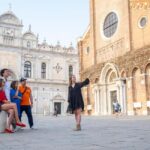
Carnival feels different when you walk. This theatrical walking show follows the Codega tradition with a costumed Pantakin actor, turning side streets into lively stories about Casanova, churches, and even ghost legends. I love how the pace stays upbeat and easy to follow, and I love that you get a Venice “what’s this all about?” education while you’re moving. The only drawback to think about: it’s still a walking show, so expect time on uneven lanes and some standing for the performances.
You’ll be in a small group (up to 15), which helps the actor keep things personal instead of crowd-control loud. It runs about 1 hour 15 minutes, and you start near Calle larga de l’Ascension, 1257, 30124 Venezia. If you’re planning a first evening, this is a smart way to get oriented fast—without doing the usual checklist tours.
In This Review
- Key things that make this Venice Carnival walking show worth it
- Why a Carnival theatrical walk works so well in Venice
- Price and time: what $37.55 buys you
- Where you start: the meeting point and getting oriented
- Stop 1: meeting the Codega and walking into the dark (figuratively)
- Stop 2: a leap in the past on the way to secret places
- Stop 3: becoming part of the performance, not just watching it
- Stop 4: Casanova and the odd legends that explain Venice’s character
- How the route stays interesting: “maze” streets with purpose
- Guide performance styles: what you can expect from Pantakin actors
- Families and older kids: a fun entry point to Venice history
- Practicalities that affect your day (without ruining it)
- Who should book this theatrical walking show?
- Should you book Carnival & Casanova Secrets?
- FAQ
- Where is the meeting point for Carnival & Casanova Secrets?
- How long is the tour?
- Is the tour offered in English?
- Is hotel pickup included?
- What’s included in the price?
- Do I need a printed ticket?
- How large is the group?
- What happens if weather or high tide is an issue?
- Where does the tour end?
- Are service animals allowed?
Key things that make this Venice Carnival walking show worth it

- Codega lantern lore that explains how nobles were guided through Venice’s night streets
- Pantakin Company actors from Venice who treat the tour like theater, not a lecture
- Secret sidestreets beyond the crowded lanes of the center
- A story-driven route that covers Casanova, odd legends, and surprising church tales
- Family-friendly format with older kids usually loving the performance moments
Why a Carnival theatrical walk works so well in Venice
Venice can be overwhelming in the first hour. Streets twist, landmarks blur, and you can end up seeing stone and water without feeling the city’s rhythms. This show solves that problem by giving you a reason to walk and a story to hold onto while you do.
The concept is simple: a professional actor guides you through Venice like a personal host, using theater to connect locations with characters and legends. That matters because Venice isn’t the kind of city where “one big view” tells the whole story. You need the small details—why a bridge is named a certain way, what an old guardian angel is doing, why a particular rumor about ghosts keeps surviving.
Also, the timing is practical. At about 1 hour 15 minutes, you can fit it between museum time, a good cicchetti stop, and a sunset wander without losing half your day.
You can also read our reviews of more walking tours in Venice

Price and time: what $37.55 buys you
At $37.55 per person for roughly 75 minutes, you’re paying for three things:
- a professional actor as your guide,
- a theatrical experience (not just a narrated walk),
- and an itinerary flyer to help you remember what you heard.
Is it “cheap”? No. But it’s also not in the same category as a full production ticket. For this price, you’re getting a guided performance in the streets, with the actor actively leading you to lesser-known corners rather than only walking past the most obvious spots.
If you’re the type who enjoys stories—Casanova gossip, oddball religious legends, and the kind of Venice myth that sounds too strange to invent—this feels like good value. If you only want photo stops and want zero theater elements, you might feel like you’re paying for entertainment first. The format is designed to be fun, not silent sightseeing.
Where you start: the meeting point and getting oriented
You’ll meet at Calle larga de l’Ascension, 1257, 30124 Venezia VE, Italy. The tour ends back at the same spot, which is helpful in Venice where returning to a fixed point makes the rest of your evening easier.
You should plan to arrive a bit early. Even with a small group, Venice lanes can delay you by a few minutes. If you’re coming from a Vaporetto stop, give yourself extra buffer—walking here is rarely direct.
One more useful detail: you’ll use a mobile ticket. That’s convenient once you’re in Venice, where paper tickets can get lost in the shuffle.
Stop 1: meeting the Codega and walking into the dark (figuratively)
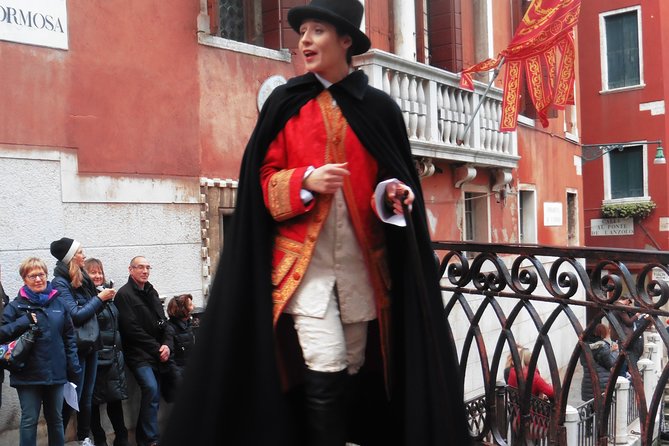
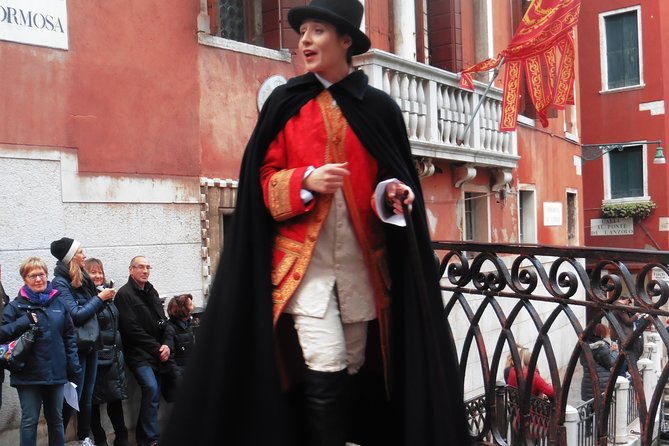
The show kicks off with the Codega, a servant who preceded nobles and wealthy Venetians back in the mid-15th century. The key image here is the lantern: the Codega carried light through the darkness of night, and the actor uses that framing to start the tour as a bit of living history.
This stop is more than a fact drop. It sets the theme for the whole experience—Venice as a place of shadows, rituals, and social choreography. When the actor introduces the Codega tradition, you start noticing what you walk past differently. You’re no longer just moving street to street. You’re imagining how people moved through the city when it was darker, noisier, and far less “tourism-ready” than today.
What I like about this opening: it’s memorable fast. You get a clear character, a visual cue (the lantern), and a reason to pay attention to the streets around you.
Stop 2: a leap in the past on the way to secret places
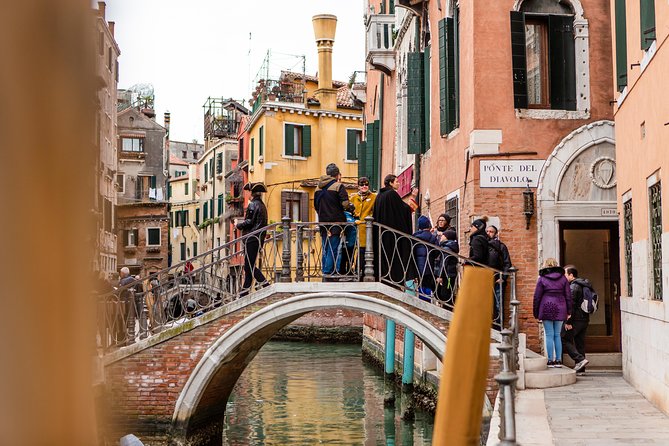
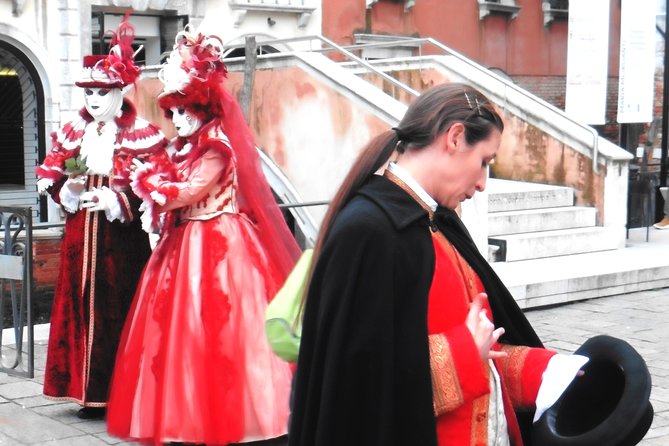
Next, the tour turns into a moving mise-en-scene, pushing you into the heart of Venice life as if you’ve stepped into another era. The actors aren’t just describing history; they’re performing it in place, with the route acting like stage scenery.
That’s where the practical value shows up. Venice is famous, but it’s also crowded. A guided theatrical walk helps you experience the city while it’s still fresh in your mind, and it can steer you toward unusual and quieter corners that you might skip on your own.
A small watch-out: this is not a “slow meander” tour. It moves enough that you’ll want comfortable shoes. If you’re sensitive to uneven ground, prepare for that before the show starts.
You can also read our reviews of more tours and experiences in Venice





Stop 3: becoming part of the performance, not just watching it
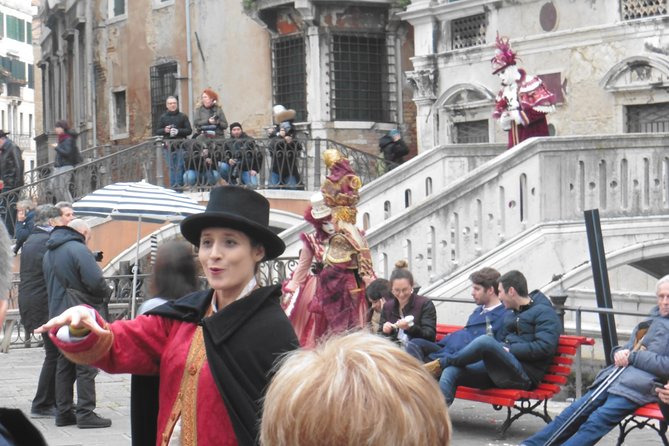
Here’s where the show shifts from guided walking to active theater. The professional actor leads you to become the main character in the scene—basically, you’re not only listening. You’re in the moment.
This stop is usually the one that makes or breaks the experience for different people. If you like interactive storytelling, you’ll probably have a blast. If you prefer your travel quieter, you might find the “participate” tone a little intense at first—but it’s still framed as playful theater, not a test or a forced spotlight.
The advantage of this format in Venice: it keeps you off the autopilot. When you’re trying to act along with the story, you pay attention to details. You remember the lanes, the turns, and why the actor brought you there.
Stop 4: Casanova and the odd legends that explain Venice’s character
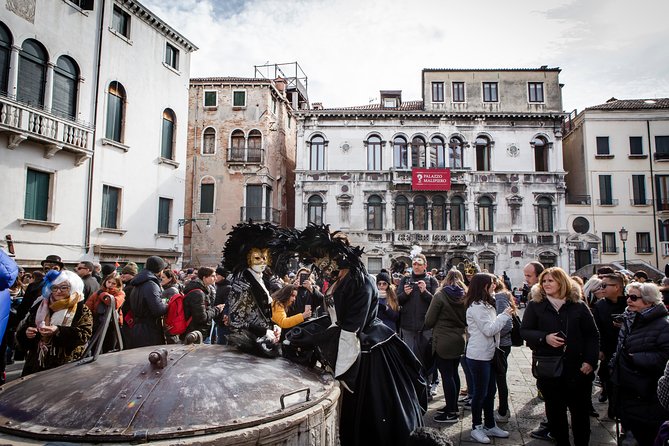
The final part leans hard into Venice myths and eccentric facts. You’ll hear secrets connected to:
- Casanova
- the Levantine
- a gondolier who became a priest
- an elephant that found shelter in a church
- why an angel was placed as a guardian of a palace
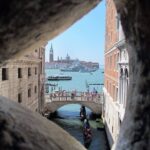
- why a bridge between two convents is called the Devil’s Bridge
- the secret language of fans
- legends of ghosts said to still live in Venice
This is where the tour earns its title. It’s not simply “history with costumes.” It’s a string of Venice stories that feel theatrical because they’re strange in a very Venice way—half folklore, half social rumor, all tied to real locations and architecture.
If you’re wondering why these kinds of stories matter: they’re one of the best ways to understand a city that loves symbolism. Venice doesn’t only impress with buildings. It also impresses with meaning—names, legends, and roles that reveal what people cared about.
If you love the Casanova era, this stop is a strong fit. And if you’re more of a “tell me a good weird story” person, you’ll leave with a folder of odd details that make your later walks more fun.
How the route stays interesting: “maze” streets with purpose
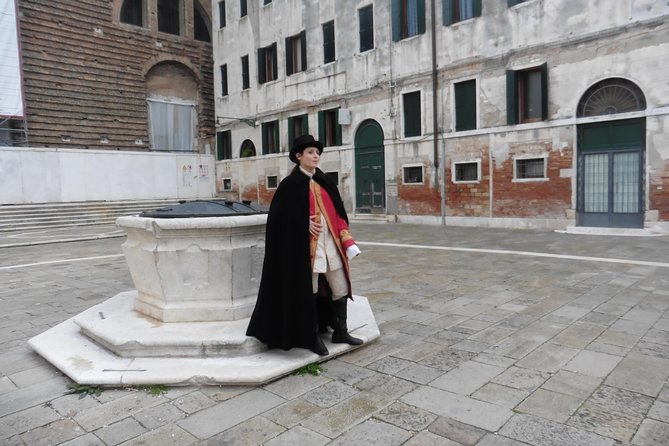
The show’s selling point is that the actor will guide you through Venice’s maze of mystery and escort you to unusual places that differ from the crowded center.
In practical terms, that means you’re less likely to spend the whole tour walking past the same photo-heavy streets. The stories help justify the turns. That’s important because Venice is easy to navigate badly—landmarks are spread out and repetition can happen when you rely only on signs.
The fact that the group size is capped at 15 also matters. Smaller groups are easier for an actor to pace and direct, which usually leads to fewer bottlenecks and a smoother “theater through the streets” flow.
Guide performance styles: what you can expect from Pantakin actors
This is run by the Pantakin Company from Venice, and the actor-led format is the core ingredient. In prior performances, Francesca has been praised for making Venice’s history feel alive—stories that land like scenes, not lectures. Another performer, Tullia, is noted for the way she plays roles and keeps people involved and entertained.
Why that matters for you: the difference between an okay walking tour and a memorable one is rarely the facts. It’s the delivery. A strong actor helps you picture how Venetian life might have felt—especially when you’re hearing about lantern-bearing servants, carnival rituals, and ghost legends that could otherwise sound too fictional.
Language-wise, the tour is offered in English, and there’s a note that the visit could be bilingual. If you’re comfortable in English, you’re set. If you speak Italian and want to compare how stories sound in both languages, that bilingual possibility can be a plus.
Families and older kids: a fun entry point to Venice history
This is described as a captivating event for the whole family, with a specific nudge toward families with older kids. That tracks with the show’s format: it’s theatrical, story-led, and designed for attention.
If you’re traveling with teens or pre-teens, they may enjoy the “role” element more than a standard walking history tour. And even if they’re picky, the silly-weird Venice legends—like the elephant sheltering in a church or the Devil’s Bridge naming—often hold attention better than straight chronology.
For younger kids, you’ll have to judge your child’s tolerance for walking time and standing during performance bits. The tour isn’t long, but Venice lanes are still lanes.
Practicalities that affect your day (without ruining it)
A few logistics points to keep in mind:
- Hotel pickup isn’t included. You’ll meet at Calle larga de l’Ascension, and you’ll handle getting there on your own.
- The tour may be postponed later if there’s exceptional high tide or bad weather. That’s a relief because you’re not forced onto a damp, risky route.
- In certain situations, the itinerary could change due to particular events.
- Service animals are allowed, and the meeting area is near public transportation, which helps if you’re planning your route around Vaporetto lines.
Also, this tour doesn’t promise a “see everything” agenda. It promises a focused, story-driven evening. That’s a feature, not a flaw.
Who should book this theatrical walking show?
Book it if you:
- want a first evening in Venice that helps you get your bearings through story
- enjoy theater, role-play, or interactive storytelling
- like Venice myths (Casanova, ghosts, symbolic angels, weird church legends)
- prefer a small group experience with up to 15 people
Skip it (or adjust expectations) if you:
- hate walking on uneven streets or standing for performance moments
- want purely informational history with minimal theater
- need a quiet, observational tour with no participation cues
Should you book Carnival & Casanova Secrets?
Yes, if you’re looking for a fun, memorable Venice Carnival activity that mixes characters, legends, and real streets. For $37.55 and about 75 minutes, you’re paying for a guided show that pulls you off the most obvious paths and teaches you Venice through scenes—Codega lantern lore to Devil’s Bridge and ghost stories.
If your trip is short and you want something that helps you feel Venice fast, this is a strong candidate. Just wear good shoes and show up ready to be part of the story for a little while.
FAQ
Where is the meeting point for Carnival & Casanova Secrets?
The tour starts at Calle larga de l’Ascension, 1257, 30124 Venezia VE, Italy.
How long is the tour?
It lasts about 1 hour 15 minutes.
Is the tour offered in English?
Yes, it’s offered in English. The visit could be bilingual.
Is hotel pickup included?
No, hotel pickup is not included.
What’s included in the price?
You get a walking tour with a professional actor from the Pantakin Company and an itinerary flyer.
Do I need a printed ticket?
No. The tour uses a mobile ticket.
How large is the group?
The tour has a maximum of 15 travelers.
What happens if weather or high tide is an issue?
The tour does not operate in case of exceptional high tide or bad weather, and in those cases it can be postponed later.
Where does the tour end?
The activity ends back at the meeting point.
Are service animals allowed?
Yes, service animals are allowed.