REVIEW · VENICE
Venice: 1.5-Hour Walking Tour
Book on GetYourGuide →Operated by Venice Events srl · Bookable on GetYourGuide
Venice is loud; this walk finds the quiet. Starting at Saint Mark’s Square and slipping into Castello, you get live audio headset commentary that turns big-name landmarks into clear, story-based landmarks you can actually connect with. I especially like the escape from crowds and the way you see Venice as real neighborhoods, with hidden campi and churches beyond San Marco. The main catch: this is an outside-only walking experience, so you won’t get museum or attraction entry time.
I also like that the guide brings the place to life in practical, everyday ways—so the symbols and traditions make sense, not just facts. One guide named Rosanna was singled out as highly knowledgeable, while another named Elisabeth was praised for teaching things you won’t get from standard maps. If you’re using this tour as your main plan for the day, keep in mind it’s 1.5 hours, so you’ll cover a lot of ground but you won’t linger.
In This Review
- Key Highlights You’ll Care About
- Why This Saint Mark’s to Castello Route Works
- Meeting Up at Calle Larga de l’Ascension (and Why That Matters)
- Getting Oriented in Saint Mark’s Square
- Doge’s Power Without the Museum Ticket: What You Actually See
- Leaving the Crowds: Castello’s Calli, Canals, and Campi
- Campo Santa Maria Formosa: A Square That Feels Human
- Campo San Giovanni & Paolo and the Doges’ Burials
- The Return Through the Mercerie (So You Can Keep Your Day Going)
- Price, Pace, and What $37 Actually Buys You
- Who Should Book This Tour—and Who Should Skip It
- Should You Book This 1.5-Hour Walking Tour?
- FAQ
- How long is the Venice 1.5-Hour Walking Tour?
- How much does the tour cost?
- Where do I meet the guide?
- What will I see during the tour?
- Is this tour wheelchair accessible?
- Does the tour include museum or attraction entry?
- What’s included in the price?
- What languages are offered?
- Is the tour affected by rain?
- What about children?
Key Highlights You’ll Care About
- Saint Mark’s Square first, then a fast exit into calmer Castello (so you actually get breathing room)
- Headset audio that keeps the narration clear even as streets get busy
- Street-level Venice: calli, bridges, narrow canals, and open campi on foot
- Two big pilgrimage-style stops outside: San Marco views, then Campo and church sights in Castello
- Doges and power stories tied to what you’re seeing, especially around San Giovanni & Paolo
- End back at San Marco through the Mercerie so you can keep walking (or shopping) right after
Why This Saint Mark’s to Castello Route Works
This tour is built for a specific Venice problem: you arrive expecting marble-and-icons, but most time is spent doing traffic-like crowd navigation. Here, you start at the head of the map at Saint Mark’s Square, then the guide gently but firmly reroutes you into the calmer residential fabric of Castello.
I like that the pacing fits the city’s reality. Venice is made for wandering, but it also punishes you when you’re lost. This walk gives you a strong sense of direction and what each area is about, without trying to cram museum visits into a short window.
The value is also in the format. For $37, you’re not just paying for a route; you’re paying for a fully qualified local guide plus a personal audio system with headset commentary. That means you can keep your eyes on the street scene instead of hunting for context in a guidebook.
You can also read our reviews of more walking tours in Venice
Meeting Up at Calle Larga de l’Ascension (and Why That Matters)
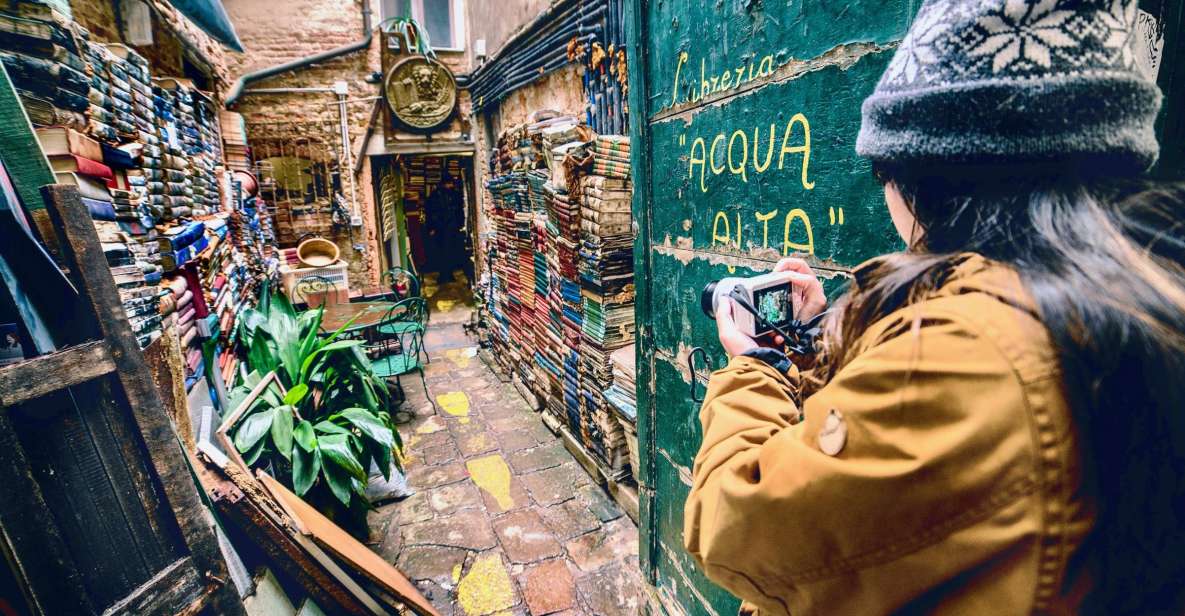
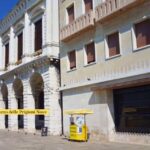
Your tour meeting point is 15 minutes early at Calle larga de l’Ascension (30124), behind the Correr museum and on the opposite side of Saint Mark’s Basilica. Look for the TURIVE assistant next to the post office San Marco.
This location is useful because you’re already positioned where most visitors feel confused—between big sights and the start of the side streets. If you arrive right on time, you can still make it, but arriving 10–15 minutes early is the easiest way to avoid the usual Venice scramble.
Good walking shoes are a real must. Venice calli are uneven, bridges can be slippery when damp, and you’re on your feet for about 1.5 hours total.
Getting Oriented in Saint Mark’s Square
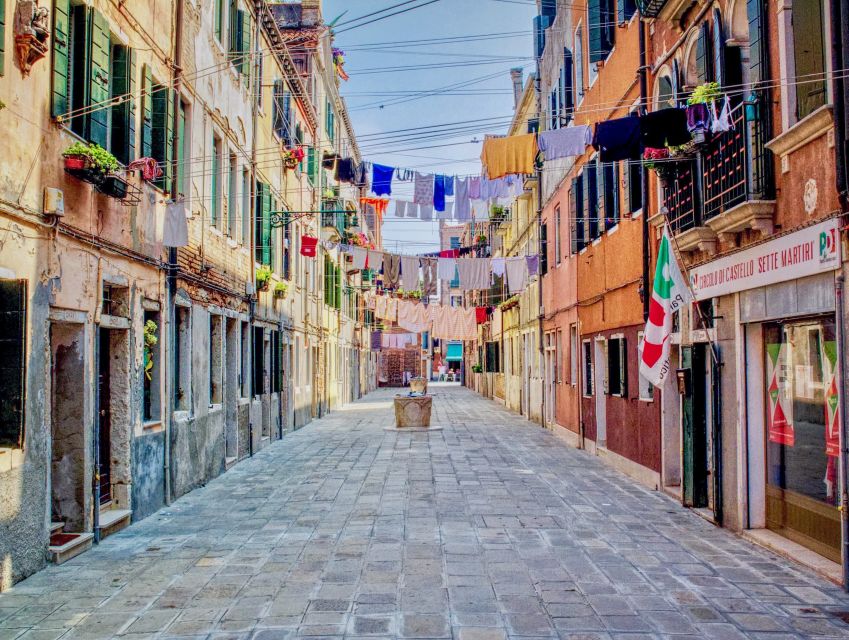
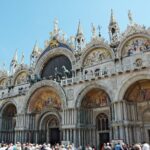
You begin in Saint Mark’s Square, where the guide starts with a historical introduction and points out architectural details you’d normally miss. You’ll hear about the origins and symbolism that made Saint Mark’s the focal point of the Venetian Republic—then you’ll see how the surrounding buildings reflect that power.
You’ll get help connecting the dots between three landmark anchors:
- Saint Mark’s Basilica: what makes it important, beyond just the exterior wow-factor
- Doge’s Palace: once the seat of Republic power, and why that matters to the city’s story
- The Renaissance clock tower: a quick but memorable way to understand how Venice kept time as a statement of order and authority
Even if you’ve been once before, this kind of guided framing can refresh your entire mental map. You’ll stop thinking of the square as a single photo spot and start seeing it as a system—politics, religion, and daily life all layered together in stone and placement.
Doge’s Power Without the Museum Ticket: What You Actually See
This walking tour doesn’t promise museum entry. Instead, it leans on the power of looking well. When you stand where the Doge’s Palace once shaped decisions, the guide’s explanation makes the facade feel less like scenery and more like evidence.
There’s also a practical advantage here. Museums take time you might not have in Venice, especially if you’re juggling other plans like another neighborhood visit or a gondola ride. This tour helps you get the big political and architectural context quickly, then shifts into Castello where the city feels more like daily life.
If you’re the type who wants to go inside every major building, plan for that separately. Think of this tour as the explanation engine for what you’ll later see up close.
Leaving the Crowds: Castello’s Calli, Canals, and Campi

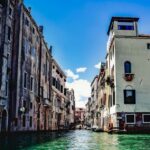
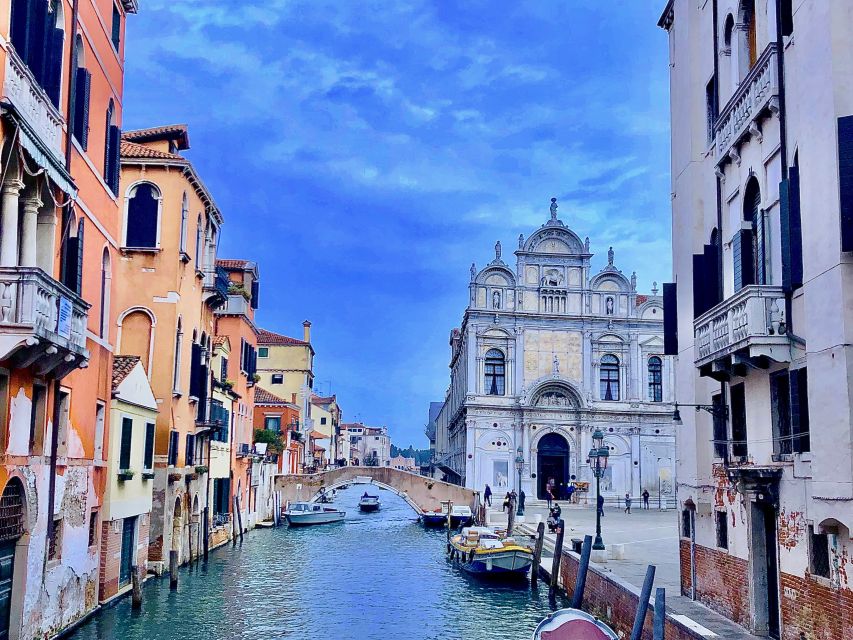
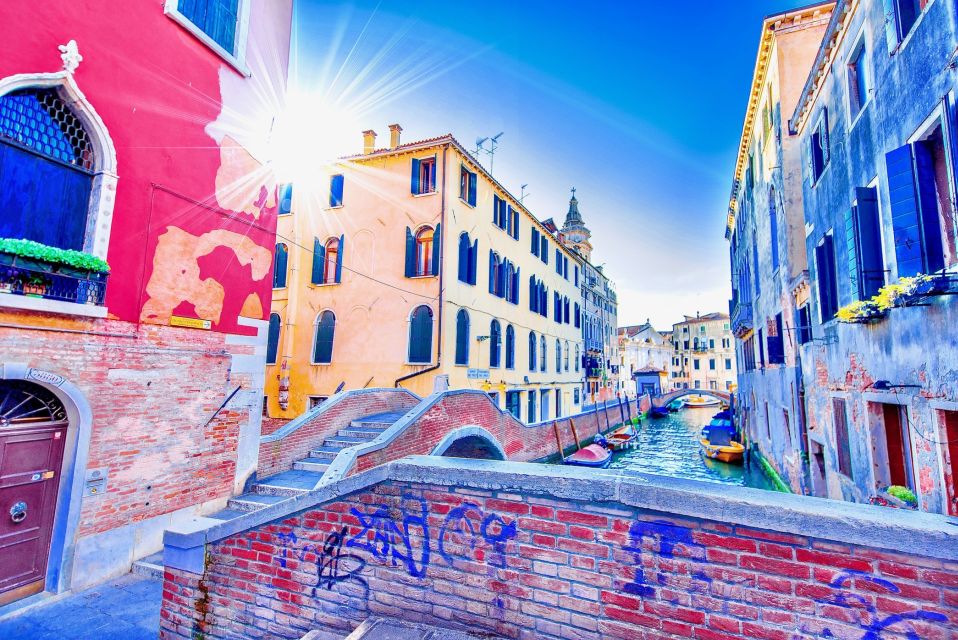
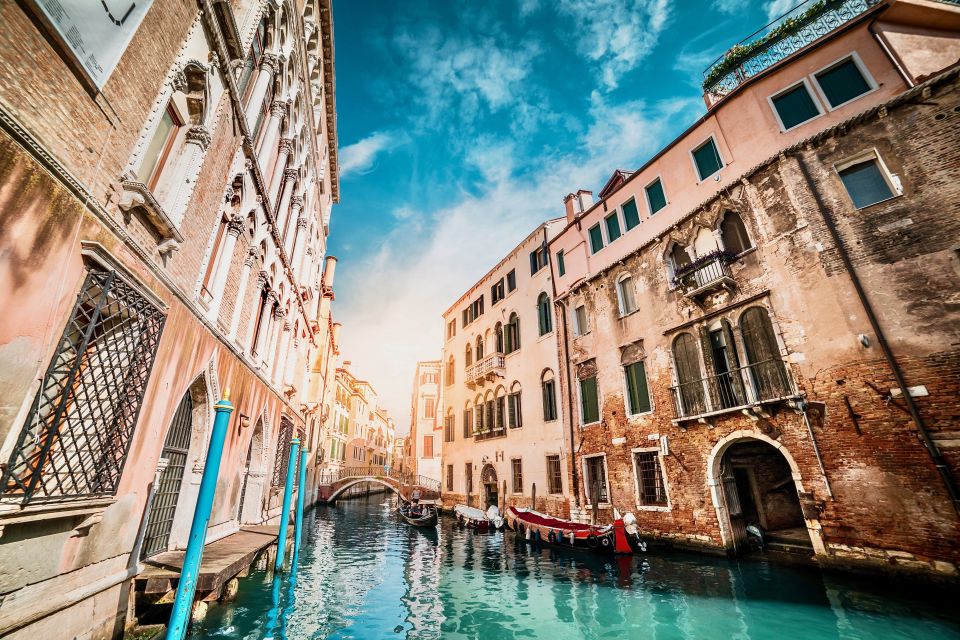
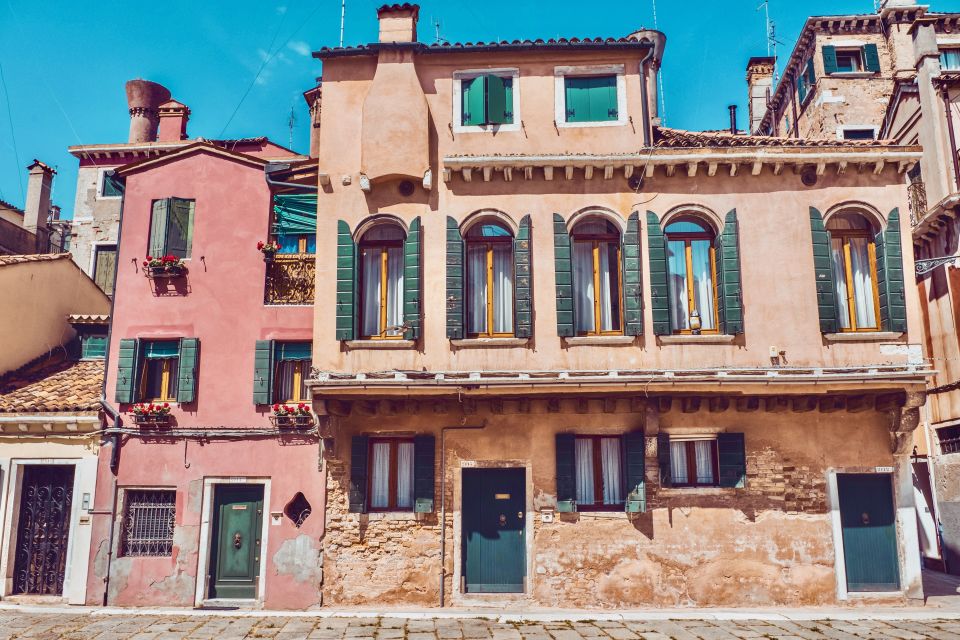
After Saint Mark’s Square, the route changes the whole mood. You move away from the busiest streets and into Castello, described as a residential part of the city with “treasure filled pockets.” That phrase is basically how it feels on the ground: smaller lanes, quieter corners, and architecture that looks lived-in rather than choreographed for visitors.
In Castello, you’ll walk through Venice’s key “on foot” features:
- Calli, the narrow streets that stitch neighborhoods together
- Bridges, which constantly reframe views
- Winding canals, which remind you that water is the real street
- Campi, wider open squares that act like living rooms for locals
What makes this valuable is that it’s not just pretty walking. The guide ties these shapes to traditions and present-day life. So when you see a bridge or cross a small square, it feels like part of a system—not a random scenic stop.


Campo Santa Maria Formosa: A Square That Feels Human
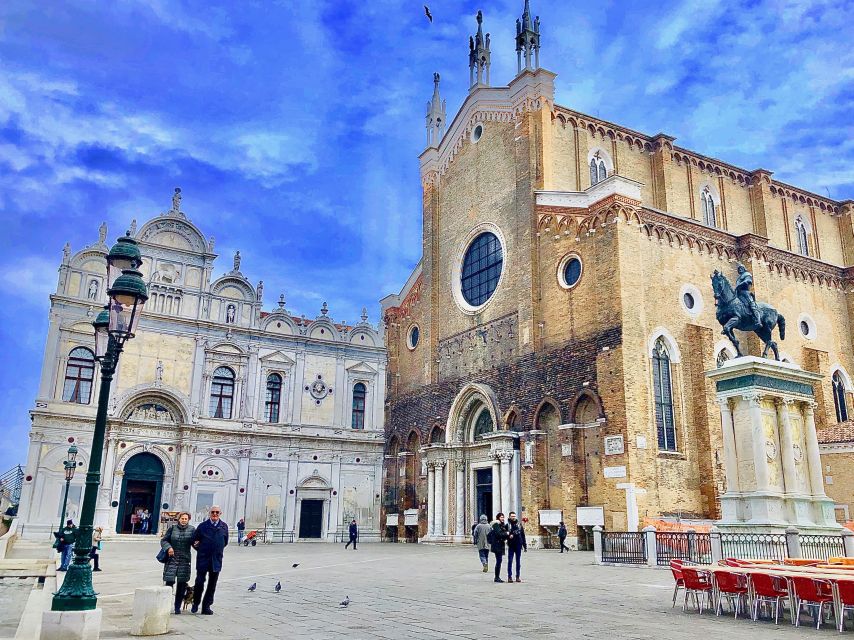
You’ll visit campo Santa Maria Formosa, one of those spaces that can feel ordinary if you’re speeding through Venice. With a guide leading, it becomes a reference point: you learn how squares function in the city and why they’re so important as gathering places.
This is also where the narration helps you notice what you’d otherwise overlook. Venice’s layout can look confusing from photos, but on foot you start to understand how people move, where they pause, and how buildings face the street. Campo Santa Maria Formosa fits that learning style well.
And because you’re already out of the main crowd flow, you’re more likely to enjoy the details instead of just counting landmarks.
Campo San Giovanni & Paolo and the Doges’ Burials
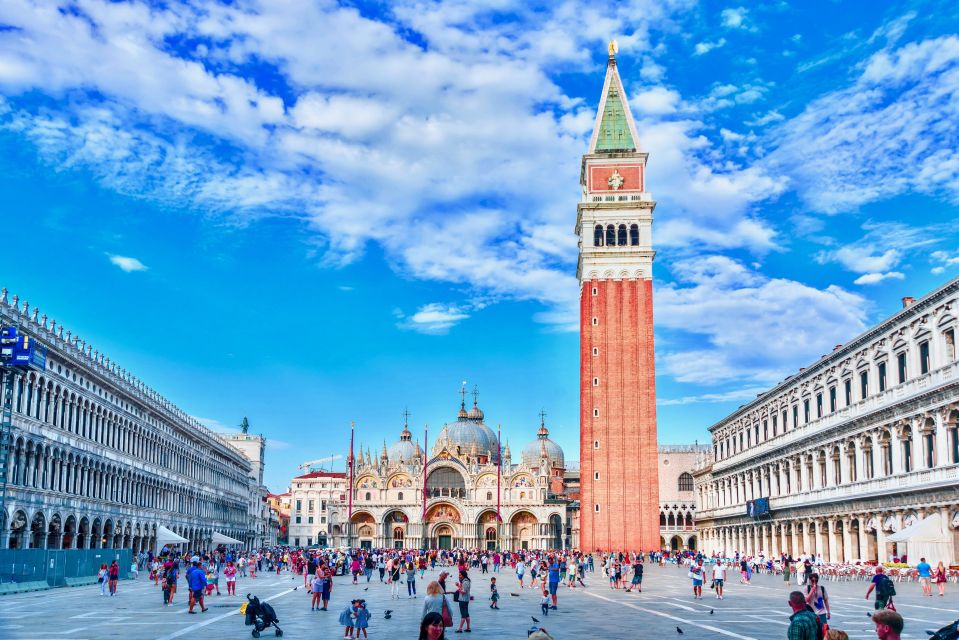
Next comes campo San Giovanni & Paolo, plus the striking Basilica there. This is one of the stronger “historical meaning” stops in the walk because the guide connects what you see to how the Republic wanted to remember itself.
This basilica is especially linked to leadership: the doges of Venice were buried here. Even from the outside, that fact gives you a better understanding of why this area carried weight. It’s not only architecture; it’s memory and authority, marked into the neighborhood fabric.
A helpful takeaway: the tour doesn’t just point at buildings. It explains why certain sites matter, so your brain stores the city in categories—power centers, religious centers, and civic spaces—rather than as a list of monuments.
The Return Through the Mercerie (So You Can Keep Your Day Going)
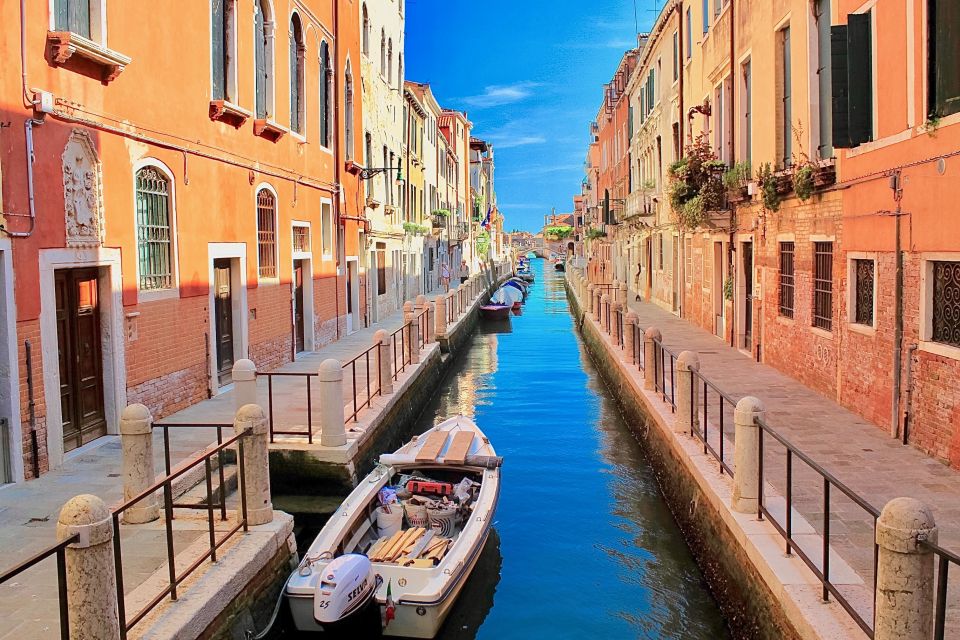
When the walk ends, you return toward San Marco’s Square. The route passes along the Mercerie—described as the shopping connection street between Rialto and San Marco.
This matters for planning. Many walking tours dump you back somewhere inconvenient, forcing you to backtrack. Here, the end position lines you up with one of Venice’s main pedestrian corridors, which makes it easy to:
- continue exploring on your own
- grab a bite nearby (without needing a complicated transit plan)
- connect to another area day plan
If you’re trying to cover Venice efficiently, this “back to a practical zone” ending is a smart design choice.
Price, Pace, and What $37 Actually Buys You
At $37 per person for 1.5 hours, the price makes sense when you focus on what’s included:
- A live guide
- A personal audio system and headset
- Commentary in English, French, German, Spanish, and Italian (with the live guide language options specifically listed as Spanish, German, English, French)
In other words, you’re paying for clarity. Venice streets are messy to navigate, and big landmarks are easy to misunderstand without guidance. The headset makes the experience easier to follow while you’re walking and looking, instead of stepping aside every minute to read a screen.
The pace is also important. One review praised a guide for giving explanations you won’t find in a typical guidebook. That’s often what you’re really buying: not the route, but the interpretation that helps you recognize what you’re seeing.
One consideration: the tour is described as “small group” in some bookings, but group size can vary. If you want a very intimate experience with minimal noise, don’t assume it will feel private.
Who Should Book This Tour—and Who Should Skip It
This walk is a strong fit if you want:
- a fast start in Venice that gives context
- an antidote to the worst crowd crush near San Marco
- a guide-led look at Castello’s residential feel
- useful stories about architecture, symbols, traditions, and how Venice works now
It may be less suitable if:
- you want interior museum or attraction entry time (this tour explicitly won’t include access)
- you need wheelchair access (it’s not wheelchair accessible)
If you’re traveling as a family, children under 5 are free, while children from 6 pay the full ticket and need ID.
Should You Book This 1.5-Hour Walking Tour?
Yes—if you want a smart first-step Venice overview with a built-in crowd escape. Starting at Saint Mark’s Square gives you instant orientation, and then sliding into Castello helps you see the city as more than one postcard zone. The headset and live commentary make it easier to keep up, even when the streets are crowded.
Skip it only if your priority is indoor museum time or if you need wheelchair-friendly routes. Otherwise, this is the kind of tour that turns your own wandering into something guided by understanding.
FAQ
How long is the Venice 1.5-Hour Walking Tour?
The tour lasts 1.5 hours.
How much does the tour cost?
It costs $37 per person.
Where do I meet the guide?
Meet 15 minutes early at Calle larga de l’Ascension – 30124, behind the Correr museum and opposite Saint Mark’s Basilica. Look for the TURIVE assistant next to the post office San Marco.
What will I see during the tour?
You’ll walk through Saint Mark’s Square and the Castello area, including stops such as campo Santa Maria Formosa and campo San Giovanni & Paolo, plus views and context around major landmarks near San Marco.
Is this tour wheelchair accessible?
No, this activity is not wheelchair accessible.
Does the tour include museum or attraction entry?
No. It is an external walking tour only and does not include access to museums or attractions.
What’s included in the price?
You get a guided tour, plus a personal audio system with headset for the commentary. Live commentary is provided.
What languages are offered?
Live tour commentary is available in English, French, German, Spanish, and Italian (with the live guide language options listed as Spanish, German, English, and French).
Is the tour affected by rain?
The walking tour runs rain or shine.
What about children?
Children are free up to 5 years old. From 6 years old they pay the full ticket and ID is required.