REVIEW · VENICE
Venice Sightseeing Small Group Walking Tour with a Local Guide
Book on Viator →Operated by Raphael Tours & Events · Bookable on Viator
A good Venice day starts with the right route. This 2-hour walk with Raphael Tours & Events gets you oriented fast with a local guide and a tight small-group size (max 15), plus insider context about Venice as a former maritime republic. I especially like how the route strings together the big landmarks with side streets, and how guides name what to look for as you go. The main drawback is the walking itself: expect stairs and bridges, and there’s no full break built in.
You’ll choose a morning or afternoon itinerary, meet in Dorsoduro, and finish at Piazza San Marco. The sights you hit are the kind you’d otherwise spend hours trying to connect on your own—Rialto, Marco Polo’s neighborhood, and the doge power center around San Giovanni e Paolo—then you land right where your evening can begin.
In This Review
- Key things you’ll like on this Venice walk
- A smart 2-hour Venice orientation from Dorsoduro to St. Mark’s
- How the walking route keeps Venice from feeling like chaos
- Stop 1: Campo San Pantalon and the Venice neighborhood feel
- Stop 2: Scuola Grande di San Rocco and Venice’s art-power system
- Stop 3: Ponte di Rialto and the trade-city energy
- Stop 4: Casa di Marco Polo and why one house represents a whole story
- Stop 5: San Zanipolo (Basilica dei Santi Giovanni e Paolo) and doge power made visible
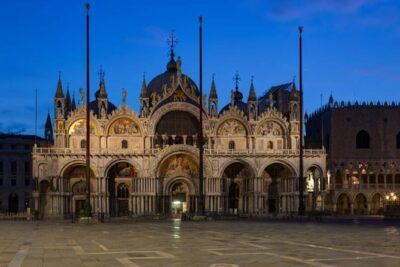
- Stop 6: St. Mark’s Square, where your walk lands in the spotlight
- What makes the walk good value for $48.37
- Stairs, shade, and the simple comfort facts you should plan for
- Who this tour fits best (and who might want a different style)
- Quick practical notes so you don’t waste time
- Should you book this Venice sightseeing walk?
- FAQ
- How long is the Venice sightseeing walking tour?
- What group size is this tour limited to?
- Where do we meet and where does the tour end?
- What languages are available?
- Is there an access fee for some visitors to Venice?
- Does the tour run in bad weather?
Key things you’ll like on this Venice walk
- Small group, max 15: easier questions, less crowd pressure, and a smoother pace.
- Local guide who answers: guides like Gianmarco and Valentina are praised for patient Q&A and practical pointers.
- Rialto + St. Mark’s Square in one go: you get the key “bookends” plus the canals between them.
- Titian and doge history on the same route: you’ll hear how art and power shaped Venice.
- Quieter districts and footbridges: you move through residential-feeling lanes, not just postcard streets.
- Free to access the stops: each stop is listed as admission free, so you’re not buying ticket bundles mid-walk.
A smart 2-hour Venice orientation from Dorsoduro to St. Mark’s
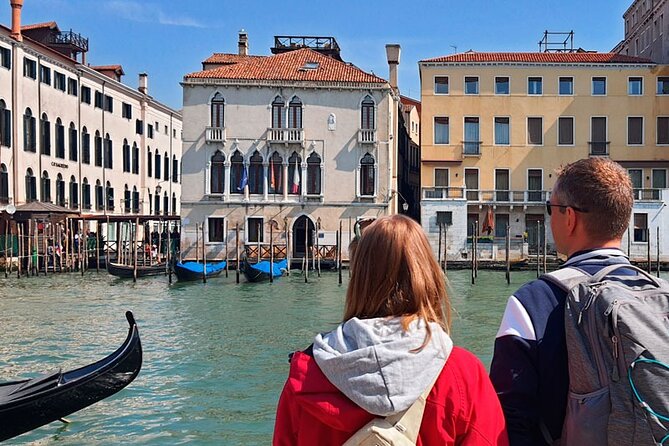
This is the kind of tour I think most people should do early. Venice is a maze of islands, bridges, and dead ends. A guided route helps you learn how the city “connects” before you start wandering on your own.
You start at Campiello dei Squelini in the Dorsoduro area, then end in Piazza San Marco. You do choose morning or afternoon, which matters because crowds and light change the experience fast in Venice. Also, it’s an English-speaking tour; the private option can be done in English, Spanish, or German if you need that.
One practical tip: the meeting point can feel oddly specific. One person noted you might only recognize it from a colorful art wall nearby. So arrive a few minutes early, and don’t assume every guide meeting spot looks like a big tourist hub.
You can also read our reviews of more walking tours in Venice

How the walking route keeps Venice from feeling like chaos
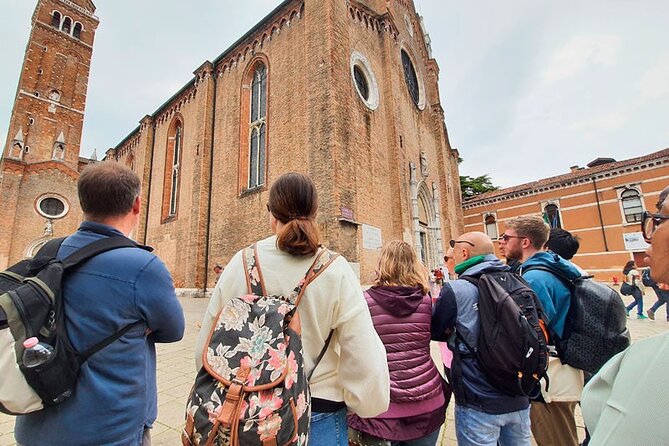
The tour is built around walking Venice’s main storylines, not just dropping you at statues. You move through pedestrian streets and cross footbridges that link parts of the island city. That’s not just scenery. It teaches you the logic of Venice: where the neighborhoods “belong,” and why bridges matter more here than roads.
You’ll also get little interpretive hooks along the way—what used to be trade and finance power, how courtyards and squares functioned, and why some buildings matter even if you can’t go inside during the walk. If you like city facts you can actually use later, this format tends to land well.
Pace and effort: the reviews point out lots of steps and bridges. One guide kept people in shade during hot weather, which is a real plus. Still, if stairs are a problem for you, plan accordingly and wear shoes that are truly comfortable for stone steps and bridge ramps.
Stop 1: Campo San Pantalon and the Venice neighborhood feel
Your tour kicks off at Campo San Pantalon. This is a good opening move because it places you inside the rhythm of everyday Venice, not immediately in the most crowded showpiece zones.
Campos in Venice are like outdoor living rooms—places to meet, hang out, and orient yourself. Even without going inside museums, you’ll learn what surrounds these spaces and how they relate to the bigger historical map of the city. It’s a quick start that helps the rest of the tour make sense.
If you’re arriving on the same day you start exploring, this is also a nice “first walk” option. You’re not doing a marathon of sights, but you’re getting a guided framework right away.
Stop 2: Scuola Grande di San Rocco and Venice’s art-power system
Next up is Scuola Grande di San Rocco. The value here is context. This isn’t just a building you pass by. You’ll understand the Scuola’s role in Venice’s civic and cultural life—how these institutions shaped community support and public identity over time.
The Scuole often sound like a detail unless someone explains why they were important. With a local guide, those buildings become part of the city’s logic: who funded what, where influence gathered, and how “religious” and “social” life overlapped in practice.
If you enjoy hearing how art, institutions, and politics interlock, this stop gives you more than a photo. If you’re hoping for long indoor time, keep expectations realistic: this is a walking sightseeing route, so you’ll see key structures more than you’ll tour them like a museum day.
Stop 3: Ponte di Rialto and the trade-city energy
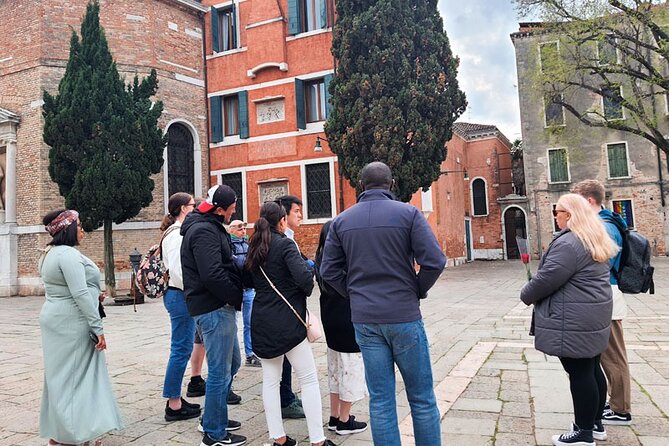
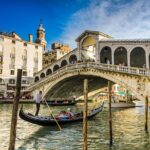
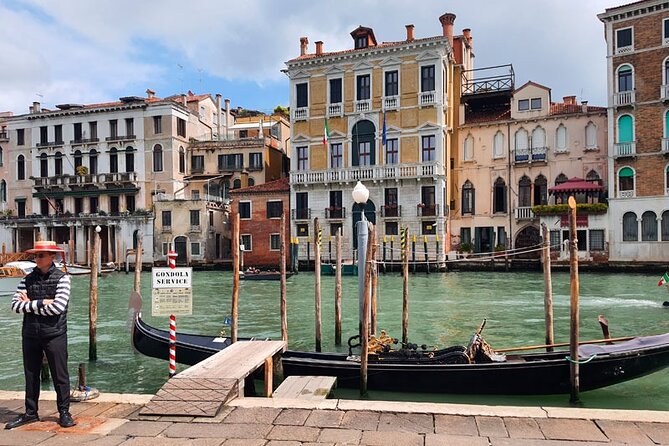
Then you hit the Rialto Bridge area. Even if you know Rialto from photos, walking it with a guide changes the experience. You see how the bridge connects movement—people, goods, and money—and how that connection shaped Venice’s reputation as a maritime republic.
Rialto also works as a “landmark anchor.” Once you know how Rialto sits in the city’s structure, your later self-guided wandering gets easier. You start recognizing distances and directions without feeling totally lost.
The drawback to Rialto on any day is crowds. That’s why the guide’s route choices matter. Several people appreciated that the tour took less crowded paths at times, so you still get Rialto’s importance without being trapped in the worst crush the whole time.
You can also read our reviews of more guided tours in Venice

Stop 4: Casa di Marco Polo and why one house represents a whole story
You’ll make your way to the Casa di Marco Polo area. The point here isn’t just the famous name. It’s what it represents: Venice as a launchpad for exploration, commerce, and storytelling that traveled far beyond the lagoon.
Marco Polo is one of those anchors that people recognize instantly. A good local guide uses that recognition to explain the deeper context—why Venice produced such travelers and why the city’s trading culture made that kind of journey possible.
This stop can feel like a turning point in the tour. After Rialto, you shift from pure trade imagery to a more human, narrative Venice. That makes the rest of the route more satisfying.
Stop 5: San Zanipolo (Basilica dei Santi Giovanni e Paolo) and doge power made visible
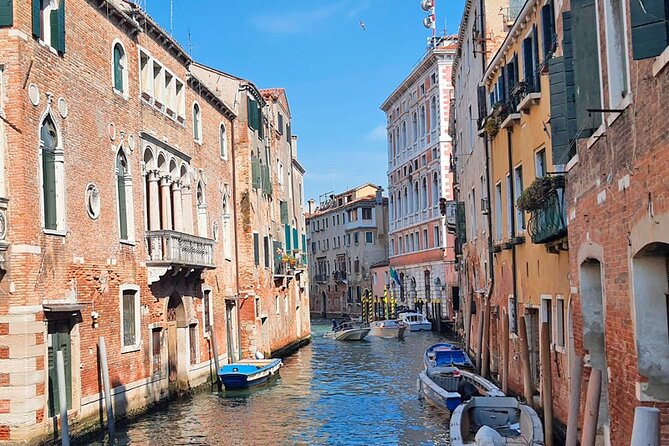
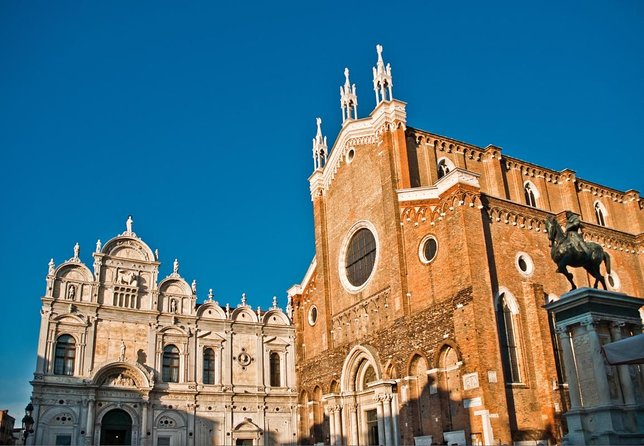
Next comes Basilica dei Santi Giovanni e Paolo, also called San Zanipolo. This is one of the tour’s best “history meets architecture” stops because it connects you to Venice’s leadership structure.
You’ll hear how this church is the resting place of many Venice doges, or leaders, of the city-state. That tidbit gives the building a different weight. Suddenly it’s not just a pretty church on a route—it’s a visible record of who mattered and how Venice honored authority.
Some people also noted the tour path included Campo San Bartolomeo as you move into this area. Those small squares matter here because they’re the spaces where you can actually watch how the neighborhood flows while your guide sets the bigger scene.
Stop 6: St. Mark’s Square, where your walk lands in the spotlight
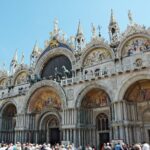
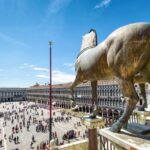
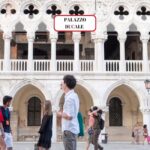
The tour finishes in Piazza San Marco, with St. Mark’s Square as the destination. This is a smart ending: the square is where you can immediately decide what kind of Venice day you want next—wander the edges, grab a drink, or plan a longer look at the monuments you’ve just learned to place in context.
The square is also where your guide’s final “what next” advice can pay off. Guides often offer practical recommendations on where to eat and how to spend your free time in Venice. One person even mentioned a restaurant suggestion—Enoteca Al Volto—which they tried after the tour. That’s the kind of value that goes beyond landmarks.
Reality check: St. Mark’s Square is busy by default. The tour ends there, so you’re stepping into a high-visibility zone after a quieter walk. If you want photos, this is your chance—start early in the square with your camera ready so you don’t waste your best moment hunting for angles.
What makes the walk good value for $48.37
At $48.37 per person for about 2 hours, the price only feels “low” if you measure it against the cost of doing this wrong. Trying to DIY Venice often turns into wasted time: backtracking, missing key connections, and ending up at landmarks without understanding how they fit together.
Here, you get:
- A route that links major sights (Rialto and St. Mark’s) with supporting neighborhoods.
- A local guide who provides context about Venice as a maritime republic and explains what you’re looking at.
- A small group cap of 15, which makes it easier to hear answers and ask follow-ups.
It’s also listed as admission free at the stop level. That matters because it reduces the “surprise costs” feeling. You’re spending money on guidance and time, not on multiple entries that slow your walk.
If your goal is a fast orientation plus a few “I get it now” history connections, this usually pencils out as solid value.
Stairs, shade, and the simple comfort facts you should plan for
Venice walks are rarely flat. Expect stairs, steps, and bridge crossings. One review called it a steady but doable pace, and another pointed out that you will go up and down many stairs—so you should assume effort is part of the experience.
Comfort gear matters:
- Wear comfortable shoes you trust on stone and bridge textures.
- If you’re sensitive to heat, pick the time of day that feels best for you and be ready for sun when you’re not in shade.
- If you have hearing issues, pay attention to the audio system if one is provided. One person said they could not hear the guide through the headset, so if sound isn’t coming through, ask right away.
If you’re traveling with kids, be aware that not every child loves history talk and constant motion. One comment directly said it’s not the best pick for children, even though the guide was excellent.
Who this tour fits best (and who might want a different style)
This tour fits you if you:
- Want a first or second day in Venice that helps you get your bearings fast.
- Like history and geography explained in a practical way as you walk.
- Prefer small-group attention over getting swallowed by big crowds.
- Appreciate a guide who stays friendly and patient while answering questions.
You might want a different type of experience if you:
- Want long indoor time at churches or museums.
- Need frequent rest or coffee stops during the walk.
- Have mobility limits that make stairs and bridges very hard.
That said, multiple reviews describe a route that keeps moving but with a steady pace, and at least one guide worked to keep the group in shade on hot days.
Quick practical notes so you don’t waste time
The tour uses a mobile ticket, and it’s offered in English for the standard tour format. Private tours can be booked in English, Spanish, or German.
It’s near public transportation, which helps because you don’t need a taxi strategy to start. And the experience requires good weather; if it gets canceled for poor weather, you should expect an alternate date or a full refund.
One more Venice-specific thing to check: on certain dates, people visiting for the day from outside Venice may need to pay a €5 access fee. Check the current rules at https://cda.ve.it so you’re not surprised.
Should you book this Venice sightseeing walk?
If you want a smart, efficient Venice introduction that connects top sights with the neighborhoods between them, I’d book it. The strongest reason is the guide experience: people consistently highlight names like Gianmarco and Valentina for being friendly, patient, and helpful with questions. That’s exactly what turns a list of landmarks into a usable understanding of Venice.
Book it especially if:
- You only have a short window (two hours is perfect as a first anchor).
- You want Rialto and St. Mark’s Square, but you don’t want your day to feel like aimless wandering.
- You value small group size and clear local guidance.
Skip it if your priority is indoor touring, long breaks, or a low-effort stroll. This is a walk with stairs and bridges, and it moves.
If you do book, show up a few minutes early, bring comfy shoes, and treat the guide like your walking concierge. Ask what to do after the tour while you’re already in the flow of Piazza San Marco.
FAQ
How long is the Venice sightseeing walking tour?
It’s about 2 hours.
What group size is this tour limited to?
The maximum is 15 travelers.
Where do we meet and where does the tour end?
You start at Campiello dei Squelini in Sestiere Dorsoduro and end at Piazza San Marco.
What languages are available?
The tour is offered in English. The private option can also be done in Spanish and German.
Is there an access fee for some visitors to Venice?
On certain dates, day visitors staying outside Venice may need to pay a €5 access fee. Check https://cda.ve.it for details and exemptions.
Does the tour run in bad weather?
The tour requires good weather. If it’s canceled due to poor weather, you’ll be offered a different date or a full refund.