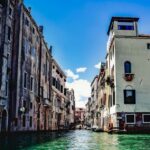
Quiet Venice tells louder stories. This Venice Historic Walk is designed for the early hours and the side streets, especially Dorsoduro, where locals hang out and you get a real sense of how the city works. Over about 2.5 hours, you’ll hear how Venice was built, why its architecture looks the way it does, and how traditions still show up in daily life.
I really like the pacing and the focus on understanding, not just photos: you’ll pick up words like squero and palazzo as you go, so the sights start to make sense fast. I also like that the guides keep things human and thoughtful, and two names you may meet are Nicoló and Aleksandra, known for energy and sharing a responsible approach to travel.
The one thing to consider is that two major stops are outside the included ticket: church or museum entry isn’t included, so you may want a little extra time and budget if you plan to go in there.
In This Review
- Key things you’ll notice on this Dorsoduro historic walk
- Why the route starts in Campo Santa Margherita and keeps you moving
- Scuola Grande dei Carmini: learning the city through institutions
- Squero Domenico Tramontin e Figli: what a squero means in real life
- Osteria Al Squero and the Venetian aperitivo break
- Fondamenta Zattere: port and canals, explained where you can see them
- Campo Sant’Agnese: urbanism that makes Venice feel logical
- Punta della Dogana: custom house and merchants of Venice
- Basilica di Santa Maria della Salute: Palladio, Venetian baroque, and living traditions
- Ponte de la Toletta: carnival symbolism without the full circus
- Giardini di Ca’ Rezzonico: palazzo life and the “day-to-day Venice” feeling
- Price and value for a 2.5-hour Venice historic walk
- Who should book this walk (and who might skip it)
- Should you book the Venice Historic Walk with Cao Rio?
- FAQ
- How long is the Venice Historic Walk?
- How much does the tour cost?
- Where does the tour start and end?
- What time does the tour begin?
- Is this tour private or shared?
- Are tickets included for churches or palaces?
- Do you get an aperitivo included in the tour?
- Is there an entry fee for Venice on certain days?
- What happens if the weather is bad?
Key things you’ll notice on this Dorsoduro historic walk
- Dorsoduro focus: quiet neighborhoods, backstreets, and local rhythms instead of a rush through the busiest spots
- Architecture and urbanism in plain language: you learn what you’re looking at as you walk, not after
- Squero and gondola boatyards: the city’s watercraft culture gets explained where it actually happens
- A Venetian aperitivo pause at an osteria: a practical break that still fits the history theme
- Free public-sight stops most of the way: you’ll see plenty without hunting down paid entries
- Customs, merchants, and trade storylines: commerce connects the canals to the city’s identity
Why the route starts in Campo Santa Margherita and keeps you moving
Venice works best on foot, but it also works best with a route that avoids the obvious bottlenecks. This walk begins at Campo Santa Margherita, a square that feels like a local living room. From there, you’re not just collecting landmarks. You’re learning how Venice organizes life around open spaces and waterways, and how those spaces shape movement through the city.
I like that you start early (the tour starts at 9:00 am) because the streets often feel calmer and easier to read. Even if you’re not an architecture nerd, you can “feel” the structure of Venice sooner when you’re not fighting crowds.
One more practical note: the tour ends at Campo San Barnaba, which is handy because it leaves you with a clear finishing point for your next meal or wander. If you’re trying to squeeze Venice into a short stay, that matters more than it sounds.
You can also read our reviews of more walking tours in Venice
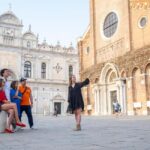
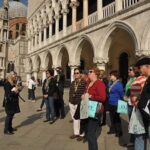
Scuola Grande dei Carmini: learning the city through institutions
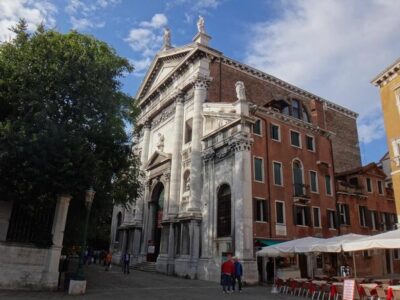
The walk includes a stop at Scuola Grande dei Carmini, timed briefly so you can stay on rhythm. You don’t need to memorize facts here. The goal is to understand what a “Scuola Grande” is in Venetian life, because these institutions show up in the way Venice organizes art, community, and identity.
Even during a short pause, you can look at the building as more than a façade. The guide helps you connect the idea of these groups to the broader Venetian culture you’re seeing throughout the walk. This is where the vocabulary lesson becomes useful: once you hear what these spaces represent, the city starts to feel less random.
The drawback? If you’re the type who likes long stops for deep interior viewing, this won’t be that kind of tour. The experience is built for clarity on the walk, with shorter exterior or context-heavy moments.
Squero Domenico Tramontin e Figli: what a squero means in real life
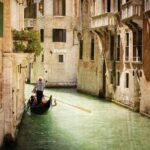
Next comes one of the most distinctive stops: Squero Domenico Tramontin e Figli. If you’ve heard the word squero and wondered what it actually relates to, this is where it clicks.
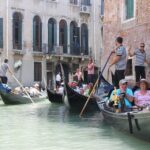
Because this is a gondola boatyard, the lesson isn’t abstract. You’re seeing the setting where gondola culture connects to craft, water, and maintenance. The guide explains what a squero is and ties it to the wider idea of how Venice lives with water rather than alongside it.
This is also a strong “off the beaten path” moment. Many first-timers see gondolas, but fewer get the chance to understand the working life and the building tradition behind them. If you want the city beyond the tourist gondola line, this stop delivers.
Osteria Al Squero and the Venetian aperitivo break
After the boatyard, you get a short pause at Osteria Al Squero for a Venetian aperitivo. The aperitivo here isn’t presented as a party. It’s a sensible break that keeps you moving while still fitting the theme of local rhythms.
One detail to plan around: alcoholic beverages aren’t included. That’s not a bad deal—just know what you’re budgeting. If you skip alcohol, you can still enjoy the moment as a reset point to absorb what you just learned.
This is also where the “responsible traveling” vibe matters. The guides’ energy tends to keep the group calm and respectful, with a focus on sharing knowledge instead of forcing volume. In a city like Venice, that tone makes a big difference.
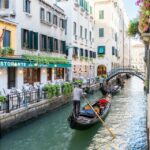
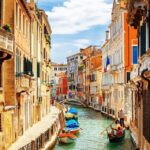
Fondamenta Zattere: port and canals, explained where you can see them
At Fondamenta Zattere, the story shifts from craft to movement—Venetian ports and canals. This is where trade logic comes into the walk. You’ll learn how Venice’s identity ties to merchants, routes, and the way the city functions as a water-connected hub.
The practical value here is visual. You’re not just reading about canals; you’re looking at the waterfront context while the guide connects it to the broader changes in Venice over time. Even if you only catch part of the explanation, the location helps you build a mental map.
This stop is also a good “photo with purpose” moment. Take pictures if you want, but try to look first. The best way to remember Venice is to understand what each viewpoint is doing—where it directs you and what it reveals about the city’s layout.
You can also read our reviews of more city tours in Venice
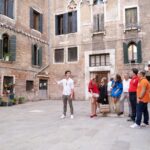
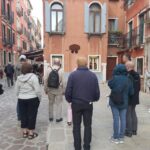


Campo Sant’Agnese: urbanism that makes Venice feel logical
Then you move into Campo Sant’Agnese, labeled around Venetian urbanism. This is a useful stop because it turns Venice from a series of pretty corners into a system.
Urbanism sounds dry, but in Venice it’s the difference between getting lost every five minutes and actually feeling oriented. The guide helps you see how the city forms neighborhoods through squares and connections, and how that structure links back to what you’ve been seeing at the waterfront and the boatyard.
A quick word of advice: if you’re visiting during a busy season, even a short urbanism stop can be crowded. Come ready to be patient and walk slowly. Venice architecture rewards attention, not speed.
Punta della Dogana: custom house and merchants of Venice
At Punta della Dogana, the focus is on the custom house and merchants of Venice. This is a storyline stop: it connects commerce to buildings and institutions, and it helps explain why the city’s identity isn’t only art and romance—it’s also business and exchange.
Important planning detail: admission here isn’t included. The walk includes a stop, but if you want to go inside the ticketed areas, you’ll need to buy entry separately. If you prefer to keep costs tight, you can still enjoy the context from the outside, but your experience will be more complete if you choose to go in.
This stop also helps you understand one of Venice’s core contrasts: the same place that looks elegant to visitors often has deep administrative and economic roots. That tension is part of the city’s charm.
Basilica di Santa Maria della Salute: Palladio, Venetian baroque, and living traditions
Next is Basilica di Santa Maria della Salute, connected to Palladio and Venetian Baroque, plus how traditions still show up in everyday life. This is one of the stops where architecture becomes a story about belief and culture, not just style.
Again, tickets inside aren’t included, so you’re making a choice. If you like entering major churches or you want the full experience at this kind of landmark, plan for it. If not, the exterior stop still gives you the cultural context, and the walk stays moving.
What I like about including this basilica isn’t the building alone. It’s that it’s tied to life traditions, which keeps the focus on why the building matters to Venice today.
Ponte de la Toletta: carnival symbolism without the full circus
Then you’ll reach Ponte de la Toletta, framed around Venetian Carnival. This is a clever timing choice, because Carnival isn’t just costumes. It’s also about how Venice turns public spaces into stages and how the city’s identity flexes when traditions hit.
This stop is free, so it works well if you’re trying to manage costs while still getting variety in the story. You won’t get only serious architecture here. You’ll get a reminder that Venice keeps traditions alive by putting them into its street-level geography.
If you want the city to feel fun and human, not only historical, this is a good counterbalance.
Giardini di Ca’ Rezzonico: palazzo life and the “day-to-day Venice” feeling
The walk finishes with Giardini di Ca’ Rezzonico, tied to a Venetian Palazzo. This is where the experience shifts from boats, trade, and monuments into the atmosphere of elite domestic architecture and its connection to cultural life.
Even if you’re not touring inside, being in the gardens area helps you read the palazzo concept: not as a single building you view from far away, but as part of a larger lifestyle structure. Venice homes and palaces are about power, proximity, and control of space—right down to how people gather and move.
This ending also pairs nicely with where the tour concludes, at Campo San Barnaba. When you finish near a square, it’s easier to continue exploring at your own pace.
Price and value for a 2.5-hour Venice historic walk
The price is $75.24 per person for about 2 hours 30 minutes, with a mobile ticket. On paper, that’s not the cheapest thing in Venice. In practice, I think it can be good value if you want real context fast.
Here’s why: you’re getting a guide for the full half-day slice, plus a route that hits multiple themes—architecture, urbanism, craft, ports, customs, and traditions—rather than repeating the same photo spots. You also get several free stops along the way, with only two marked as ticketed.
If you’re the type who usually visits Venice on your own and ends up with a folder of photos but a vague sense of what you saw, this kind of guided structure helps. It’s less about ticking attractions and more about giving you language and connections so Venice sticks in your head.
Who should book this walk (and who might skip it)
This works especially well for:
- First-time visitors who want more meaning than a typical highlights loop
- People who like small, local-feeling routes, especially around Dorsoduro
- Travelers who enjoy learning words and concepts tied to what they see (squero, palazzo, Scuole)
- Anyone who values guides who focus on responsible travel and sharing knowledge
You might skip it if:
- You want long museum-style time inside ticketed locations
- You’re only interested in the biggest headline monuments with full interior access
- You need a very flexible schedule during the walk (this is a set, private route for your group)
Should you book the Venice Historic Walk with Cao Rio?
If you’re aiming to understand Venice as a working city—craft, trade, and tradition in one place—I’d book it. This walk is built around the city’s structure and its language, not just its scenery. The combination of Dorsoduro neighborhoods, the squero boatyard stop, and the guided links between architecture and daily life makes it feel practical, not theatrical.
My main caution is the same one you should always have in Venice: plan for the two ticketed areas if you care about going inside. If you’re fine with that trade-off, you’ll likely leave with a clearer map in your mind and a better sense of what makes Venice feel like Venice—long after the photos fade.
FAQ
How long is the Venice Historic Walk?
It lasts about 2 hours 30 minutes.
How much does the tour cost?
The price is $75.24 per person.
Where does the tour start and end?
It starts at Campo Santa Margherita, 30123 Venezia VE, Italy and ends at Campo San Barnaba, 30123 Venezia VE, Italy.
What time does the tour begin?
The start time listed is 9:00 am.
Is this tour private or shared?
It’s private, meaning only your group participates.
Are tickets included for churches or palaces?
Tickets inside churches or palaces are not included.
Do you get an aperitivo included in the tour?
The walk includes an Osteria Al Squero stop for a Venetian aperitivo, but alcoholic beverages are not included.
Is there an entry fee for Venice on certain days?
On certain dates, travelers staying outside Venice who are visiting for the day may need to pay a €5 access fee. You can check applicable dates and exemptions at https://cda.ve.it.
What happens if the weather is bad?
This experience requires good weather. If it’s canceled due to poor weather, you’ll be offered a different date or a full refund.