REVIEW · VENICE
Venice Sightseeing Walking Tour with a Local Expert
Book on Viator →Operated by Orange Umbrella Tours · Bookable on Viator
Venice hits different once you understand the lay of the land. This Venice Sightseeing Walking Tour with a Local Expert is a tight, two-hour way to make sense of the city by focusing on the people, places, and power behind the postcard scenes. I like how it’s built to cover a lot without feeling like a sprint, especially with top sights packed into a walk that ends in St. Mark’s Square.
Two things I really value: you get the guidance of a true local who can answer questions as you go, and the route is designed to keep you moving efficiently through the most important areas. Guides you might meet on this tour, like Flavia or Desi, have a reputation for pointing out the small stuff that makes Venice feel less like a museum and more like a lived-in city.
One possible consideration: the tour is meant to be small (up to 15), but if your date runs on the larger side, you may find there’s less time for back-and-forth questions.
In This Review
- Key things to know before you go
- Getting oriented fast: why this 2-hour Venice walk is a smart first move
- Starting point at Campiello dei Squelini (Dorsoduro): where the walking begins
- Campo San Polo and the San Polo Church view: how a neighborhood gets its name
- From civic space to romantic canal views: the bridge over the Gran Canal
- A place where doges were buried: reading Venice’s power through stone
- Closing at Piazza San Marco: your end point and next best steps
- Price and value: what $41.94 buys you (and what you still need to budget)
- Group size and guide Q&A: how to get the most out of the walking pace
- Rainy-day reality in Venice: why this tour still works when the forecast is ugly
- Who should book this tour (and who might prefer something else)
- Quick decision guide: should you book this Venice Sightseeing Walking Tour?
- FAQ
- How long is the Venice sightseeing walking tour?
- Where does the tour start and end?
- What’s the price per person?
- Is lunch included?
- Is the tour in English?
- How many people are in the group?
- Is there any extra access fee to consider?
Key things to know before you go
- A focused 2-hour route that takes you from Dorsoduro to San Marco without dragging
- A local guide at the center of it, with time to ask questions along the way
- Small-group format (maximum 15) for a more human pace than big bus tours
- Major Venice landmarks in one sweep, including St. Mark’s Square at the end
- Rain-ready practical planning since you’ll keep seeing the city even when skies don’t cooperate
- Free admission only at the finish, since St. Mark’s Square itself doesn’t require tickets for the viewpoint
Getting oriented fast: why this 2-hour Venice walk is a smart first move
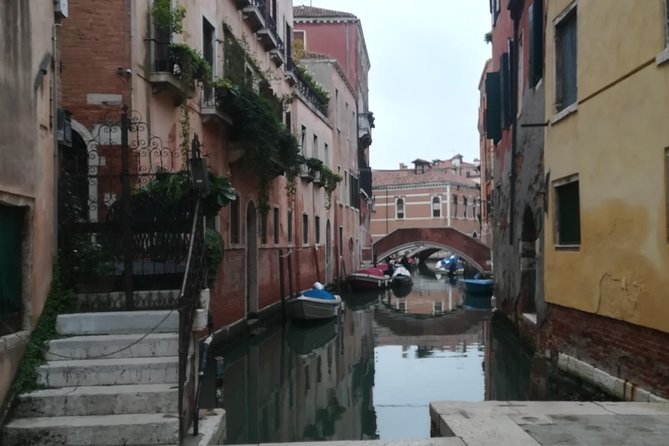
If Venice is your first stop on the trip, this is the kind of tour that helps you stop guessing. You’ll walk through key city zones and learn what mattered historically and socially—so later, when you wander on your own, you know what you’re looking at instead of just taking photos and hoping for the best.
The value here isn’t only that you see sights. It’s that you learn the connections. Venice wasn’t built in a day, and it didn’t grow randomly. Walking from camp to church to canal viewpoints gives you a sense of how neighborhoods work and why certain places became decision-makers for centuries.
Price-wise, $41.94 per person is reasonable for what you get: a local guide, about 2 hours of route planning, and an easy meet-up and finish in central Venice. You’re paying for guidance that saves you time, helps you avoid dead ends, and gives context you’d otherwise have to chase through maps and guidebooks.
You can also read our reviews of more walking tours in Venice

Starting point at Campiello dei Squelini (Dorsoduro): where the walking begins
The tour begins at Campiello dei Squelini in Dorsoduro (Sestiere Dorsoduro, 2766). This matters more than you might think. Dorsoduro sits across the water from San Marco, and starting here helps you ease into Venice’s smaller streets right away. You’re not immediately dropped into the loudest tourist choke points.
From the first minutes, you’ll be in the mode the city demands: look up at facades, read street signs, and notice how the canals shape movement. A good local guide can make that click quickly, and that’s the real advantage of starting in a camp area rather than at some random piazza.
Also, this is a practical location. The meeting point is in a neighborhood that’s served well enough by public transport that you’re not forced into complicated detours before the tour starts.
Campo San Polo and the San Polo Church view: how a neighborhood gets its name
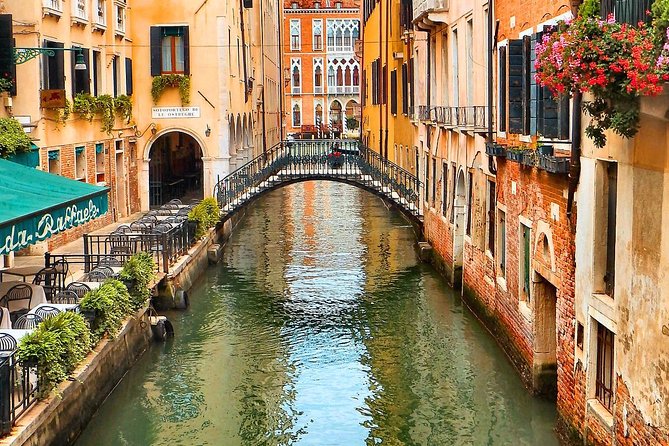
One of the first major areas you’ll reach is Campo San Polo, described as the second big Venice camp after San Marco Square. The name ties directly to the nearby San Polo Church, which overlooks the area.
What I like about this stop is that it explains the logic behind the city’s naming. In Venice, many squares and campi take their identity from churches, families, and long-standing roles. Once you learn that, it becomes easier to orient yourself when you come back later on your own.
You’ll also see the San Polo Church from the outside. The tour shares its evolution too: it originally served as a lay confraternity, and today it’s used as a place of art exhibitions. Even without going inside, that historical shift gives you a helpful framework for how Venice repurposes buildings over time rather than starting fresh.
From civic space to romantic canal views: the bridge over the Gran Canal
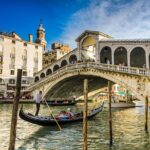
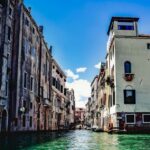
Next comes a big visual payoff. You’ll move toward the area that used to be the city’s commercial center, and you’ll stop at one of Venice’s most romantic bridge viewpoints with a standout view over the Gran Canal.
This is where the walking tour earns its keep. Venice doesn’t let you understand the Grand Canal from a single angle. A guide helps you pick a viewpoint that makes sense—so you can actually connect what you’re seeing with the city’s old trading routes and wealth.
There’s also a small, real-world bonus here: by the time you reach the canal area, you’ve already learned what to watch for. You’ll notice canal edges, street alignments that hint at crossings, and how nearby landmarks sit within the broader neighborhood plan.
The only downside? Venice bridge viewpoints can be crowded, even when a guide tries to route around chaos. If you’re very sensitive to crowds, plan to arrive with patience and keep your focus on the meaning of the view, not only the photo.
A place where doges were buried: reading Venice’s power through stone
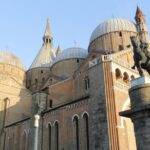
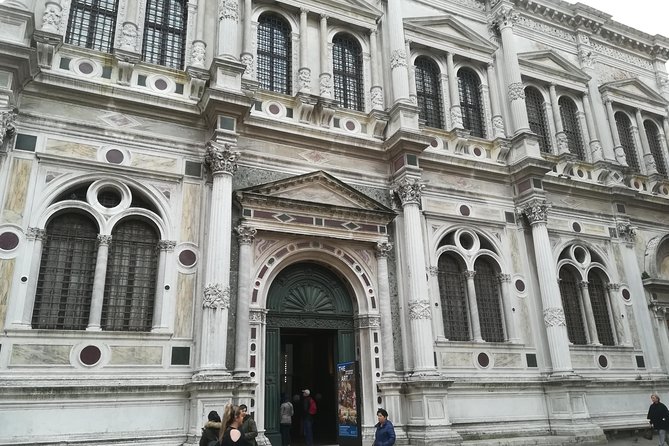
After the canal moment, the tour brings you to a more solemn thread in Venice’s story: the location where many doges (Venice’s leaders) were decided to be buried.
This is the part of the walk that adds weight. St. Mark’s is famous, but the doges weren’t legends floating in the clouds. They were political operators, and their burial sites show you how Venice treated leadership like a civic institution.
You’ll get the context as you walk, which is usually the missing piece for anyone who only sees the exterior of grand churches. When you understand why certain places became official burial grounds, those buildings stop feeling decorative and start feeling purposeful.
It’s also a useful reset after canal scenery. Venice is full of breathtaking views, but if you only chase the pretty stuff, the city can feel like a set of independent postcards. This stop ties the past to the physical space so the walk feels like a story.


Closing at Piazza San Marco: your end point and next best steps
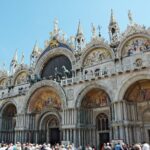
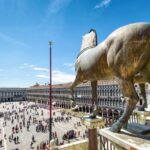
The tour ends in San Marco Square (Piazza San Marco). The square is listed as free to access for the tour time window, which is great because you can immediately keep exploring without paying another ticket just to continue.
St. Mark’s Square is where most visitors want to go anyway. The advantage of reaching it by walking is that you don’t arrive as a blank slate. You’ll have a clearer sense of how you moved through neighborhoods and why certain zones were central for commerce and leadership.
After the tour, my practical advice is simple: take 20 minutes to reorient first. Sit, look around, and map where you want to go next. If you’re heading toward major monuments, you’ll likely find your instincts improve because you already understand the city’s basic structure.
Price and value: what $41.94 buys you (and what you still need to budget)
Let’s talk value without pretending Venice is cheap. At $41.94 per person for about 2 hours, you’re paying for three things:
- A local expert who can explain what you’re seeing while you’re walking
- Time-saving routing through the key areas so you don’t waste your limited energy backtracking
- A structured experience that ends in a perfect launch point for your next sightseeing block
What’s not included: lunch. That’s normal for walking tours in Italy, but it matters for planning. If you’re pairing this with the rest of your day, decide ahead of time whether you’ll eat near Dorsoduro, around Rialto/San Marco areas, or later once lines cool down.
You should also know that this tour operates with good weather expectations. If it’s canceled due to poor conditions, you’ll be offered a different date or a full refund. That’s a big deal in Venice, where rain can turn stone and alleys into a slippery obstacle course.
Finally, one more practical note: this activity is commonly booked around 23 days in advance. If your schedule is fixed, don’t wait until the last week to secure a spot.
Group size and guide Q&A: how to get the most out of the walking pace
This tour runs with a maximum of 15 travelers, which is the sweet spot for a guided walk. Smaller groups mean less time spent waiting at intersections and more room for conversation.
The best part is the guide’s ability to handle questions along the way. In particular, I’d take advantage of that early. Ask about what to prioritize later, or where to walk for calmer views versus the busiest scenes. If you’re the type who likes context, this is your moment to get it while the locations are still fresh in your head.
One consideration: even with a cap, you might occasionally see a larger group in practice. If your day runs larger, the guide may need to keep questions tighter to maintain the pace. If that’s you, have one or two questions ready instead of a long list.
Rainy-day reality in Venice: why this tour still works when the forecast is ugly
Venice rain can be dramatic. One of the strongest points associated with this tour is that it can still work on a day with bad weather because the guide keeps the route moving and focuses on the city experience rather than letting the day fall apart.
Here’s how to use that to your advantage. Bring footwear with grip and a light rain layer you can move in. Then treat the cloudy light as part of the atmosphere. Wet stone can look darker, more textured, and it often makes canal views feel moodier.
And if you’re worried about cancellations, remember: the tour has a weather-dependent approach. If conditions are too poor, you’ll be offered a different date or a full refund—so you’re not forced into a gamble without an exit.
Who should book this tour (and who might prefer something else)
I think this tour is a great fit if you want:
- A practical orientation for your first day in Venice
- A guided route that hits major highlights without requiring you to plan a complicated itinerary
- Question time with a local so you understand what you’re seeing, not just where to stand for a photo
It’s also a solid pick if you value efficiency. With only about 2 hours, you get a lot of city exposure and a strong sense of direction for the rest of your trip.
I’d consider skipping or pairing this with a different format if:
- You prefer to stay extremely flexible with stops, because this is still a structured walking route.
- You’re only chasing one monument and don’t want a multi-stop introduction.
- You want a long, slow neighborhood day. This walk is designed for momentum, not wandering at your own pace for hours.
Quick decision guide: should you book this Venice Sightseeing Walking Tour?
Book it if you want big-sight coverage plus local context in a short window. At $41.94, the cost works out well for a guided walk that saves you from map confusion and helps you understand why Venice looks the way it does.
Hold off if you already know Venice well and just need a self-guided route. In that case, you might be better off spending the money on a longer, specialized tour or using it toward tickets for places that require entry.
If you’re on the fence, do this: book it for your first or second day. Then use what you learn to build a smarter plan. That’s where the real payoff lives.
FAQ
How long is the Venice sightseeing walking tour?
The tour lasts about 2 hours.
Where does the tour start and end?
It starts at Campiello dei Squelini (Sestiere Dorsoduro, 2766, 12242 Venezia VE, Italy) and ends at St. Mark’s Square (Piazza San Marco, 30124 Venezia VE, Italy).
What’s the price per person?
The price is $41.94 per person.
Is lunch included?
No. Lunch is not included.
Is the tour in English?
Yes, it’s offered in English.
How many people are in the group?
The tour has a maximum of 15 travelers.
Is there any extra access fee to consider?
On certain dates, visitors staying outside Venice who are visiting for the day may need to pay a €5 access fee. You can check applicable dates and exemptions at https://cda.ve.it.