REVIEW · VENICE
Morning Magic: Venice City Walk and Gondola Tour
Book on Viator →Operated by MOVE VENEZIA · Bookable on Viator
Venice feels like a film set, and this tour helps you make it make sense. You start at St. Mark’s Square, walk through quieter neighborhoods like Castello, then finish with a shared gondola ride on the Grand Canal. It’s a smart mix of big sights and side streets in just under three hours.
I like two things a lot here: the walking guide uses stories and local details (including how people actually talk), and the tour provides a personal audio system so you don’t miss the commentary while you’re moving. The route also connects several iconic places without turning it into a museum day, which is exactly what you want for a first-morning plan.
One thing to consider: the gondola is shared, and seats are assigned by the gondolier, not chosen by you. Add in the fact that the meeting point check-in needs time (arrive early or you risk losing the tour), and you’ll want to be on top of your timing.
In This Review
- Key highlights you’ll actually feel
- Morning Start at St. Mark’s: how the route sets you up
- Walking from St. Mark’s toward Castello: campi, bridges, and real pacing
- Piazza San Marco area: the stop before you get crowds in your head
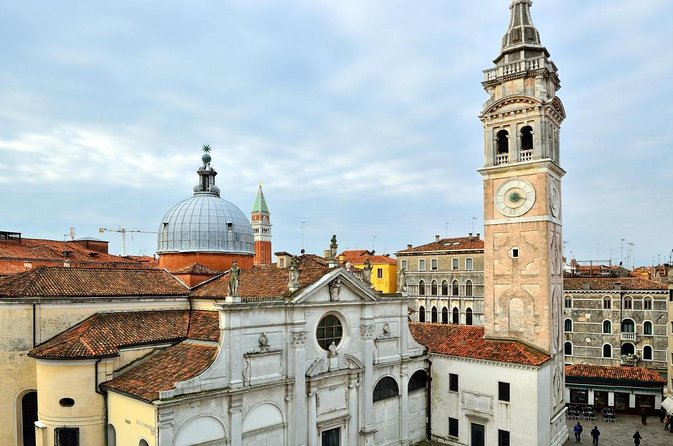
- Campo Santa Maria Formosa and the Church you can’t miss
- Rialto Bridge and the Grand Canal views: where the city turns photogenic
- Teatro La Fenice context: hearing the drama before you see the theatre
- Gondola from Campo San Moisè: the best part, with shared reality
- Ponte de le Ostreghe: learning the city through its food-name clues
- Price and value: what $162.21 is really buying
- Who should book this Venice morning walk and gondola
- Should you book? My straight answer
- FAQ
- How long is the Venice City Walk and Gondola Tour?
- Where does the tour start, and what time does it begin?
- What’s included in the price?
- What is not included?
- Is the gondola private?
- Do children pay?
Key highlights you’ll actually feel
- A guide-led walk that keeps you out of straight-line sightseeing
- Headset audio so you can hear the commentary across the campi and bridges
- St. Mark’s Square plus Castello in one morning loop
- Shared gondola on the Grand Canal (with smaller gondola group limits)
- Stop-by-stop storytelling around places like Rialto, La Fenice, and Ponte de le Ostreghe
Morning Start at St. Mark’s: how the route sets you up
This is the kind of tour that works because it starts where many people feel most confused: right near St. Mark’s. You begin around Calle larga de l’Ascension (1256) and check in at the Aliguna Ticket Office. The start time is 9:00 am, and you’ll be asked to arrive about 20 minutes early so you can show your WhatsApp voucher and collect tickets.
Why that matters: Venice mornings can get noisy fast, and narrow streets make last-minute searching a headache. If you’re coming from the train station, keep your route plan simple. One practical tip I’ve seen work well is not to trust sat-nav blindly; route yourself toward Accademia first, then continue on foot rather than getting pulled onto a ferry plan that starts early.
You’re also traveling with a headset audio system. That’s a big deal in Venice, where wind, footsteps, and crowds can drown out normal conversation. With the audio, you’re free to look at buildings and canals without mentally shouting back at your guide.
You can also read our reviews of more walking tours in Venice

Walking from St. Mark’s toward Castello: campi, bridges, and real pacing
The walking part runs about 2 hours 50 minutes total with the gondola included, and the walking itself is focused on Piazza San Marco and Castello. The goal isn’t museum time. It’s orientation: learning how the city’s layout works and what to look at once you’re on your own.
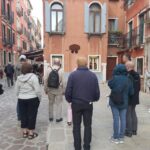
Along the way, you’ll move through campi and narrow alleys between St. Mark’s Square and the Rialto side. The guide shares background on landmarks you’ll recognize right away, plus smaller details that help you read Venice like a map. The tour also leans into language and local flavor, including the Venetian dialect angle, so it feels less like a script and more like a human explanation.
What you should expect in motion:
- Frequent turns and short stretches, because Venice “streets” are often passages between squares.
- Bridges and tight corners, where slowing down to look is normal.
- A group size that stays small enough to keep moving, with up to 15 people on the walking portion.
A practical consideration: the walking pace can feel quick if you pause often for photos. Venice is photogenic enough that you’ll want to stop. My advice is to plan your camera breaks intentionally—one quick shot at a time—so you don’t get stuck behind the group. If you’re sensitive to speed, stay close to the guide rather than letting yourself drift.
Piazza San Marco area: the stop before you get crowds in your head
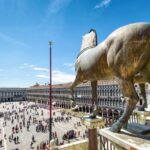
You spend real time in the St. Mark’s orbit, with the tour emphasizing the area between St. Mark’s Square and the Rialto direction. Even if you’ve seen postcard images before, this is the part that can still surprise you once you’re walking it instead of viewing it from afar.
A couple of named highlights show up in the route context:
- La Fenice opera house gets mentioned for its story and the drama behind it.
- Bovolo Staircase, a Renaissance-style spiral staircase often loved for its character and shape, appears as a reference point during the walk.
This section is valuable because it gives you a mental checklist before you move into smaller neighborhoods. Once you understand what sits where around St. Mark’s, Venice stops feeling random.
Potential drawback: because this area is visually intense, it can be easy to feel like you’re always looking and never absorbing. The audio narration helps, but you’ll still get the best experience if you take a few seconds to pause at a bridge or open square and let the scene settle. Otherwise, it’s all motion and no takeaway.
Campo Santa Maria Formosa and the Church you can’t miss
One of the loveliest parts of the itinerary plan is Campo Santa Maria Formosa. This square is a good example of why Venice walking tours can be more than just “look at the famous stuff.” It’s a calmer-feeling pause point amid the wider St. Mark’s/Rialto gravity.
The centerpiece is Santa Maria Formosa Church. The information you’re given points to a mix of Byzantine and Renaissance elements and notes that it dates back to the 15th century. Even if you don’t go inside, the façade and the way the church anchors the square make the stop worth it.
Why I think this stop works for you:
- It gives your eyes a break from the heaviest tourist clusters.
- It helps you understand Venice’s rhythm: big icons, then quiet campi, then back to water and motion.
- It’s a perfect “slow down” zone for photos, people-watching, and just taking in the scale of the buildings around the square.
No museum tickets are included here, so don’t plan on an inside visit as part of the value calculation. Instead, treat it like a guided visual stop where the guide points out what you’d otherwise walk past.
Rialto Bridge and the Grand Canal views: where the city turns photogenic
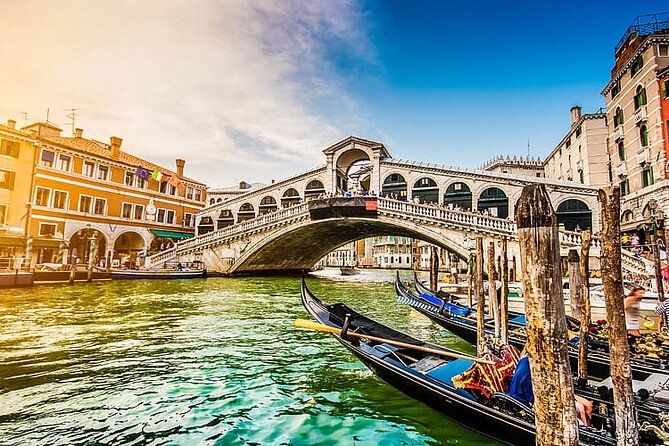
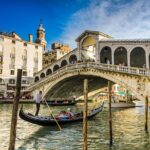
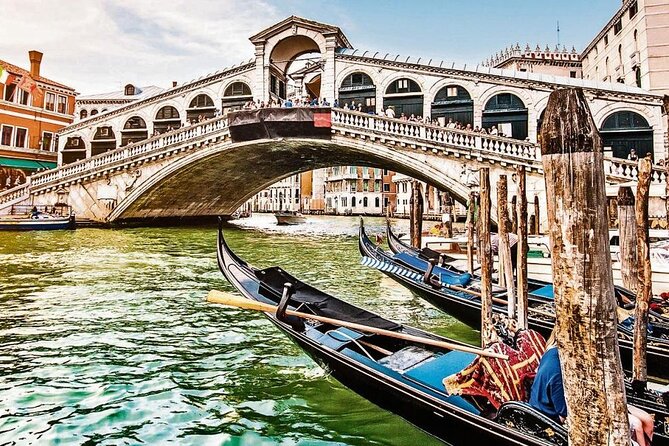
You’ll also spend time at the Rialto Bridge area. The bridge is described as dating to the 16th century and lined with shops along the sides. It’s one of those Venice moments where the icon status is justified: it’s visually strong, and the water traffic below it gives the scene energy even when the crowds thin out.
The key takeaway from this part of the tour is not just that Rialto is famous. It’s that it sits on a major connector over the Grand Canal, so you start to grasp how the canal shapes life in Venice. Once you see that, the gondola ride feels less like a separate activity and more like a continuation of the same story.
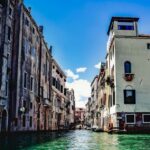
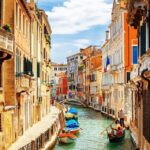
You’ll also get time with the Grand Canal itself. The tour description emphasizes its long route (about 2 miles) and the way it forms an S-shape through the city. You’re shown the idea that the canal banks hold palaces, churches, and buildings with detailed façades—enough to keep your eyes busy even during slower moments.
If you’re the type who likes structure in chaos, this section helps a lot. You leave with a “main corridor” understanding that makes later explorations feel easier.
You can also read our reviews of more city tours in Venice


Teatro La Fenice context: hearing the drama before you see the theatre
The tour includes commentary around Teatro La Fenice. The way this gets used on the walk is more about understanding Venice as a city of performance and power than about visiting the interior.
What you’re told is tied to a broader picture of Venice’s theatre world: there were multiple theatres in the city, and roles shifted between dramatic and musical stages. La Fenice is placed in that ecosystem, including a reference to the earlier theatre San Benedetto near Campo San Luca, with its 1755 origins associated with the Grimani family, and later changes around 1787 involving a judicial agreement and a society tied to boxholders.
Even if you’re not a theatre person, this context is useful. Venice isn’t only about buildings and water. It’s about institutions, wealth, and public life. Learning this kind of story makes the streets feel less like scenery and more like lived space.
One caution: since the walking tour is not an attraction entry ticket plan, you should not assume you’ll go inside La Fenice or other venues. You’re there for guided explanations and exterior/area context.
Gondola from Campo San Moisè: the best part, with shared reality
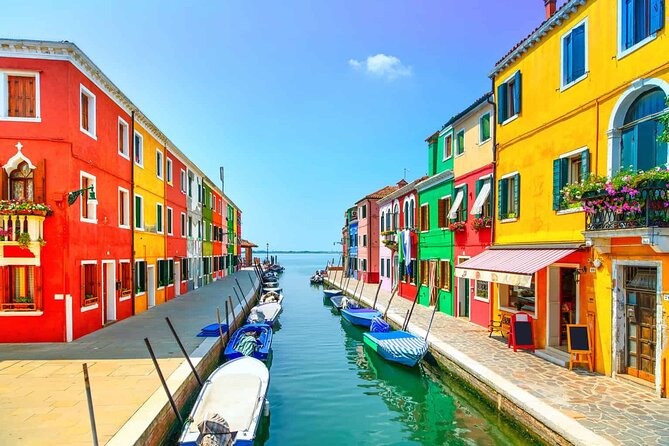
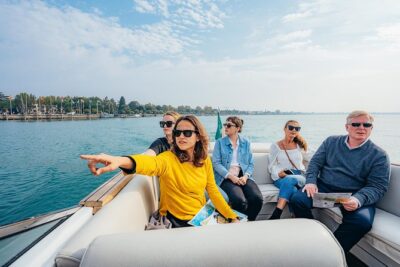
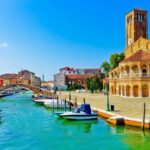
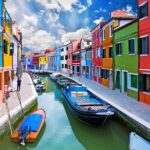
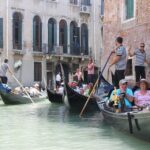
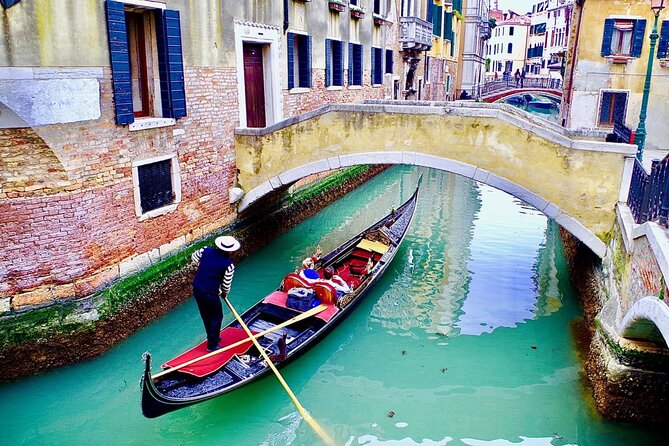
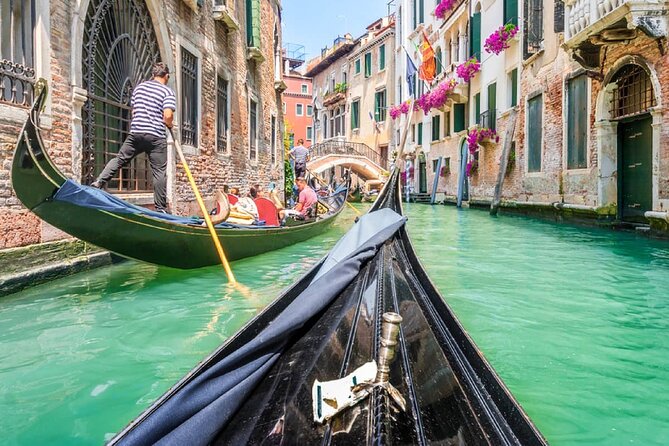
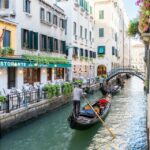
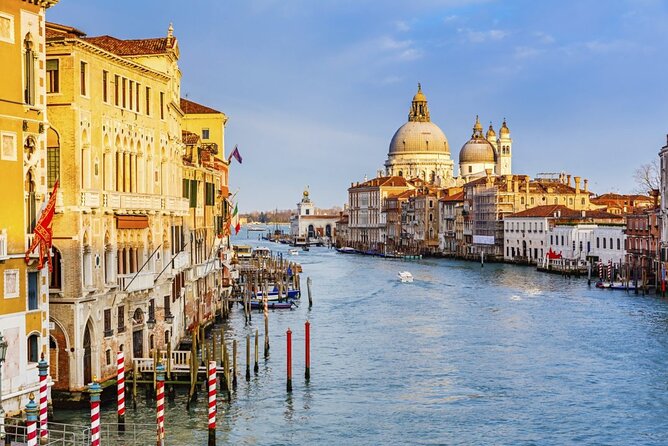
Then comes the gondola ride. It departs from Campo San Moisè, and you ride along the Grand Canal and minor canals. This is where the tour earns its price tag for a lot of people, because Venice’s canals aren’t the same on foot.
A few facts to keep you grounded:
- The gondola is shared, not private.
- A gondola can hold a maximum of 5 individuals.
- You can’t choose your seat; the gondolier assigns it.
- The gondola ride is not a guided tour in the sense of narration from the boat. The guide’s role is mainly on the walking portion with the headset system.
So what should you expect to feel? More than words, you’ll feel the slow glide. The Grand Canal portion gives you the “you are in Venice” sense fast, and the minor canals help you see a different, tighter side of the city.
The big value here is momentum. After you’ve walked the streets, you understand why the waterway is the street. After the gondola, you’ll spot canal connections more easily when you’re wandering on your own.
Possible drawback: because it’s shared and seats are assigned, you might end up in a less-than-ideal position for photos. Plan for enjoying the ride first, taking photos second.
Ponte de le Ostreghe: learning the city through its food-name clues
Near the end of the walk, you’ll pass through the area around Ponte de le Ostreghe. This stop is interesting because it’s less about a single famous building and more about how Venice names places.
The tour explanation ties the name to horticultural and vegetable-related place naming in Venice and connects it to historical references for the Rio dell’Alboro and Rio de le Ostreghe. The narrative points to vendors who likely sold “delicacies” related to the lagoon, with cultivation growing noticeably in the first half of the 19th century.
Even if you don’t remember every date, you’ll take away a useful skill: reading Venice place names as clues. That alone can make your self-guided walks more rewarding later, because you start seeing how the city’s past shapes what you see now.
As a practical note, don’t expect this stop to be a major photo icon. It’s a story stop, and the payoff is in how the guide connects the dots for you.
Price and value: what $162.21 is really buying
At $162.21 per person, you’re paying for a mix of guide service and canal transport in one morning window. Here’s how that translates into value for you:
You get:
- A guided walking tour in the Piazza San Marco and Castello zones.
- A gondola ride along the Grand Canal and minor canals.
- A personal audio system with headphones.
You don’t get:
- Museum entries or attraction admissions.
- Food and drinks.
- A guided narration from the gondola itself.
The most honest way to judge value in Venice is to compare what you’d otherwise piece together on your own. If you’re planning a first morning with orientation and you want the gondola without extra planning friction, this package structure usually makes sense. You also lock in a set route time window, which matters when crowds and weather can change your day.
One extra cost consideration: on some dates, some visitors traveling from outside Venice for the day may need to pay a €5 access fee. If you’re in that category, factor it into your total budget.
Also: the walking portion is capped at 15 people, and the gondola is capped per boat at 5. Smaller group limits generally mean you spend less time waiting for people to catch up and more time moving with the story.
Who should book this Venice morning walk and gondola
This tour suits you best if:
- You want a first-day foundation of Venice geography: St. Mark’s, Rialto corridor, and the canal logic.
- You like architecture and storytelling, including theatre references like La Fenice.
- You’d rather spend time on streets and water than hunt for museum tickets.
It may be less ideal if:
- You want a museum-heavy morning. This plan is not built for inside admissions.
- You’re extremely photo-focused and need gondola seat choice. Seats are assigned.
- You dislike group pacing. The walking can move quickly, and you’ll need to stay close to avoid getting separated.
There’s also one “soft” consideration from real-world experience: check your headset fit and keep an eye on your guide at crossings. If your headset is loose or you lose sight of the group, correct it immediately rather than assuming someone will notice you’re behind.
Should you book? My straight answer
Book it if you want one efficient morning where you get both the street view and the canal view, with a guide doing the heavy lifting on context. The combination of St. Mark’s-to-Castello walking plus a gondola on the Grand Canal is a strong way to start a Venice trip without needing museum tickets.
Skip or choose something else if you’re hoping for a private gondola, museum entrances, or a slow, unstructured stroll. Shared gondolas and assigned seating aren’t a match for everyone.
FAQ
How long is the Venice City Walk and Gondola Tour?
The tour runs about 2 hours 50 minutes.
Where does the tour start, and what time does it begin?
It starts at Calle larga de l’Ascension, 1256, 30124 Venezia VE, Italy. The start time is 9:00 am, and you should arrive about 20 minutes early.
What’s included in the price?
Included are a guided walking tour in the Piazza San Marco and Castello areas, a gondola ride along the Grand Canal and minor canals, and an audio system with headphones.
What is not included?
Not included are museum visits or attraction entry tickets, a guided gondola narration, hotel pickup or drop-off, food and beverages, and tips.
Is the gondola private?
No. The gondola ride is shared with other participants. Each gondola can hold a maximum of 5 people, and your seat cannot be chosen.
Do children pay?
Children up to 2 years old do not pay, but they only avoid payment if they do not occupy a seat on the gondola.